Best Backpacking Tents of 2026
The Top 1-Person and 2-Person small and Lightweight Tents for Backpacking

June 27th, 2026 updated with the Big Agnes String VST, updated NEMO Dragonfly, Mountain Hardwear Nimbus, and Six Moon Designs Orbiter
Home > Gear Reviews > Backpacking
Your tent is the piece of gear you're most dependent on when things go wrong. A sleeping bag can be supplemented with extra layers, a pad with a jacket stuffed underneath, but a tent that leaks in a rainstorm or collapses in wind at 11,000 feet has no substitute. Getting the right one for how you actually backpack matters more than most gear decisions.
We've been testing backpacking tents for five years across desert, rainforest, coastal, and alpine mountain conditions, including thru-hikes of the Pacific Crest Trail and thousands of miles of overnight and multi-day backpacking trips. Our testers cover a range of body sizes, trip styles, and shelter preferences, from ultralight single-wall setups to freestanding double-wall tents, which gave us a clear picture of where the tradeoffs actually land.
What separates a genuinely good backpacking tent from one that frustrates you comes down to how well the waterproofing and seam sealing hold in sustained rain, how the interior dimensions work for your body and sleep style rather than just on paper, how quickly and reliably you can pitch it in the dark or in deteriorating conditions, and how the weight distributes between two people sharing a load versus a solo carry.
Top Pick: The Big Agnes Copper Spur HV UL2 with Hyperbead Fabric earns our Best Overall award for two-person backpacking tents. It stood out as the lightest freestanding two-person tent we tested at 2 lbs 11 oz minimum weight, with two doors and two vestibules that make it genuinely livable for two people, a 40-inch peak height that allows sitting upright, and a new Hyperbead fabric that shaved nearly three-quarters of a pound off the previous model while improving zipper performance that was a known weak point.
We create reader-supported, objective gear reviews independently selected by our editors. This story may contain affiliate links, which help fund our website. When you click on the links to purchase gear, we may get a commission — without costing you an extra cent. Thank you for supporting our work and mission of outdoor coverage for every body! Learn more.
Comparison Table
| BACKPACKING TENT | TREELINE AWARD | FREESTAND | WALLS | PEOPLE | MIN. WEIGHT | LENGTH (inches) | MAX WIDTH (inches) | DOORS | VESTIBULES | Price |
|---|---|---|---|---|---|---|---|---|---|---|
| Big Agnes Copper Spur HV UL2 | Best Overall Two-Person Tent Read why |
✅ | Double | 2 | 2 lbs 10 oz | 88 | 52 | 2 | 2 | $600 |
| Six Moon Designs Lunar Solo | Best Overall Solo Tent Read why |
❌ | Single | 1 | 1 lb 10 oz | 90 | 48 | 1 | 1 | $260 |
| NEMO Hornet Elite OSMO 2 | Best Lightweight Read why |
Semi | Double | 2 | 1 lb 11 oz | 80 | 50 | 2 | 2 | $609 |
| Zpacks Duplex | Best Ultralight Read why |
❌ | Single | 2 | 1 lb 2.5 oz | 90 | 45 | 2 | 2 | $749 |
| Six Moon Designs Skyscape Trekker | Best for Tall People Read why |
❌ | Hybrid | 1 | 1 lb 12 oz | 103 | 48 | 2 | 2 | $275 |
| REI Co-op Half Dome 3+ | Best 3-person Read why |
✅ | Double | 3 | 5 lbs 10.8 oz | 90 | 70 | 2 | 2 | $399 |
| Marmot Tungsten 2P | Best Freestanding Read why |
✅ | Double | 2 | 4 lbs 15.7 oz | 88 | 54 | 2 | 2 | $279 |
| Six Moon Designs Lunar Duo Outfitter | Best Budget Read why |
❌ | Single | 2 | 3 lbs 9 oz | 90 | 54 | 2 | 2 | $210 |
| Tarptent Double Rainbow DW | Best Budget - Ultralight Read why |
Semi | Double | 2 | 2 lbs 7.6 oz | 88 | 50 | 2 | 2 | $369 |
Note: some tents taper toward the foot; the maximum width at the head is shown here.
See our most popular Backpacking Gear guides:
Best Tents for Backpacking
Best Two-Person Backpacking Tent: Big Agnes Copper Spur HV UL2

Packed Weight: 3 lbs 2 oz
Minimum Weight: 2 lbs 10 oz
Length/Width: 88 / 52" (head) 42" (foot)
Floor Space: 29 SF
Height: 40”
Double/Single Walled: Double
Freestanding?: Yes
Doors/Vestibules: 2 / 2
Other options available: 1-person, 2-person XL, 3-person, 3-person XL, 4-person, 5-person
What we liked: Great, light-ish weight, all-around freestanding backpacking tent
What we didn't like: Sharp taper from head to foot, zippers can be touchy
For all-around considerations of space, weight, and ease of use, the updated Big Agnes Copper Spur HV UL2 with Hyperbead is our best backpacking tent for two people. Treeline Review writers and staff have tested the Copper Spur for thousands of miles on thru-hikes, overnight backpacking trips, and bikepacking trips. Over years of testing it, the Copper Spur still holds up as the best overall two-person backpacking tent with the newest Hyperbead model being the best (and lightest) yet.
The reason the Copper Spur wins our best backpacking tent award is its spaciousness and weight. The Copper Spur HV UL2 is the lightest freestanding tent we considered, and it’s among the most spacious of the 2-person backpacking tents we reviewed, with a length of 88" and a head height of 40". Remarkably, Big Agnes also decided to expand on the Copper Spur 2-person this year with a new 2XL model (since the 2P is so popular)— the 2 XL is the same tent as the Copper Spur UL2, but with an extra 8" in length, 2" in width, and a couple more inches in headroom. Both 2P models use the new Hyperbead fabric.
Two people fit comfortably: the two doors provide easy access for both sleepers, and the two vestibules provide ample storage space for gear. You can even use a trekking pole or two to make the vestibules even bigger as an awning. Backpackers can pitch the Copper Spur as a freestanding tent or stake it out to get the most room out of their pitch. And with a fully-packed weight of 2.6 pounds, the HV UL2 is a fantastic choice for two people sharing the load. For more, read our review of the Big Agnes Copper Spur.
Compare Prices Of The Big Agnes Copper Spur HV UL2


-
The new HyperBead fabric on the Copper Spur is overall 6% lighter. As a result, the entire weight of the tent is down by almost ¾ of a pound, bringing the trail weight to 2lb 10 oz from 3.5 pounds.
Big Agnes has also addressed the zipper sticking, which addresses a problem we ran into with the previous model. So far, we've had no issues with zipper slides in the field!
In addition to the rain fly fabric changing to HyperBead, Big Agnes changed how the rain fly attaches to the cross pole.
While we think the Hyperbead version is a big advancement in tech on this tent, you can still find the older version at many retailers. If you want the Hyperbead version (and we there is good reason to get it!), be sure to check your retailer that you aren't getting sold last year's model.
-
For 2025, Big Agnes updated the waterproofing on the rain fly to the new Hyperbead fabric. It is 6% lighter, 50-100% stronger, and 25% more waterproof without relying on PFAS or PFCs or DWR treatments or coatings. Big Agnes says it is "inherently waterproof at a molecular level." We were curious so we ran our own waterproofing tests.
In addition to testing in the field, we ran several simulated rain tests on the new Big Agnes Copper Spur Hyperbead to get more controlled data on waterproofing. This included a:
Steady, direct rain shower for 15 minute duration (to simulate medium/heavy direct rain)
Light mist/moisture treatment (to simulate moisture/light rain)
Dry tests (to test beading out and drying)
We ran this test side-by-side with other tents to test beading and waterproofness, taking photos at the 30-minute, 1-hour, and 2-hour marks. We also checked the inside and outside of the tent to test for moisture and condensation.
-
We loved the HV UL2 as a lightweight backpacking tent with plenty of vestibule space perfect for a solo hiker or a couple. If you’re tall, get stoked: tall folks, in particular, praised this tent.
-
The new Big Agnes Copper Spur has completely updated their crosspole system. The first time we set it up, we didn't find it intuitive. However, it definitely does a good job of staying taut and the rain fly does not move under this new system. The tension on the new tent is great and keeps the fly perpendicular to the tent ends that are staked out. This also could be due to the new Hyperbead material being more stretch resistant.
-
In addition to the most popular 2-person model that we recommend, the Copper Spur HV UL 2 is available in many different sizes and two lengths. It comes in 1-person, 2-person XL, 3-person, 3-person XL, 4-person, 5-person.
The Copper Spur HV UL 2 is available in both the backpacking style reviewed here as well as a bikepacking style. The roomy bikepacking version comes with a short stick pole that ties to handlebars and a daisy chain compression sack that ties to bike-frame attachments. It’s also a winner in our guide to Best Bikepacking Tents.
Big Agnes has also recently released their first trekking pole tent, which has the same Hyperbead material as the Copper Spur, but doesn’t come with poles. Instead, you use your trekking poles to set up the tent. See more in our review of the Big Agnes String VST 1.5 tent.
-
We had to get really picky to find issues with the Copper Spur HV UL2. For example, the tent’s taper to 42 inches width at the foot likely won’t fit two rectangular sleeping pads side by side without overlap (most backpackers are carrying mummy-shaped pads, so this isn't a common issue).
It is worth noting that the lightweight fabric of the Copper Spur HV UL2 is not particularly durable or abrasion-resistant.
However, since all lightweight and ultralight tents have somewhat delicate fabrics, we feel confident recommending the Big Agnes Copper Spur HV UL2 to backpacking duos who want a roomy backpacking tent that will serve them well in spring, summer, or fall.
-
Trying to decide between the Big Agnes Tiger Wall UL2 and the Big Agnes Copper Spur HV UL2? Now that both are available in Hyperbead, you have more options.
After comparing the two popular tents, we ultimately side with Reddit users and agree that the Copper Spur is the best tent because it is more durable and has better ventilation, while also offering more usable room.
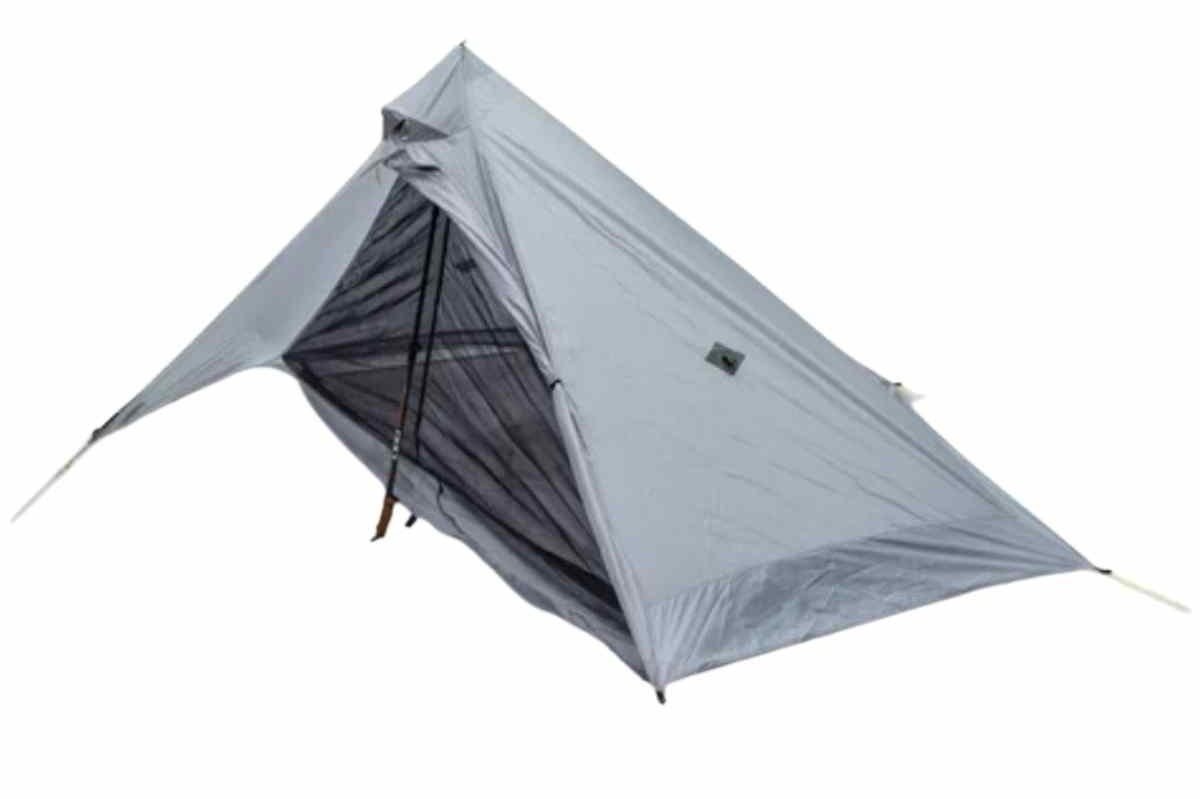
Best 1-Person Backpacking Tent: Six Moon Designs Lunar Solo
Packed Weight: 1 lb 10 oz
Length/Width: 90 / 48"
Floor Space: 26.3 SF
Height: 49”
Double/Single Walled: Single
Freestanding?: No
Doors/Vestibules: 1 / 1
Options available: 2-person (Lunar Duo), Lunar Duo Outfitter
What we liked: Light weight, low price, roomy, space-saving
What we didn't like: Non-freestanding pitch takes some getting used to; enough ventilation to reduce condensation also makes the tent sleep colder; stakes not included
The Six Moon Designs (SMD) Lunar Solo checks all the boxes — excellent storm protection, easy to pitch, roomy, durable, well ventilated, lightweight, and affordable. We love this tent, and we think you will too.
We know you might be a little suspicious, given that the Lunar Solo is billed as a one-person shelter. So often, one-person tents aren’t really big enough for one person, unless you plan to store all of your gear outside. But the usable space in the Lunar Solo is 7.5’ long, 4’ wide, and over 4’ tall - meaning there’s plenty of room for a large adult to sit up, dress, and stretch out without touching the shelter.
Treeline Review writer Mike Unger has used the Lunar Solo as his primary solo shelter since 2018. One of his favorite features is the interior “notch” in the floor space of the back of the shelter. While he loves the large, usable vestibule, the notch is the perfect place to stow your pack and other gear, especially when it’s wet or snowy outside. The Lunar Solo is also a winner in our Best Ultralight Tents guide.
You can read our in-depth long-term review of the Six Moon Designs Lunar Solo for even more information.
Compare Prices Of The Six Moon Designs Lunar Solo

The Lunar Solo has lots of small and nice improvements that make it a solid affordable and reliable solo tent. Photo by Naomi Hudetz.
-
The Lunar Solo can withstand the elements. The shelter effectively sheds wind, but how you pitch is important - just try to keep the head or foot pointed into the wind. The 6” bathtub floor keeps rain splashback at bay, and while the vestibule doesn’t quite reach to the ground - and shouldn’t, for ventilation - anything stored close to the mesh door should stay dry. On nice nights, the vestibule can be completely opened to maximize ventilation, though there is a balance to be found between ventilation and sleeping warm enough.
-
Still, this is a single-wall tent, meaning in all but the most ideal of circumstances, condensation will likely be an issue. This is also the case for our Best for Tall People, Best Value, and Best Ultralight winners. As there is a vent in the peak of the tent, most people have the most trouble at the head and foot of the tent, where the walls slope in. Online reviewers recommend carrying a small piece of microfiber towel with you to wipe condensation down before packing the tent away. If you’re worried about pack weight, others recommended giving your head extra room and covering your sleeping bag footbox with your rain gear.
-
The Lunar Solo isn’t freestanding, but can be set up in under two minutes with a single trekking pole and six stakes (neither included - so your loadout will be a bit heavier than the listed packed weight). It also takes up more room than 1-person freestanding tents, so we do recommend setting it up before you head out. (If you’ve never set up a non-freestanding tent, Six Moon Designs has a helpful video to show you the ropes.) Six Moon Designs also sells folding aluminum poles or carbon fiber tent poles that can be used in lieu of a trekking pole, making the Lunar Solo a great bikepacking tent as well. Over at Bikepacker.com, they rave about the Lunar Solo’s packed size and durability squashed into panniers after a year of use.
-
The Lunar Solo’s silicone-coated polyester fabric is less likely to delaminate or trap moisture than the silnylon other lightweight tents are made from. Silpoly also sags less and packs down smaller than silnylon, and while it’s heavier than the Dyneema fabric found in our Best Ultralight winner, it’s also more durable. SMD also recently reconfigured the top vent to improve ventilation and added reflective guylines - a small but nice improvement for those of us that walk around camp after dark. That said, the tent does not come seam sealed. While you can order seam sealing through SMD’s website, reviewers report you’re better off doing it on your own. SMD does provide a handy video tutorial if you decide to go that route.
-
Treeline Review writer Mike Unger has used the Lunar Solo as his primary solo shelter since 2018. He used it on most of his PCT southbound thru-hike, a large section of the Continental Divide Trail, and most recently on several bikepacking trips.
Best Lightweight Tent: Nemo Hornet Elite Osmo 2P

Packed Weight: 1 lb 13 oz
Minimum Weight: 1 lb 7 oz
Length/Width: 80 / 50" (head) 42" (foot)
Floor Space: 27.3 SF
Height: 37”
Double/Single Walled: Double
Freestanding?: Semi
Doors/Vestibules: 2 / 2
Other versions: NEMO Hornet OSMO
What we liked: Just over 2 pounds packed weight for a semi-freestanding tent; two doors make for easy access, storm coverage
What we didn't like: Pricey for a one-person-plus-gear tent rather than an actual 2-person tent
The Hornet Elite Osmo 2P is one of those tents that is legendary among Treeline Review writers. We love this tent. If you’re looking for a semi-freestanding tent that’ll shave ounces off your baseweight, the NEMO Hornet Elite OSMO two-person tent is a fantastic buy.
NEMO says that everything about the Hornet Elite OSMO has been considered for weight savings, and we believe them. At just over two pounds packed weight, this is the lightest semi-freestanding tent we looked at with two doors, two vestibules, and two inside pockets (plus a headlamp diffuser overhead pocket!) and its own dedicated pole.
It’s easy to set up, even in rocky or otherwise unforgiving terrain where you can’t get stakes in (though staking it out will give you more room on the inside).
The Hornet Elite OSMO is also a winner in our Best Ultralight Tents guide and a favorite of Treeline Review editor Liz Thomas, who wrote an in-depth review of this tent.
Compare Prices Of The Nemo Hornet Elite Osmo 2P

Treeline Review editor Liz Thomas in the NEMO Elite OSMO on a yoyo backpacking trip of the California Riding and Hiking Trail. Photo by Kate Hoch.
-
Our Editor-in-Chief Liz Thomas first set up the Hornet Elite OSMO in her backyard at night in just a few minutes without reading the directions - just by using the color coding on the poles and the “satisfying” snap-in system. She also noted how easy it was to get a taut pitch to maximize the interior space inside. (Reviewers at REI had some trouble with this, so best to practice before heading out on your adventures.)
-
When camped on a ridge during a rain and wind storm on the California Riding and Hiking Trail and during 6-days of high-altitude monsoon weather at altitude on the High Sierra Trail, she felt she had great protection with the rain fly’s “really generous coverage.” While she normally uses single-wall tents, “the lack of condensation really blew [her] mind.” And once the rain is done, she said that this tent is almost as quick to dry as more expensive DCF fabric, making packing and storage a breeze.
-
Other things we like about the Hornet Elite Osmo include the 100% recycled, PFAS-free OSMO poly-nylon fabric that’s 4x better at repelling water and 3x less stretchy when wet compared to the fabric on their now-discontinued Hornet 2. PFAS is a common waterproofing in outdoor gear that is considered a "forever chemical" that many states are banning. You can read more in our All About PFAS in outdoor gear guide.
-
And if your tent ever breaks or you’re looking to upgrade down the line, NEMO has a lifetime warranty on their products and offers a trade-in program to make sure their tents never see a landfill. We’re also into NEMO as a company for their commitment to sustainability as a Climate Neutral Certified company, their bluesign system sourcing, and their advocacy work.
-
The main drawback? While this is technically a two-person tent, most reviewers on REI are using the Hornet Elite OSMO as a one person tent or only bringing their dog along with them. Liz also went solo in this tent and felt it would be a tight squeeze for two, even on shorter trips. And speaking of short, at 80 inches in length, this is also the shortest tent we looked at - so tall folks might want to test the length out for themselves at a retailer or by measuring out floor space, especially since the walls of this tent lean inward.
-
This small-but-mighty package also comes at a price: the Hornet Elite OSMO is expensive. Among our winners, the only more expensive tent is our Best Ultralight Tent, the ZPacks Duplex, which is the lightest tent we considered. The similarly-named NEMO Hornet OSMO is less expensive, but at 2 lbs 8 ozs, it's heavier. Still, if you’re a solo backpacker looking to save on weight on a two-wall shelter or who wants the flexibility of a semi-freestanding tent, the NEMO Hornet Elite OSMO is a great choice.
Best Ultralight Tent: Zpacks Duplex

Packed Weight: 1 lb 2.5 oz
Minimum Weight: 1 lb 1.6 oz
Length/Width: 90 / 45"
Floor Space: 28.13 SF
Height: 48”
Double/single walled: Single
Freestanding?: No
Doors/Vestibules: 2 / 2
Other options: Duplex Lite, Duplex Zip, Duplex Freestanding
What we liked: Featherlight two-person shelter that actually fits two people and their gear
What we didn't like: Non-freestanding pitch takes some getting used to; pretty narrow for two people; stakes not included
If you’re looking for the most reliable ultralight tent money can buy, we recommend the Zpacks Duplex for thru-hikers, backpackers, and bikepackers. There's a reason this is one of the most popular tents among thru-hikers on the Pacific Crest Trail and Continental Divide Trail.
The Duplex is a true two-person tent that’s a solid three-season shelter. Made of Dyneema Composite Fabric - some of the lightest, strongest, and most weatherproof tent fabric on the market - this time-tested single-wall shelter offers protection from weather and bugs at nearly a pound lighter than our lightweight pick, the NEMO Hornet Elite Osmo (which, admittedly, is two-wall). The extensive mesh on the body provides excellent ventilation.
It has two doors that fold down for easy in-and outs at night and two vestibules for extra gear storage. (There are also two small pockets inside for maps and other sundries.) It’s pitched with two trekking poles (or made-for-purpose carbon fiber poles; not included) and eight stakes (also not included), so it’s not freestanding, but we think the weight savings is worth the necessary stakeout. It also comes seam taped, so it’s fully waterproof out of the box.
The Zpacks is the overall winner in our Best Ultralight Tents and also a favorite of Treeline Review editor Liz Thomas, who wrote an in-depth review on the Zpacks Duplex tent.
Compare prices of the Zpacks Duplex


-
ZPacks was one of the first manufacturers to start using Dyneema Composite Fabric - or Dyneema, or DCF - as tent fabric rather than tarp fabric. DCF is incredibly lightweight, completely waterproof (except at the seams–which Z-packs includes fully seam taped), doesn’t stretch or sag under weight or water, doesn’t absorb water at all, and dries super quickly. All of these qualities make it ideal as a tent fabric - and ZPacks’ fully-enclosed, bathtub floor design has since been replicated by numerous tent makers (e.g. the Hyperlite Mountain Gear Unbound 2), so you know they’re on to something.
-
Our Editor in Chief Liz Thomas loves how easy this tent is to set-up. As with any non-freestanding tent, there’s a bit of a learning curve to make sure you’re getting a tight pitch, but once you have it down it’s simple, even for one person alone. (And you need a tight pitch: Dyneema fabric is loud in the wind, a tight pitch eliminates rustling.)
-
Once set up, reviewers noted that this tent felt luxurious for one and spacious enough for two. (The reviewer at Bikepacking.com even mentioned fitting four people inside for a short meeting and our editors have fit 3 people to play games while sitting out an afternoon thunderstorm on the Sierra High Route.)
-
Treeline Review co-founder Naomi Hudetz used the Z-Packs Duplex for thru-hikes of the Appalachian Trail, Tahoe Rim Trail, Low 2 High Route, Idaho Centennial Trail (most of), and Pacific Northwest Trail.
In our experience, the Duplex performed wonderfully in rain and light snow, but it’s a drafty shelter in windy conditions. This is likely due to the extensive ventilation to prevent condensation issues in this single-wall tent. Impressively, condensation wasn’t really an issue for reviewers - it isn’t mentioned in any of the reviews we saw.
Our editors carried this tent on the 800-mile Great Divide Trail in the Canadian Rockies during record-breaking rainfall during a record-breaking late summer of rain and condensation was not an issue. Reviewers instead noted that the bathtub floor’s mesh is well-placed to let condensation drip out of the tent rather than into the sleeping area.
-
Reviewers at all sites are also really happy with the optional Duplex Freestanding Flex Kit, which consists of two carbon fiber tent poles that make the Duplex freestanding. ZPacks even suggests that you can pitch this way without trekking or other support poles at the peaks. Folks at Bikepacker.com tried this, however, and don’t generally recommend this if you’re expecting any kind of weather. If you want that no-stake luxury, plan to add another half pound (10.5 oz) to the Duplex’s weight and another $150 to the already steep price of the Duplex. While Switchback Travel calls the Freestanding Flex Kit worth it, Outdoor Gear Lab noted that most of their reviewers preferred to use the Duplex without the Freestanding Flex Kit. While it’s not a necessary purchase, it might be worth it if you commonly find yourself backpacking in rocky or sandy environments.
-
So what’s the catch? Even without the flex kit, the ZPacks Duplex is the most expensive tent on our list. All reviewers also said some version of “you get what you pay for” - and we agree.
-
If we had to get picky, the single-wall Dyneema fabric is a little see-through - while you can’t see everything, you can absolutely see shapes - so you’ll have to consider whether weight or privacy matter more to you, especially if you find yourself in crowded backcountry or car camping sites. And speaking of fabric, the Duplex’s ultralight materials do require a little extra care, especially around sharp things that poke and prod. In our experience, it'll last 180 nights before you may consider replacing it (that sounds like a lot, but is still less than tents made of other materials). We recommend carrying some DCF repair tape for any necessary patching.
Lastly, the Duplex is also relatively narrow for a two-person tent. It’s only 45 inches wide - for context, most of the two-person tents we considered narrow from around 50 inches at the head to around 43 inches at the foot. Still, most reviewers say the tent feels spacious with the 48 inches of head room. The length has been a common complaint for years, but Z-packs came up with a solution. If you need more space - or are taller than 5’ 11” - ZPacks released an Offset Duo that provides an extra 4 inches of length and 8 more inches in width.
-
The ZPacks Duplex keeps winning awards for a reason. If you can afford it - and you take care with the ultralight materials - our Best Ultralight Tent will take care of you for years to come.
Best Backpacking Tent For Tall People: Six Moon Designs Skyscape Trekker

Packed Weight: 1 lb 10 oz
Length/Width: 103 / 48"
Floor Space: 23 SF
Height: 45”
Double/Single Walled: Hybrid
Freestanding? No
Doors/Vestibules: 2 / 2
Other versions: Skyscape Scout
What we liked: The generous length and two-door design in a 1-person tent
What we didn't like: Lack of a vent in the peak means extra condensation on clammy nights
If you’re over 5’11” and looking for an ultralight backpacking tent that won’t break your budget, the Six Moon Designs Skyscape Trekker is a fantastic choice.
This one-person, hybrid wall, non-freestanding tent is a bit of an anomaly among backpacking tents. Not only does it weigh only 1.75 pounds - minus the two trekking poles and 5-6 stakes that keep it aloft - but the Skyscape Trekker is a whopping 103 inches in length. This ultralight shelter also remarkably features two doors and two vestibules, providing plenty of space for a single person’s gear storage.
Also unlike most backpacking tents - which are either rectangular or just tapered at the foot - the Skyscape Trekker is shaped more like a kite, pointed at the head, wider in the middle, and rectangular at the foot. This provides more usable room where you need it, although people who sprawl when they sleep might find it a tight squeeze. We also love that the peak is slightly offset from the center of the tent - it makes it easier to sit up without scooting around first.
The Skyscape Trekker is a favorite of Treeline Review writer Mike Unger, who wrote an in-depth review on this tent.
Compare Prices Of The Six Moon Designs Skyscape Trekker

Two Six Moon Design Skyscape Trekker tents side by side in Hells Canyon, Oregon.
-
The hybrid wall design - single wall over the head and foot, double wall over the vestibules - means you can roll up and stow one or both of the vestibules for added ventilation. This can be useful on humid or colder nights, particularly as this tent doesn’t have a vent at its peak like most single-wall tents. Many reviewers reported carrying a small sponge or towel to make cleanup easier in the morning.
The Skyscape Trekker, like all Six Moon Design tents, does not come seam sealed. Six Moon Designs will seal it for you for a price if you order directly from their site (as opposed to a retailer), or they offer great video instructions if you’d rather save some cash and do it yourself.
-
Reviewers at Six Moon Designs rave about the Skyscape Trekker - especially folks with bigger bodies. At the time of writing, this tent currently has an average of 4.65/5 stars over 54 reviews. One reviewer who’s 6’6” and 250 pounds loves this tent; another who’s 6’9” says they have space to both lay down and sit up. It does require practice to get the perfect pitch, but most report it gets easier the more you pitch it. One reviewer notes that taller folks or folks who are going into heavier weather should carry 6 stakes rather than 5 to stake out the foot and prevent unnecessary sagging.
Normally, tall folks have to pay a premium for outdoors gear that fits - but not so with the Skyscape Trekker. This tent is barely more expensive than our Best 1-Person Backpacking Tent, the Six Moon Designs Lunar Solo. So if you’re a taller backpacker that’s tired of waking up with your tent wall leaning over your face, the Six Moon Designs Skyscape Trekker is an excellent choice.
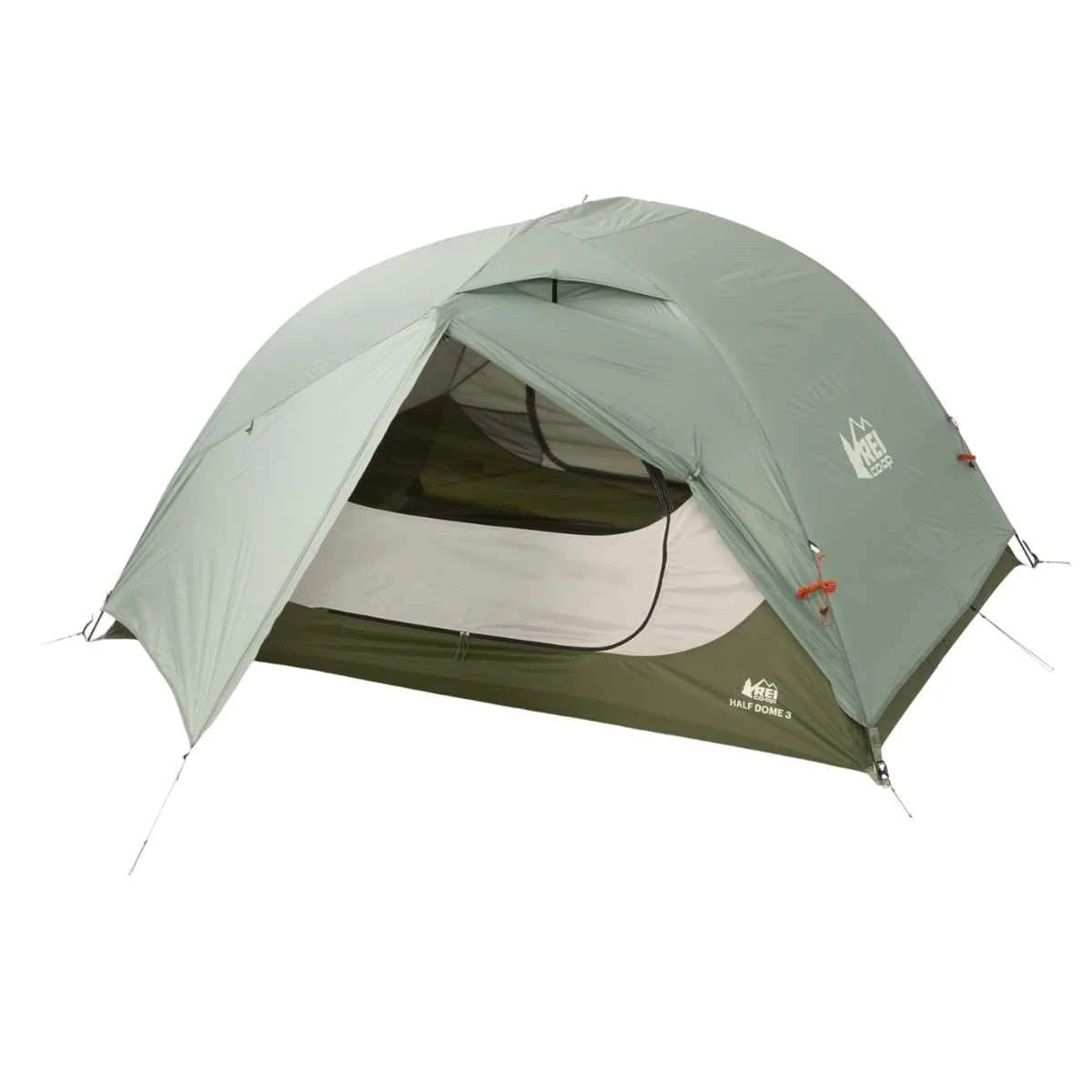
Best 3-Person Backpacking Tent: REI Half Dome SL 3+
Packed Weight: 5 lbs 11.7 oz
Minimum Weight: 4 lbs 13 oz
Length/Width: 90 / 78"
Floor Space: 48.8 SF
Height: 44”
Double/Single Walled: Double
Freestanding?: Yes
Doors/Vestibules: 2
What we liked: A ton of floor space keeps things roomy enough for three people and gear
What we didn't like: Heavy if you’re looking for a spacious 2-person tent
When we first got the idea of making the Half Dome SL 3+ the best 3-person backpacking tent, we did a double take.
It's heavy. But when we started diving into the numbers, we realized that almost every 3-person tent we considered is within 8 oz the weight of this tent. And when it comes to roominess, the REI Half Dome SL 3+ has more floor space, more vestibule space, features, durability, and more headspace.
The real clincher is that the Half Dome SL 3+ is $100 less expensive than comparable 3-person tents while still coming with a footprint ($40 value). Plus, REI Members can often snag it for even less during sales throughout the year.
Plus, if you’re looking for a three-person backpacking tent that can double as a comfortable car-camping tent, it is hard to beat the REI Half Dome SL 3+.
View The REI Half Dome SL 3+

The REI Half Dome SL 3+ is a good option for 3 people, especially if you want one tent that will work for both car camping and backpacking. Photo by John Carr.
-
The larger cousin of the much-beloved Half Dome SL 2+, the Half Dome SL 3+ is a freestanding tent that comes with a footprint (usually a $40 upcharge) to protect your tent floor and stakes. After a year of use, we aren’t concerned about durability.
-
Where the Half Dome SL 3+ really shines is roominess. The vestibules are large enough to hold “a couple of 60L packs, boots, and a small stove.” The tent itself is long enough “for a 6’ adult using a long size sleeping pad and bag.”
This is notable because we strongly considered the MSR Hubba LT 3 for best 3-person tent, but it is almost $200 more and actually has less floor space and 2" less headroom.
We also considered the widely popular Big Agnes Tiger Wall as the best 3-person tent, but it only has 38 SF of floor space compared to the REI tent's 48.8 SF. While that tent is significantly lighter, the Big Agnes Tiger Wall feels more like a 2-person tent than a true 3-person tent.
-
The design will feel familiar to most car campers: two D-shaped doors mean two large, porch-like vestibules for storage, with additional storage inside and overhead pockets. Setup is clipping in a single, hubbed pole that’s color coded for ease of use, with four more clips for the rain fly. Each vestibule has two stakeout points, making them more stable in the wind. Two vents in the rain fly help decrease condensation.
-
This tent has been an REI staple for a long time and they've had a while to perfect it. When it’s staked out properly, it’s great in both wind and rain.
-
Reviewers had to get pretty picky to find issues with the Half Dome SL 3+. The most common concern was how to pack the one-piece pole system, which at its smallest stays 24 inches long. (Most people ended up storing theirs in a side pocket of their pack.) Some folks feel like the rain fly doesn’t come low enough to prevent dust and rain splashback from entering the tent. Others wouldn’t spend too long on trail with three people in the tent (though they do say it’s more than roomy enough for two). Other, more minor concerns include frequent snags in the tent’s mesh and the size, with one reviewer noting it’s “great when you have space to pitch it but can feel like a full-size SUV among subcompacts at a cramped group site.”
-
Still, if you’re headed out backpacking with three people (or two people and a dog or two), the REI Half Dome SL 3+ is a comfy option for a solid price. And if it turns out you don’t like it - or something goes awry - REI’s generous return policy will allow you to get a refund or swap it out within the first year for something that suits you better.
Best Freestanding: Marmot Tungsten 2P

Packed Weight: 5 lbs 14.2 oz
Minimum Weight: 4 lbs 15.7 oz
Length/Width: 88 / 54" (head) 46" (foot)
Floor Space: 30.1 SF
Height: 42"
Double/Single walled: Double
Freestanding?: Yes
Doors/Vestibules: 2 / 2
Other versions: 3-person
What we liked: Near-vertical bathtub walls, color-coded setup, sheer reliability, affordability
What we didn't like: Heavy compared to other two-person tents on our list; the stakes aren’t as nice as they could be
The Marmot Tungsten 2P is the best freestanding backpacking tent if you’re looking to get out for your first backpacking trips with a minimal hit to your wallet.
As a fully freestanding tent, the Tungsten 2p is a fantastic choice if you’re looking to make the switch from car camping to backpacking (and want something that will work well for car camping, too). For hundreds less than our Best 2-Person winner, Big Agnes’s Copper Spur HV UL2 (which is also freestanding), you get a tent with an extra square foot of living space, an extra inch of peak height, some wiggle room to either side, and a footprint to help keep your tent floor intact.
The Tungsten 2p tent is freestanding and double-walled - and ultimately heavier than our Best Value winner, Six Moon Designs’ not-freestanding, single-wall Lunar Duo Outfitter. But the folks using the Tungsten are satisfied: this tent has some of the highest reviews on REI and Backcountry out of all the tents we considered.
We think the Marmot Tungsten 2-Person Tent is the way to go for a fully-freestanding first backpacking tent.
Compare Prices Of The Marmot Tungsten 2-Person Tent

Setting up the Marmot Tungsten 2p while camping in Anza Borrego Desert. This backpacking tent is roomy enough to use camping and lightweight enough to take backpacking—all at an affordable price. Photo by Liz Thomas.
-
We loved that the setup for the Tungsten is simple–and that is something echoed by everyday reviewers, too. The tent is freestanding, including the rain fly that clips into the pole tabs (though it’s best to stake out the tent and fly if you’re expecting weather). Those tabs are color-coded, so there’s no confusion about which of the poles go where or how the fly clips in.
-
Reviewers at REI reported that after setup, this tent is weatherproof: while condensation is still a consideration, multiple people experienced days of rain and high winds with no leaks or issues with the taped seams.
-
All these great features come with a price: namely, this tent is the heaviest two-person tent out of all our winners, at 5.9 pounds fully packed. (That’s about 2.5 pounds heavier than the Copper Spur.) That’s a little much for one person to carry into the backcountry, but the good news is that it’s a truly two-person tent. With 30.1 square feet of floor space, it’s roomier than comparable REI brand tents. You’ll have room for two people and all your gear, and with pre-bent poles that make the bathtub walls nearly vertical, it even feels roomy lying down.
-
Some folks also had comments about the Tungsten’s stakes, saying they’re more prone to bending than aftermarket stakes. The Tungsten’s delightful price, however, leaves plenty of room in the budget to get nicer stakes if you want them.
-
We chose the Marmot Tungsten 2P as the best freestanding backpacking tent for its ease of use and unbeatable bang-for-the-buck. But if you've got a little more experience in the backcountry or have a little more to spend, there are other freestanding tents that are lighter. Most notably, the Big Agnes Copper Spur, our overall winner, is also fully freestanding. Other great options include the Nemo Dragonfly Osmo and the Mountain Hardwear Mineral King.
-
All in all, if you’re looking for an affordable freestanding tent and you’re not looking to go alone, The Marmot Tungsten 2-Person tent is a great choice.
Best Affordable Backpacking Tent: Six Moon Designs Lunar Duo Outfitter

Packed Weight: 3 lbs 9 oz
Length/Width: 90 / 54"
Floor Space: 33.75 SF
Height: 45"
Double/Single Walled: Single
Freestanding? No
Doors/Vestibules: 2 / 2
Other options: Lunar Duo
What we liked: Least expensive of any of the tents we tested; most square footage of all our 2-person winners
What we didn't like: The tent’s fabric is heavy - and there’s no way to split the weight
If you’re looking to try out a trekking pole-supported tent and want a lot of features for a low price, the Six Moon Designs Lunar Duo Outfitter is a great gateway tent.
The Lunar Duo Outfitter is a two-person, single-wall, non-freestanding tent with two doors and two vestibules. And it’s a true two-person tent: it’s tied for both the longest and widest two-person tent among our winners. All in all, it offers a whopping 33.75 square feet of living space, plus 45 inches of peak height, making for a luxurious escape if you run into wild weather. (The next biggest is the Tarptent Double Rainbow DW, at 30.5 square feet of living space - though it only has 40 inches of peak height.)
Compare Prices Of The Six Moon Designs Lunar Duo Outfitter
-
The boon and the bane of the Lunar Duo Outfitter is the fabric. The 190T polyester fabric makes this tent incredibly durable - which can be especially useful if you’re bringing a four-legged friend along. This fabric is also less expensive than other tent fabrics, so Six Moon Designs passes the savings along to you. The issue? The weight, which at 3.56 pounds is the second-heaviest of our 2-person winners. (The Lunar Duo Outfitter is two pounds lighter than the Marmot Tungsten 2p, which we feel is better for folks who want a budget-friendly freestanding shelter.) And since it’s a single-wall tent, you can’t usefully distribute the Lunar Duo’s weight between both hikers.
-
The packed weight of the Lunar Duo Outfitter also doesn’t include stakes, the trekking poles that hold the shelter up, or - as this is a Six Moon Designs shelter - seam sealing. Notably, for the Lunar Duo Outfitter, SMD does not provide seam sealing. The 190T polyester requires Gear Aid’s Seam Grip Plus FC to really stick.
-
If you really wanted to, you could shave ¾ of a pound off the weight by buying the Lunar Duo Explorer. It has all of the same features as the Outfitter, but is made of silnylon instead - for a price. If paying hundreds more is worth it to you, you might want to give the Explorer model a look.
-
People really trust this tent. One reviewer mentioned using theirs for more than seven years without any failures. Multiple reviewers use the word “luxurious” with regard to its size, and a 6’1” and a 6’2” reviewer mention this tent’s roominess. Though some reviewers mentioned the fabric can stretch overnight - and, as with any non-freestanding shelter, learning the quirks of how to pitch this shelter is key - with rare exception, those who purchase this tent are happy they did.
-
Take it from one reviewer: “I have ultralight options when the grams count, but if comfort and protection from the elements for me and my partner is a priority, this is coming along.” So if you’re looking to see if a non-freestanding tent is right for you on a budget, look no further than the Six Moon Designs Lunar Duo Outfitter.
Best Affordable Lightweight Tent: Tarptent Double Rainbow DW

Packed Weight: 2 lbs 9.1 oz
Minimum Weight: 2 lbs 6.7 oz
Length/Width: 88 / 50"
Floor Space: 30.5 SF
Height: 40"
Double/Single Walled: Double
Freestanding?: Semi
Doors/Vestibules: 2 / 2
What we liked: The new double-wall construction makes this tent much more versatile
What we didn't like: Heavy for a lightweight tent
Our new Best Affordable Lightweight tent is unequivocally the Tarptent Double Rainbow DW. The Double Rainbow DW is a two-person, semi-freestanding tent that uses just one, non-branching tent pole to stand. This is the only backpacking tent among our winners to have a tent pole sleeve instead of clips. It can be staked out, or you can use trekking poles to anchor the head and foot to make it freestanding. (See the manual for more details on how this system works.) At 88 inches in length, it’s a solid pick for tall folks, and with a squared-off construction and a 50-inch width, it’s wide enough for two. It also features the two-door, two vestibule construction vital for any true two-person tent.
View The Tarptent Double Rainbow DW

Our Tarptent Double Rainbow set up in northern New Mexico on the Continental Divide Trail. Photo by Liz Thomas
-
Updated for 2025, the Tarptent Double Rainbow DW now has shorter tent poles—only 16"--making it much easier to pack along the side of your pack.
The interior volume has increased
There are additional side tie outs to help in wind.
The inner now uses polyester "solid" fabric for faster drying and lower water retention.
-
The fly is made of a 20D Polyester nano ripstop that doesn't sag when wetted out. Similar to other high-end tent fabrics, it also retains less water than silnylon.
-
Our testers have used the Double Rainbow for thousands of miles of hiking. They loved the quick setup, reasonable footprint, and the ability to attach the rainfly to the inner for setup in the rain. This also helps to keep the fly from sliding around in relation to the tent
The fly-to-arch connections have added a connection points to make it easier to set up your fly before your inner when it's raining. It also leads to a more stable pitch.
It's small but mighty, but the Tarptent Rainbow DW now has a magnetic fly door, similar to what we see on much more expensive tents like the ZPacks Duplex Lite.
-
The Double Rainbow DW uses a silpoly rainfly pressure rated to over 3,000 mm. Design-wise, it has a lower fly edge to prevent backsplash from rain and also keep out more draft. The floor fabric is a silnylon pressure rated to over 5,000 mm.
At Reddit, people are stoked about how sturdy and weatherproof this tent is. There is some mention of not being able to line up the seam of the rain fly with the interior arch pole, but we think that ultimately reduces pressure on the seam. At both sites, and at Backpacking Light, reviewers praise the customer service - so if you have any trouble, you can always reach out.
-
Both of our co-founders have thru-hiked entire Triple Crown trails with the single-wall version of this tent that shares the same dimensions. From those experiences, we think that two thru-hikers may feel a little too cramped in the Double Rainbow DW (although we’ve done it).
After months together, you develop a need for personal space. We think the Double Rainbow will better serve two backpackers sharing space for days or weeks rather than months.
-
Word of caution: the Double Rainbow isn’t seam sealed, meaning it isn’t waterproof out of the box—though you can ask Tarptent to seal your seams for a fee. Even with the seam-sealing service, the Double Rainbow still comes in at more than $200 less than the NEMO Hornet Elite OSMO or Zpacks Duplex. And from our experience, Tarptent tents tend to last years longer than other ultralight tents out there. That's why the Tarptent Rainbow is an excellent ultralight tent on a budget.
Other backpacking tents we tested
While testing, additional tents came to our attention that looked promising. However, after a lot of time in these tents, we decided to not do a full write-up on these models, instead keeping them on our shortlist.
Why? The tent may have been great, but a similar model from another maker was just as good and costs less. Of the dozens of models of backpacking tents we tested, we still think these are towards the top.
Packed Weight: 3.13 lbs
Minimum Weight: 2 lbs 13 oz
Length/Width: 88” / 50”
Floor Space: 29.0 SF
Height: 40”
Double/Single Walled: Double
Freestanding?: Yes
Doors/Vestibules: 2 / 2
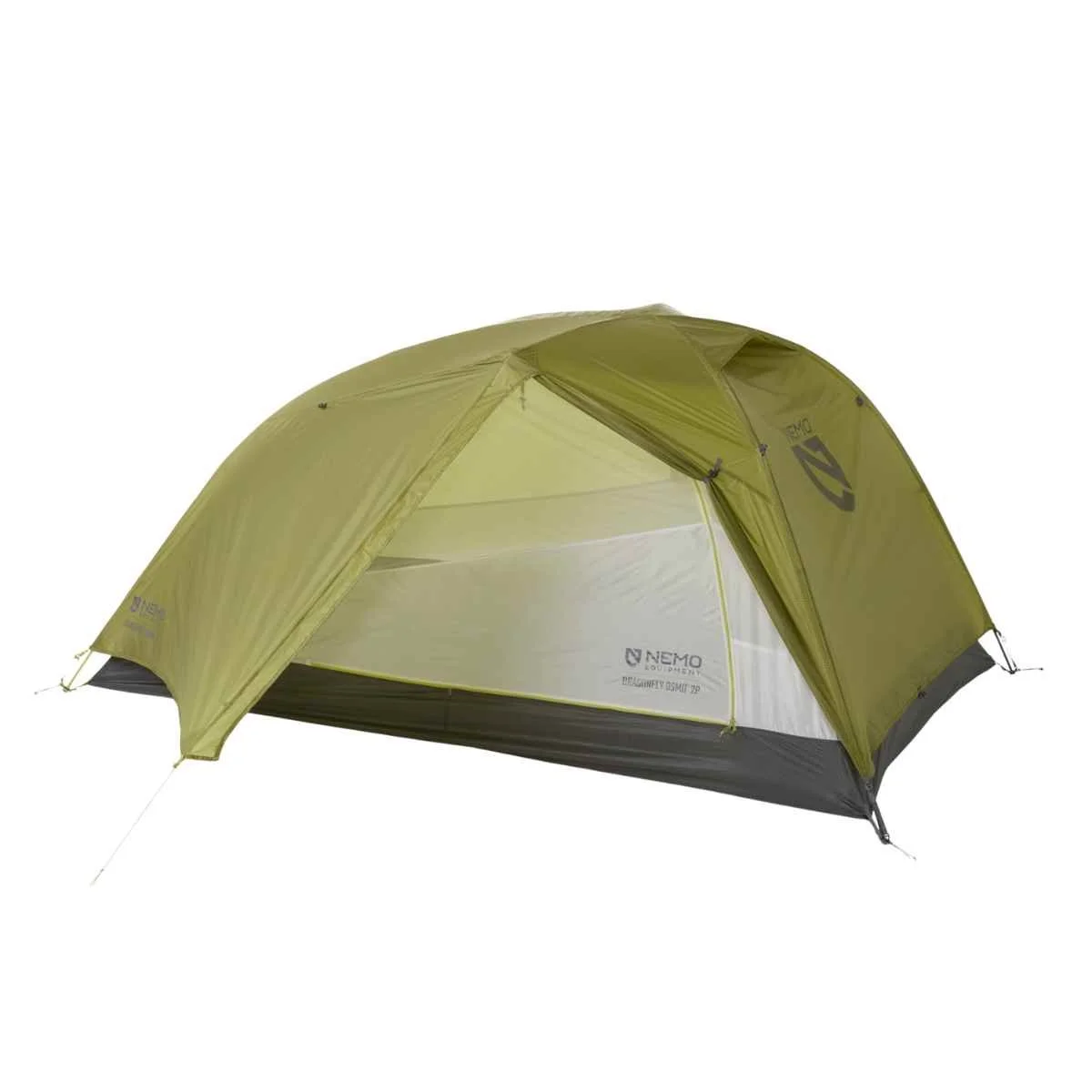
The NEMO Dragonfly OSMO, purely on statistics, is neck and neck with our Best 2-Person tent, the Big Agnes Copper Spur HV UL2. They’re both freestanding with the same packed weight, they have the same length, and the same number of doors and vestibules. The Dragonfly OSMO even wins in a couple of categories: it has larger vestibules, an inch on the Copper Spur’s peak height, environmentally friendly fabric, and a lower price point.
We tested the NEMO Dragonfly OSMO in the 2P size, as well as the 1-person.
We found the pole attachments on the ends—where the tent and fly attaches to the body corners—to be trickier to assemble than some other tents, but otherwise, we have almost no negative feedback—this is a lightweight and comfortable 2P tent with lots of great upgrades.
The NEMO Dragonfly OSMO backpacking tent is best suited for frequent backpackers who want to prioritize comfort, liveable space, and reliable waterproof protection. It’s best for backpackers who don’t mind a little extra weight (compared to say a Hexamid or Six Moons tent) and an asymmetrical design.
See our in-depth review on the newest version of the NEMO Dragonfly OSMO tent here.
Compare Prices Of The Nemo Dragonfly Osmo
1P
2P
3P
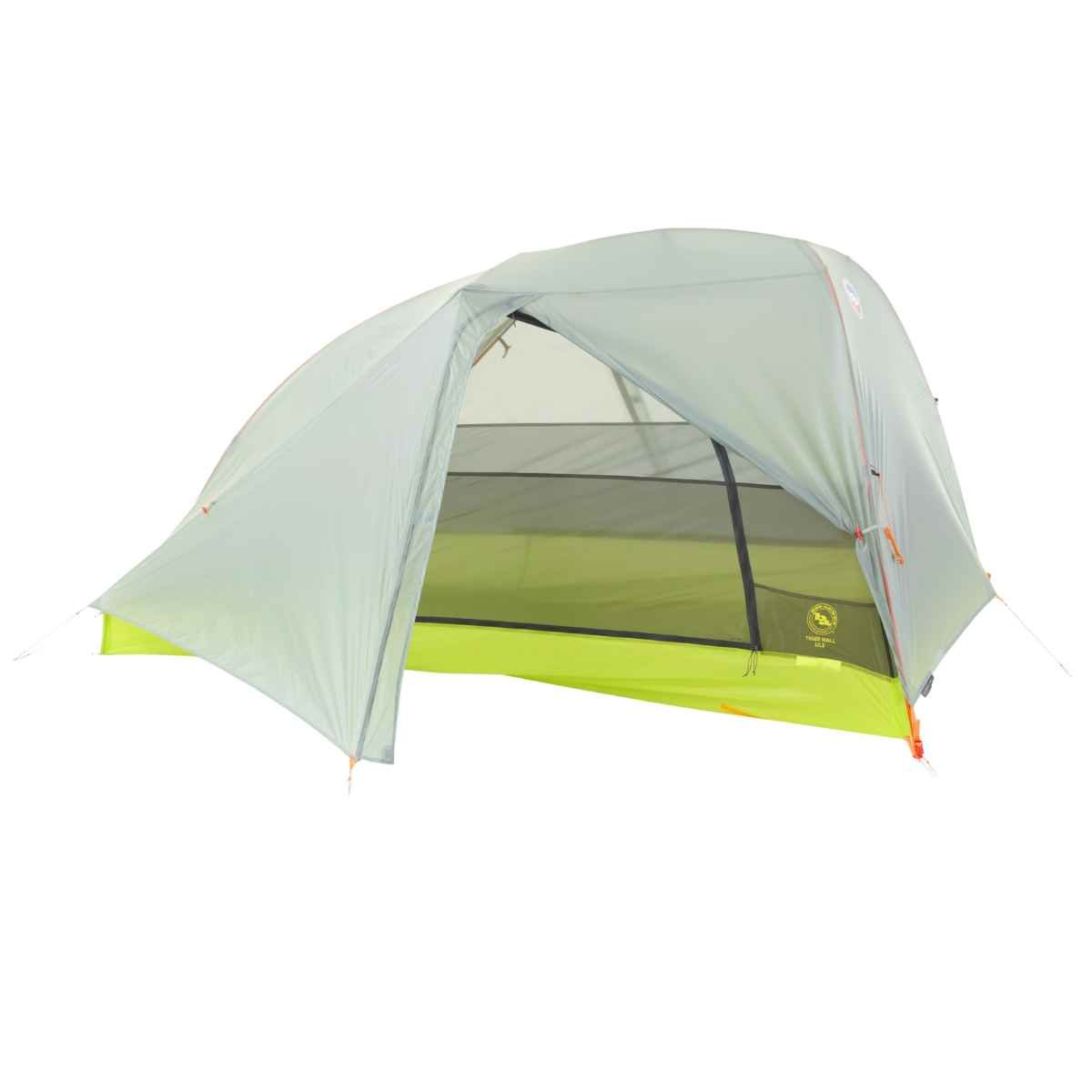
Packed Weight: 2 lbs 3 oz
Minimum Weight: 2 lbs 3 oz
Length/width: 88" / 52”
Height: 39"
Floor space: 28.0 SF
Double/Single Walled: Double
Freestanding?: Semi
Doors/Vestibules: 2 / 2
There's a lot to love about the Tiger Wall, but ultimately we think it sacrifices durability for weight.
For more, read our review of the Big Agnes Tiger Wall.
View The Big Agnes Tiger WalL UL2
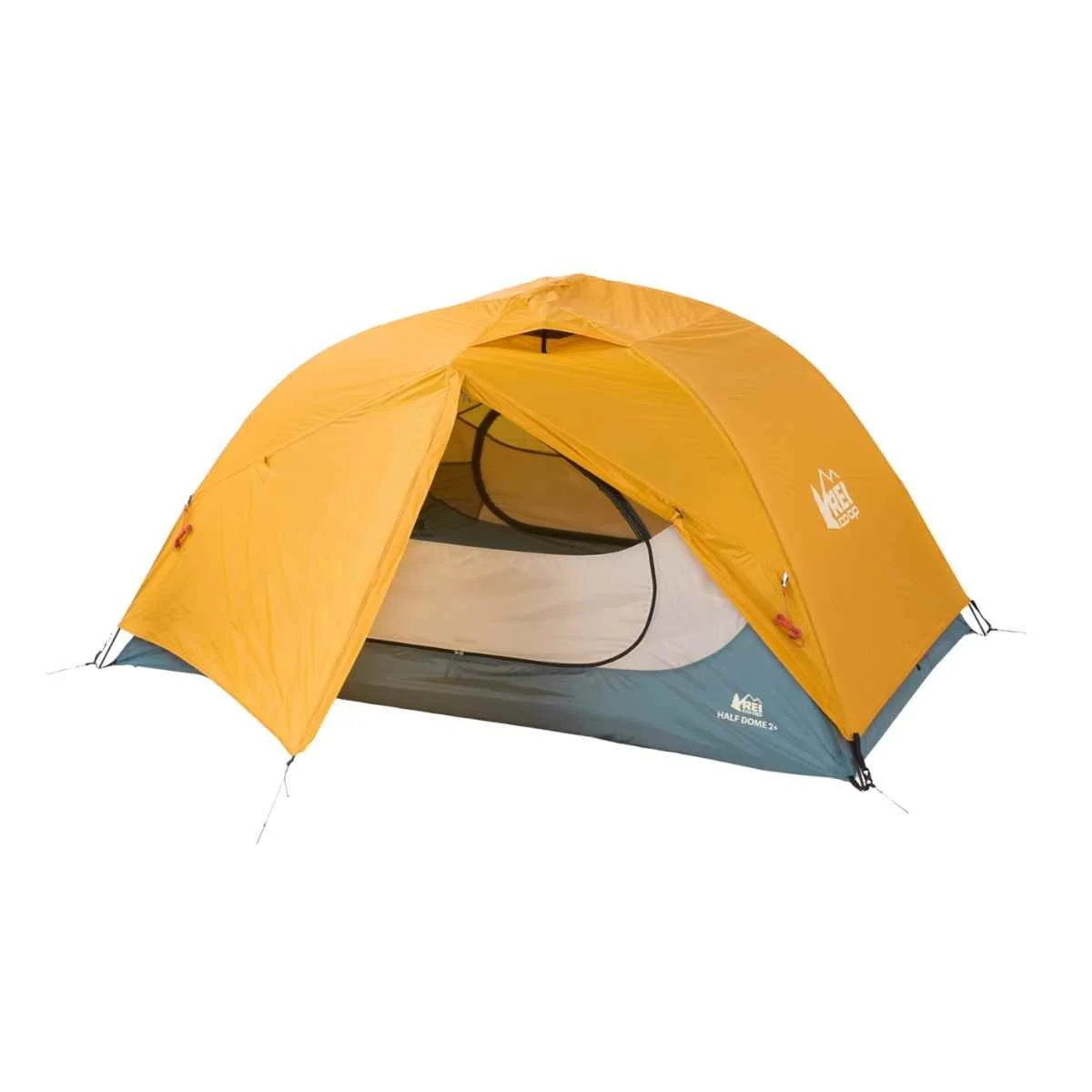
Packed Weight: 4.72 lbs
Minimum Weight: 5 lbs 0.8 oz
Length/Width: 92” / 56”
Floor Space: 33.7 SF
Height: 42”
Double/Single Walled: Double
Freestanding?: Yes
Doors/Vestibules: 2 / 2
The REI Co-op Half Dome 2 Plus with Footprint is a great bang-for-your buck tent. The Half Dome has been in REI's line-up for decades and has been perfected by user reviews of years of iterations.
While marketed as a backpacking tent, we find the REI Co-op Half Dome 2 Plus works best as a camping tent. With a minimum trail weight of 5 lbs 0.8 oz, it's by far the heaviest two-person tent we considered. We recommend the 3-person version because it is so much bigger for minimal additional weight.
REI Co-op Half Dome 2 Plus
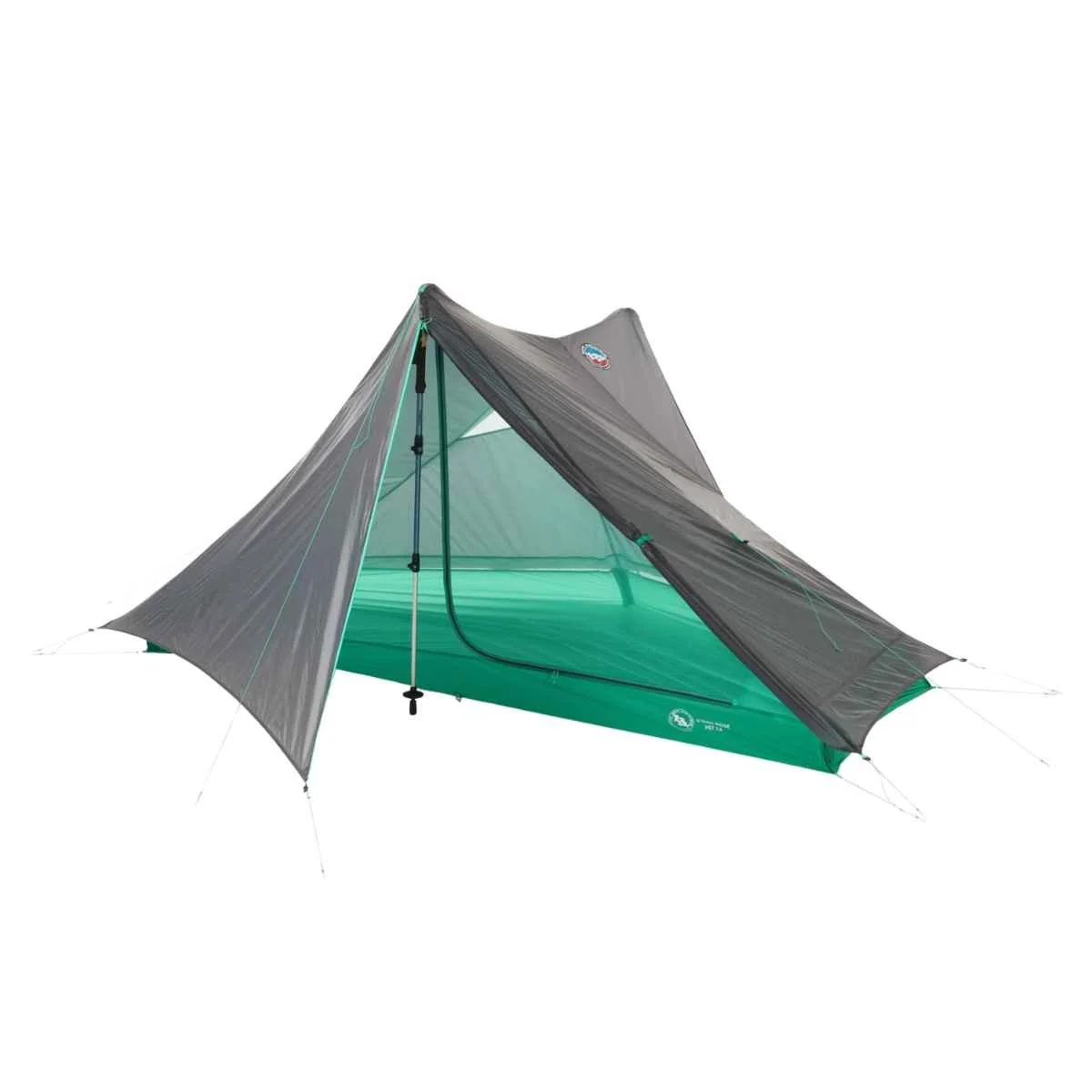
Packed Weight: 1 lb 7.1 oz
Minimum Weight: 1 lb 3.3 oz
Length/Width: 90” / 44”
Floor Space: 22 SF
Height: 47”
Double/Single Walled: Hybrid
Freestanding?: No
Doors/Vestibules: 1 / 1
The Big Agnes String Ridge VST is an ultralight tent for thru-hikers and ultralight backpackers who want to minimize weight by using their trekking poles instead of dedicated tent poles. With minimalist hardware and lightweight, extremely waterproof Hyperbead fabric, it maintains Big Agnes’ attention to detail, including a full bathtub floor and bug netting, all in a 19.3-oz package.
The Big Agnes String Ridge VST is one of the first trekking pole-only ultralight tents that will be widely available at stores like REI, marking a big change in the mainstream-ing of ultralight shelters.
As a tent manufacturer who hasn’t made trekking pole tents before, Big Agnes did a great job on making an ultralight tent that thru-hikers would actually use. It’s expensive for a one-person tent, but if you’re a Big Agnes fan and have always wanted a shelter lighter than the Tiger Wall, the String Ridge VST 1.5 will feel like the perfect home.
See more in our in-depth review of the Big Agnes String VST 1.5 backpacking tent.
View The Big Agnes String VST 1.5
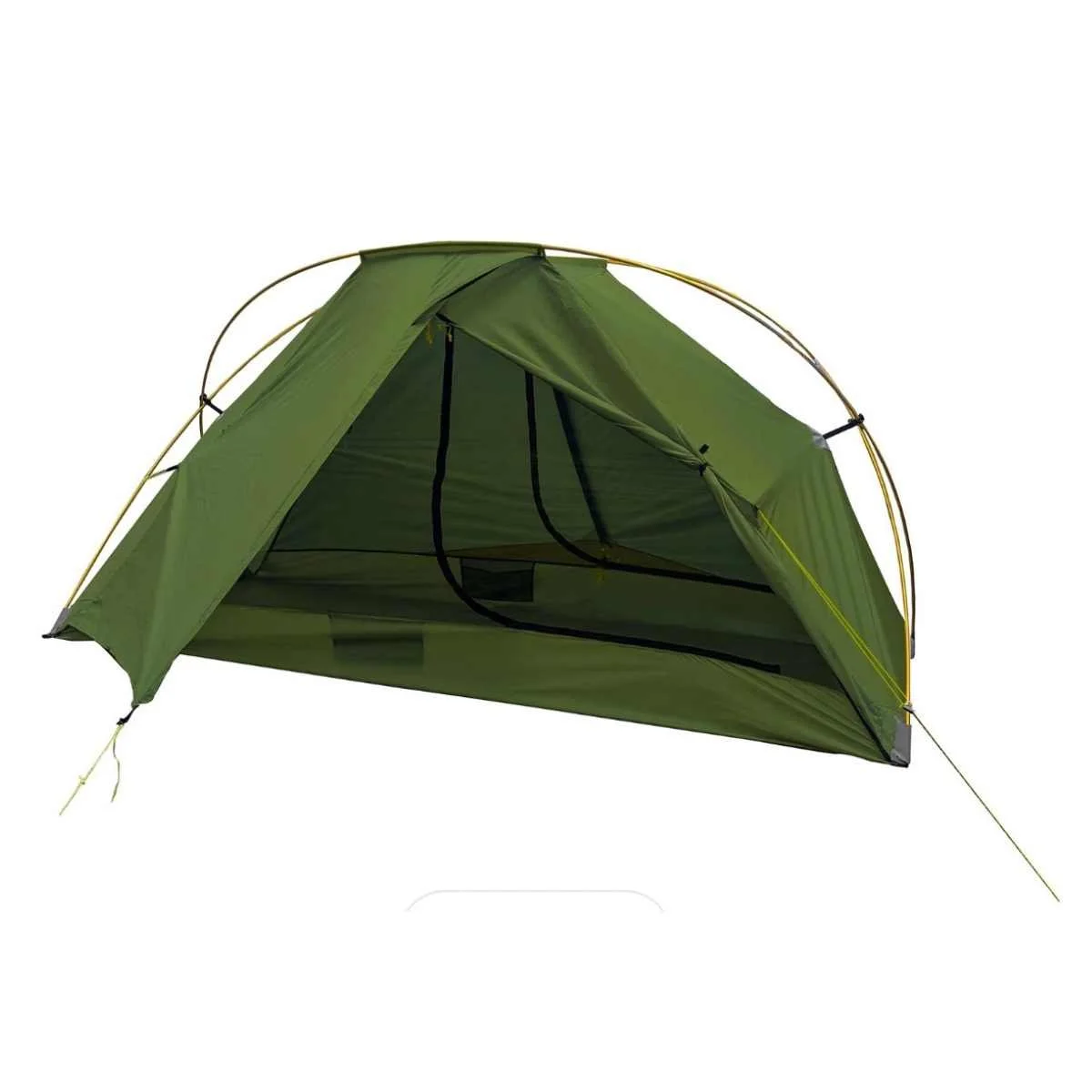
Packed Weight: 2 lbs 12 oz
Minimum Weight: 2 lbs 12 oz
Length/Width: 90” / 34”
Floor Space: 21.5 SF
Height: 48”
Double/Single Walled: Hybrid
Freestanding?: Yes
Doors/Vestibules: 2 / 2
The Six Moon Designs Lunar Orbiter is a lightweight tent for backpacking or thru-hiking, and the first freestanding tent from this ultralight brand. It's cozy with excellent headroom and among the best dual-vestibule storage spaces of any tent in its class. Made with waterproof silicone-coated polyester that doesn't stretch as much as other nylon materials, its dome-like pole geometry makes it among the best performing lightweight tents in the wind and for shedding rain.
With steep walls, this is a tent that maximizes usable space. It has two doors, each with its own vestibule, so you have lots of sleeping space. Seriously, it has almost as much vestibule space as internal space. For organization, it has two internal pockets and a removable gear loft. This tent is very livable and very comfortable.
While heavier and more expensive than many other ultralight tents, including those by Six Moon Designs, this tent is great for a cozy night when the weather is windy, wet, and terrible.
See our in-depth review of the Six Moon Designs Lunar Orbiter backpacking tent.
View The Six Moon Designs Lunar Orbiter
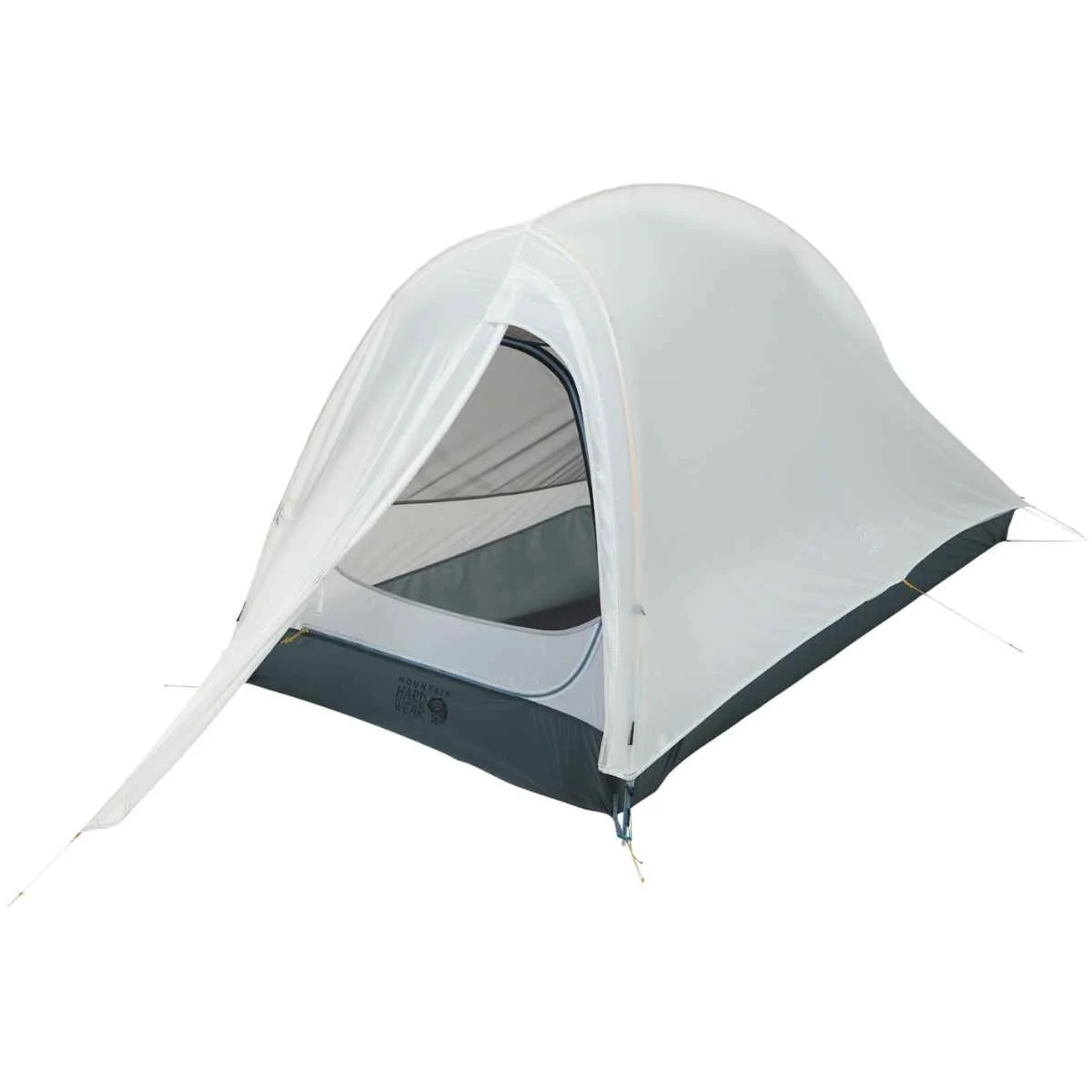
Packed Weight: 1 lb 14.6 oz
Minimum Weight: 1 lb 0.5 oz
Length/Width: 86” / 52”
Floor Space: 28.1 SF
Height: 41”
Double/Single Walled: Double
Freestanding?: Semi
Doors/Vestibules: 1
The Mountain Hardwear Nimbus UL is another great option for a semi-freestanding tent. We like this tent because it withstands high winds really well and is generally great in stormy conditions. The rainfly almost extends to the ground, preventing rain from blowing underneath. It is also extremely packable and lightweight. It also costs less than the Nemo Hornet Elite and the MSR Freelite, the other semi-freestanding tents we tested.
We tested the Nimbus on the Hayduke Trail this spring, backpacking 700 miles across southern Utah and Arizona from Arches National Park to the Grand Canyon. Almost every night of that trip, we set up this tent. Sometimes we only used the inner net tent, so we could see the stars and be protected from buzzing insects.
The only real drawback of the Nimbus is that the door and vestibule are on the head end of the tent. After crawling in and out of this tent every day, then twisting our bodies to get our feet to the other end, we’ve decided that we prefer the side entry door of the Nemo Hornet. But if you don’t mind the idea of crawling into the head-end entryway of a tent every night, the Nimbus is a great tent.
For more, see our in-depth review of the Mountain Hardwear Nimbus tent.
View the Mountain Hardwear Nimbus

Packed Weight: 4 lbs
Minimum Weight: 3 lbs 5 oz
Length / Width: 86” / 43"
Floor Space: 28.0 SF
Height: 39"
Double/Single Walled: Double
Freestanding?: Yes
Doors/Vestibules: 1 / 1
We've used our Hilleberg Anjan 2 GT tent on backpacking trips all throughout the Pacific Northwest for years.
Hilleberg tents are well-designed to minimize condensation and stay durable enough to last a decade or more. But at $200 more than our most expensive winner - and at 4 pounds, 10 oz of packed weight - the Hilleberg Anjan is a tent we love but can't say is suited for most backpackers.
View The Hilleberg Anjan 2 GT

Packed Weight: 4 lbs 13 oz (3-person)
Minimum Weight: 4 lbs 6 oz (3-person)
Length / Width: 90” / 75"
Floor Space: 47 SF (3-person)
Height: 42"
Double/Single Walled: Double
Freestanding?: Yes
Doors/Vestibules: 2 / 2
We are big fans of the new MSR Hubba Hubba LT 3, which is designed to be a more spacious and lighter weight version of their classic backpacking tent. After testing this tent camping and backpacking in Utah and Colorado, we think MSR has nailed their intention with this. The tent has a sturdy structure and full coverage rain fly to withstand bad weather, plus plenty of mesh and ventilation for when the clouds part.
For this particular model, MSR shaved weight in the tent overall, traded a primarily ripstop nylon tent body for one that’s mostly micro mesh, and increased the floor area. So this model is both lighter and more spacious than previous Hubba Hubba models.
This is a great tent for folks who want space, comfort, sturdiness, and weatherproofing in a tent that’s small and light enough to carry deep into the backcountry. However, it runs a lot more expensive than similarly spacious tents we considered.
Read our in-depth review of the MSR Hubba Hubba LT Backpacking Tent Review.
Compare prices of the MSR Hubba Hubba LT

Minimum Weight: 1 lb 3.1 oz (does not include bug net, which is included on all other tents we reviewed)
Length/ Width: 83” / 43"
Floor Space: 63.0 SF
Height: 39"
Double/Single walled: Single
Freestanding? No
Doors/Vestibules: 1 / 0
The Hyperlite Mountain Gear 2 Pyramid Tent is a winner in our Best 4-season tent guide. It's a single-wall shelter without a bug net and a pyramid shape tarp. It's 1.2 pounds for just the tarp, which is the second lightest tent we considered.
However, it does not include a bath tub floor or bug netting. Ultimately, even the most ultralight tents in this guide have those features and the UltaMid 2 does not. You can add in the optional UltaMid inner tent, but together, the cost $more than $1000 (or even more for the DCF bathtub floor). Like all inner tent add ons, it also adds weight--in this case, 1.2 lbs. As much as we like the UltaMid 2, we think that price and extra weight is steep for a tent with bug netting. Still, if you like the modularity and flexibility of having a tarp that only sometimes needs an inner, this is a much-loved and highly-rated tent that we like a lot for 4-season trips and will perform well during 3-season backpacking, too.
Compare prices of the Hyperlite Mountain Gear Ultamid 2
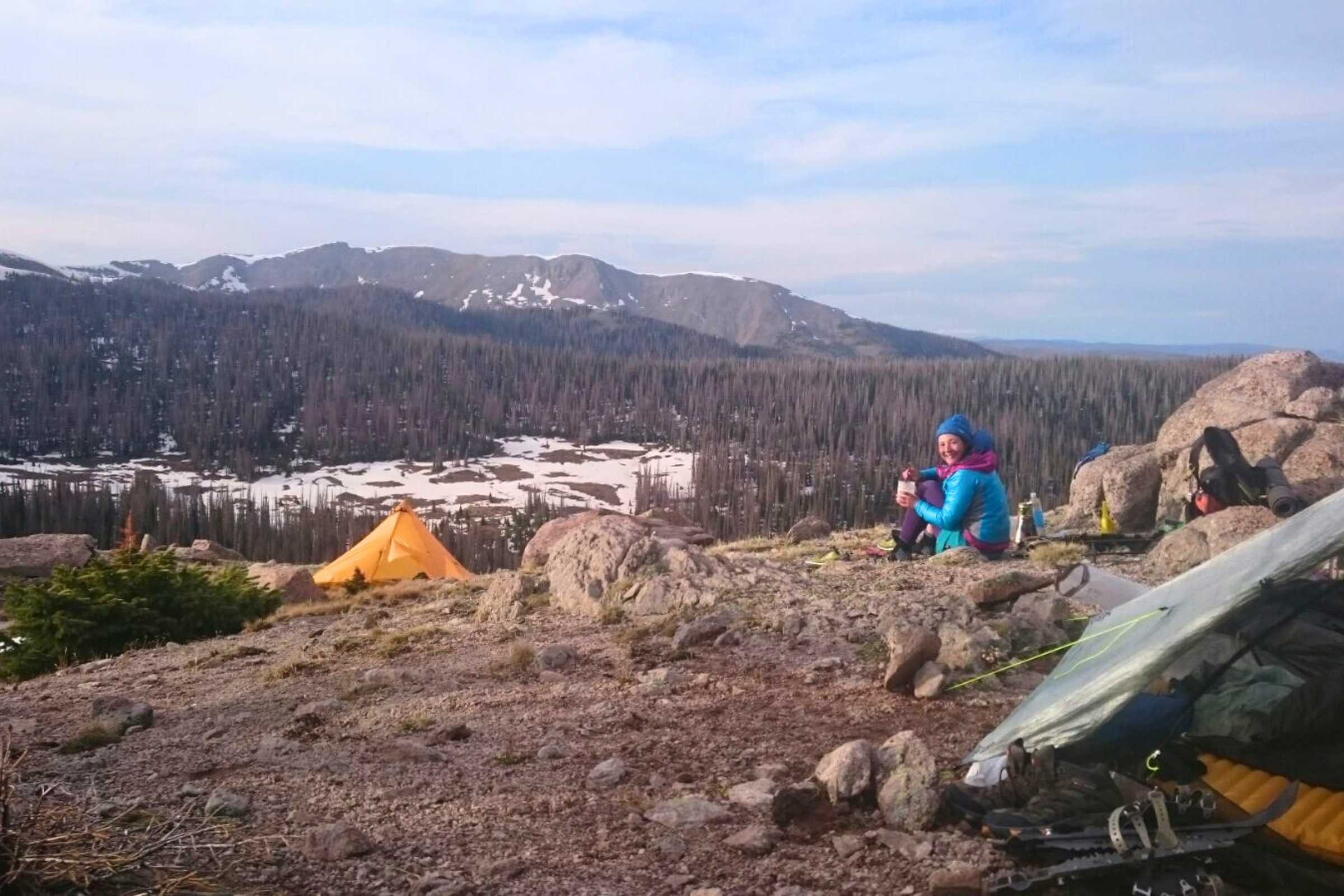
Treeline Review editor Liz Thomas backpacking in the San Juan mountains of Colorado.
What to look for in a backpacking tent
Using the following criteria (aside from price), we narrowed that list down the most popular hiking tents that should fit the needs of most backpackers.

Tent square footage for each of the tents we considered. Graphic by Naomi Hudetz.
Tent Sleeping Capacity
Most backpacking tents have an advertised sleeping capacity of one, two, three, or four people. The stated capacity, however, is not always appropriate for all sleepers. Always check the measurements on a potential tent to be sure it will fit your needs, particularly if you’re tall or traveling with a human or canine companion. Length and width are important, as is knowing whether or not a tent narrows at the feet to save on weight. If you’re going to be spending more time in your tent, for example on trips with poor weather where sitting out storms is an inevitability, find one with a height comfortable to sit up in.
The number of doors on a backpacking tent is generally suggestive of the tent’s capacity as well. One-door models are better suited for one person, where two-door models are less cumbersome for two people to use, especially at night for bathroom breaks. Even among, for example, models built for two people, some are roomier than others. For example, the NEMO Hornet Elite OSMO is a better choice for one person and their gear, though you can squeeze two people in if you need to.
Can My Tent Stand On Its Own (Aka Is It A Freestanding Tent)?
If you’re backpacking in places with significant rock or sand—where you might not be able to get a tent stake into the ground—a freestanding backpacking tent might be right for you. Freestanding tents can stand on their own, without the use of stakes or guylines. Of our winners, the Marmot Tungsten 2P, the Big Agnes Copper Spur, and the REI Co-op Half Dome SL 3+ are all freestanding. Though these tents can be pitched without the use of stakes, a tent is always sturdiest when properly staked out, so we recommend staking and securing guylines in all but the best of weather. Freestanding tents tend to be heavier, though more and more ultralight brands are coming out with freestanding tents, most notably the Gossamer Gear The Free tent we recently reviewed.
Semi-freestanding tents can work with or without stakes and are usually lighter in weight than their freestanding counterparts. The drawback? They lose precious room and weatherproofing when not staked out. The NEMO Hornet Elite Osmo and the Tarptent Double Rainbow DW are both semi-freestanding.
Non-freestanding tents must be staked out to stand. The Zpacks Duplex and the Six Moon Designs Lunar Solo, Lunar Duo Outfitter, and Skyscape Trekker are all non-freestanding. (The Zpacks Duplex has the ability to become freestanding with the Duplex Freestanding Flex Kit, sold separately.) While we recommend learning to set up any tent before heading into the backcountry, non-freestanding tents especially require practice to get a tight pitch if you’re coming from a freestanding or semi-freestanding shelter.

The tent on the left is a single-wall shelter (the Mountain Laurel Designs Solomid, a winner in our Best Ultralight Tents guide). The tent on the right is a double-wall shelter (the Nemo Dagger, which we did not test for this guide). We used the two side-by-side in Buckskin and Paria River in Utah.
Double Wall Vs. Single Wall
Double-wall backpacking tents provide two layers of protection between sleepers and the elements: a tent body, often primarily mesh, and a rain fly, made of weatherproof, protective material. Because of the extra material, double wall tents usually weigh more than single-wall tents. The Marmot Tungsten 2p, the NEMO Hornet Elite OSMO, the Big Agnes Copper Spur HV UL2, the REI Co-op Half Dome SL 3+, the REI Co-op Trail Hut 4, and the Tarptent Double Rainbow DW are all double wall tents.
Single-wall backpacking tents only have one layer of protection, and often (but not always) cost less than double wall tents. Both single-wall and double-wall tents will keep rain out of the tent. However, double-wall tents are better at keeping interior condensation off of you and the gear inside your tent, since the condensation forms on the rain fly and runs down the sides. With single-wall tents, the interior condensation forms on the interior tent wall where it can drip onto your sleeping bag or other gear, especially when you touch the tent sides with your head when you sit up, or the foot of your sleeping bag as you shift during the night. The Zpacks Duplex and Six Moon Designs Lunar Solo, Lunar Duo Outfitter, and Skyscape Trekker are all ultralight tents and are all single-wall shelters.

Gear storage including pockets and hooks can come in handy. Photo by John Carr.
Gear Storage
While no one quite brings the kitchen sink, everyone has different ideas about how much gear to bring on a backpacking trip. Some prefer as many comforts as possible, whereas others are looking to cut weight where they can. Storage options give you a place to stash a headlamp or glasses — things you want to keep handy.
But more storage options mean more fabric weight — something many of our ounce-conscious readers are looking to avoid. For our backpacking tent winners, we selected tents with a range of storage options.
Ease of Setup
Freestanding and semi-freestanding tents either use fabric sleeves or plastic clips to secure the body of the tent to each tent pole. While pushing the pole or poles through fabric sleeves was once more common, attaching clips to each pole instead generally provides a faster, easier setup that’s less prone to tearing the tent’s fabric or accidentally poking through it. The Tarptent Double Rainbow DW still features the older sleeve design, while the Marmot Tungsten 2p, NEMO Hornet Elite OSMO, Big Agnes Copper Spur HV UL2, REI Co-op Half Dome SL 3+, and REI Co-op Trail Hut 4 all feature the newer clip design.
The Zpacks Duplex and Six Moon Designs’ Lunar Solo, Lunar Duo Outfitter, and Skyscape Trekker don’t have poles at all, and rely instead on trekking poles and guylines to loft the tent fabric.
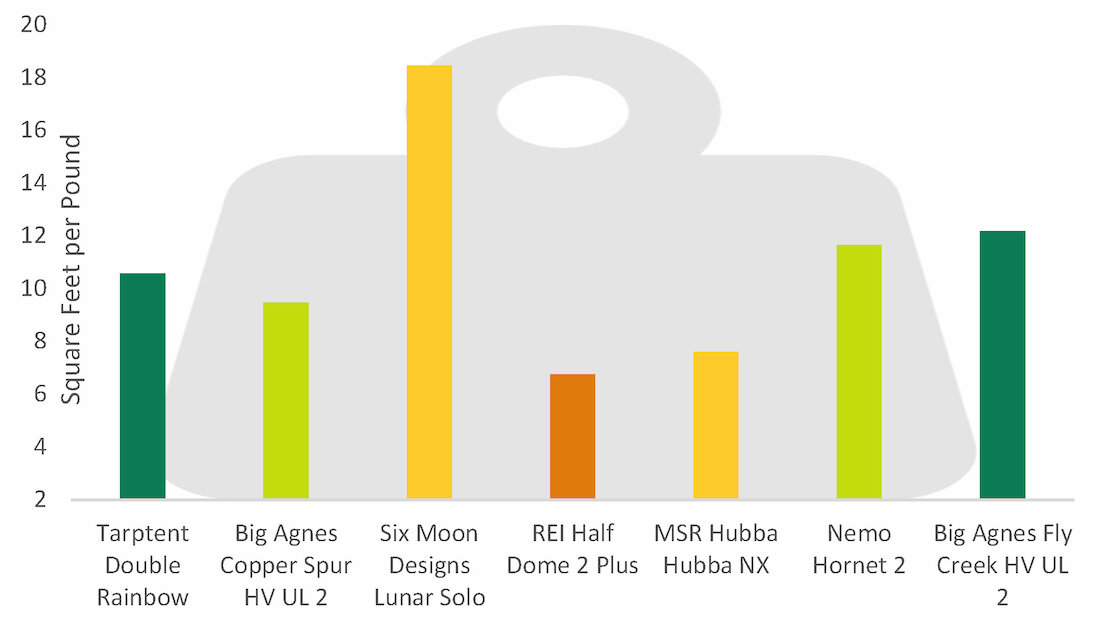
Weight of the tent per squarefoot of space. Design by Naomi Hudetz.
Weight
While ultralight backpacking shelters are a subject for another review, weight is still a concern for those carrying their tents down a trail for miles at a time. More room and storage in a tent generally means more fabric, and more weight to carry. More doors and vestibules means more zippers and added weight as well.
Although we don’t recommend it, if you intend to pitch your semi-freestanding backpacking tent as a freestanding tent, you won’t need stakes, which means less weight to carry. If you expect to encounter any wind, though, you'll still want to carry stakes.
The Zpacks Duplex and Six Moon Designs Lunar Solo, Lunar Duo Outfitter, and Skyscape Trekker don’t come with tent poles and use a trekking pole set-up to further reduce tent-specific weight (obviously, you still have to carry hiking poles, but at least they are multi-use). This design is common in ultralight shelters, which we will discuss in an upcoming story. With the Zpacks Duplex, you can purchase a freestanding kit if you prefer to have poles on hand; for the Six Moon Designs tents, you can purchase poles for that specific use (for example, if you are bikepacking and won’t have trekking poles).
All weights mentioned for our winning tents are fully packed weight, to indicate the combined weight of the tent and accessories. Many tent manufacturers will also list trail weight for each. These tend to be lighter and are a measurement of the tent body and fly without stakes, stuff sack, or extra cord.

Midges on the bug netting of the Zpacks tent we tested on the West Highland Way in Scotland.
Bug Proof
There are many ultralight shelters and tarps available these days that do not include bug netting. We did not include any of them in our guide to the best backpacking tents. Why? Because we think you’ll get the best night’s sleep if you have a way to keep bugs away from you. Nets don’t just keep away bugs, but they will also help keep out other creepy crawlies.

When backpacking with many others, you may find it difficult to fit all the gear in the back of your car. The light-colored stuff sack towards the middle of the vehicle is a two-person backpacking tent.
Packability
If you have limited room in your backpacking backpack or in your car, you may consider how small your backpacking tent packs down.

Dry out your gear everyday, even when on trail and especially after your trip is over but before storage. Photo by John Carr.
Quick drying
We recommend drying your tent every single day on your backpacking trip, even when it didn’t rain. This helps keep mildew from building on your tent and keeps you more comfortable night after night. Some fabrics, like silnylon, may take longer to dry than other fabrics that don’t absorb water, like DCF.
Slope of tent walls
Some tents, like the Zpacks Duplex, have sloped walls. So while technically, the length of the floor is the reported length, just a few inches above the floor, the story is much different. This means if you're over 6 feet in height, if you don't want your nose hitting the slope of the tent wall, a tent rated to 6 feet isn't going to cut it.
Even if you aren't tall, if you use a Backpacking Pillow or use a stuff sack of clothes under your head as a pillow, you're going to want to care about the slope of your walls. This is true too if you have an inflatable sleeping pad that is over 3 inches in height. We note when sloped walls impact people's sleep (aka, the tent's ceiling is dangling in our face or hitting the toe box of our sleeping bag) and when a tent's length is functionally the length.
FAQ
-
3-season backpacking tents are made to be used in spring, summer, and fall and they are not ideal for cold and snowy environments. 4-season tents can be used all year, including winter, but they are most ideal for cold environments. 4-season tents often don’t have mesh paneling on the tent body like most 3-season tents. This makes them warmer in winter conditions, but can also make them unbearably hot in the summer because of the lack of extra airflow and ventilation. Because of the extra material, 4-season tents are often a bit heavier than similar 3-season tents (though that’s not always the case). If you backpack primarily in warm-weather conditions, a 3-season tent will be the best option.
-
Weights for backpacking tents vary depending on size, features, materials, and other factors, but they are all far lighter and more packable than their car camping counterparts. A good rule of thumb is that your tent weight should be about 2-3 pounds per person it sleeps. That means if it’s a single tent, it should ideally weigh less than 3 pounds and a 3-person tent should stay below 9 pounds.
-
This depends on the size of the tent you choose. Backpacking tents can range from tiny single tarp shelters to spacious abodes that can host a family of five. A tent’s name and/or description should indicate the number of people it sleeps.
-
Backpacking tents are designed to be light enough to be carried along the trail into camp, and this weight savings often means that they’re not quite as beefy as car camping setups where weight isn’t really a concern. But like most outdoor gear, backpacking tents are versatile and can be used for regular camping in a pinch. But remember, they won’t offer the same spaciousness or durability as car camping tents.
-
The lifespan of a backpacking tent depends largely on how frequently you use it and how you take care of it. A good backpacking tent should last dozens if not hundreds of nights in the backcountry. If you’re thru-hiking a long trail, that means you may only get one summer out of your tent. But weekenders and casual backpackers should be able to get several seasons out of a tent.
If you want to extend the life of your tent, there are a few things you can do to maintain it. First, always let it dry completely before storing and shake any dirt and dust out.
Cleaning the tent occasionally with a tech wash and applying a refresh of water repellent on the fly every once and a while can also help it function well. See our guide on How to Wash a Tent for detailed instructions.
Use a ground tarp or tent footprint underneath your tent to protect the floor and be conscious of what your tent is sitting on top of. If you find a hole, patch it as soon as you can to avoid it getting larger, and keep your zippers in good shape by cleaning them as necessary. See our guide to How to Repair a Tent or How to Fix Zippers in Outdoor Gear for step-by-step instructions.
-
Backpacking tents are designed to protect against elements like wind and rain, not curious or hungry animals. Never store food or scented items in your tent in areas where wildlife is present. For food storage, follow local guidelines or use a bear canister if needed.
-
A ground tarp or tent footprint is not always necessary to have under your tent, but it can help to keep the tent floor from getting damaged. It does add more weight to your setup, but if you’re camping in a particularly rocky area or somewhere where your tent floor is more likely to get holes, it’s a good idea to have this.
-
Sometimes packing a wet tent is inevitable when you’re out on the trail. If you have the opportunity and time for it to dry out before stuffing it in your pack, that’s ideal but it’s not always possible. What’s most important is that you let the tent dry completely before storing it once you’ve returned from a trip.
Why you need a backpacking-specific tent
When I started backpacking, I made the classic mistake of borrowing a car camping tent. It was a perfectly good tent. It was also eight pounds. I know this because I felt every single one of those pounds on every uphill for three days straight. I donated it to a thrift store shortly after.
The weight difference between a car camping tent and a backpacking tent is not subtle. Car camping tents for two people often weigh eight to ten pounds or more. Our backpacking tent winners typically weigh between one and four pounds. That difference, spread across a full day of hiking, is the difference between arriving at camp feeling good and arriving at camp wondering why you do this to yourself.
The weight savings come from specialized fabrics like silnylon, silpoly, and Dyneema Composite Fabric, and from design choices that cut everything that isn't essential. Backpacking tents are smaller in floor area than car camping tents, which means less fabric and less weight. They use lighter poles. They compress down to roughly the size of a large water bottle rather than taking up a quarter of your pack.
Beyond weight, backpacking tents are designed for the specific conditions you encounter on trail. They pitch low to the ground to shed wind more effectively than the tall box designs of car camping tents. They ventilate strategically to reduce condensation in humid conditions. They set up quickly in rain, in fading light, and on uneven or rocky terrain where a larger tent simply wouldn't fit. Most freestanding models can be pitched on rock or packed snow where stakes won't go in at all.
They also dry faster in the morning, which matters more than you'd think when you're trying to pack up and get moving before the heat sets in or a storm rolls through.
If you're planning to carry your shelter more than a parking lot's distance, please get a backpacking-specific tent. Your back will thank you by day two.
Care and maintenance
Here are a few ideas we’ve found handy when choosing and using a backpacking tent for ourselves:

The view from inside a tent. Photo by John Carr.
If you’re not sure whether a tent's interior space will be wide or long enough for you, consider using masking tape to tape out the tent's floor dimensions on your floor at home. Layout your sleeping pads in that tape-tent to see if they fit comfortably. The walls of any tent will slant in at least a little, so make sure you have a few extra inches on all sides to allow for enough interior space for you and all your gear.
If you’re planning to spend an extended amount of time in your tent, or camp for many nights in a row, a good rule for choosing a lightweight tent — those at or around two pounds — is to purchase a tent designed for one more person than will be sleeping inside. For one person, a two-person tent will provide enough room for stuff and gear. For two people, a three-person tent might be best. If you’re going on the occasional backpack, a two-person tent for two people will work—but don’t expect to have a ton of room.
Before you pack up for your trip, make sure your tent is seam-sealed to prevent potential water leakage at sewn seams. Many tents come from the factory seam-sealed, but others, like the Tarptent Double Rainbow, do not. We like the Gear Aid Seam Sealer. It also comes in a silicone silicone version for silicone-coated tents (silnylon and silpoly), so be sure to choose the right one for your tent. Find a dry place and budget a few hours. This is also a great time to attach guylines and add more if you need them.
The best way to stay dry in a rainstorm? Location, location, and pitch. When you’re looking for a spot, you’re ideally looking for the ground to be at an ever-so-slight incline under a copse of trees with enough space for you to secure all your stakes and guylines. The incline will prevent water from pooling under your tent, and the trees will reduce your exposure to wind, rain, and condensation. None of these will save you if you don’t have a tight pitch, though, so make sure you get enough tension in your tent by staking it out before setting it up with the poles. And pitching the nose of the tent—the side with the least surface area—into the wind will lessen the risk of pole bending or snapping.
And another thing on location: Leave No Trace by camping 200 feet from water and trails to protect the environment and others’ experiences.
If possible, avoid allowing your tent’s slanting tent walls from touching your sleeping bag. When condensation on the inside of the tent touches your sleeping bag, it can get it wet, which reduces its insulating properties and can make you sleep colder.
If you’ve got to pack your tent up wet, try to pack the rain fly separate from the body. (Many backpackers put the fly in the outside mesh pocket of their backpack.) Make time to dry it during the day. Setting up and sleeping in a wet tent, even on a dry evening, is no fun.
Preserve the life of your tent by cleaning it. Make sure you empty the tent body before you put it away to prevent abrasion from rocks and other junk while in your pack. In between trips, apply zipper lube to make the zipper last longer (don’t make the mistake of thinking lip balm will achieve the same goal—we learned the hard way). Before storing your tent for extended periods of time, make sure the tent is clean by soaking it in a bathtub of cool water, and hang it out until it dries completely. This additional care will extend the life of your tent. Learn more in our How to Wash a Tent guide.
We get into how to repair tents in How to Repair a Tent | Rips, Leaks, Broken Poles.
If the zipper goes, see How to Fix a Zipper on Outdoor Gear
How we researched and tested
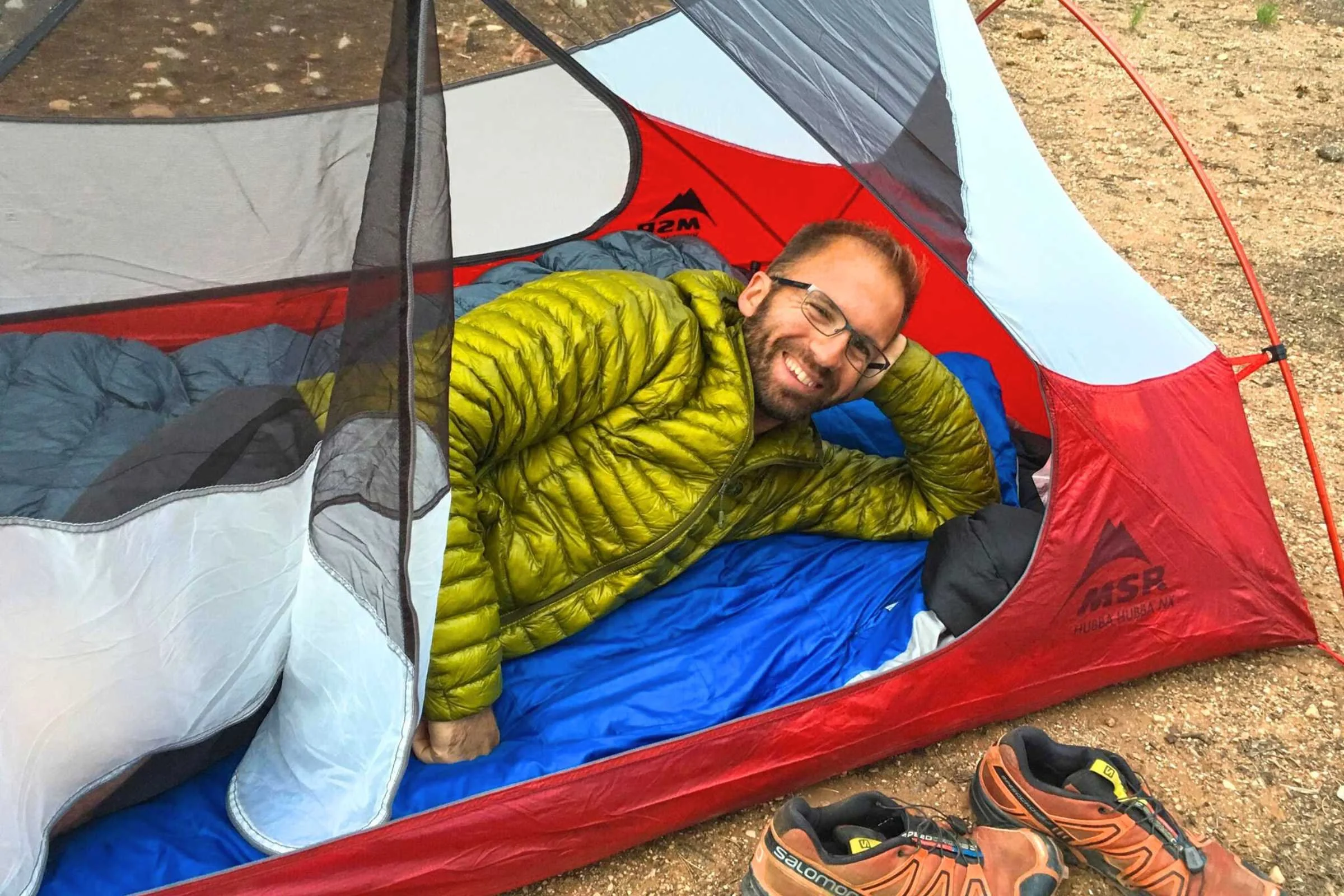
We tested backpacking tents on trips of all lengths—from overnight trips to thru-hikes to camping in campgrounds. We think the best backpacking tents will keep you happy when tailored to how you spend your time outdoors.
Your backpacking tent is pretty much a superhero. It shields you and your gear from the bugs and the elements while you sleep. But hiking tents also need to be lightweight enough to carry with you up the trail, small enough to fit into less-than-ideal campsites, and easy to set up with practice. The rain fly should be well-ventilated to keep condensation to a minimum, and designed well enough to keep you warm and dry even in the windiest and wettest of conditions.
Over 7 years, the Treeline Review team and I have tested over 3 dozen backpacking tents on thru-hikes, overnighters, mountain summits, car camping, and walk-in campsites. We've used these backpacking tents on and off trail, on established paths and on first known takes on new routes, as well as set up next to our car at car camping sites on road trips.
Here are some of the places we have tested:
Our testers used these backpacking tents on:
Overnight camping trips in Joshua Tree and Anza Borrego Desert
Alpine climbing trips in the Sierra and Trinity Alps
Hot spring backpacking trips on the coast
Backpacking trips on the High Sierra Trail and California Riding and Hiking Trail and Boy Scout Trail
Thru-hikes of the 2,200 mile-long Appalachian Trail
A thru-hike of the Pacific Crest Trail
Thru-hikes of the ~2,900 mile-long Continental Divide Trail
Thru-hikes of the 1,200 mile-long Pacific Northwest Trail
Thru-hikes of the Great Divide Trail
Multiple thru-hikes of the Colorado Trail
Multiple thru-hikes of the Grand Enchantment Trail
Multiple thru-hikes of the Arizona Trail
- Thru-hikes of the PCT, CDT, AT & PNT
- Colorado Trail, AZ Trail & Grand Enchantment Trail
- Alpine climbing in the Sierra & Trinity Alps
- Desert camping in Joshua Tree & Anza Borrego
- Coastal hot spring trips & High Sierra backpacking
- Waterproofing & seam sealing in sustained rain
- Interior dimensions for real body sizes & sleep styles
- Pitch speed in dark or deteriorating conditions
- Weight distribution for solo vs. shared carries
- Condensation management in humid conditions

The author, Amanda Jameson, on her Pacific Crest Trail thru-hike. Photo courtesy Amanda Jameson.
Why you should trust us
I’m Amanda, trail name Zuul. I’m not particularly new around these Treeline Review parts; I’ve written on backpacking gear here, so you might have seen my pieces on Rain Jackets, Water Filters, and/or Trekking Poles before.
I’ve also written about going stoveless (and my Pacific Crest Trail thru-hike) for Backpacker Magazine, and about being outside for Griots Republic.
I’ve got right around 3500 miles under my feet, and I walked 3300 of those miles solo, beholden to nothing but the whims of nature and my on-again-off-again hiker hunger. Between those miles and a year as a Subaru/Leave No Trace Traveling Trainer, I’ve spent nearly a year of my life sleeping on sleeping pads - in deserts and lush valleys, on mountainsides and beachsides.
I’m still a Leave No Trace Master Educator, and am a former board member of the American Long Distance Hiking Association-West. I also run the blog Brown Girl on the National Scenic Trails, and consult on justice and equity in the outdoor and non-profit spaces. You can see all my Treeline Review articles on my author page.