Best Snowboard Jackets of 2026
Slope-tested jackets that offer the best comfort, warmth, and ventilation from resorts to backcountry
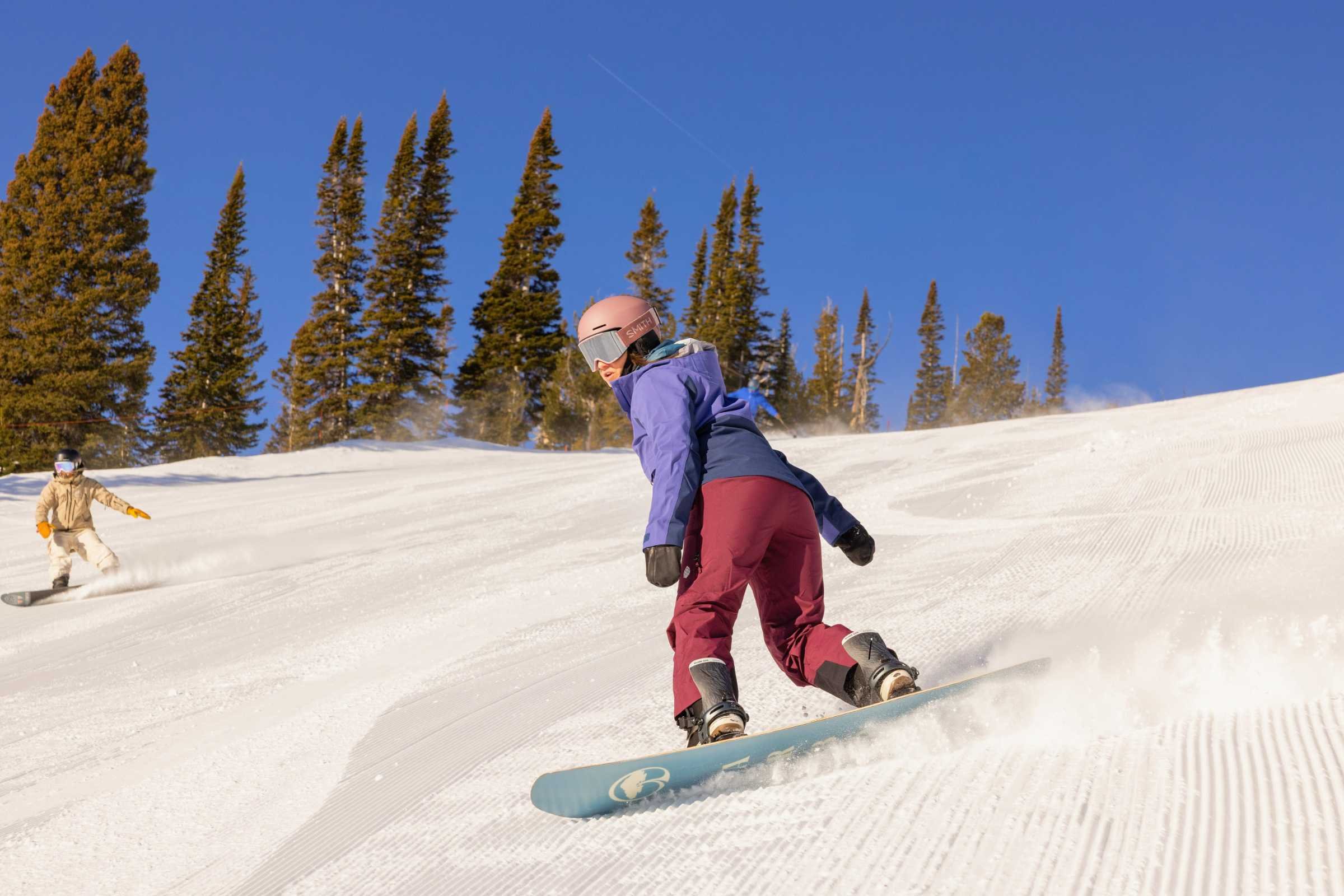
Photo credit: Jay Nel-Mcintosh
February 23rd, 2026
Home > Gear Reviews > Ski & Snow
To determine the Best Snowboard Jackets, we tested 13 jackets while snowboarding in the mountains of Colorado, Wyoming, and even Japan. We compared them back to back across a range of weather conditions—warm, sunny days with little moisture to cold, windy days with dumping snow. We wore them in-bounds on groomers, tree runs, and moguls, but also while touring and hiking in the backcountry.
When testing snowboard jackets, we tested technical features like waterproofness, breathability, windproofness, and overall warmth. We also evaluated the number and type of features, with bonus points for sustainability or recycled materials. We evaluated each jacket on its own but also compared it to others, and took into account where each jacket would be best suited—the backcountry, the resort, or the park. Lastly, we considered other relevant factors such as inclusive sizing, price, and style.
Snowboard jackets differ from ski jackets in that they tend to have a slightly baggier fit and longer hem than ski jackets. The looser fit allows for extra mobility when carving or whipping through trees, which requires you to use your core and upper body more for balance and stability when riding. A longer hemline provides just a little bit more protection for snowboarders, who sit on the ground much more often than skiers. Snowboarding became popular in the 90s, and riders typically sport a baggier look with bolder patterns for a more freestyle vibe compared to ski jackets' clean-cut, sleek look.
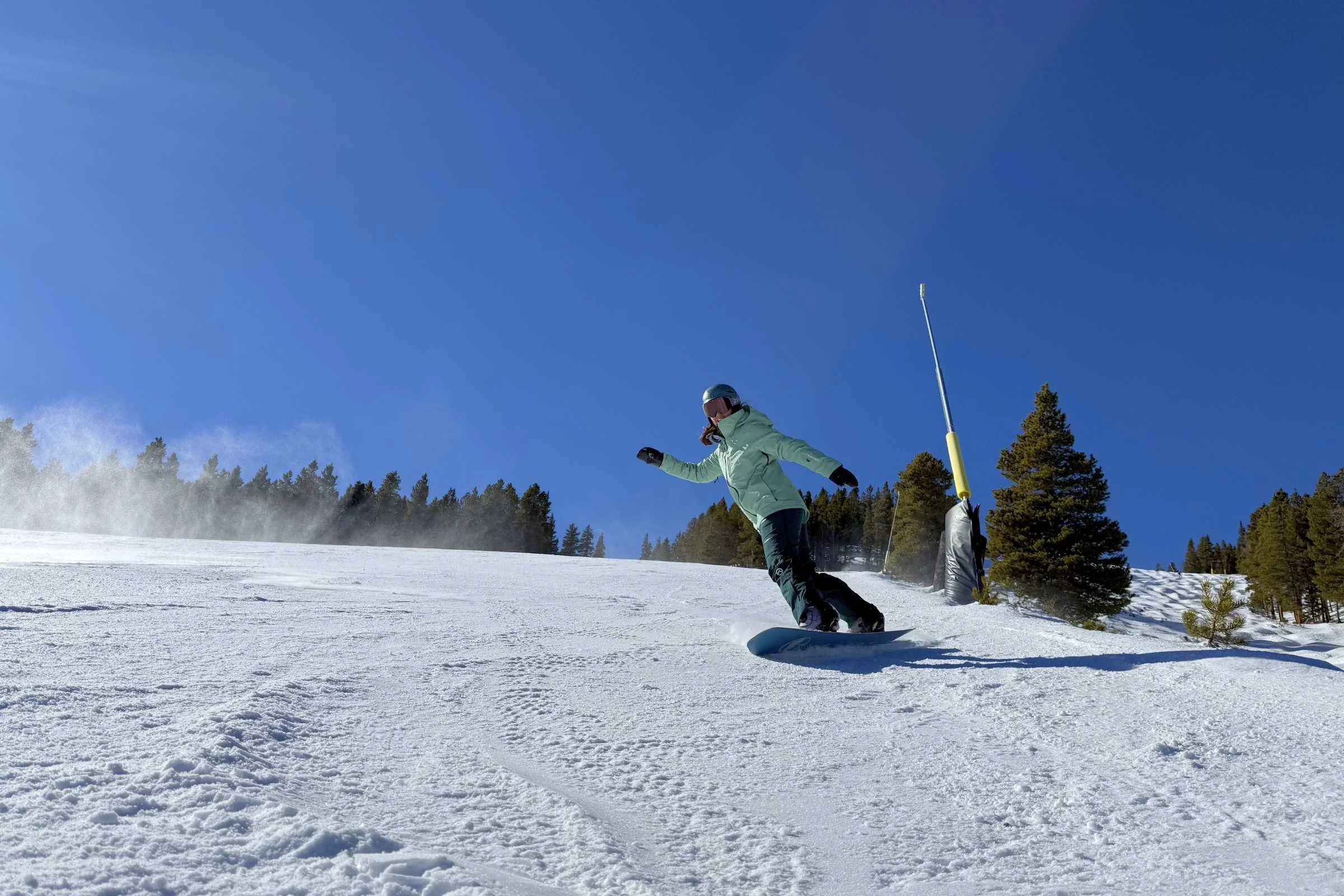
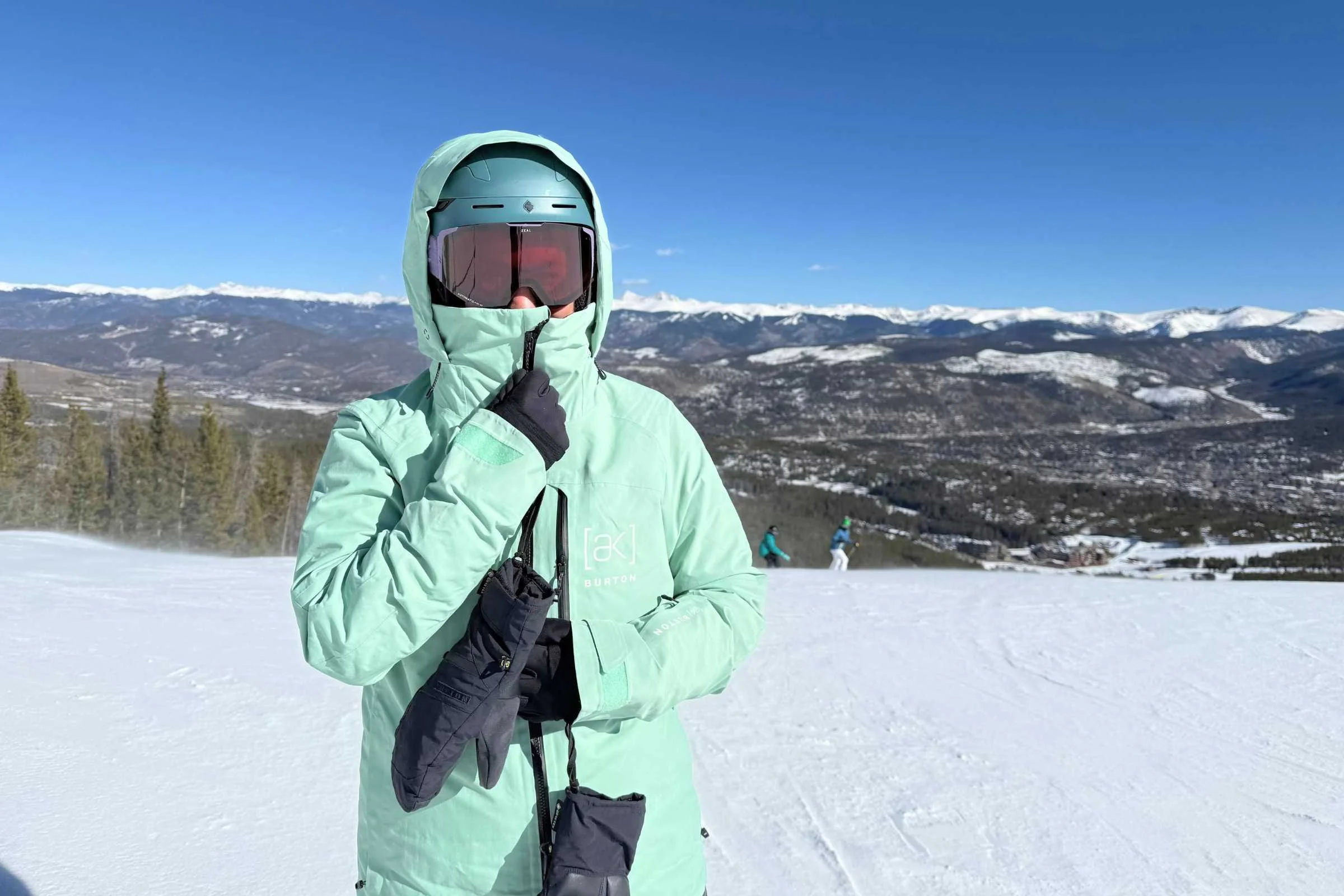
Our pick: Our best overall snowboarding jackets are the Burton [ak] Embark GORE‑TEX 2L (women’s) and [ak] Swash GORE-TEX 2L (men’s) jackets. They provide top protection against water and wind with a GORE-TEX membrane and are still breathable for when you hike. They have very lightweight, slim insulation that kept us very warm without any bulk, unlike other jackets we tested. The protection, ample features, and stylish look made the Embark an easy top choice.
Learn more about our top picks, buying advice, and more in this guide. For our top picks in ski, check out our Best Men’s Ski Jackets and Best Women’s Ski Jackets guides.
We write mission-driven gear reviews. To find the best gear, we combine expert reviews, everyday user opinions, and rigorous independent trail testing—never native ads or sponsored posts. We are 100% reader-supported and may make a small commission from some qualifying affiliate links. Learn more.
Comparison tables
Men’s
| SNOWBOARD JACKET | TREELINE AWARD | SIZES | INSULATED? | RECCO? | VENTS | SEAM TAPING | WATERPROOF RATING | BREATHABILITY RATING | MSRP |
|---|---|---|---|---|---|---|---|---|---|
| Burton [ak] Swash GORE‑TEX 2L | Best Overall Read why |
XXS-3XL | ✓ | No | ✓ | Full | 5/5 | 4/5 | $520 |
| Burton Covert 2.0 2L | Best Men's Read why |
XXS-3XL | ✓ | No | ✓ | Critical | 3/5 | 3/5 | $270 |
| Outdoor Research Carbide | Best for Touring Read why |
S-3XL | No | No | ✓ | Full | 4/5 | 5/5 | $329 |
| Stio Skyrider | Best Resort to Backcountry Read why |
S-XXL | No | No | ✓ | Full | 5/5 | 5/5 | $349 |
| REI Co-op Powderbound | Best Affordable Read why |
S-3XL | ✓ | No | ✓ | Critical | 3/5 | 3/5 | $229 |
Women’s
| SNOWBOARD JACKET | TREELINE AWARD | SIZES | INSULATED | RECCO | VENTS | SEAM TAPING | WATERPROOF RATING | BREATHABILITY RATING | MSRP |
|---|---|---|---|---|---|---|---|---|---|
| Burton [ak] Embark GORE‑TEX 2L | Best Overall Read why |
XXS-3XL | ✓ | No | ✓ | Full | 5/5 | 4/5 | $520 |
| Helly Hansen Powchaser Asymmetric | Best Women's Read why |
XS-XL | ✓ | ✓ | No | Full | 4/5 | 4/5 | $365 |
| Outdoor Research Carbide | Best for Touring Read why |
XS-4X | No | No | ✓ | Full | 4/5 | 5/5 | $329 |
| Stio Skyrider | Best Resort to Backcountry Read why |
XS-XL | No | No | ✓ | Full | 5/5 | 5/5 | $349 |
| REI Co-op Powderbound | Best Affordable Read why |
XS-3XL | ✓ | No | ✓ | Critical | 3/5 | 3/5 | $229 |
The winners
Best overall snowboarding jacket: Burton [ak] Embark/Swash GORE‑TEX 2L Jacket
![Burton [AK] Swash Gore-tex 2L Insulated Jacket](https://images.squarespace-cdn.com/content/v1/5b4544e485ede17941bc95fc/0c09b6bc-e35f-4b4c-925a-218ec4f28244/burton-ak-swash-gore-tex-2l-insulated-jacket-mens.jpg)
Price: $500
Waterproof rating: At-home testing rating of 5/5; Gore-Tex 2L recycled polyester jacket with fully taped seams and durable water repellent (DWR) made without PFAS
Breathability rating: 4/5; Gore-Tex 2L breathable membrane, not stated by brand
Insulation: 60g Primaloft Silver
Sizes available: XS to XXL for women’s; the men’s equivalent (the Swash) has XXS to XXXL
What we liked: Style and cut; extreme protection against the elements
What we didn’t: Slightly pricey
It’s no surprise that Burton knows how to make a high-quality, fully functioning snowboard jacket. Burton, founded in 1977 by Jake Burton Carpenter, put modern snowboarding as we know it on the map and has only improved their gear ever since. The women’s Embark GORE‑TEX 2L Jacket (and the comparable men’s [ak] Swash GORE-TEX 2L Jacket) took the top spot after days of testing in cold, windy weather. Learn more in our in-depth review of the Burton [ak] Embark BORE-TEX 2L Jacket.
Burton [ak] Embark/Swash GORE‑TEX 2L Jacket
men's
Women's
-
We wore this jacket at Eldora Mountain Resort, where temperatures were in the teens and winds averaged 15 mph, and on sunny groomer runs at Breckenridge Ski Resort. Somewhat surprisingly, wearing the jacket on both cold and warm days still left us feeling comfortable. On cold days, the GORE-TEX two-layer membrane protected against wind, but on warmer days, it allowed ample breathability when we worked up a sweat.
The total insulation is 60 grams of Primaloft Silver, a thin insulating layer sandwiched between the lining and the GORE-TEX membrane. On the Embark, that insulation is in the arms and the torso; in men’s Swash, the insulation is centralized to the torso without any insulation in the arms. The full insulation provided us with good warmth—even when other jackets we tested had technically more insulation but were not as warm—and made for a relatively slim, low-bulk jacket that could easily fit a base layer or thinner midlayer underneath.
-
It is one of the heavier jackets we tested and wouldn’t be great for backcountry touring, as it doesn’t pack down easily. But if you opt to hike something quick in-bounds, you won’t get swampy thanks to its breathability and pit vents.
-
One feature that made this jacket stand out is the detachable powder skirt. We like this because when wearing bibs, a powder skirt seems pointless. It’s an added bonus to be able to easily unzip it and leave it behind (this was not the case with almost all of the other jackets we tested).
The Burton [ak] Embark and Swash also have great pockets. There are two softly lined handwarmer pockets on the front: one with an ATM pocket for cards and the other with a key clip. There is a pass pocket on the sleeve, an internal mesh drop-in pocket, and a zippered chest pocket on the front. Inside that chest pocket, though, is a unique feature of an extra slip-in, insulated pocket to keep your phone warm and not dying halfway through the day.
The hood on these jackets fits easily over various helmets, like ones by Smith, Revi Gear, and Sweet Protection, and has inconspicuous cinches in the front and on the back. The jacket also has attached wrist gaiters, which I like to wear under my snowboarding mittens so my wrists are fully covered..
Our other favorite part of the Embark? It’s style. Other jackets were too boxy or too bulky, but the Embark sits between slim and baggy for a perfect snowboard style.
Best snowboard jacket for men: Burton Covert 2.0
Price: $270
Waterproofing: 3/5, 10,000mm, DRYRIDE two-layer nylon and polyester membrane
Breathability: 3/5, 5,000g
Insulation: 80g of ThermacoreECO
Available sizes: XXS to XXXL
What we liked: roomy and flexible for comfortable riding; good snowboard style
What we didn't like: not a high value of waterproofness
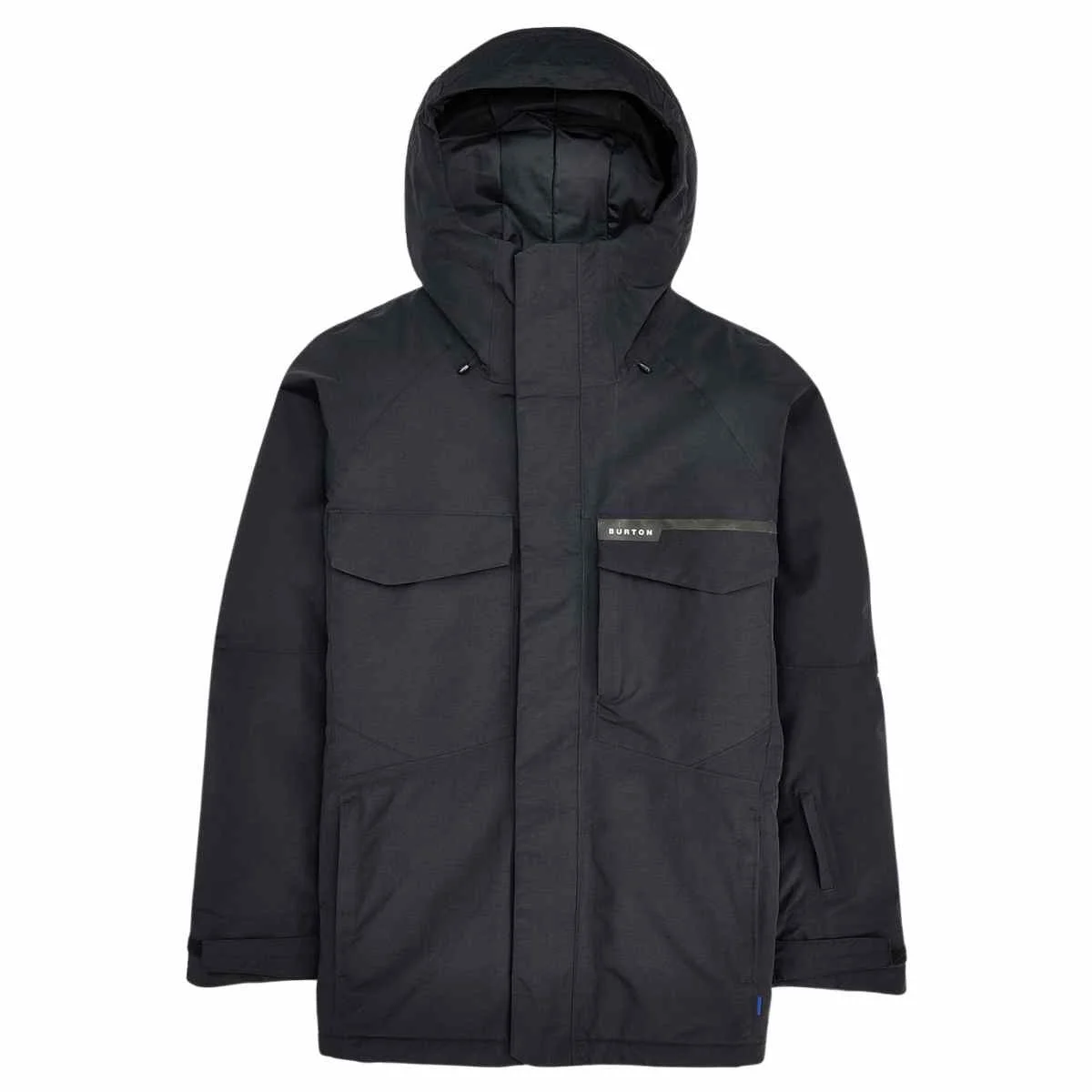
If you want a Burton jacket without a price tag of $300 or more, check out the men’s Burton Covert 2.0 two-layer jacket. It costs almost $150 less than the winning men’s Swash. The Covert was a favorite for our male tester, who wore this lightly insulated jacket at resorts in Colorado and Japan, and appreciated its technical functions as well as its quality features.
Burton Covert 2.0
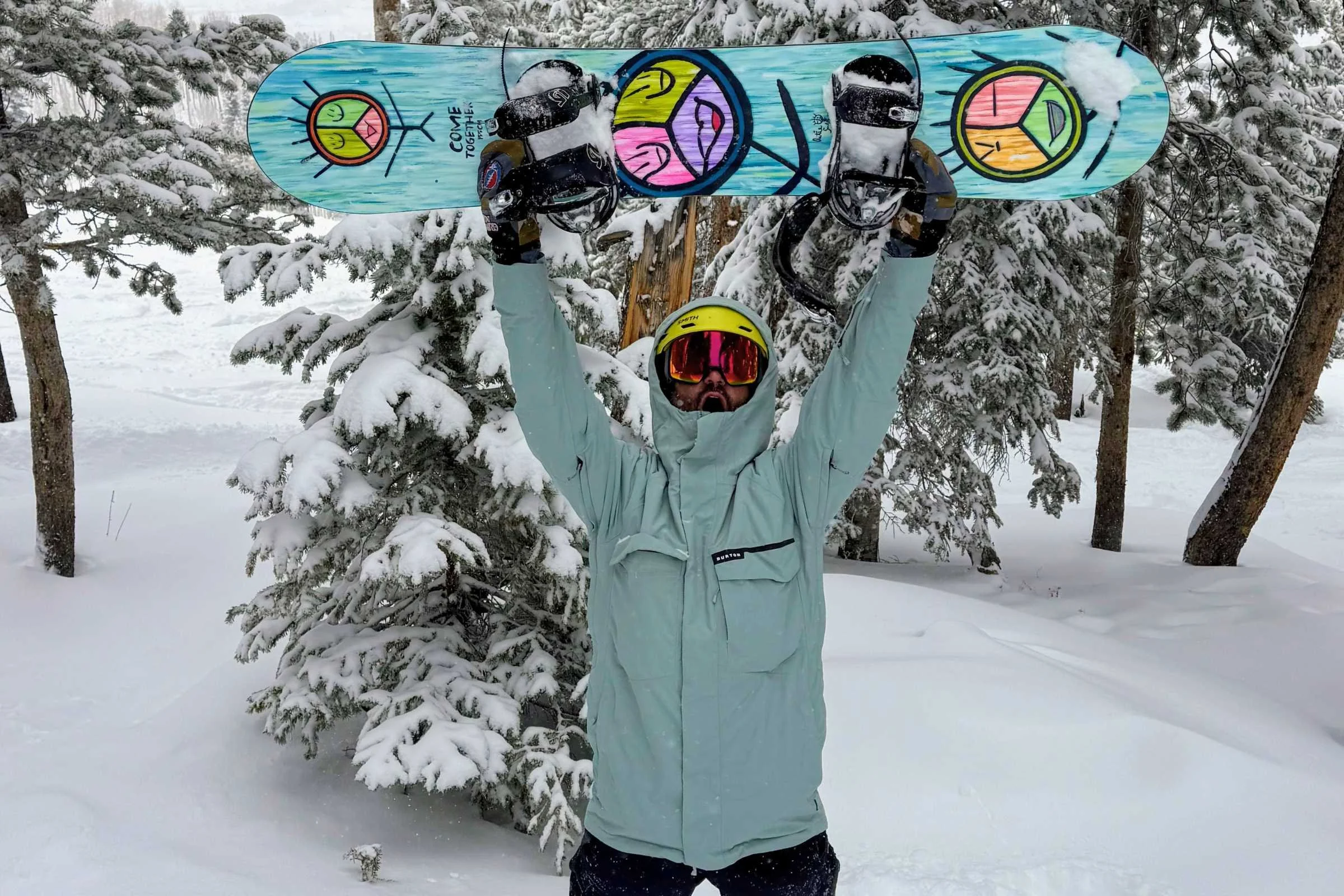
Burton’s Covert 2.0 snowboard jacket kept us warm and dry in snow conditions.
-
The jacket wasn't quite as warm as the other jackets we tested, though it does have 80 grams of insulation. Be prepared to wear a midlayer underneath on chillier days, but during testing, we found it easy to layer without compromising movement while riding. That could be due to the overall fit and style of the jacket, which is very much an all-mountain snowboarders’ look—a regular fit that isn’t as boxy as a typical ski jacket but also isn’t super park baggy, either.
-
The Covert is made with Burton’s DRYRIDE waterproof, breathable membrane. This membrane isn’t as robust against the elements as a GORE-TEX jacket; the waterproofing is 10,000mm, and breathability is 5,000g, which both fall in the mid-to-low range of protection. The jacket's more affordable price may be due to using Burton’s internal waterproofing technology instead of GORE-TEX. It should also be noted that this coat contains PFAs, which are harmful chemicals that gear companies are beginning to phase out.
Even with these moderate ratings, our tester found the jacket waterproof and breathable while working up a sweat in deep powder and trees in Japan. However, avoid this jacket if you tend to ride in extremely wet climates, like the Pacific Northwest.
-
The placement of the pockets allowed for easy access while riding; pockets include two zippered handwarmer pockets (one with an ATM pocket inside to store cards), one zippered chest pocket, a zippered sleeve pass pocket, two chest pockets with hook-and-loop closure, an interior mesh drop-in pocket, and a media pocket with hook-and-loop closure (not zippered, which is a bit concerning) with an integrated Therma-pocket inside to keep your phone warm. Other features we liked included lined pit vents, a detachable powder skirt, and a two-way front zipper.
All of the pockets were easy to reach and use; zippers were easy to use with mittens on. Our tester also found that the sleeves fit easily over mittens and that the hood was easy to put up while riding without hindering movement or vision. As a relatively budget-friendly Burton jacket, our tester loved this piece and would highly recommend it.
-
If you want a feature-rich, high-quality Burton jacket at a more affordable price, check out the men’s Burton Covert 2.0 two-layer jacket.
Best snowboard jacket for women: Helly Hansen Powchaser Asymmetric Jacket
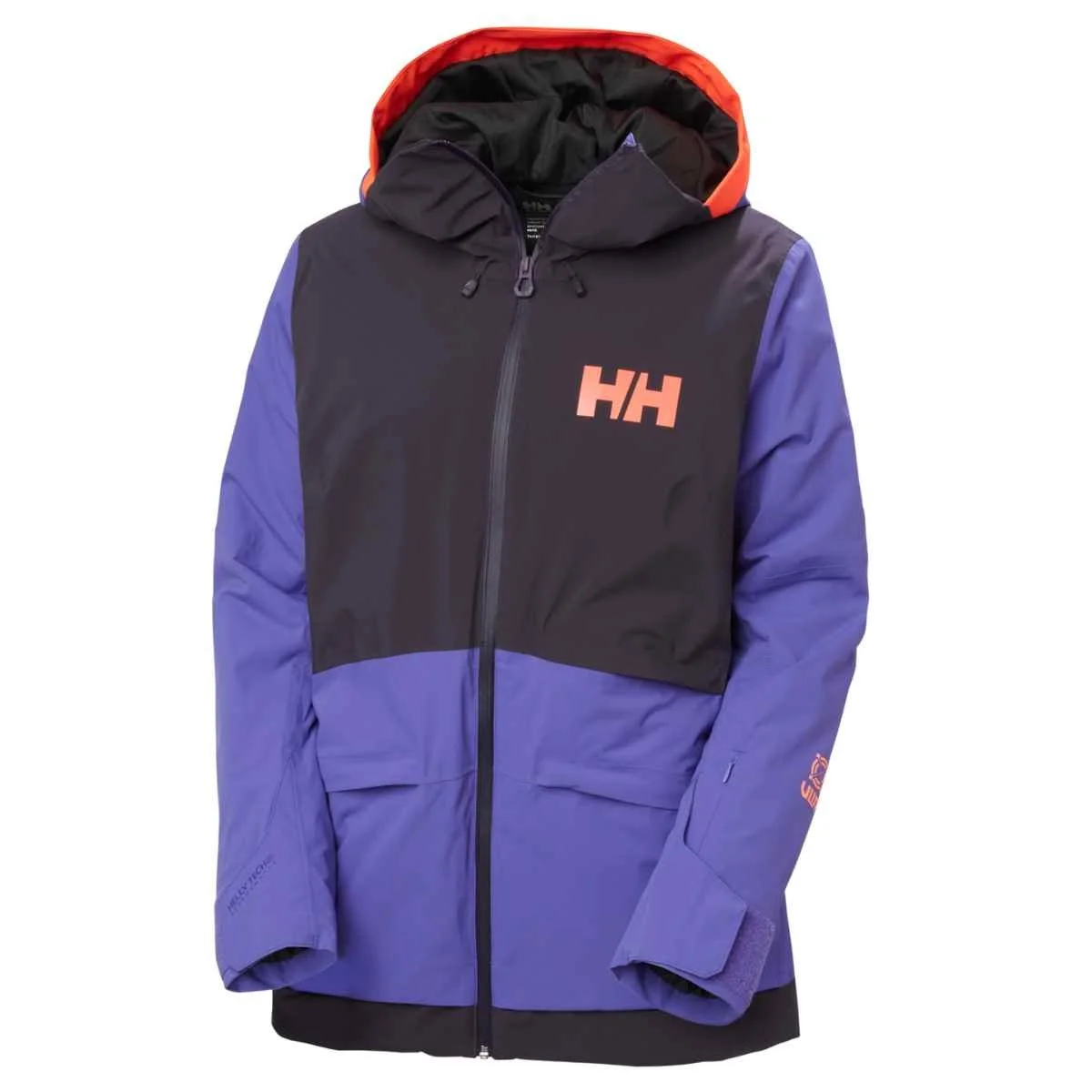
Waterproofing: 4/5; waterproof, breathable Helly Tech Performance with DWR finish, seam sealed, ranging from 10000 to < 20000 mmH2O
Breathability: 4/5; ranging from 10000 to < 20000 g/sq.m/day
Insulation: 4/5, Primaloft Black Eco and Primaloft Ocean Bound 60g
Available sizes: XS to XL
What we liked: funky design with asymmetrical zipper, very warm
What we didn't like: weirdly placed front pockets
Price: $365
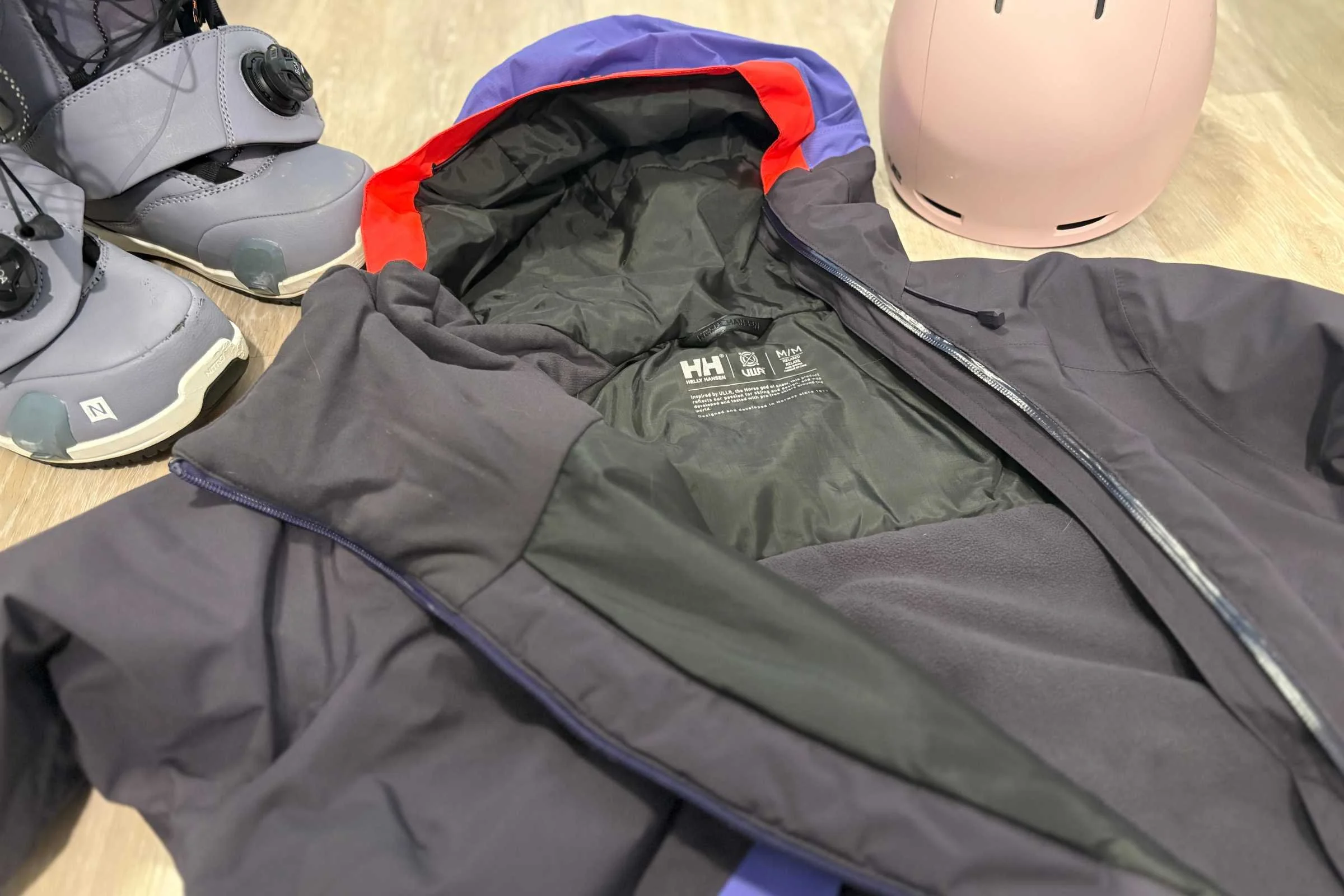
Although technically Helly Hansen lists this as a ski jacket, we think the overall style leans more toward the snowboarding community. That style, plus its supreme warmth, easily helped it snag the top spot for best women’s snowboard jacket. We tested the Asymmetric version, but it has the same specifications and features as their more popular non-asymmetric model, the Powchaser 2.0 Jacket.
Helly Hansen Powchaser Asymmetric Jacket
Powchaser Asymmetric
Powchaser 2.0
-
We found this to be one of the warmest jackets we tested. There is recycled polyester insulation in the body, sleeves, and even the hood, and then the back of the internal body is a soft fleece. Even with this insulation, the jacket didn’t feel bulky or restrictive while carving. Helly Hansen lists it as a 4 out of 6 for their internal warmth rating, but with just a base layer underneath, we felt plenty warm on 15-degree days. Even when our legs or faces were getting cold, our upper bodies and torsos stayed completely warm both on the chair and while riding down. The longer hem (about mid-bottom) gave us a bit of extra protection, too, when we were either sitting on the chair or on the snow while strapping in.
-
Helly Hansen also rates the jacket’s waterproofness and breathability at 5 out of 6; we found the waterproofing to be comparable to that of other high-end jackets we tested. For breathability, the stacked insulation made us feel sweaty after hard-charging runs or as soon as we got into the lodge. There are unlined vents, although they are placed just below the pit and run more along the torso.
-
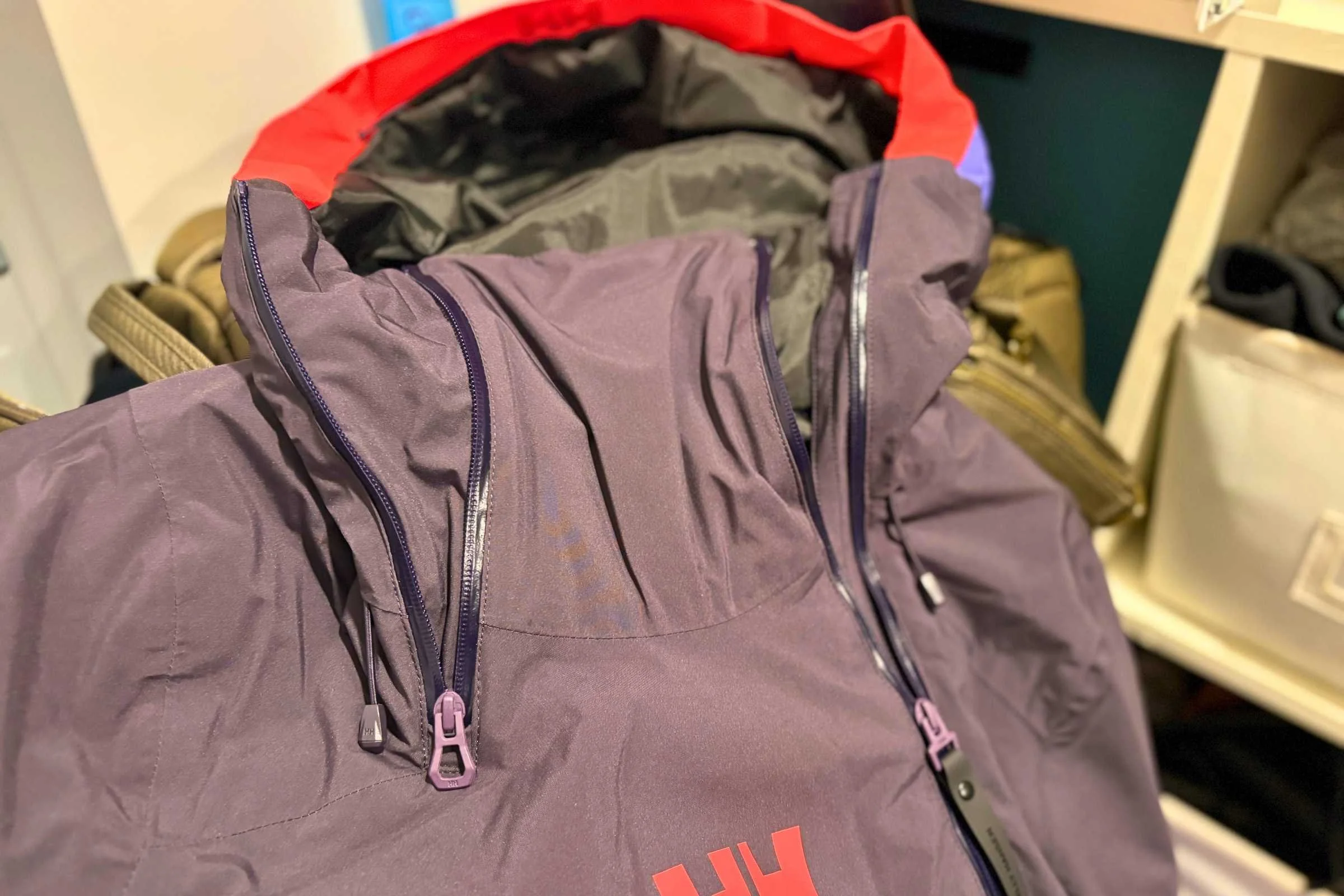
This is the first jacket we tested with an asymmetrical zipper, which we enjoyed for two main reasons: style and function. Style-wise, we enjoyed the different look of the outerwear and the color-block styles.
When it comes to function, the huge, fleece-lined collar protected our chin, mouth, and almost our nose, too, from the wind, but didn’t have any rough parts because there was no zipper in the middle. Instead, there is a full zipper on the left and a quarter zipper on the right. Unzip both a bit to get the hood fully on, then zip up for almost full protection. A neck gaiter will protect you more, but this is a great compromise if you forget yours or are riding on a day when you might not fully need one. We found that when the hood was down and the zippers were fully zipped up with the collar, they looked odd, but that wasn’t a deal breaker.
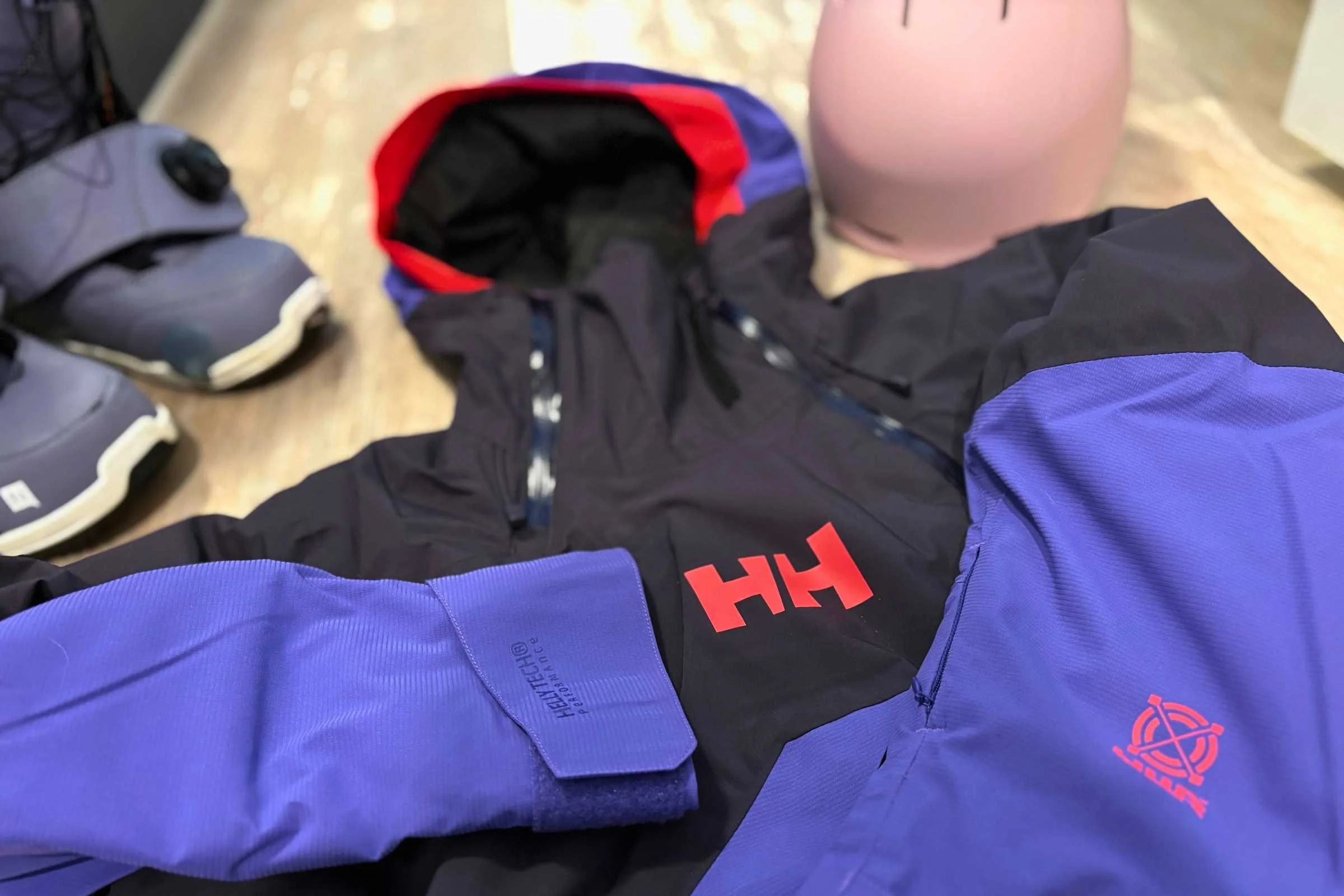
The hood is helmet-compatible with a small brim and a cinch on the back and one on the side for extreme conditions. There is also a pass pocket on the sleeve, cinches on the hem, and a powder skirt. The sleeves are big enough to go over a mitten if you prefer one with an undercuff, and there are also mesh wrist gaiters of sorts, but they were confusing, as there wasn’t a thumb loop to actually have it be able to layer under a glove or mitten properly, so it was just a tight wrist sleeve.
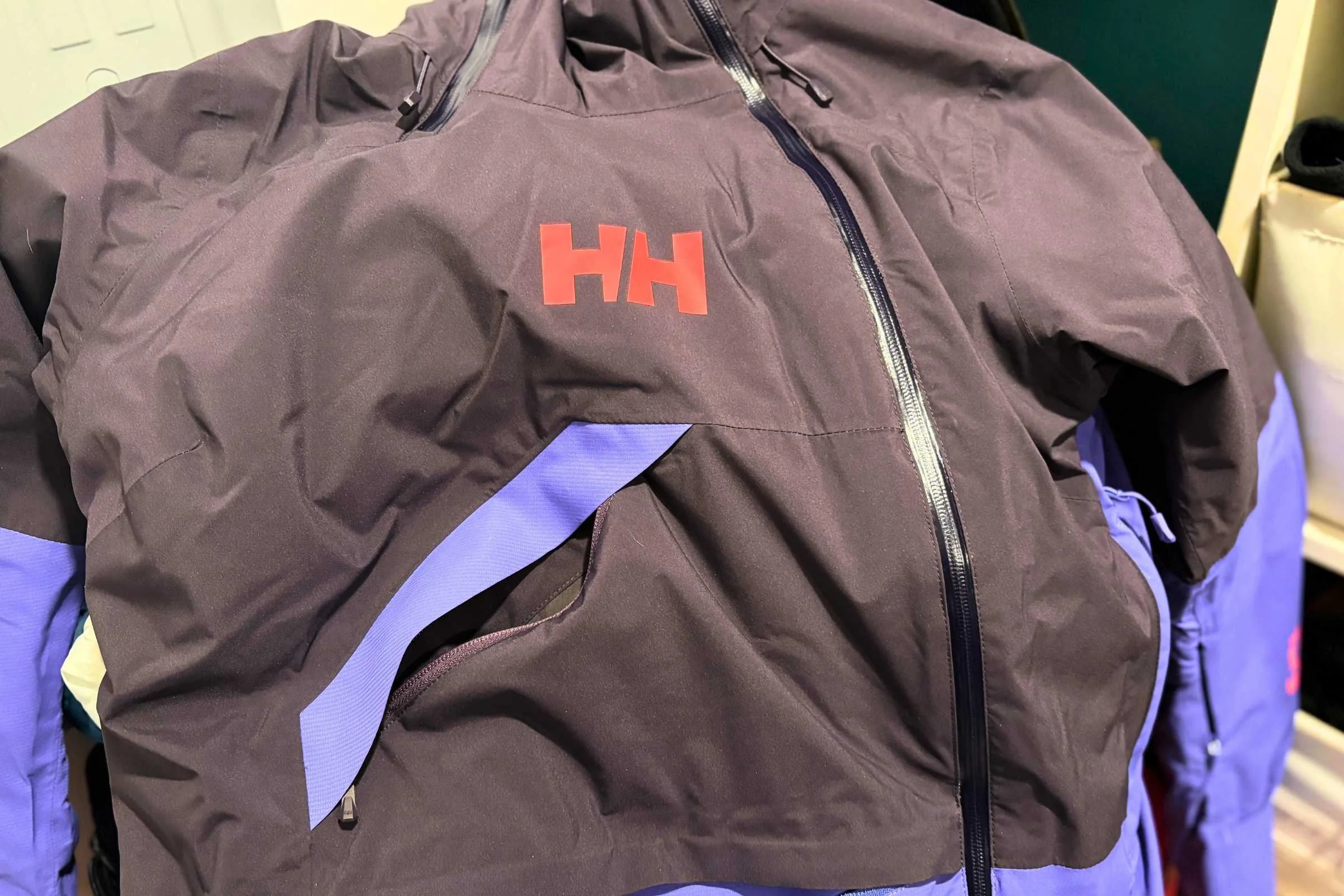
There is one internal drop-in pocket and then two external pockets. Although I appreciated the two large external pockets that matched well with the asymmetrical hood, anything in them stuck out in a weird way, even just my phone. On that same note, if one were to catch an edge on their toe side, they’d slam belly-first into whatever was in their pockets. Overall, the pocket placement isn’t ideal, so I just stored the gear in my bibs instead.
-
Despite a few not-ideal features, the warmth, style, and comfort of the Powchaser Asymmetric Jacket make it a fun choice when you don’t need a midlayer underneath.
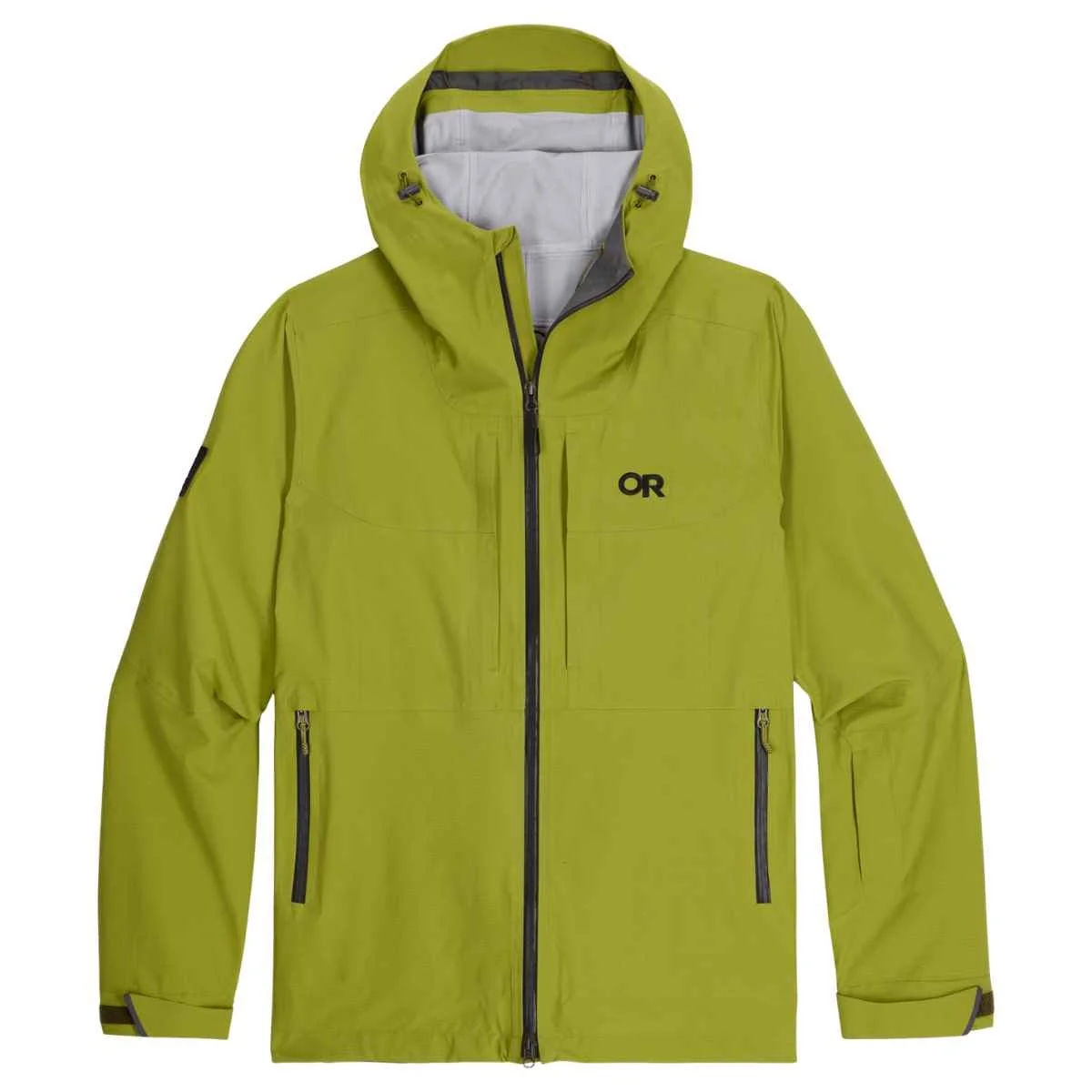
Best snowboard jacket for touring: Outdoor Research Carbide Jacket
Waterproofing: 4/5, waterproof 3-layer Pertex
Breathability: 5/5
Insulation: none, 1/5
Available sizes: women’s XS to 4XL; men’s S to 3XL
What we liked: extremely lightweight and packable shell
What we didn't like: not warm; will need a separate layer for insulation
Price: $329
If you spend a lot of time in the backcountry touring and working up a sweat, you’ll want a shell that protects you from wind and moisture but is also breathable, lightweight, and packable. The Outdoor Research Carbice jacket is just that—a no-frills, no-lining shell that kept us protected when splitboarding, both in the backcountry and early mornings at Eldora Mountain Resort.
Although this is just a shell and doesn’t have any insulation, there is enough room to layer a puffy underneath and wear it in the resort if you need to. Plus, some of its features lend well to in-bounds riding, like the pass pocket on the sleeve. We also like that it has some of the most inclusive sizing of any snowboard jacket out there going to 4X in women's and 3XL in men's. Learn more in our in-depth review of the Outdoor Research Carbide Jacket.
Outdoor Research Carbide Jacket
men's
Women's
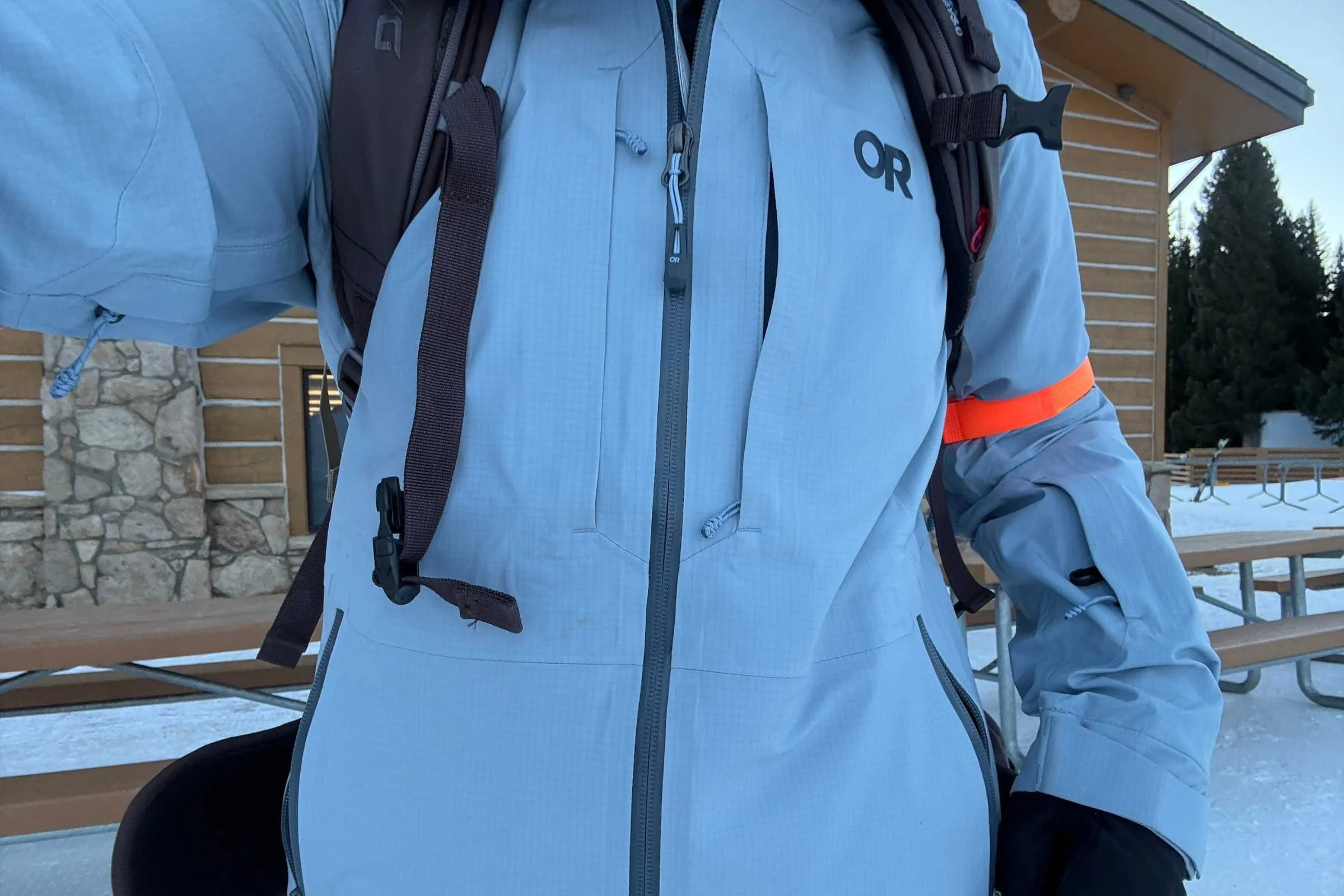
The extremely lightweight shell from Outdoor Research made for a comfortable skin uphill.
-
The fit is slimmer, with a hem that hits just below the waist, but the stretchy, flexible material made layering underneath easy and didn’t hinder movement while riding. We wore a puffy, zip-up Fjallraven jacket underneath and did not feel constricted while skinning up at Eldora Mountain Resort in sunny, 25-degree weather. The look is clean, slim, and sleek. Plus-size testers have also found this jacket comfortable and true to size.
-
We highly recommend this as your go-to splitboarding jacket for its low weight and packability, backed by solid waterproofing. Outdoor Research internally lists it as mid-range for waterproofing; however, it fared well in our at-home testing, where we ran a faucet over various parts of the jacket for one minute at a time, like the back panel, seams, and zippers. The aim was to simulate a water pressure of about 45 PSI, which is close to 31,000mm. No water seeped through any of the parts we tested. The jacket didn’t get wet or saturate, even when water was pooling during the testing. The Carbide is made from Pretex Shield 3L fabric with fully seam-taped construction for no leakage.
-
Features we liked include a powder skirt, an attached, helmet-compatible hood with cinches in both the front and back, a drawcord hem for the utmost protection from wind, one interior zipper pocket, two zippered exterior chest pockets. It also has unlined pit zips, even though the jacket is highly breathable.
-
Choose this jacket if you mostly tour, if you tour but also need a single jacket that works in-bounds and out, or if you plan to hit some very warm spring slush days. It’s simple yet functional and will keep you dry from both the inside and the outside—a waterproof shell for protection from the elements, matched with top-notch moisture management and breathability for when you work up a sweat.
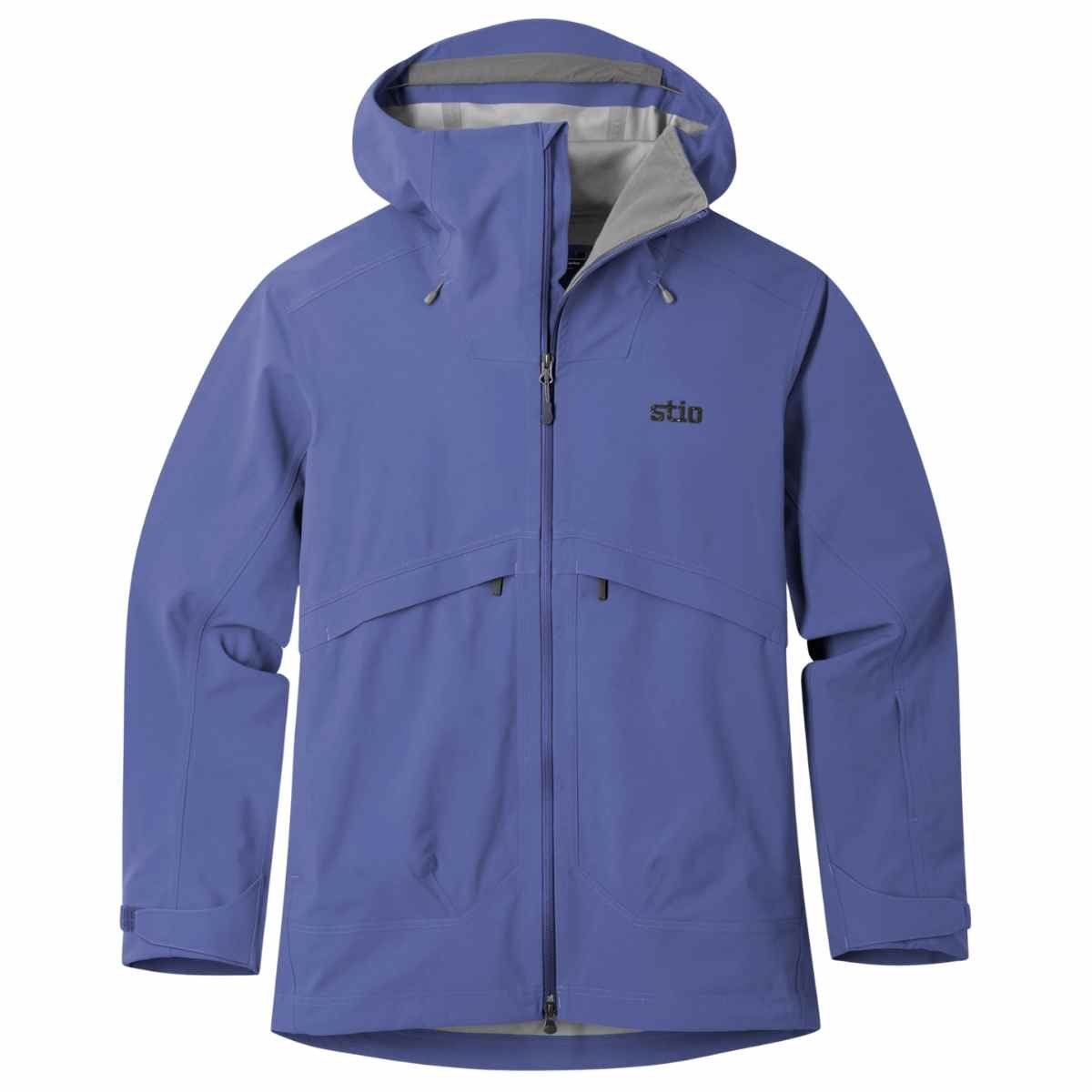
Best snowboard jacket for resort to backcountry: Stio Skyrider Jacket
Waterproofing: 5/5; PeakProof 3-layer canvas, 20K/20K PU hydrophilic lamination
Breathability: 5/5; 20,000 g/m²
Insulation: none; 1/5
Available sizes: women’s XS to XL; men’s S to XXL
What we liked: High-quality construction and protection at a medium pricepoint; extremely durable
What we didn't like: Limited, non-inclusive sizing
Price: $349
Over the past few years, Stio has quickly become one of my go-tos for summer and shoulder season gear, and I wasn’t disappointed with the company's winter outerwear either.
When on a trip to Jackson Hole, I wore the Skyrider snowboarding jacket while hiking out-of-bounds with a guide to Cody Bowl. This hike ended up being about an hour long, with mostly sunny skies and light to moderate winds (which did pick up once we were on the ridge and at the peak). I was able to scramble around rocky outcrops, posthole, and bootpack up steep ascents without ever feeling compromised in my movement or feeling too hot or too cold. I was definitely sweating, but never felt swampy, and felt extremely protected from the wind that kicked up once we got to the ridge line.
Stio Skyrider Jacket
men's
Women's
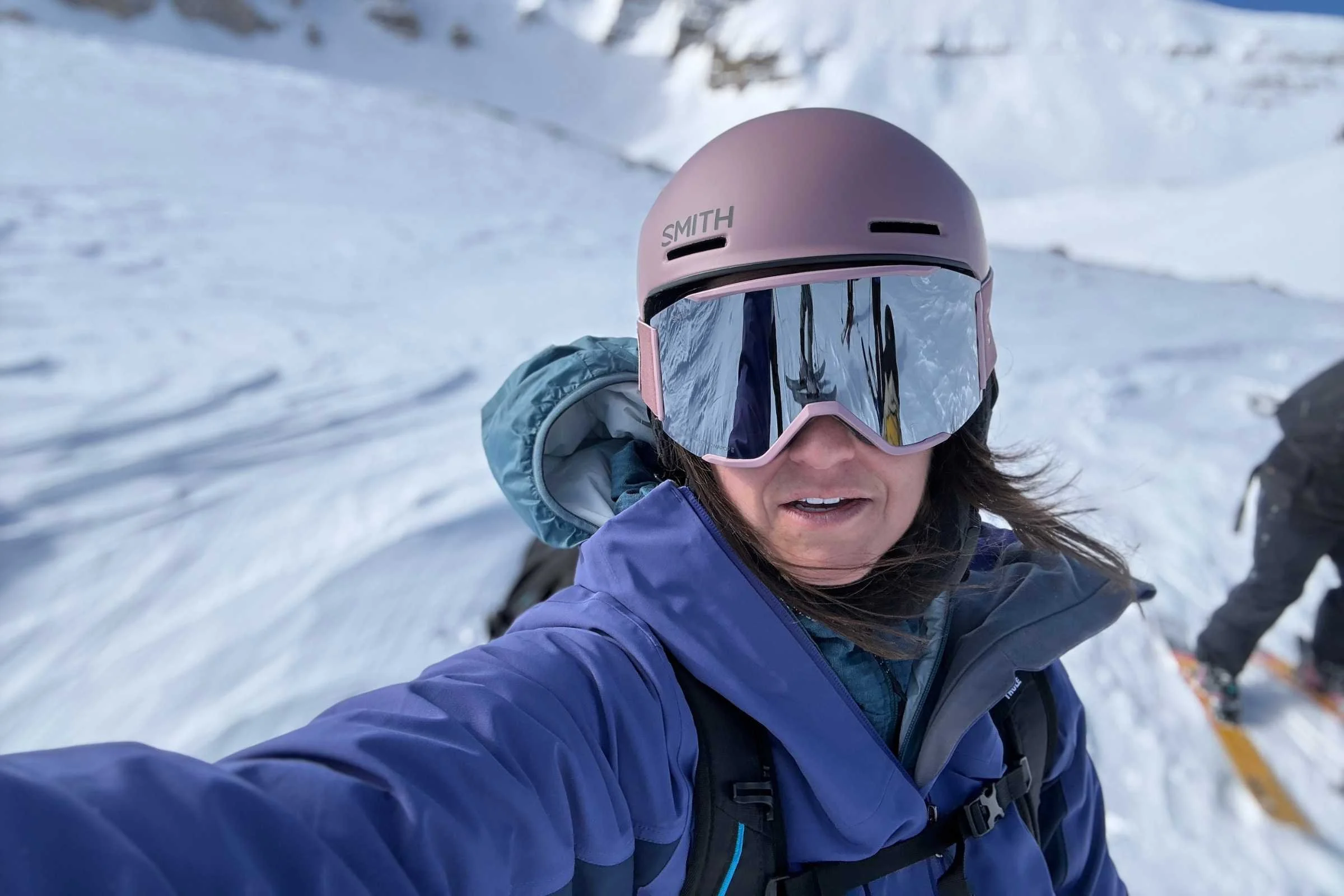
The Stio Skyrider shell had enough room to layer a puffy underneath while exploring the side country at Jackson Hole Resort.
-
The Skyrider has a relaxed fit that isn’t too tight or boxy but not baggy, meaning you can easily layer a puffy underneath without looking like a marshmallow or influencing your movement while carving.
-
In our at-home waterproofing test, I ran water over the back panel, shoulder seams, and main zipper for a minute each, with no water seeping through.
-
Features include a cinching hem, a lightweight, attached powder skirt with snapbacks, one internal drop-in pocket, and a much-used small internal zipper mesh pocket for my phone. On the front, there are two handwarmer pockets and two larger pockets layered over those, plus unlined pit zips and a sleeve pass pocket. The hood is large and easily fits over various helmets, with front and back cinches and a bonded brim.
Style and function meet in this jacket, whether you are a beginner or a hard-charging rider through the trees, no matter the weather. This will hold up to all sorts of extreme elements and keep you warm and dry, all day.
-
The Skyrider is actually one of Stio’s more budget-friendly jackets, compared with the pricier Objective Pro, which uses GORE-TEX, or the heavier, more durable Figment, which has a few more pockets. However, the Skyrider was perfect for a light shell (one of the lightest shells we wore) with lots of flexibility and a soft feel, much like a regular insulated jacket, even though it's one of the most durable we tested, with 150-denier recycled polyester canvas. It’s made from Stio’s fully recycled three-layer PeakProof canvas.
Best affordable snowboard jacket: REI Co-op Powderbound Insulated
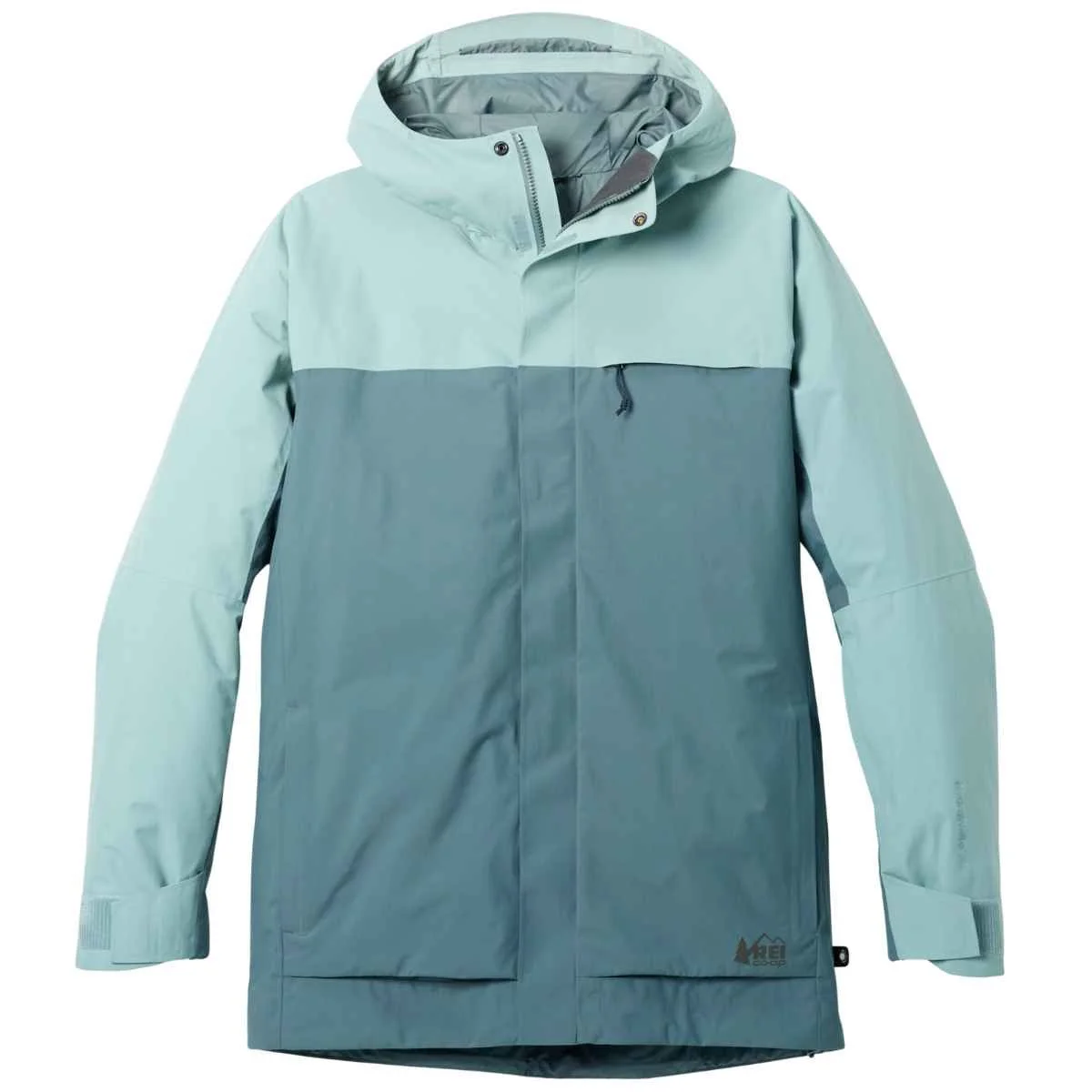
Waterproofing: 3/5; Peak 2-layer waterproof/breathable laminate with a DWR PFAS-free finish
Breathability: 3/5
Insulation: 3/5; 80 grams in the core and 60 grams in the sleeves
Available sizes: women’s XS to 3XL; men’s S to 3XL
What we liked: affordable, solid features
What we didn't like: not extremely warm
Price: $229
REI’s internal brand, REI Co-op, has consistently made high-quality gear at affordable prices. With the Powderbound Insulated Jacket, you get a warm and waterproof jacket with ideal features for less than $250, which is a steal when it comes to winter outerwear. This jacket also has some of the most inclusive sizing of the jackets we tested, with 3XL options for both men and women.
For more details, check out our in-depth review of the REI Co-op Powderbound Insulated Jacket.
REI Co-op Powderbound Insulated
men's
Women's
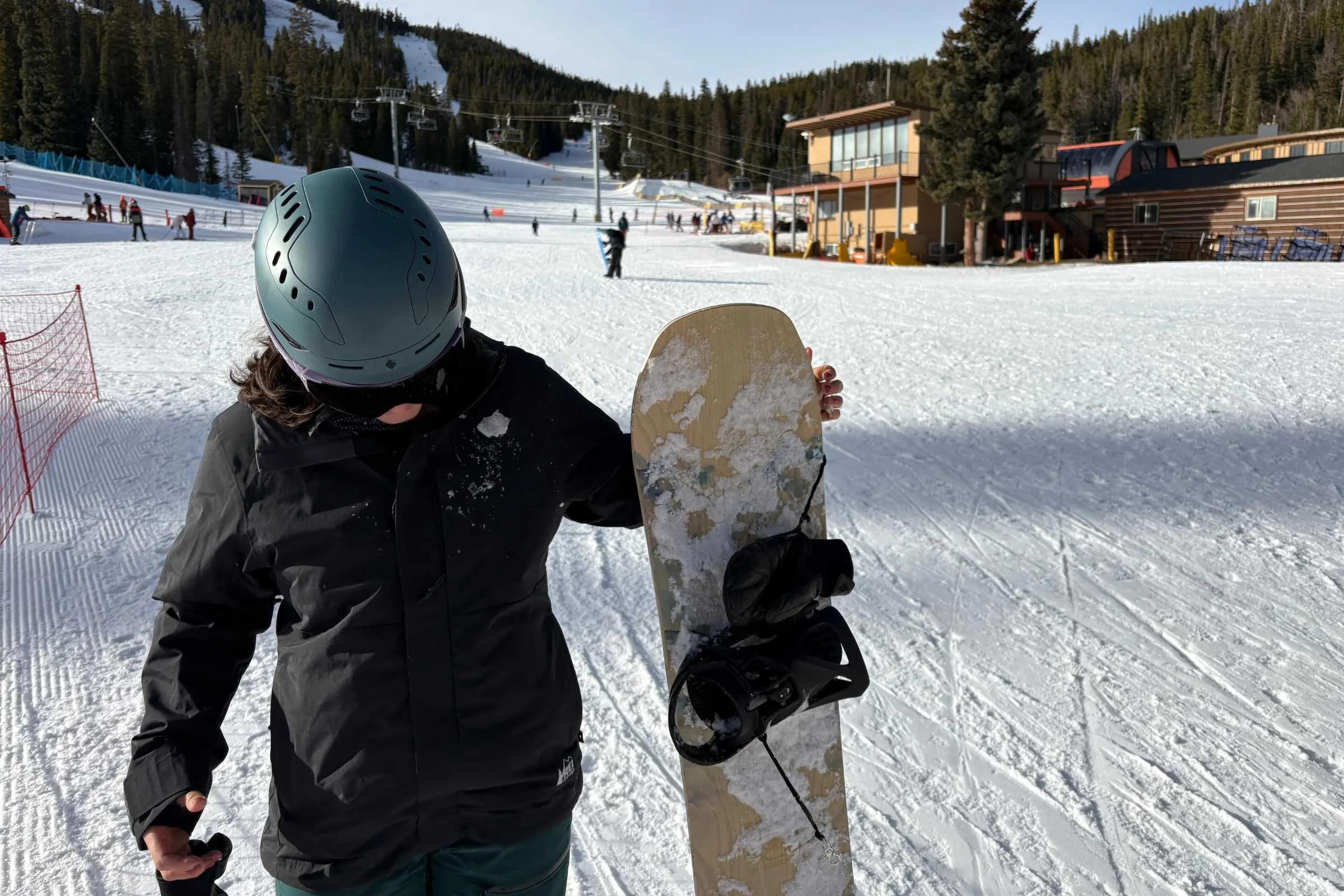
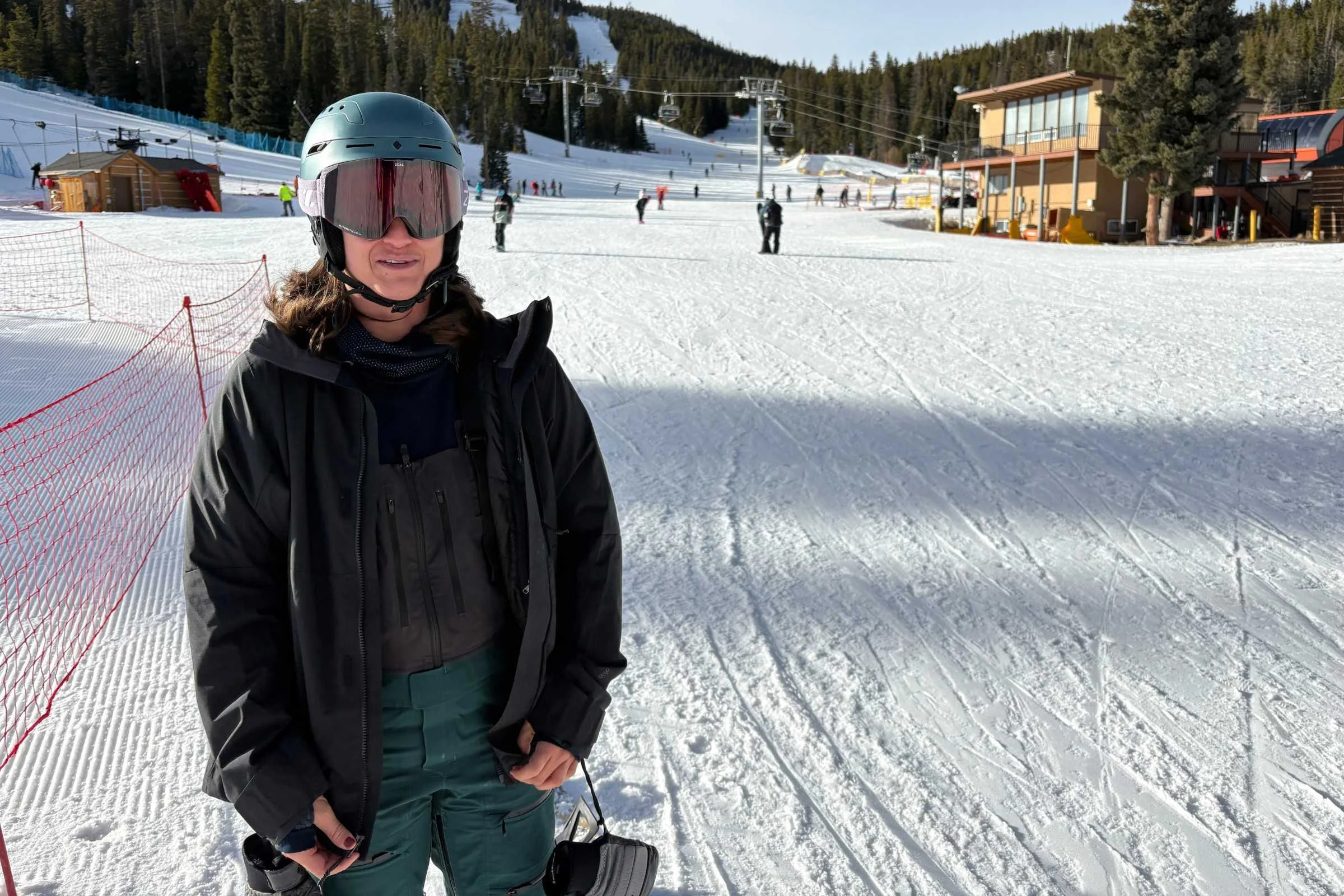
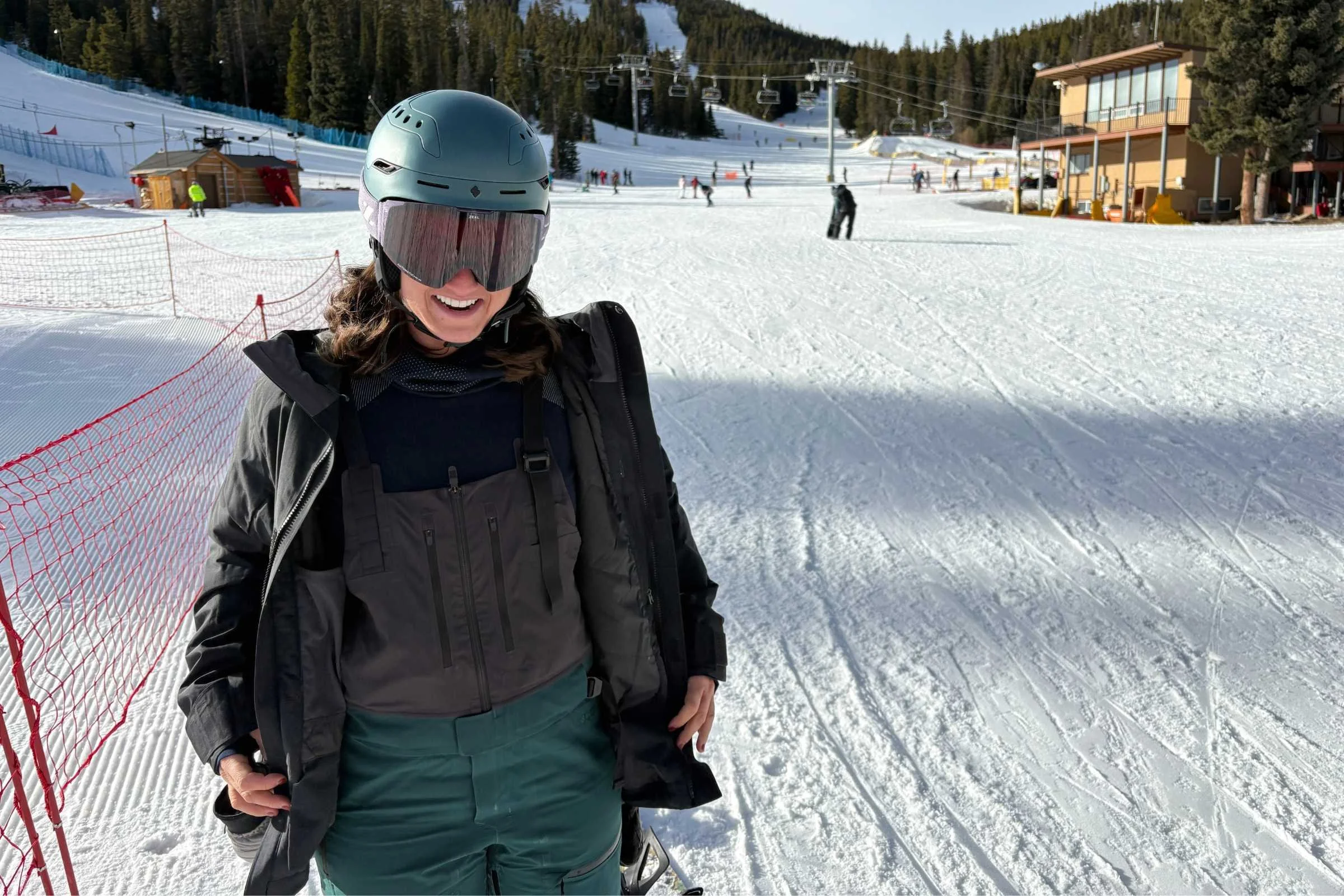
-
The jacket uses a two-layer construction with a waterproof, breathable laminate and has a durable, non-PFAS water-repellent finish. In our own waterproof testing (where we ran the faucet over various parts of the jacket, such as the sleeves and torso, for one minute at a time), it proved waterproof to a point—we felt just the slightest bit of damp on the inside of the jacket where we were testing under the faucet, which was not the case with other jackets we tested.
Because of that, if you are in a very wet climate with heavy snow (West Coast and Pacific Northwest), a GORE-TEX option will offer more robust waterproofing. If you are riding in the Rockies, like Colorado and Utah, this should hold up on snowy days or when you eat it in fresh powder.
-
Overall, this jacket is ideal for fair-weather riders. With 80 grams of synthetic insulation in the core and 60 in the sleeves, we stayed warm on sunny 20-degree days and above. Even though this insulation is comparable to that of other jackets we tested, it just wasn’t as warm. We got chilled when it was cloudy, when temperatures were in the teens, or on a very windy day, like the one we had while testing at Eldora Mountain Resort. The bonus of slightly less insulation in a jacket is that you get zero bulk, as was the case with the lightweight Powderbound.
-
The jacket is a regular, relaxed fit with articulated elbows, allowing enough room to move around and bend over without hindrance. And, if you really needed to layer another midlayer underneath, it is doable. This jacket isn’t necessarily winning any points for style—it’s a regular cut with a slightly boxy look—though one of the women’s colorways is a funky bright pink, orange and black pattern, while the men’s also has a teal and blue pattern. Other colorways include black, orange, blue, and teal.
-
The hem, which sits at the lower waist and has a drawcord to cinch tight, isn’t as long as on other snowboarding jackets, but the rest of the features are helpful. The attached hood is helmet-compatible and has front and back cinches. The unlined pit zips are easy to open and close, even with mittens on. The powder skirt snaps away when not needed. Plus, you get plenty of pockets, including a pass pocket and a zippered chest pocket for your phone.
-
Even though this jacket isn’t the warmest we tested, the affordable price and wide range of sizing make it a good option. There is enough room to layer underneath on frigid days, and the waterproofing held up in our in-house testing. If you are just starting out in winter sports (and aren’t really sure if you are fully committed just yet) or simply don’t want to break the bank, the Powderhound is a great option.
Best Snowboard Jacket for Park Riding: TREW Gear Popover Jacket
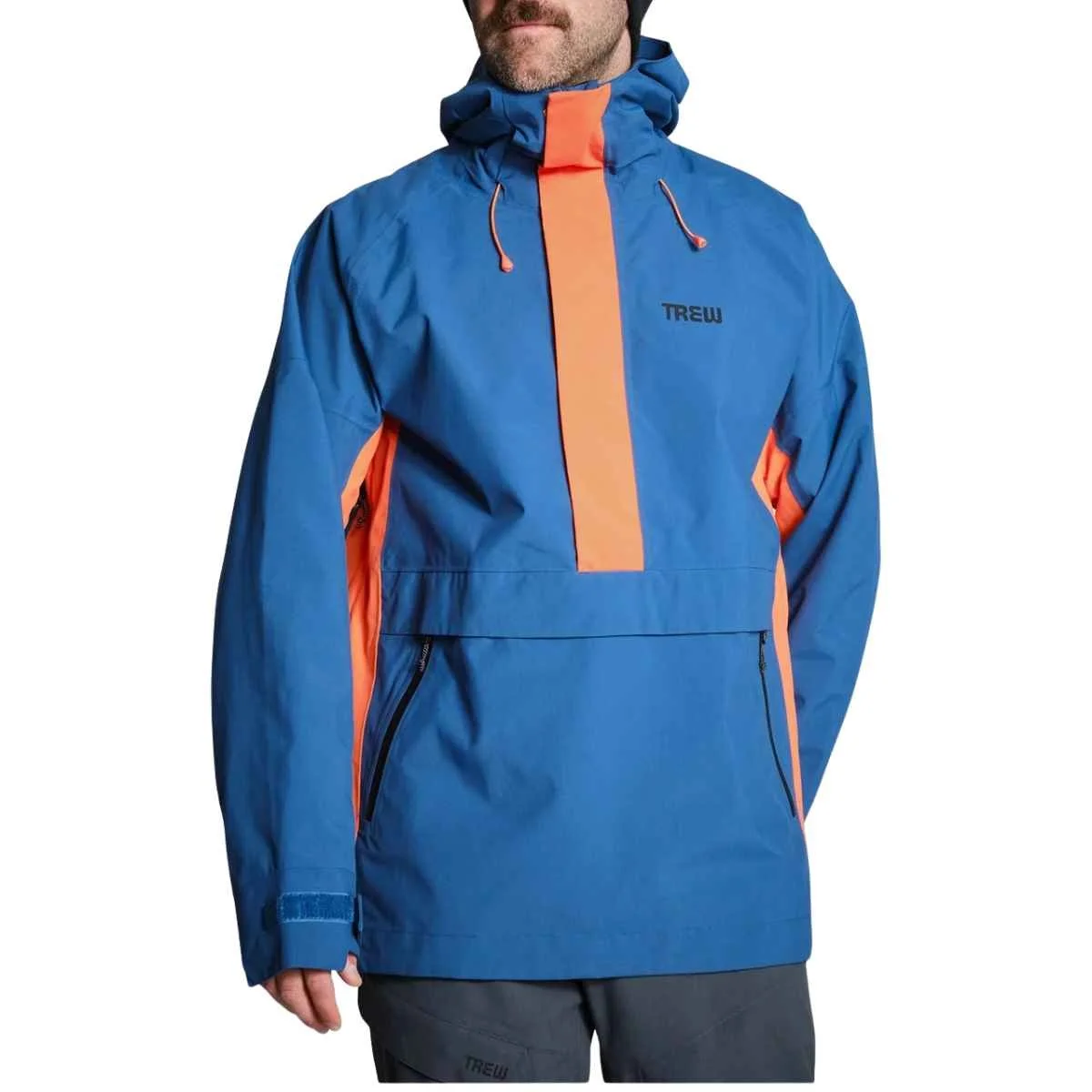
Waterproofing: 4/5; 20,000mm Waterproof
Breathability: 4/5; 20,000gsm Breathable
Insulation: none, ⅖ with a nylon liner
Available sizes: Unisex, but range from men’s XXS-XXL and women’s XS to XXXL
What we liked: Inclusive sizing; baggy fit; most durable we tested
What we didn't like: Finding the right size was tricky; not a lot of pockets
Price: $329
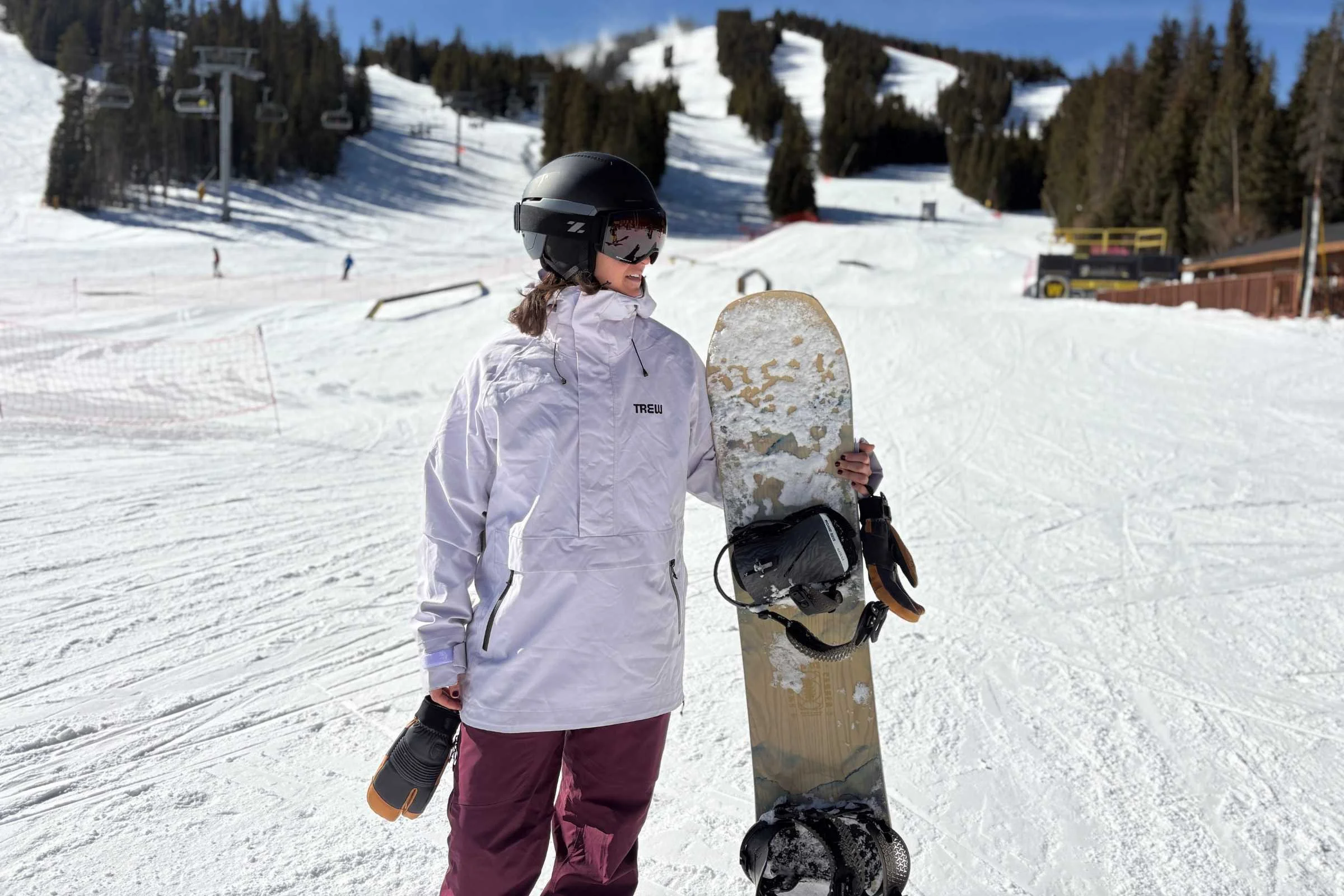
The TREW Gear Popover unisex snowboard jacket is easily the one that screams “I snowboard” more than any other we tested. Even if you aren’t hitting the park, this unisex, over-the-head jacket will make it look like you do. Plus, it’s the most durable snowboarding jacket we tested, with a 200-denier rating and made from a heavy-duty Oxford weave. Choose this if you are riding in the park and might be landing on some sharp edges.
TREW Gear Popover Jacket
-
It is unisex, and even with checking the sizing guide, the small that I ordered was quite large (which contributed to the whole knuckledragger vibe); for reference, I’m 5’5”, and the sleeves went about an inch bit past my fingertips while the back hem sat mid-thigh. The sleeves have Velcro at the cuff, so that was an easy enough fix to not have them covering my mitts.
-
A bonus of this anorak jacket is the full zipper on the left side, so you can get it on and off much more easily without having to pull it over your head. That zipper also doubles as a pit vent.
Other features include a helmet-compatible hood with cinches in the front and back, a RECCO reflector to aid with search and rescue, a hem cinch for adjustability, a forearm pass pocket, and one zippered kangaroo pocket in the front with a layered zippered pocket on top of that. There is no chest pocket, so I stored all my stuff in my bibs, and the collar wasn’t very soft against my chin.
-
It doesn’t feel like the most technical jacket. It did decent in the at-home waterproof testing, with some water getting through a zipper. I wore this on a very warm day at Eldora, with sunny skies and temperatures in the 30s. I felt warm and comfortable during my easy runs, but because of the soft nylon lining, I started to feel just a little swampy as I pushed harder. For colder days, it isn’t insulated, but baggy enough to comfortably layer underneath with a puffy.
-
Overall, we found it ideal for milder days without pounding snow or super-chilly temps, and for riding in-bounds.
Other snowboard jackets we tested
Flylow Billie Coat
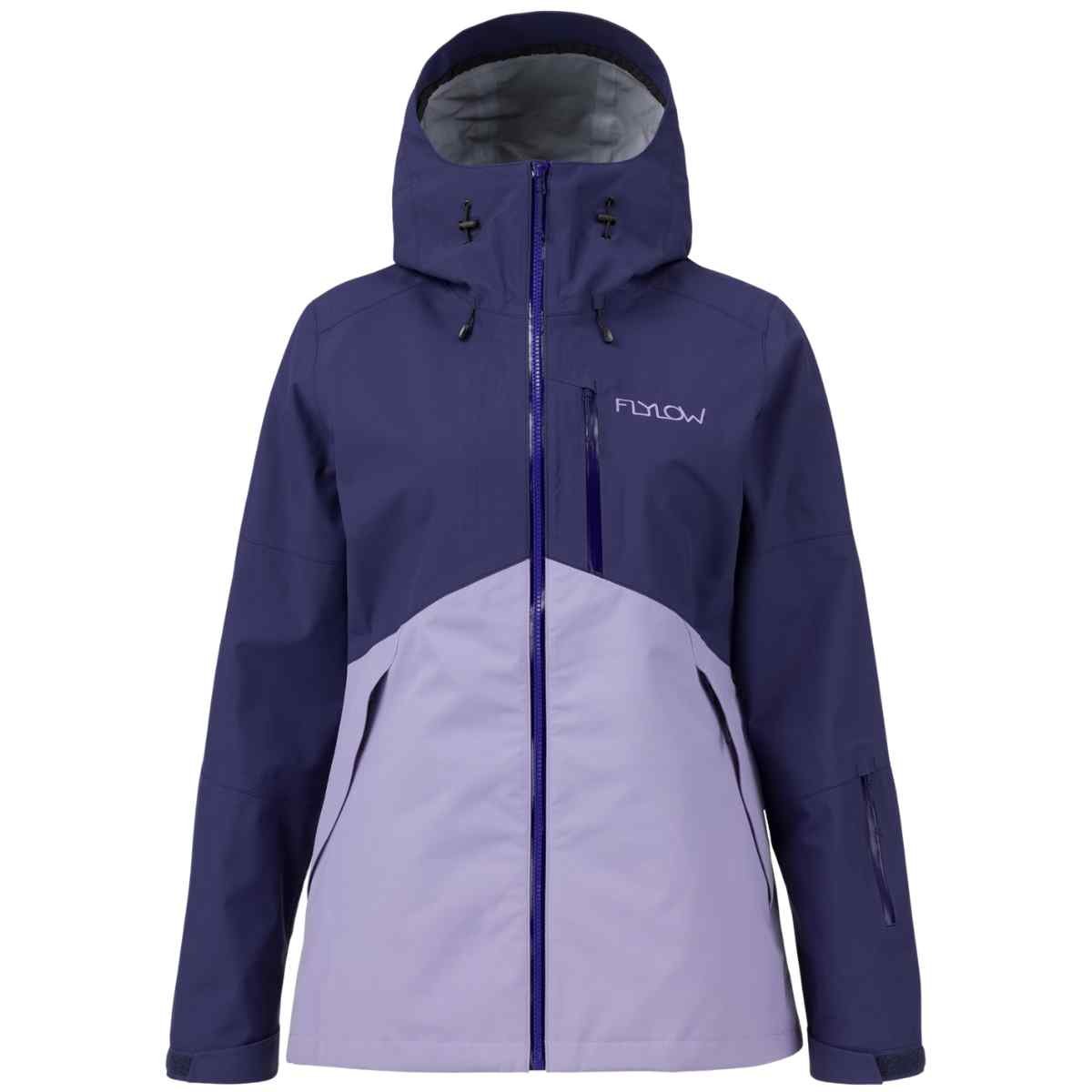
Waterproofing: 5/5; 20,000mm Waterproof, Surface 3L hardshell fabric with PFAS-free DWR finish; 100% recycled polyester
Breathability: 4/5; 20,000gsm
Insulation: none, 2/5 thin
Available sizes: women’s XS to XL
What we liked: the in-bounds to out-of-bounds versatility
What we didn't like: non-inclusive sizing
Price: $440
Flylow rates the Billie Coat as medium breathability, very waterproof, and mid-level warmth. With at-home testing, I found it relatively accurate, though I would argue the jacket isn’t warm. It has no insulation, but is a thicker shell, so it blocks wind wonderfully, but you’ll still need some sort of layers underneath.
Flylow Billie Coat
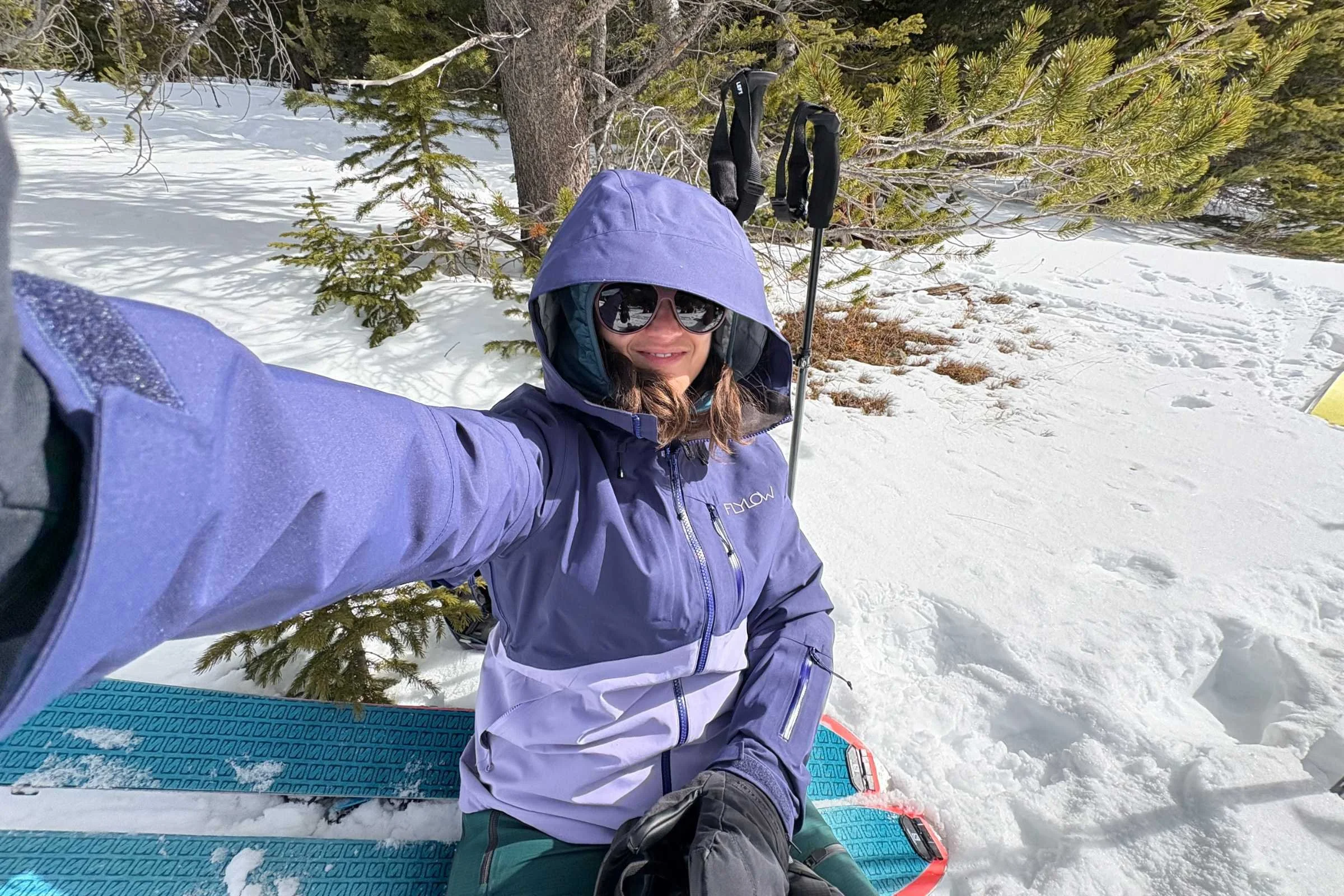
The Flylow Billie Coat fit well underneath a pack while touring in the backcountry.
When I wore this on a backcountry day at Vail Pass, led by Bondi Outdoor Leadership and AIARE, it blocked the wind completely while transitioning from split skis to my board, and it was lightweight and flexible enough to tie around my waist while trekking uphill. Overall, it’s an ideal coat you can use both in and out of bounds.
Other features include a helmet-compatible hood with cinches in the front and back, which again helped keep that wind out when at our peak, but also didn’t hinder movement or vision when riding down. There is also a detachable powder skirt with extra snaps to connect to a pair of Flylow’s snowpants, a cinching hem, and unlined pit vents. For pockets, this jacket has a sleeve pass pocket, two handwarmer pockets, an external zippered chest pocket, plus three zipper pockets inside, which I greatly appreciate. A small one is on the chest, and then two deep ones are lower near the powder skirt, so you have ample storage for snacks and your phone.
The jacket was easy to ride in and wear a pack with, as the fabric is flexible and soft, but still protective with sealed seams and waterproof zippers. It is similar to the Stio Skyrider in terms of weight, flexibility, and protection, but it does cost more. However, this jacket will easily take you from in-bounds to side country and back, all without compromising style or function.
Arc’teryx Sentinel / Sabre
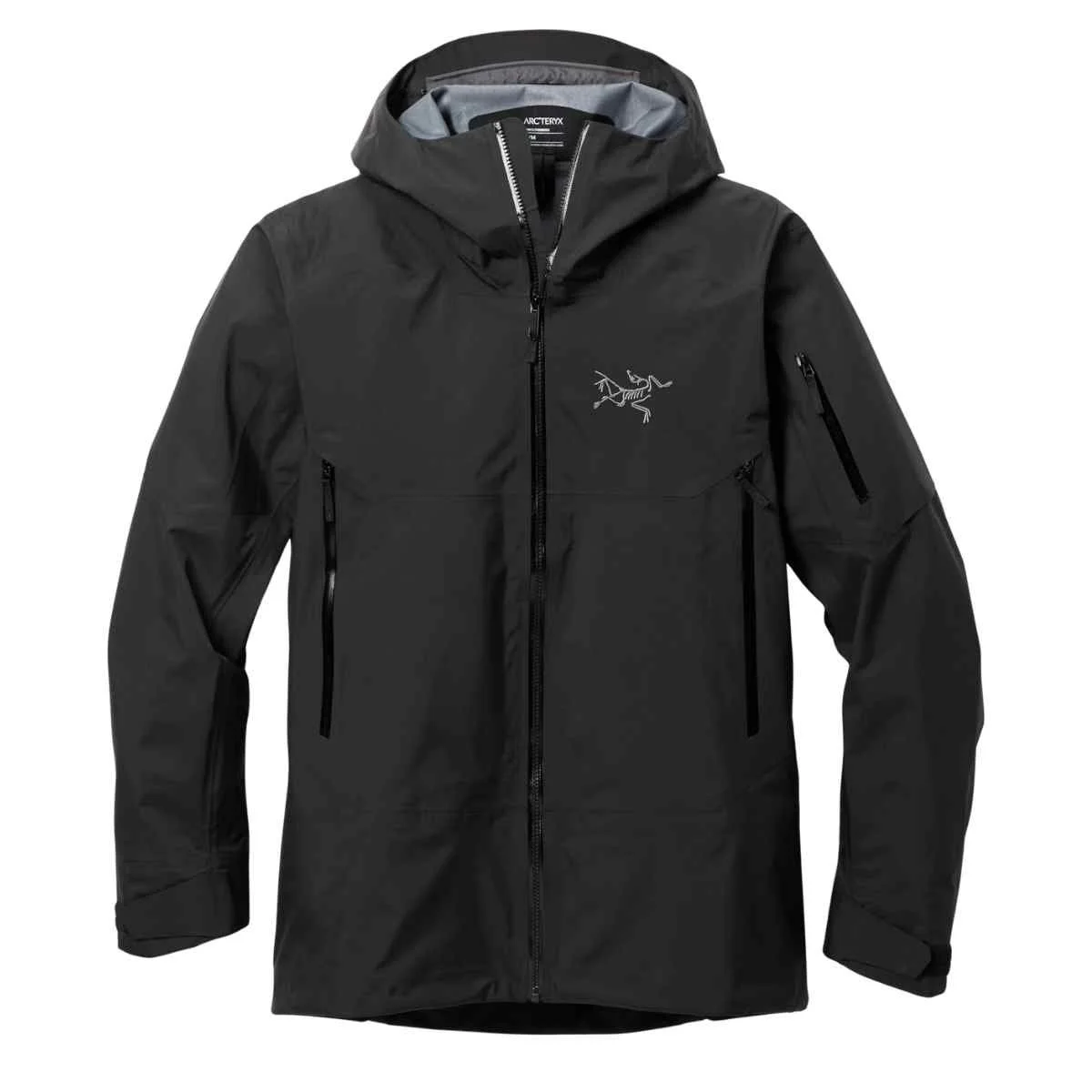
Waterproofing: 5/5; waterproof and breathable 3-layer ePE GORE-TEX shell, PFAS-free DWR finish
Breathability: 4/5
Insulation: None; 1/5, thin
Available sizes: XXS to XXL (women’s); XS to XXL (men’s)
What we liked: Lightweight, most windproof shell
What we didn't like: Extremely pricey
Price: $750
The Arc’teryx women’s Sentinel jacket and men’s Sabre are extremely lightweight shells with top-of-the-line waterproofing. The Sentinel was our second-lightest jacket at 1.4 pounds and was rated among our highest in at-home waterproofing testing.
Learn more in our in-depth review of the Arc’teryx women’s Sentinel Jacket by reviewer Stasia Stockwell and our in-depth review of the Arc’teryx men’s Sabre Jacket by Matt McDonald.
Arc’teryx Sentinel / Sabre
men's
Women's
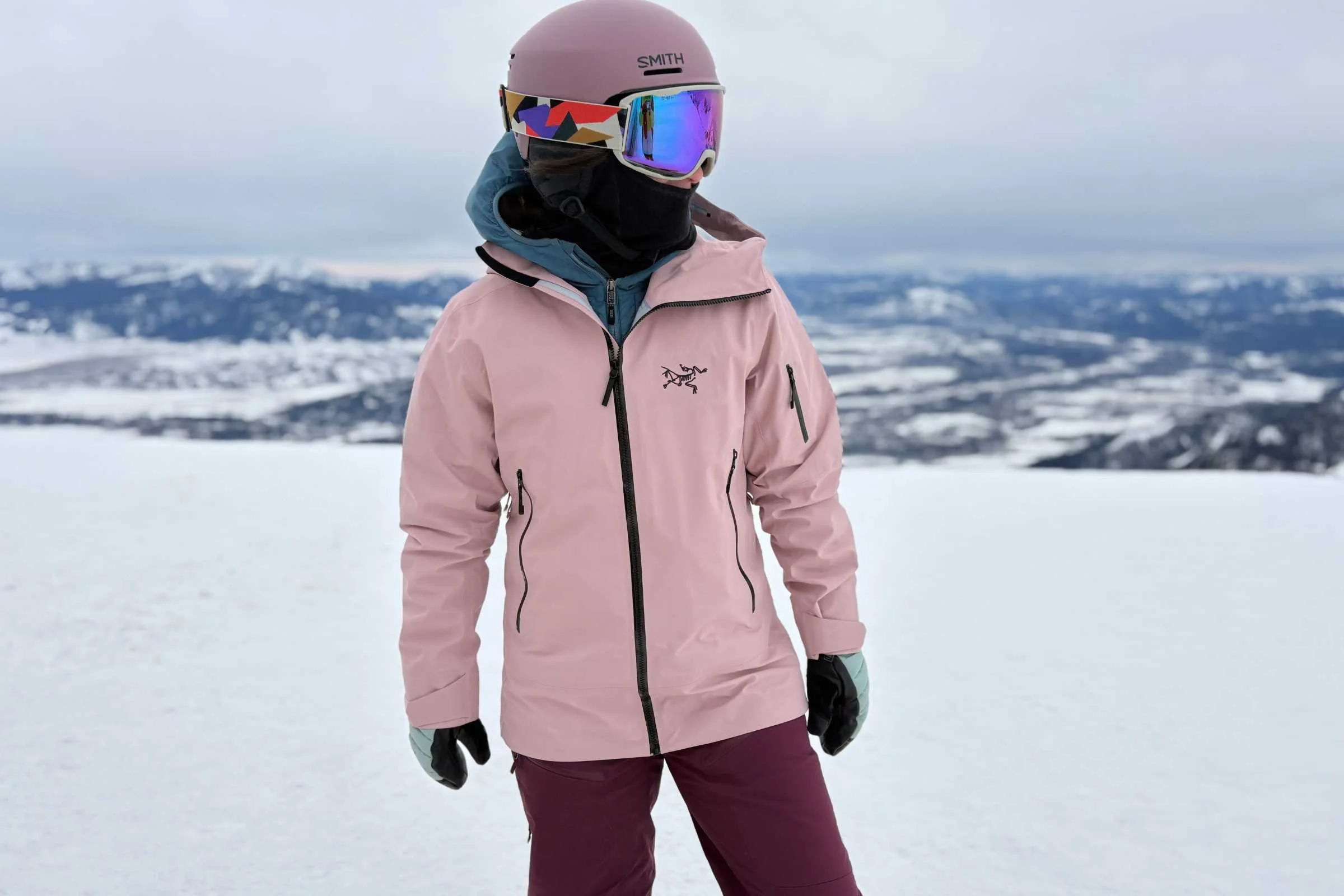
When I ran a faucet over various parts of the jacket for a minute at a time, no water seeped through—not on the zipper, the seams, or the general back panel. Although brands sometimes use their own internal waterproof tech or something similar to GORE-TEX, this three-layer GORE-TEX membrane still reigns as the most waterproof material in both at-home and on-the-mountain testing.
Its windproofing is on par with its waterproofing. This was put to the test while taking photos on top of the tram line at Jackson, where resting snowboards were being blown over, and mittens almost whisked away while we were eating waffles at Corbet’s Cabin. Not once did I feel any wind coming through, so I stayed warm in a base layer and a slim midlayer.
It does well enough for breathability (I never felt too warm while ripping blues and blacks at Jackson Hole Resort).
Features include a helmet-compatible hood with front and back cinching (this helped the hood stay up while riding), unlined pit vents, a pass pocket, two soft handwarmer pockets, and two internal drop-in mesh pockets, one of which has an integrated small zipper pocket, perfect for my phone. The hem, which stops just below the butt, has a cinch, and you also get a lightweight, attached powder skirt with snaps to attach to Acr’teryx snowpants.
It looks like a no-frills, sleek jacket, and it was one of the most stylish I tested, with a simple, streamlined look. As this is just a shell, I needed to wear a decent puffy and a base layer underneath it, but even with those layers, the look was still slim, and my movement wasn’t hindered at all. It is made from 80-denier fabric, so it is one of the more rugged and durable jackets we tested, meaning it will ideally last for multiple seasons (let’s be real, it better, given the high price). Arc'teryx also has a legendary repair program that is good for the lifetime of the garment.
Would I buy this jacket? Not necessarily, as I just can’t imagine spending $750 on a jacket, given that I can find a similarly high-quality jacket when it comes to its waterproofing and windproofing, but with a slightly more snowboard style. It did win the top spot for Best Ski Jackets of 2026, but as a snowboarder, I prefer something more like the Burton Embark that is created for snowboarders.
However it will work for all types of terrain, weather, and climates, and for both in-bounds and backcountry use. I do plan to wear this one quite often, given its protection from the wind.
Patagonia Powder Town
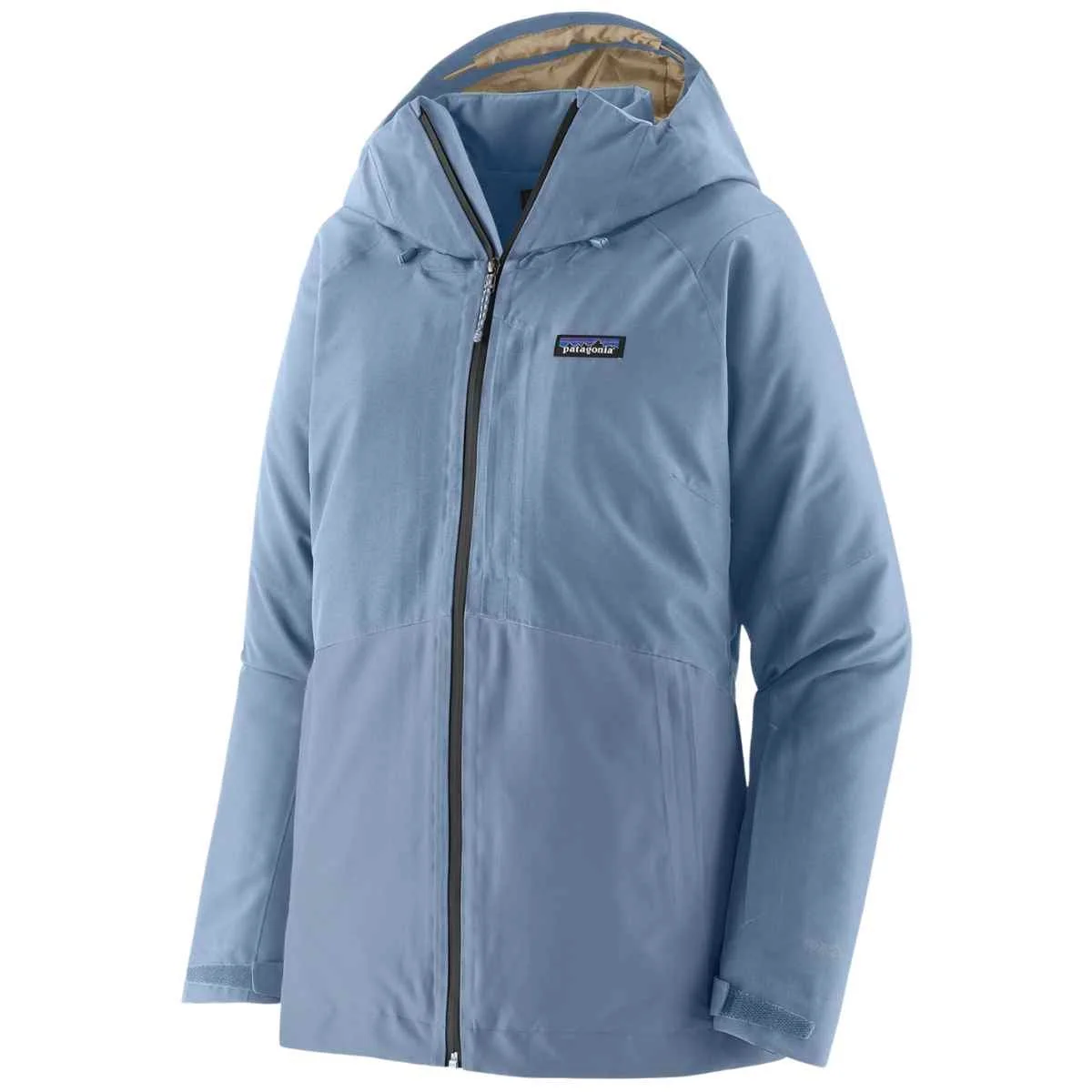
Waterproofing: 4/5; waterproof 2-layer H2No® Performance Standard shell treated with a PFAS-free durable water repellent (DWR) finish
Breathability: 3/5 maybe 5/5
Insulation: none; 2/5 with inner mesh liner
Available sizes: XXS-XL (women’s), XXS-3XL (men’s)
What we liked: A two-layer that offers a bit more warmth than a single layer
What we didn't like: A bit boring; a slimmer cut that lacks style
Price: $349
The Patagonia Powder Town is a classic Patagonia shell, both from its construction and its look. It’s a streamlined, slimmer fit in either a single solid color or a block color, with useful features but no frills. It has all the classic features you’ll want in a snowboard jacket, like a helmet-compatible hood with a visor, open pit zips (no mesh liner), a powder skirt that can connect to Powder Town Pants, and a built-in RECCO reflector to aid search and rescue.
Learn more in our in-depth, long-term review of the Patagonia Powdertown 3-in-1 Jacket.
Patagonia Powder Town
men's
Women's
For pockets, the exterior has two front hip pockets, one zippered chest pocket, and an arm pocket for your pass. On the inside, there is a larger mesh drop-in pocket and a zippered pocket as well, perfect for your phone.
We tested the non-insulated, durable shell (there is a 3-in-1 option and an insulated one). On warmer days, the shell was enough to keep us warm over a base layer and felt smooth to layer under because of the mesh liner. Because of this simple inner liner, this jacket was slightly warmer than other options that are only a thin shell. The jacket is made of Patagonia’s H2No material, a two-layer waterproof, breathable fabric, which holds up to fat flakes on a powder day. Because of the high-quality protection and thin construction, this would be a solid choice for touring, as it is lightweight and not cumbersome when it comes to packing it away. When temperatures dropped into the 20s and below, a puffy or fleece midlayer underneath was necessary to stay warm.
The slimmer look and fit didn’t hinder our movement while snowboarding, but definitely gives off a more skier vibe when it comes to style. The hemline was also shorter, sitting just below the waist, and tight around our hips and butt. If you prefer a longer hem or want more coverage when sitting on the snow, go with a different option.
The North Face THERMOBALL Snow Triclimate
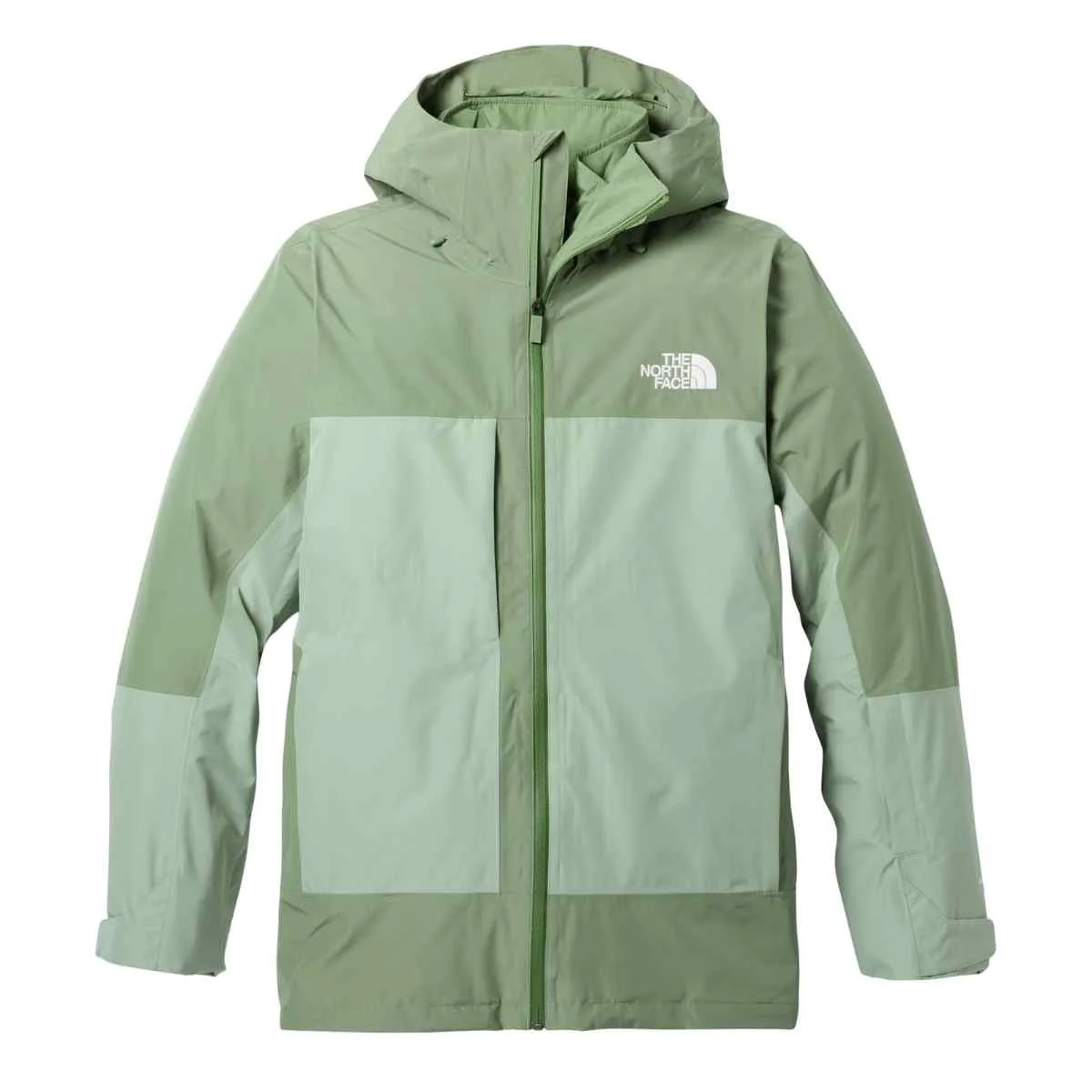
Waterproofing: 4/5; Waterproof, breathable, seam-sealed DRYVENT™ 2L shell with a non-PFC DWR finish
Breathability: 4/5
Insulation: 5/5; 11g/ft2 Thermoball in the inner body, 80g Heatseeker in the collar, yoke, and sleeve
Available sizes: XS to XXL
What we liked: A 3-in-1 jacket with a shell and a separate puffy
What we didn't like: Slightly boring look
Price: $400
With The North Face THERMOBALL Snow Triclimate jacket you get three outerwear options in one. There is a waterproof, breathable shell that you can wear solo, an extremely warm puffy that you can wear as a midlayer or on its own on moderate days, and you can put them all together for a complete kit.
Learn more in our in-depth review of The North Face THERMOBALL Snow Triclimate Jacket.
The North Face THERMOBALL Snow Triclimate
men's
women's
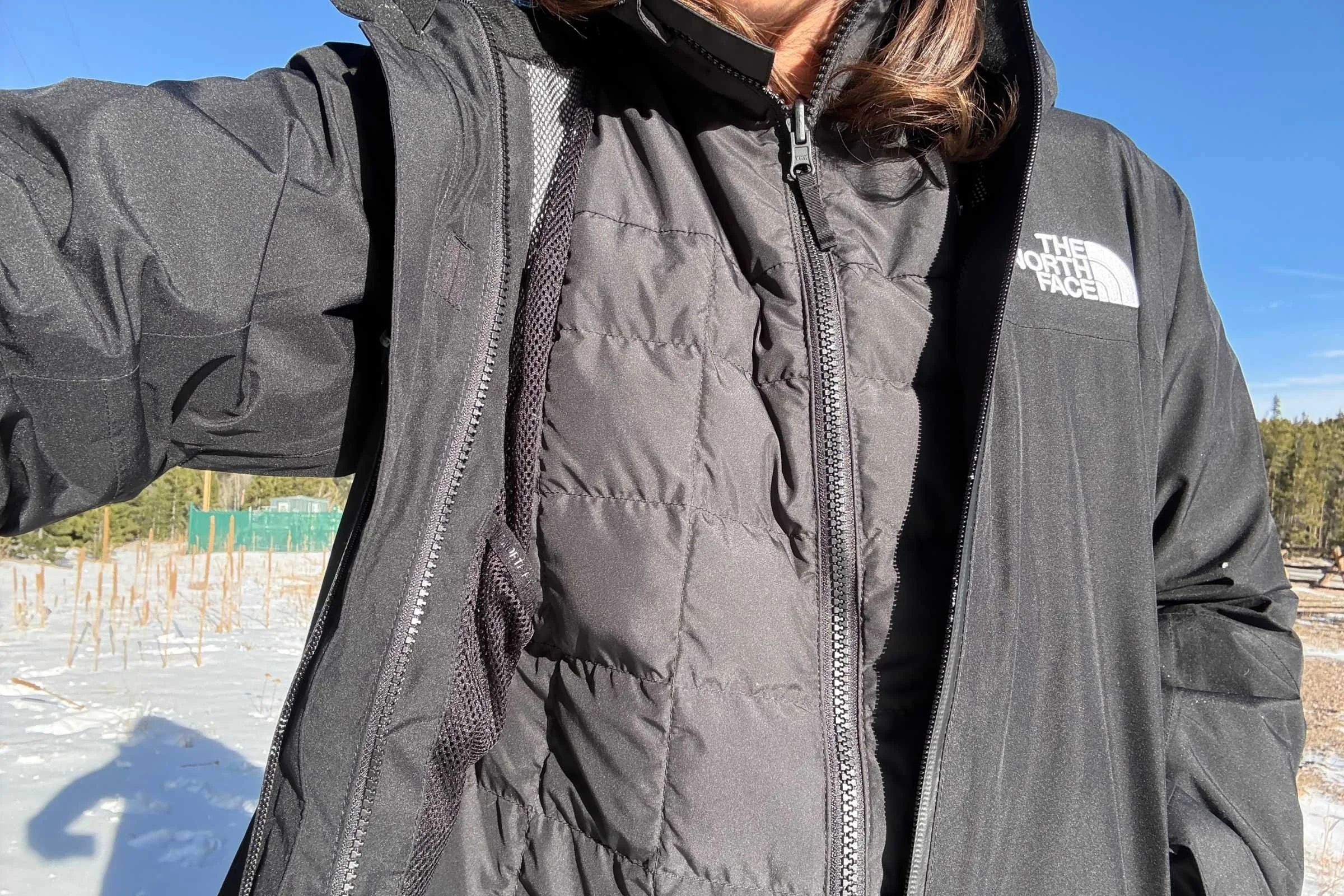
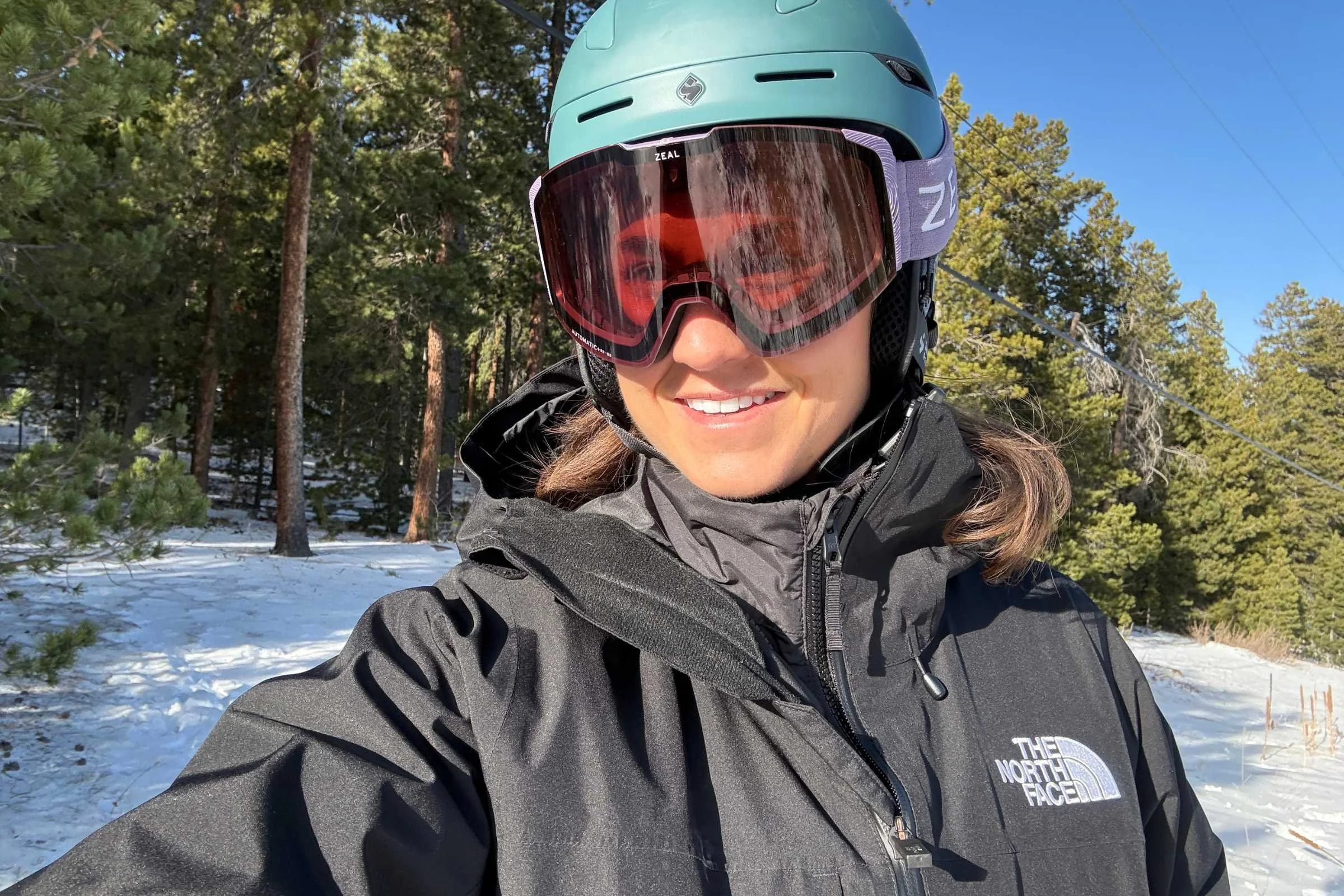
The shell is waterproof and ideal for wet and windy days, but it is too thick (it’s made with a two-layer, seam-sealed Dryvent material) to sport when touring, so use this in-bounds. The puffy paired with the shell made this kit one of the warmest we tested; even on 15-degree days with cloud cover, we stayed extremely warm on the chair and while heading down the slopes. It is fairly breathable (especially if you open the pit vents), but we felt sweat gathering between the puffy and our base layer on sunny days where temperatures were in the mid-20s and above.
Along with the supreme warmth, the features also make this jacket worth the price. There are two hand pockets on the shell, one chest pocket, a pass pocket with a goggle wipe, and an inside drop-in pocket. On the puffy, there is a zippered chest pocket and two hand pockets. The shell has an attached, helmet-compatible hood with cinches at the back and the sides to secure it on especially windy days; the midlayer puffy does not have a hood. Inside the shell is a powder skirt with a grippy elastic hem.
The entire fit is relaxed, bordering on baggy, as the hem sits near the upper thighs, which was a nice added protection when sitting on the snow. Moving, turning, and bending down to strap in was easy in the roomy jacket.
Bonus: the jacket is made with a non-PFC, durable water-repellent finish and recycled polyester throughout.
While we think this jacket is a good option for those who need versatility and extreme warmth, it ultimately didn’t win because we prefer a less boxy cut.
Montec Doom
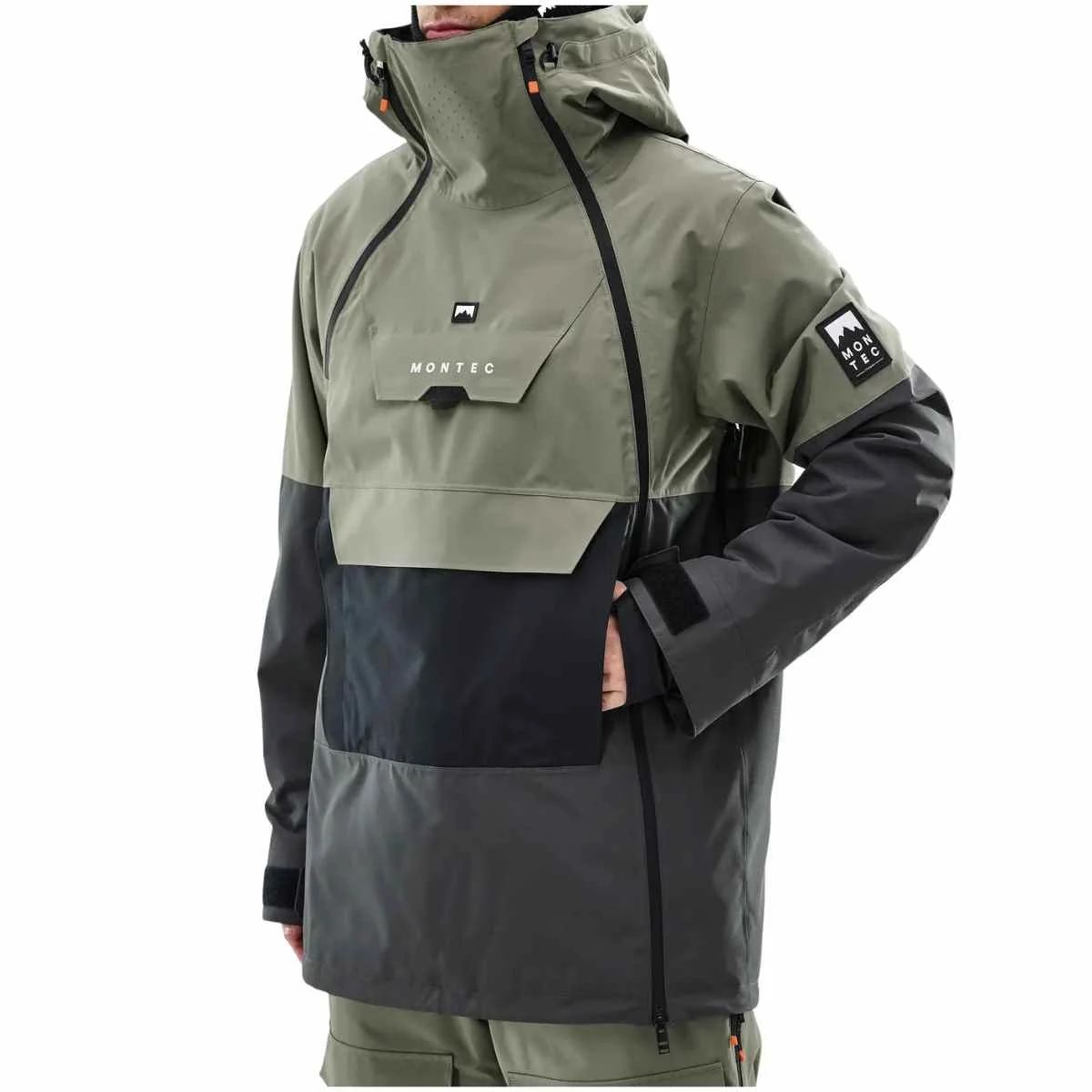
Waterproofing: 4/5; 20,000mm waterproof with Montec’s Shield-Tec bonded waterproof membrane with a PFAS-free DWR; fully taped seams
Breathability: 5/5; 20,000 g/m²
Insulation: 3/5, 60g in the body, 40g in the hood and sleeves; a shell version is available as well
Available sizes: men’s: XS to XXL; women’s XXS to XL
What we liked: An anorak style, but with an asymmetrical zipper, so you don’t actually have to pull it over your head
What we didn't like: Front pocket placement; crunchy and stiff fabric feeling
Price: $269
The Montec Doom jacket features a cool asymmetrical-zipper design that gives it an anorak look without requiring you to pull the snowboard jacket over your head.
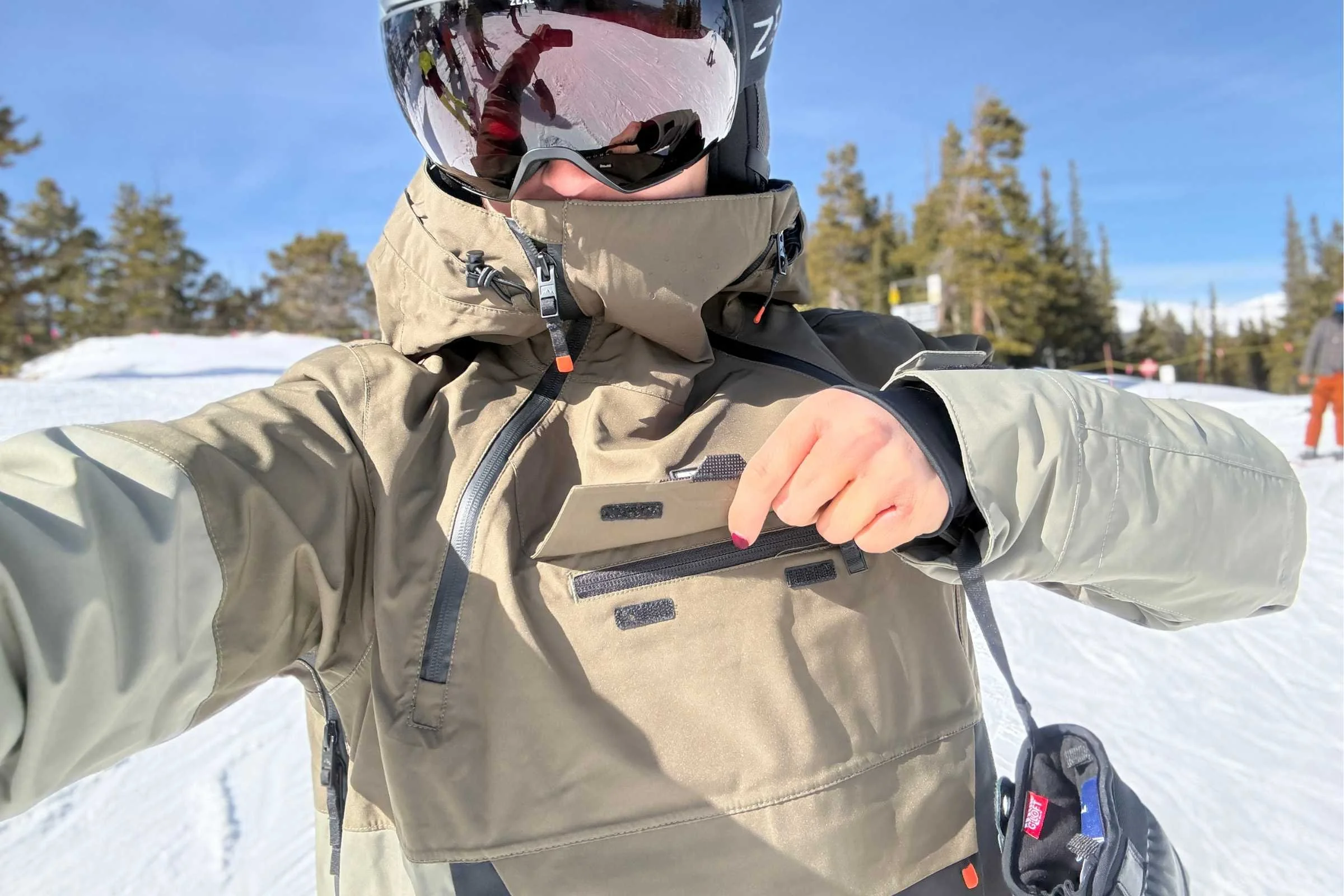
Similar to the Helly Hansen Powchaser Asymmetric Jacket, the pockets are plentiful but look off because of their placement. On this type of jacket, the pockets are in the front, which means if I fill them with my phone, chapstick, and snacks, I’m either looking extra puffy or could possibly catch a front edge and bellyflop onto all of that, which sounds even more painful than a regular fall. The front pockets include a zippered media pocket with an integrated smaller mesh pocket for your phone, and a kangaroo pocket that zips on both sides, with a zipper pocket layered on top. There is a pass pocket on the sleeve and two mesh drop-in pockets inside. None of the pockets are lined with any sort of softer material.
Montec Doom
men's
Women's
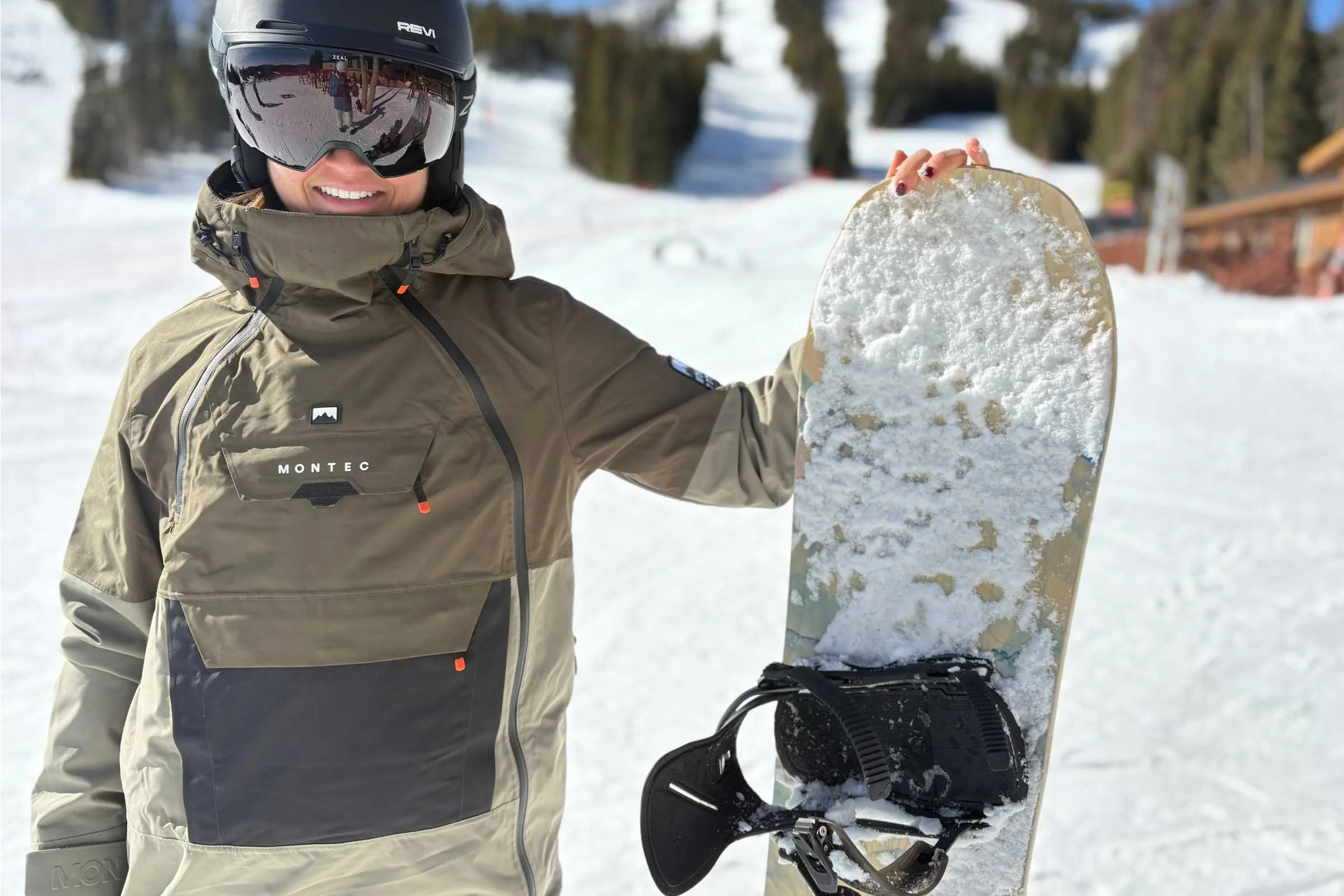
Other features include a helmet-compatible, drawstring-adjustable hood with some insulation, which I appreciate for really cold days. There are unlined pit vents, an attached powder skirt with an elastic, grippy hem (but no snapbacks), and a very soft, large microfleece chinguard for when you are zipped all the way up. The snowboard jacket also has wrist gaiters, which people either love or hate; I like them and found them neither too tight nor too loose.
The jacket really does look different and stylish. The back hem sits below the butt. It is slightly heavier than other jackets we tested, but it provided decent warmth on colder days, like 20 degrees and sunny or slightly cloudy, without needing a midlayer fleece or puffy. Even with insulation, this jacket didn’t keep me warm on extremely cold days (think teens, wind, and no sun), and I needed to layer underneath with an extra puffy, which was slightly uncomfortable and hindered my movement somewhat.
Overall, I like the look and price of this jacket, but not necessarily the full functionality. Only having front pockets is hard, and the jacket is mid-level in breathability; the material feels a bit crunchier and less soft than others. However, if you want a unique look at a good pricepoint—and are more of a fair-weather rider—this jacket is definitely a good option.
Waterproofing: 5/5; waterproof, breathable 2-layer GORE-TEX
Breathability: 4/5
Insulation: none, shell, 2/5
Available sizes: men’s S to XXL
What we liked: Extremely durable and rugged, with full protection from snow, water, and wind
What we didn't like: Pocket placements with zipper angles
Price: $425
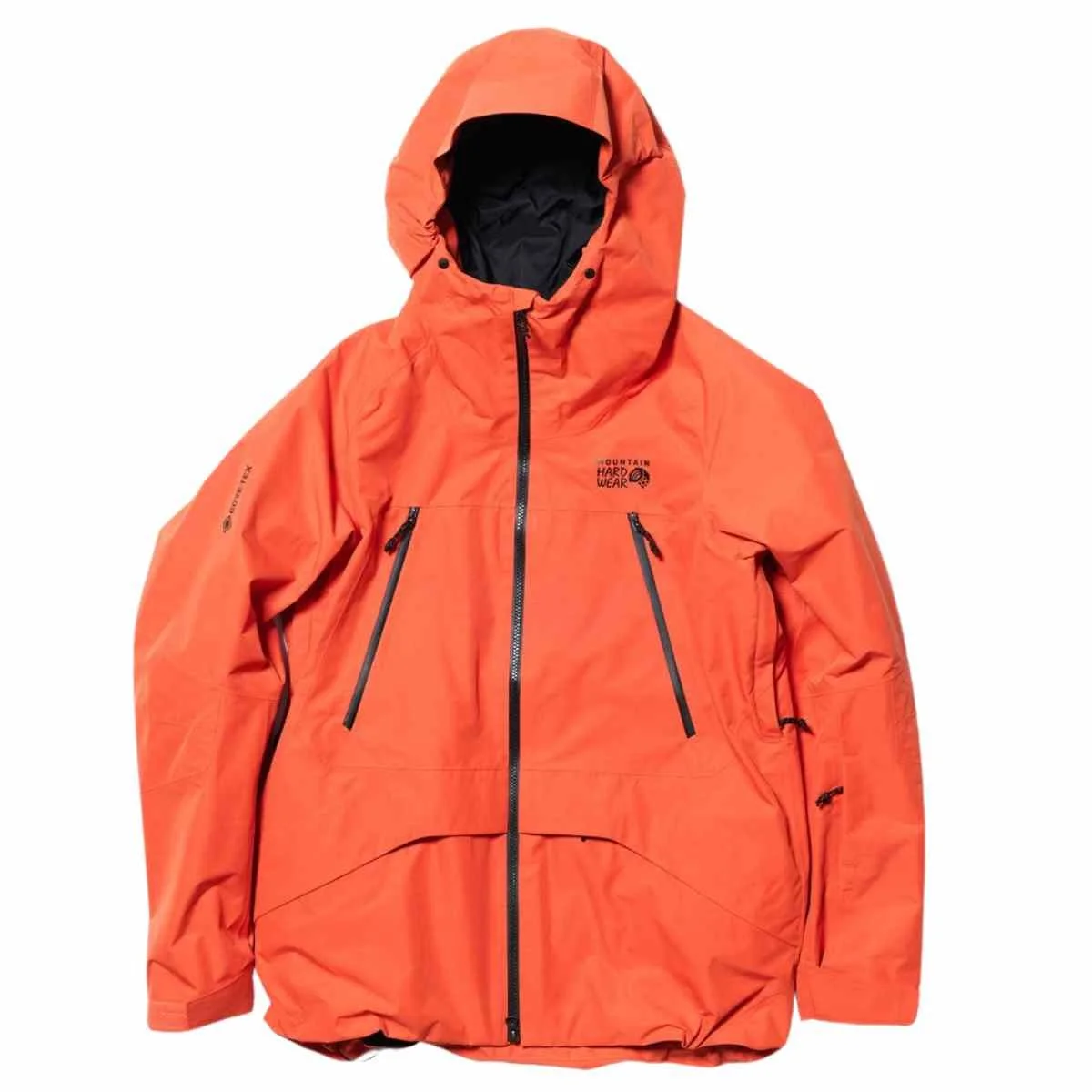
The men’s Mountain Hardwear Sky Ridge with GORE-TEX isn’t necessarily a snowboard jacket with optimal style and the best function for a snowboarder, but it is a solid shell that offers protection from the elements. As our tester said, this feels like a rugged shell rather than a snowboard jacket. He wore this in Japan with feet of snow on the ground and more falling regularly, and he was consistently dry and protected. This is just a shell with no insulation, so a midlayer puffy or fleece is necessary for colder, non-touring days.
Mountain Hardwear Sky Ridge GORE-TEX Jacket
The GORE-TEX two-layer shell gives you a high-quality jacket with superb waterproofness and breathability, but also is extremely windproof. It is a high-density fabric that, to the touch, feels extremely durable and tough. Because of this being a slightly thicker shell, it doesn’t have quite as much flexibility or stretch as other snowboard jackets. This didn’t necessarily hinder movement, but was a noticeable difference from other jackets, like the Burton Covert 2.0. One complaint was that, because of the slightly stiffer shell fabric, the hood was harder to pull over the helmet and interfered with vision and mobility.
Our tester also found the pocket placement difficult to unzip. On the front, there are two large chest pockets and two handwarmer pockets. Both were angled in a way that made them difficult to open and use properly. If you prefer mittens or gloves with short undercuffs, our tester found the sleeve openings slim and difficult to get over his mitts, compared with large, over-the-sleeve gauntlet mittens or gloves.
Features we liked include an adjustable hood, an internal, attached powder skirt with jacket-to-pant integration (no snapbacks), a drawcord hem, and an integrated RECCO avalanche rescue reflector.
Overall, the Sky Ridge is a technical shell for riders who ride in extreme conditions and need protection from super wet weather, but for in-bounds snowboarding (versus in-bounds skiing or backcountry touring), other options offer more freedom of movement and dialed-in features. Choose this if you need a higher-quality build that can withstand extreme weather.
What to look for in snowboard jackets
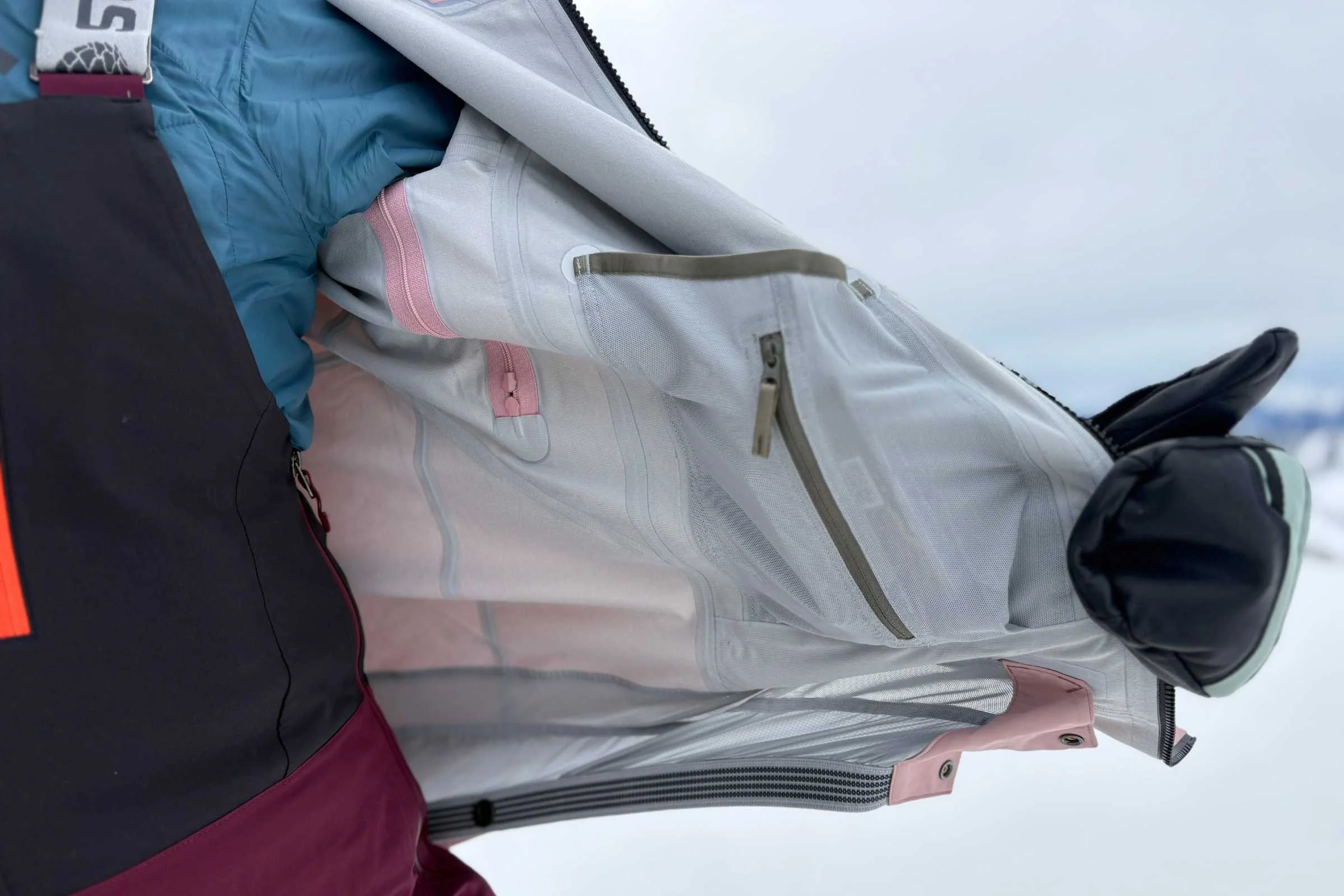
The slim, inner mesh zipper pocket on the Arc’Teryx Sentinel is perfect for a phone or snacks.
Waterproofing and breathability ratings
Most snowboard jackets should be waterproof and windproof. That way, no matter what the condition, you are protected from the elements. Waterproof jackets are made with a membrane woven tight enough where water droplets are then too big to seep in, but vapors are able to escape so that breathability isn’t an issue. Some jackets also (or instead) have a water-repellent finish for added protection.
Editor’s Note: Waterproof gear can often contain polyfluoroalkyl and perfluorochemicals (commonly referred to as PFAs or PFOAs or PFCs). These are considered “forever chemicals” by the EPA, which means they take an extremely long time to break down and are thus very bad for the environment. Some companies have since started making waterproof gear without PFAs. Read more in our article about PFAs and PFC-free waterproofing in outdoor gear.
Insulation types (synthetic vs. down vs. shell)
Snowboard jackets come in a variety of insulation types, which is helpful for different weather conditions, or if you tend to run hot or cold. An insulated jacket uses either synthetic insulation or down insulation. Synthetic insulation, like Primaloft, stays warm when wet and is very lightweight and compressible. Down insulation has a better warmth-to-weight ratio, meaning it provides good warmth at a lighter, more compressible weight, but it takes much longer to dry and loses much of its ability to provide warmth. If you are choosing a down option, look for a Responsible Down Standard (RDS), a standard that promises more humane treatment of the animals they use to source their down.
Another jacket option is a shell, which has no insulation and is used for water and wind protection. With a shell, you’ll need to layer underneath for warmth, like with a base layer, breathable fleece, or a lightweight puffy jacket (more on layering below). Learn more in our How to Layer for Skiing guide.
Snowboard-specific features (powder skirt, pass pocket, goggle cloth)
Snowboard jackets have many features that you’ll find on any ski jacket, like a specific pocket for your ski pass, wrist gaiters, mesh pit vents for breathability, an integrated goggle cloth, numerous inside and outside pockets, and powder skirts to prevent any cold air or snow coming in when you are working your bindings.
Fit and mobility for snowboarding movements
Snowboard jackets are roomier than ski jackets, so there is more ease of movement when carving and bending down to strap in. Jackets will also be longer all around or at least longer in the back hem so as to keep your back/butt covered when strapping in or sitting down.
Ventilation systems
Snowboard jackets have pit vents that are either fully open when unzipped or feature mesh windows to improve breathability. Venting features, like pit zips, are also a regular feature of ski jackets.
Pocket configuration and accessibility
Where the pockets are on a jacket won’t make much difference to your riding, but they're more of a consideration for personal convenience. Likely you’ll get a chest pocket and side pockets (also called hand pockets) near the hips. If you have a jacket that is pull-over style or uses an asymmetrical zipper, then the pocket placement will differ depending on where the zipper is.
Hood design and helmet compatibility
Make sure your snowboard jacket has a hood that fits over your helmet. In the past, this wasn’t always the case, but most jackets today have helmet-compatible hoods. A cinch on the back of the hood also helps tighten the hood around the helmet, keeping it in place on windy days.
Durability for snowboard wear patterns
The outer shell of a snowboarding jacket should be a durable, high-denier fabric that withstands abrasion. That way, you don’t have to worry about wear and tear if you happen to slide on your butt often or nick a few tree branches.
Why you should buy a snowboard-specific jacket
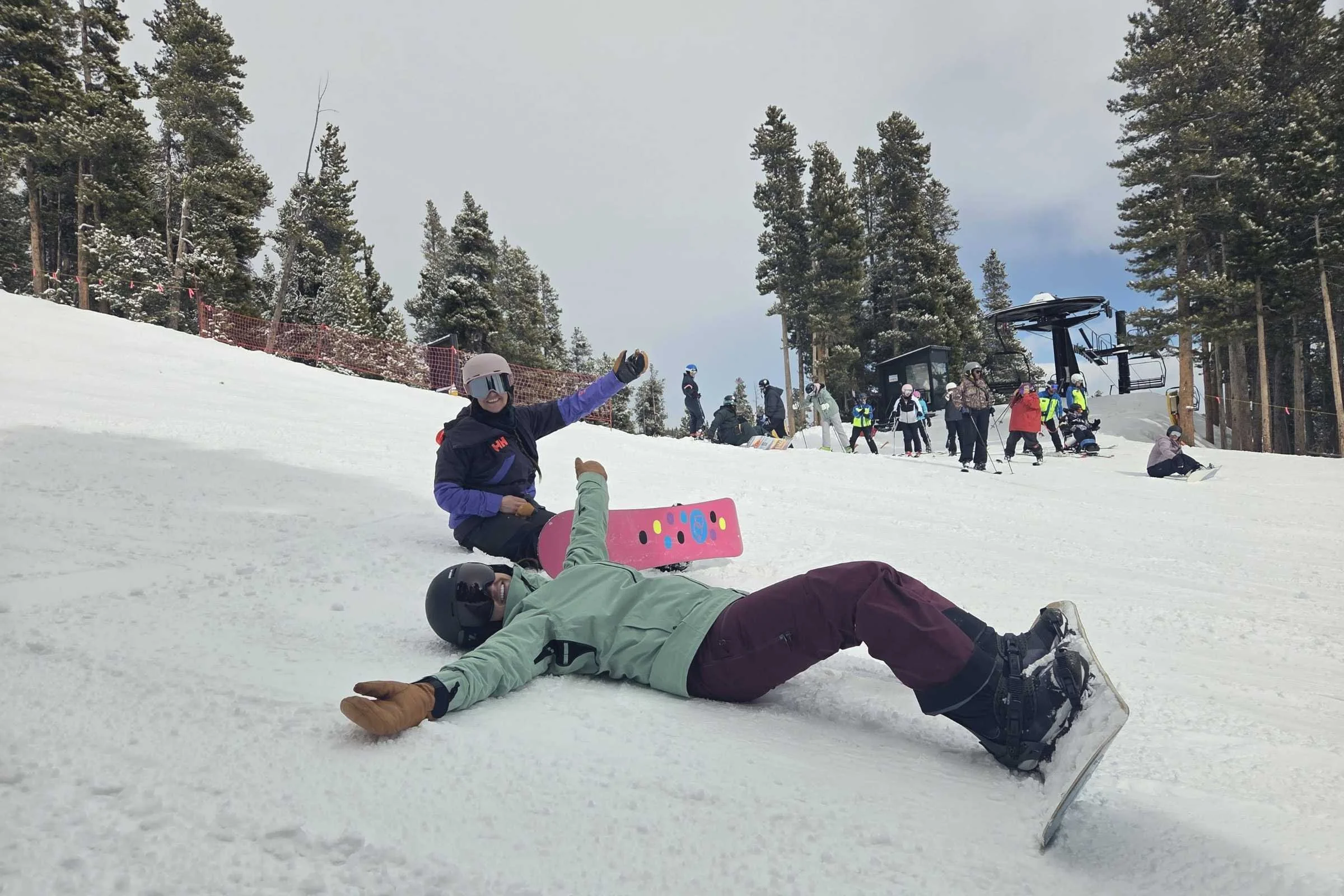
Snowboard-specific fit
Snowboarding jackets have a longer hem than ski jackets to keep your lower back more covered as you strap in and out of your bindings. Consider wearing bibs instead of snowpants, and then you’ll stay fully covered with little room for cold air or snow to get in your kit.
Enhanced mobility
The overall fit of most snowboarding jackets will be looser than that of a ski jacket. This provides more mobility when sitting or bending down to get in and out of your bindings, or when engaging upper body movement for stability and turning.
Snowboard features
Compared to a regular winter coat, a snowboarding jacket will have many more features specific to resort or backcountry snowboarding. Features should include a pass pocket, zippered pit vents, a helmet-compatible hood, a powder skirt, and more pockets. Potential features also include wrist gaiters, lift ticket loops, an integrated goggle cloth, and cinches on the hems and hood for even more secure protection. Although you could use a regular winter coat or a waterproof rain jacket in a pinch, they aren’t going to be nearly as helpful, durable, protective, or as comfortable as a winter-sport-specific jacket.
Durability considerations
Durability for a snowboard-specific jacket doesn’t really differ from that of a ski jacket. The main difference is that snowboarders sit on the ground much more often, so the jacket will likely have a longer hemline.
Style and culture
Since snowboarding grew in popularity in the ’90s and beyond, the aesthetic and style have always been a bit different than the more clean-cut, sleek look of skiers. The tight pants of skiing’s heydays have relaxed a bit over the years (at least for some), so that the style difference between skiers and boarders has begun to narrow. Overall, snowboarders typically sport a baggier look with bolder patterns for a more freestyle vibe.
Weather protection
Snowboard and ski jackets are going to be more waterproof than an everyday coat, since there's a chance of being in heavy snow for hours at a time. With that, snowboarding jackets also need to be more breathable, as you are also working up much more of a sweat than just commuting around town.
If you ride mostly on the West Coast with heavy, wet snow, opt for a fully waterproof, three-layer shell with taped seams, so you’ll stay completely dry and can layer underneath depending on the temperatures that day.
If you ride in the Rocky Mountain region, you could get by with a 2-layer jacket or 3-layer shell, as the snow tends to be slightly drier. Choose an insulated option if you run cold.
If you ride on the East Coast, choose a jacket with a high-durability outer fabric so it can withstand any falls on these typically icy slopes.
Snowboard jackets vs. ski jackets
Style and fit-wise, snowboarding jackets are baggier or looser than tighter-fitting ski jackets. This loose fit helps with mobility when carving or whipping through trees, and it requires you to use your core and upper body more for balance and stability.
If you find a ski jacket that you like and that fits well, don’t say no just because it is technically a ski jacket. Wear what fits, keeps you warm, and gives you confidence. Plus, features (like a pass pocket, pit vents, and a helmet-compatible hood) rarely differ from a ski-specific or snowboard jacket.
How to choose the right snowboard jacket fit
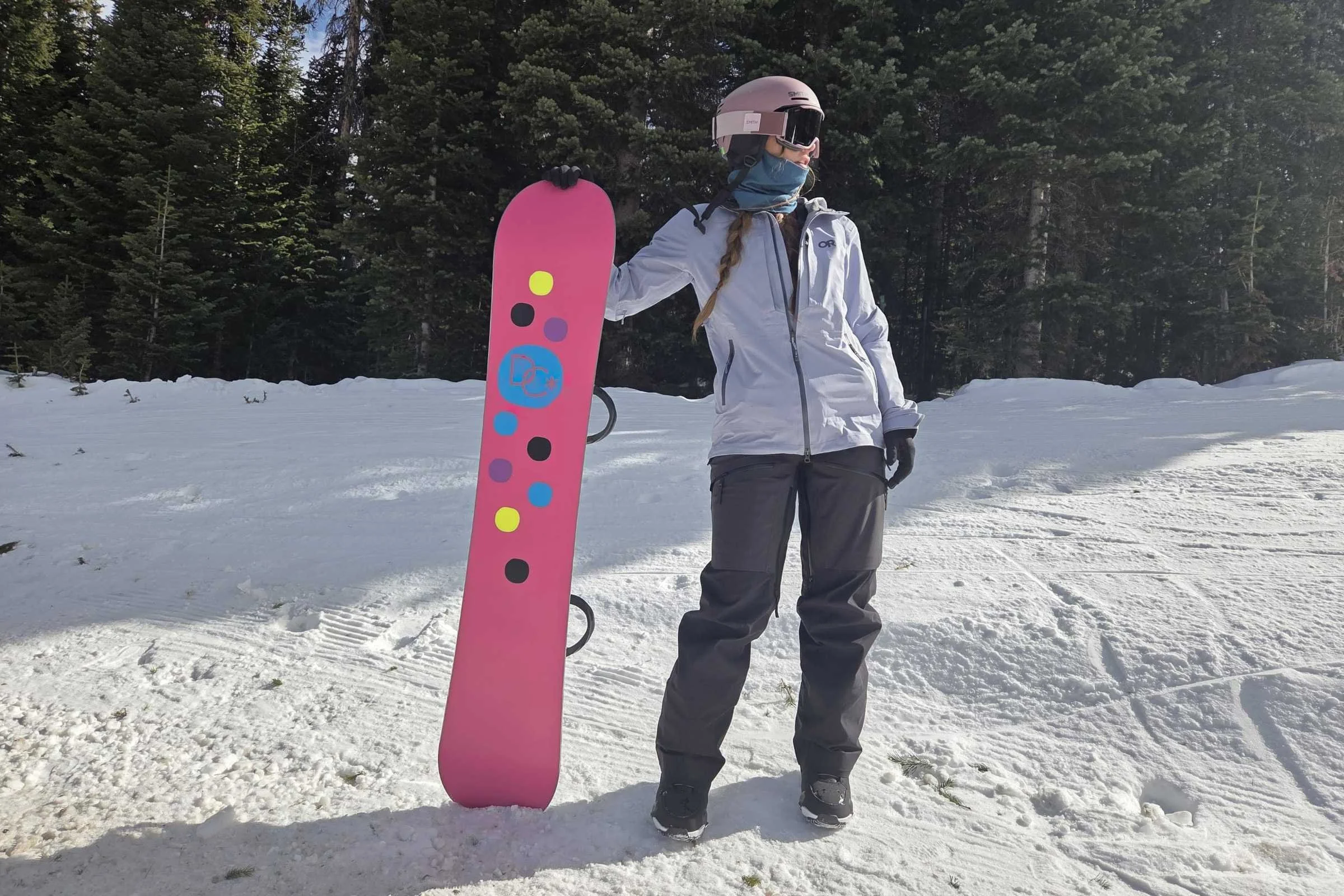
Because snowboard jackets tend to have a more relaxed fit, you should be able to order your regular-size jacket and easily fit a base and a midlayer underneath. Move around a bit when trying it on and mimic a carving movement; it shouldn’t be too tight as to hinder your mobility in the torso and upper body.
Layering with your snowboard jacket
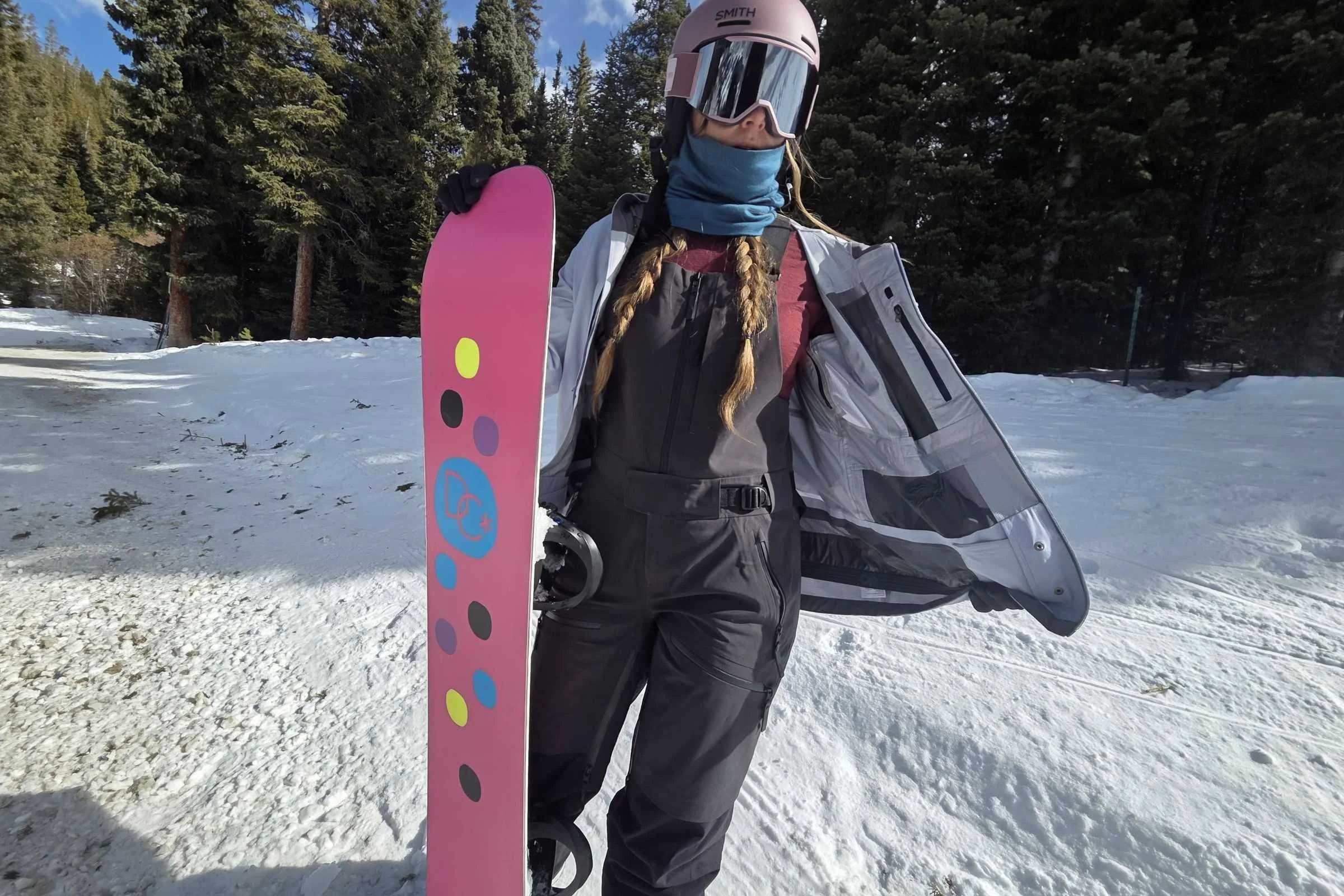
Wearing the right layers is essential, as they can keep you warm, dry, and protected from the elements. Your base layer is the first layer you’ll put on (tops and bottoms) that sits right next to your skin. These are often thinner and should be moisture-wicking to keep you dry (do not wear cotton, which will stay wet and cold). If you wear snowpants that are just a shell and not insulated, consider a thicker base layer for the bottom or fleece-lined leggings.
Your midlayer depends on your jacket; if you are wearing a non-insulated shell, you’ll most likely want a slim, down puffy jacket or a fleece to go under it, unless it is a warm, sunny day. If your jacket is already insulated, a base layer or a base layer and a vest should keep you warm enough on most chilly days. If you are touring or spring skiing, a base layer under a shell might be enough for you to stay toasty.
For a full download on proper layering, check out our guide to winter sports layering.
Care and maintenance tips
After every use, wipe your jacket down to remove any loose dirt or debris and make sure it airs out completely. You don’t have to wash your jacket after every use, but a few times a season (especially if you get quite sweaty) and definitely before storing it to extend its lifespan. Follow the manufacturer's directions, use a tech wash like Nixwax to re-up the water resistance, and never use fabric softener. For waterproofing, you can use a specific wash-in or spray waterproofing as well. Check out our guide on how to care for a waterproof shell to learn more.
FAQ
-
The best color for a snowboarding jacket truly depends on your preference. When snowboarding first became popular on the mountains, the style was much more vibrant with bright colors and funky patterns. Now, you’ll see both skiers and snowboarders in all sorts of colors or patterns, as well as no patterns and simple colors like navy and black. It’s all up to you and your personal style.
-
You technically could snowboard in a regular winter coat, but you would be pretty unhappy with your choice—and pretty quickly, too. Snowboarding jackets are designed for the movements of snowboarding and with specific features in mind; not just those for convenience such as pockets and snowskirts, but also technical features to keep you comfortable, warm, and dry. A snowboarding jacket is going to be waterproof against snow, whereas a regular winter coat could only be water-resistant, or warm enough.
Similarly, snowboarding jackets will be windproof, which is necessary for frigid days with cold winds, whether you are riding down in the trees or up on the lift. The jackets also have vents to keep you from getting too sweaty underneath, which keeps you dry and protected from being cold and clammy.
-
You should replace your snowboarding jacket when it stops keeping you warm. This could be due to insulation being packed down too much, holes in high-wear areas, or the waterproofing no longer working (though you can re-waterproof your jacket). If the jacket is too big or too small, also consider replacing it, as it will hinder your movement when riding.
-
A powder skirt is a part of a snowboarding jacket, near the inside waist or the lower part of the jacket, to keep snow and cold air out. Especially if you wear bibs, they are not necessary. Most insulated jackets come with a powder skirt that may or may not be removable; shell jackets might not come with one to save space for packability. When getting up and down from strapping into your bindings, powder skirts can often rise up uncomfortably and stay up. Rather than using a powder skirt, bibs are a preferred way to keep snow and cold air out for a snowboarder.
-
You can wear a snowboarding jacket for different cold-weather activities. Wearing the jacket for other outings could make it wear out more quickly, but if you need a warm, waterproof coat for snowshoeing, sledding, or walking around town, a snowboarding jacket is a great choice.
-
The difference between a 2-layer jacket and a 3-layer jacket is how they are built with respect to the outer fabric, waterproof membrane, and inner layer. A 2-layer jacket has the outer fabric bonded to a waterproof, breathable membrane, with an inner, loose-hanging liner to keep sweat and abrasion away from the membrane. Two-layer jackets are often more affordable and slightly bulkier, as they tend to include insulation. A 3-layer jacket has all three layers bonded together as one (the outer fabric, waterproof membrane, and inner liner or backer). Three-layer jackets are often more expensive, slightly stiffer, and are shells with no insulation.
-
You do not technically need a different jacket for different conditions. A high-quality, waterproof snowboarding (or ski) jacket will be able to withstand many seasons of whatever conditions you encounter. If it’s extremely cold outside, layer up more underneath; if it’s a warm spring day, open up those vents or pop on a puffy or hoodie instead.
The only consideration for more than one jacket or a specific-condition jacket would be if you tour often in the backcountry. When touring or skinning uphill, you will be working up a sweat, and an insulated jacket will be too hot, and a shell will be much better for this type of intense workout.
How we researched and tested
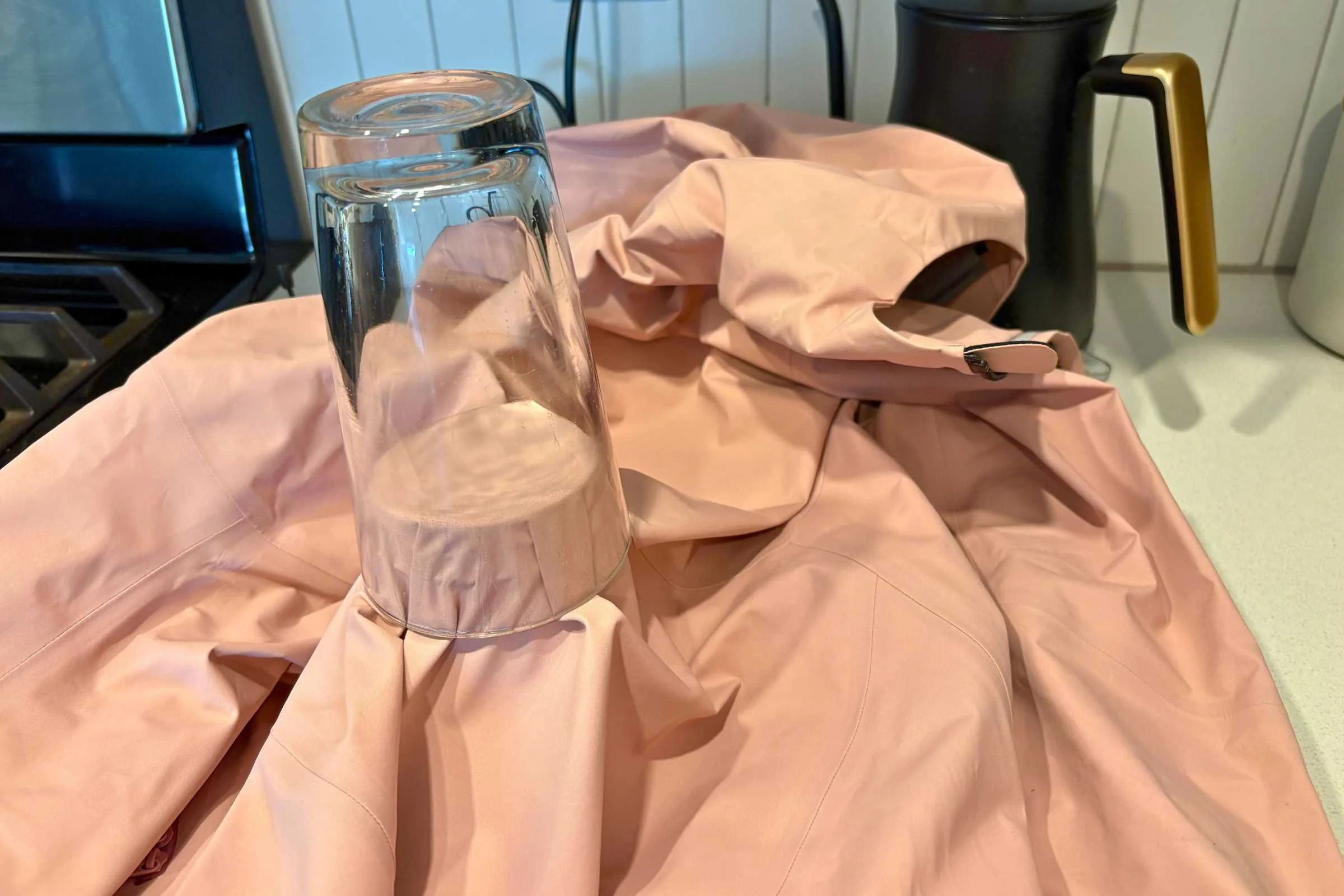
We had men's and women's testers wear snowboarding jackets in Colorado, Utah, and Japan, covering a range of conditions, temperatures, precipitation, and types of snowboarding. Over a season of snowboarding, we wore the jackets back-to-back, comparing them in similar weather and on longer days, both in-bounds and in the backcountry.
Temperatures ranged from 15 degrees with clouds and winds to low thirties with sunny skies; we experienced cold, wind, snow, sun, and warmth. We wore the jackets while hiking, touring, and exploring the backcountry, and while carving on groomers, steeps, and through trees to test mobility, flexibility, and stretch. While riding, testers were asked to evaluate waterproofing, windproofing, breathability, and convenience, functionality, and placement of features like hoods and pockets.
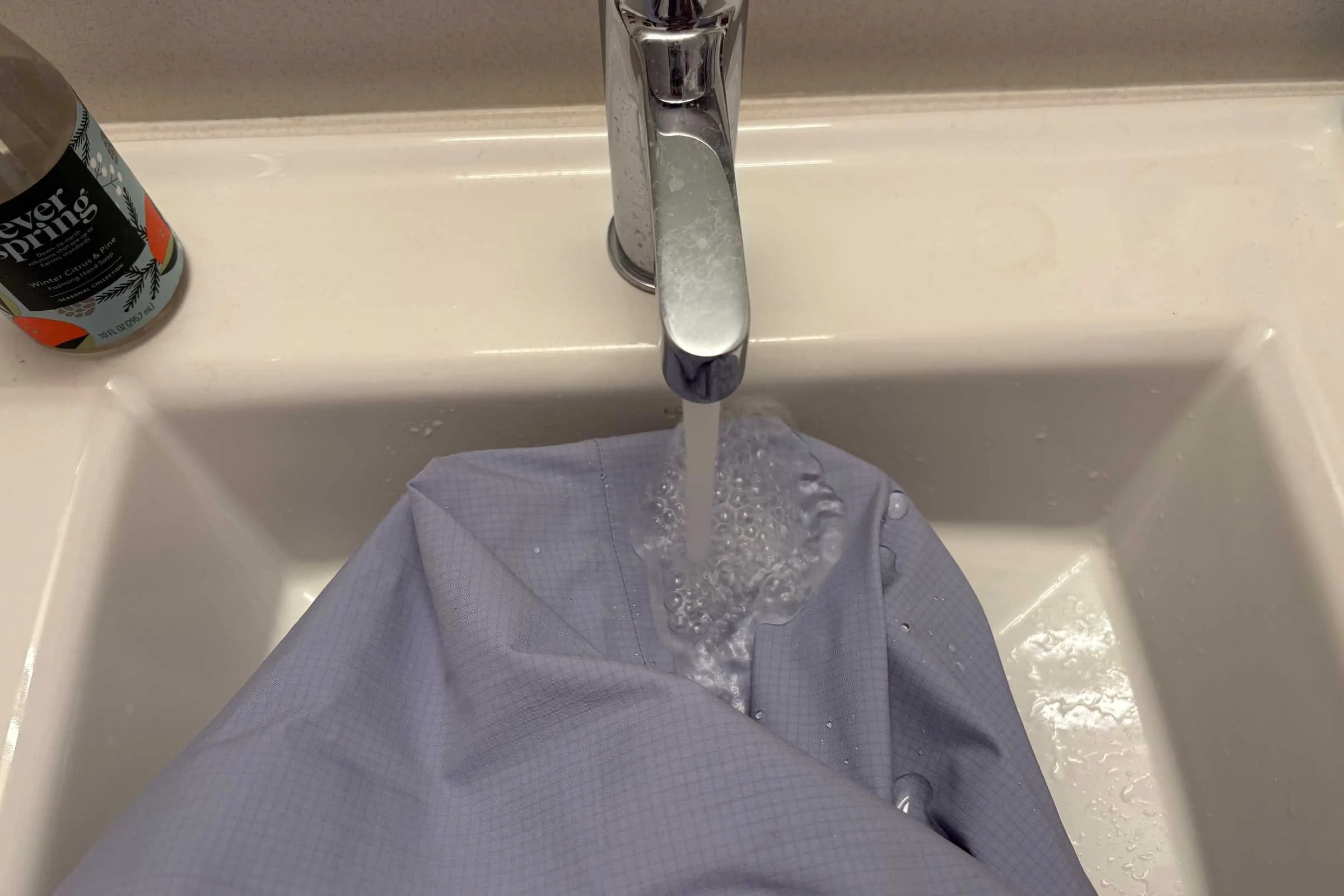
For controlled "lab-like" testing, we tested the jackets’ waterproofing by running a faucet over various parts of the jackets for a minute at a time, like the back panel, shoulder seams, and pocket zippers. We tested breathability by seeing how easily steam from a mug of hot water seeped through the fabric. We considered how easy all the features were to use with mittens or gloves on, and decided we wanted a slightly more stylish jacket for snowboarding. The jackets had to be flexible enough that we could easily bend down to strap in our bindings, roomy enough to layer an extra puffy underneath on extremely cold days, and with a hem that is just a bit longer to give an added layer when sitting on the snow.
OUR TESTING PROCESS
We tested snowboard jackets back-to-back on resort laps and in the backcountry, then added at-home waterproofing and breathability checks for controlled comparisons.
How we tested
- Rode in-bounds (groomers, steeps, trees) to test mobility
- Toured, hiked, and explored the backcountry in varied conditions
- Did a faucet test (1 minute per area: seams, zips, panels)
- Checked breathability using steam from a mug of hot water
What we evaluated
- Waterproofing, windproofing, breathability, warmth
- Hoods + pockets: function, placement, convenience
- Features and usability with mittens/gloves on
- Fit, style, sizing range, and sustainability notes
Why you should trust us / About the author
Although I grew up in Wisconsin, my family got me on skis when I was just three years old. At ten, I decided to follow in my older brother's footsteps and try snowboarding. I haven’t stepped on a ski since and, instead, have been snowboarding for more than 25 years, with more than half of those seasons spent out west once I moved to Boulder, Colorado.
I have dabbled in park riding over the years, but my go-to is moguls, trees, and steeps as I’ve advanced to an experienced rider; I have spent time in the backcountry as well. When it comes to testing snowboarding gear, I’ve spent numerous seasons sporting many different helmets, boots, bindings, and apparel to break down the minutiae of what truly works and what doesn’t when it comes to what I need as a snowboarder.
Read more on Mattie Schuler’s website or author page.