Altra Lone Peak 9+ GTX Trail Running Shoes Kept My Feet Dry Through It All
A waterproof, zero-drop trail running shoe with excellent traction
April 9th, 2026
Home > Gear Reviews > Running
Our Verdict
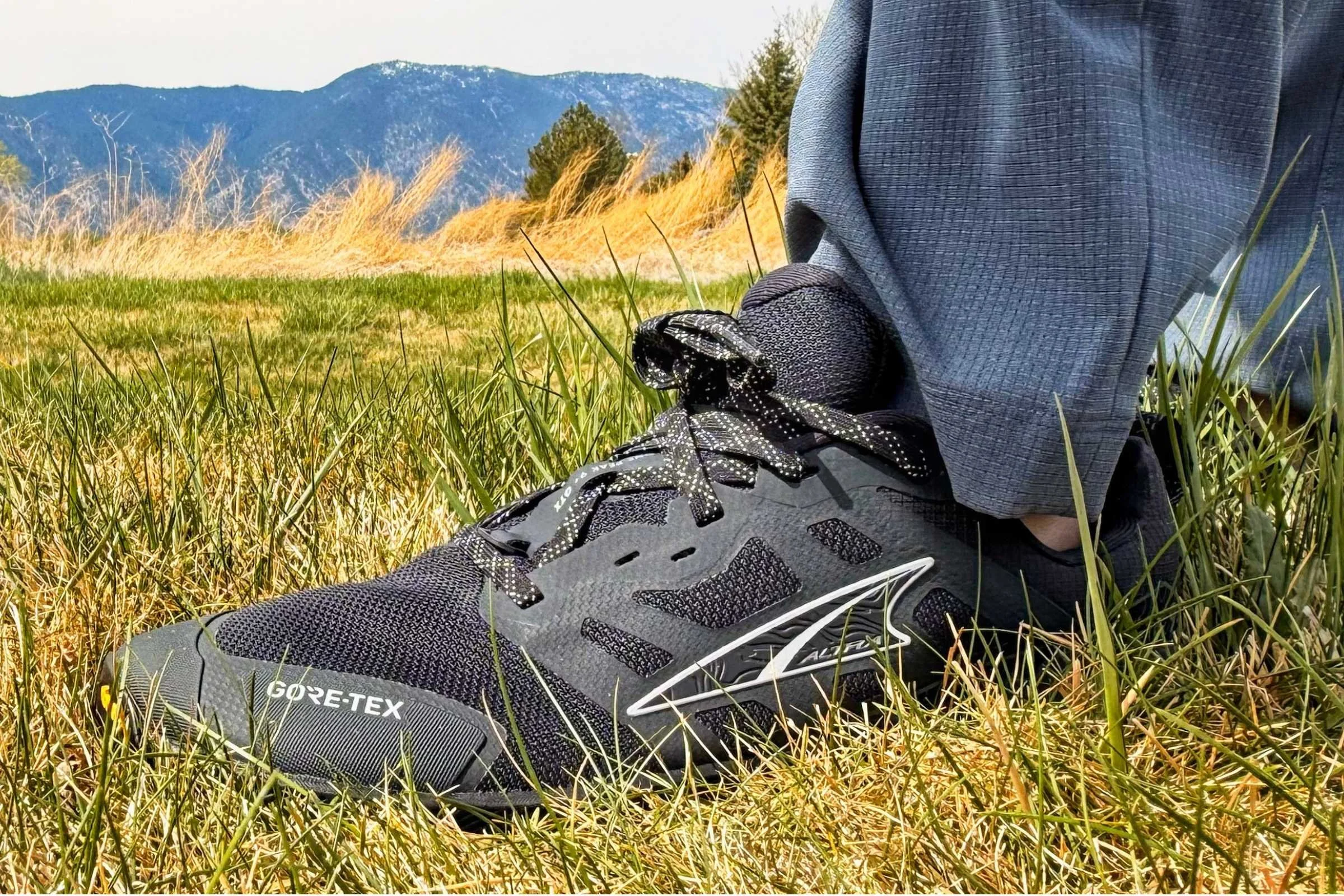
The Altra Lone Peak 9+ GTX is a GORE-TEX waterproof shoe with a durable Vibram sole (that’s what the “+” means), and one of four versions of Altra’s all-time most popular trail running shoe. This full-loaded iteration is ideal for running and hiking sloppy trails—or even snow—while still featuring Altra’s original wide toebox fit and zero heel-toe drop ride.
We’ve been running in numerous models of the Lone Peaks over the last several years, and have retired nine pairs that have carried us thousands of miles. We tested both the men’s and women’s versions of these shoes, running over 70 miles through historic winter snowstorms and horrifyingly deep springtime mud puddles to see how they compare to other versions and other zero-drop trail running shoes.
The Vibram outsoles of these plus-version shoes show their true abilities on wet ground. They stick better in snow and squishy, slippery mud than any other Lone Peak we’ve worn. The GORE-TEX layer does an impressively thorough job keeping our socks dry from everything but foot sweat.
Though they’re significantly stiffer out of the box than previous versions, they loosened up over a few runs, and we didn’t mind their broken-in flexibility. We couldn’t detect any noticeable loss of breathability compared to the non-GORE-TEX versions, and the extra 2/3 oz felt like nothing.
Ultimately, if you’re a fan of the Altra Lone Peak line or searching for a wide-forefoot, zero-drop option for gross trails that will keep you dry and upright no matter the weather, we solidly recommend this version of the Lone Peaks.
Altra Lone Peak 9+ GTX Trail Running Shoes
men's
Women's
We create reader-supported, objective gear reviews independently selected by our editors. This story may contain affiliate links, which help fund our website. When you click on the links to purchase gear, we may get a commission, without costing you an extra cent. Thank you for supporting our work and mission of outdoor coverage for every body! Learn more.
Altra Lone Peak 9+ GTX specifications
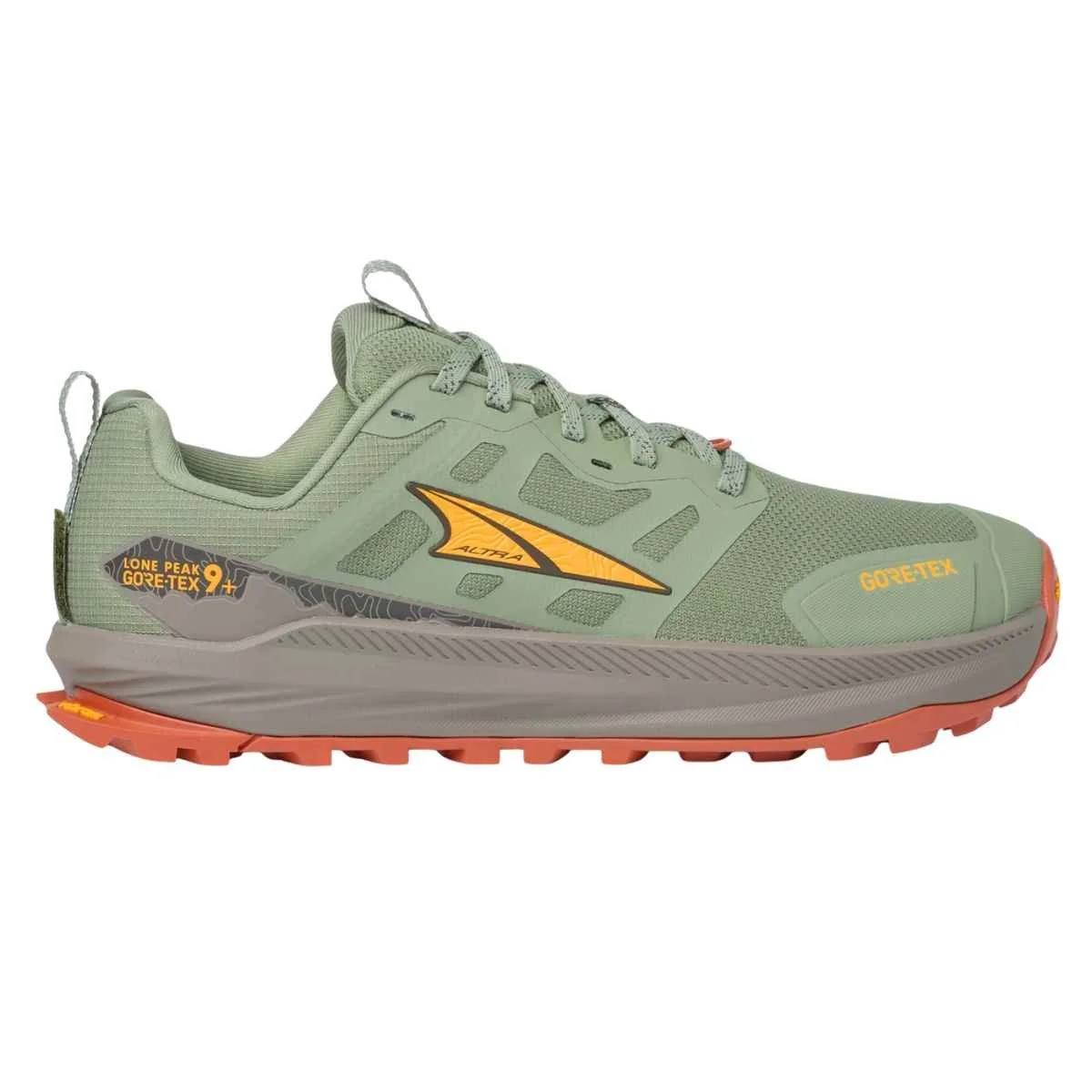
Price: $180
Weight (per shoe): 10 oz (women’s), 12.4 oz (men’s)
Heel-to-toe drop: 0 mm
Stack height: 25 mm
Cushion level: Moderate
Midsole material: Altra EGO
Outsole: Vibram Megagrip
Upper: GORE-TEX Invisible Fit and 85% RPET
Lug depth: 4 mm
Fit: FootShape toe box (wider than most shoes and most trail running shoes, but on par with a lot of other barefoot shoes)
Available sizes and widths: 5.5 - 12 (women’s), 7 - 16 (men’s); no alternate width options available
Suitable for vegans: Not stated
Best for
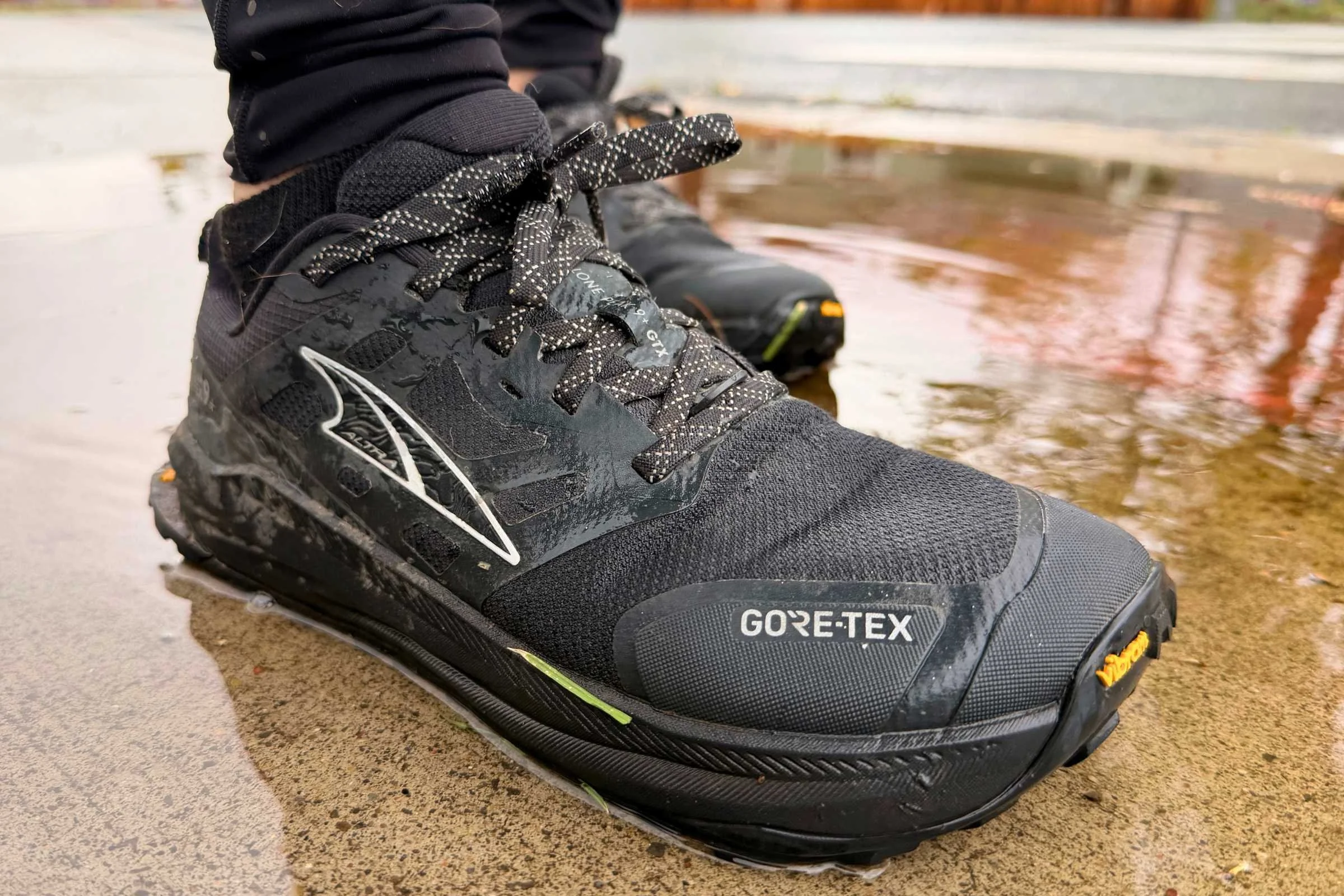
The Altra Lone Peak 9+ GTX trail running shoes are a waterproof upgrade in the Lone Peak lineup.
Trail running in wet conditions
Hiking in muddy or rainy environments
Runners who prefer wide toe boxes
Zero-drop running fans
Long-distance trail runners
Comparison table
| TRAIL RUNNING SHOE | WEIGHT MEN'S (PAIR) | WEIGHT WOMEN'S (PAIR) | CUSHION | HEEL DROP | STACK HEIGHT |
|---|---|---|---|---|---|
| Altra Lone Peak 9+ GTX Men's Women's |
1 lb 8.8 oz | 1 lb 4 oz | Moderate | 0 mm | 25 mm |
| Altra Lone Peak 9+ Men's Women's |
1 lb 7.1 oz | 1 lb 2.6 oz | Moderate | 0 mm | 25 mm |
| Altra Lone Peak 9 Men's Women's |
1 lb 6.3 oz | 1 lb 2.6 oz | Moderate | 0 mm | 25 mm |
| Altra Timp 6 Men's Women's |
1 lb 7 oz | 1 lb 3 oz | Moderate | 0 mm | 30 mm |
| Notace Yama T1 Men's Women's |
15 oz | 15 oz | Minimum | 0 mm | 15 mm |
What we liked
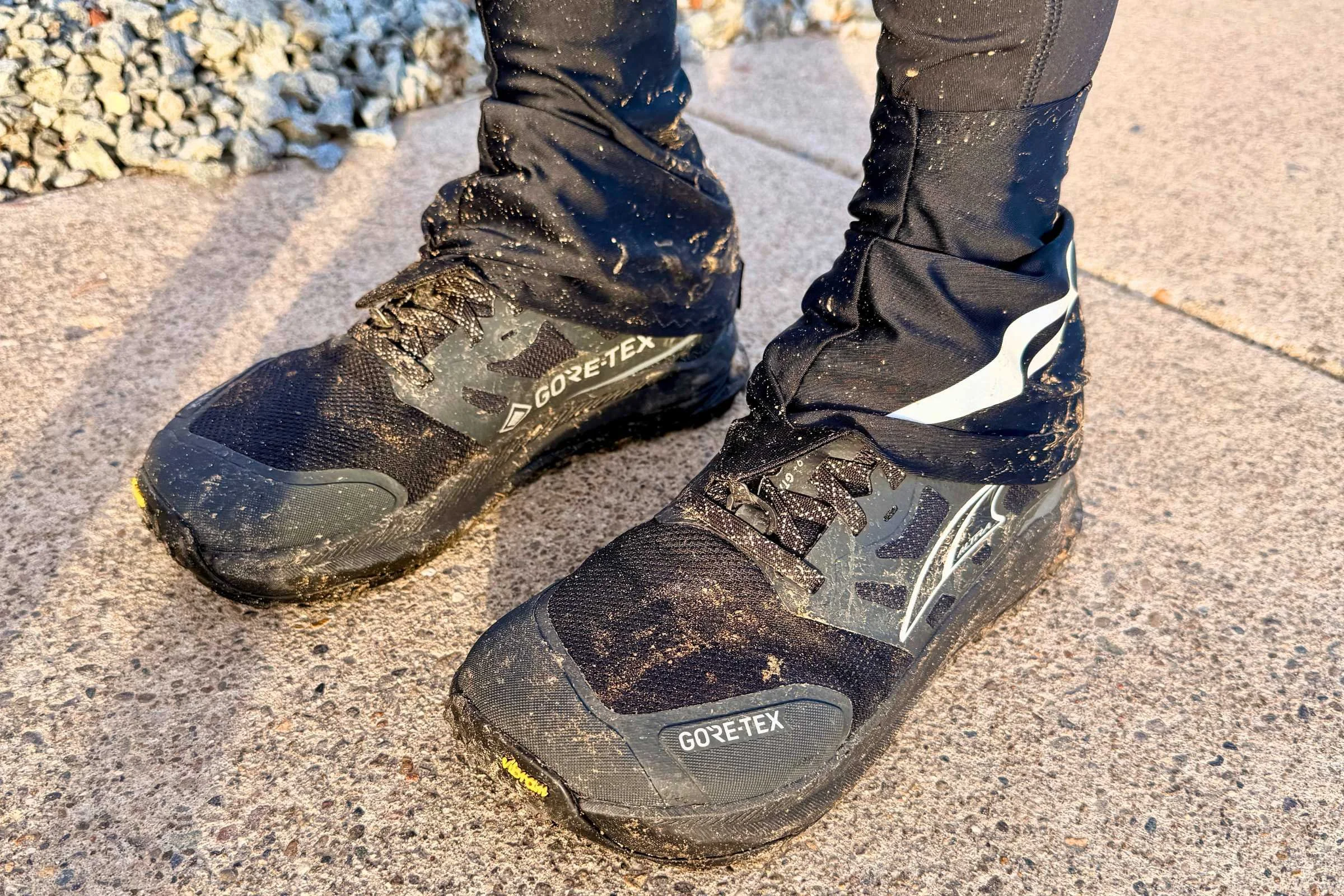
The Altra Lone Peak 9+ GTX shoes are compatible with gaiters for extra protection.
Wide, roomy toe box
Comfortable zero-drop platform
Reliable waterproof protection
Good traction on wet and challenging terrain
Versatile for running, hiking, and walking
Easy gaiter attachment points
Flexible sole (after break-in period) compared to other waterproof shoes
What could be better
Vibram sole is stiffer and requires breaking in; still not as flexible as MaxTrac version (non+)
Tall lugs can be felt on flat surfaces
Cushioning may feel minimal for some runners but maximal for true barefoot enthusiasts
Less packable than other barefoot shoes
No wide sizes
How we tested
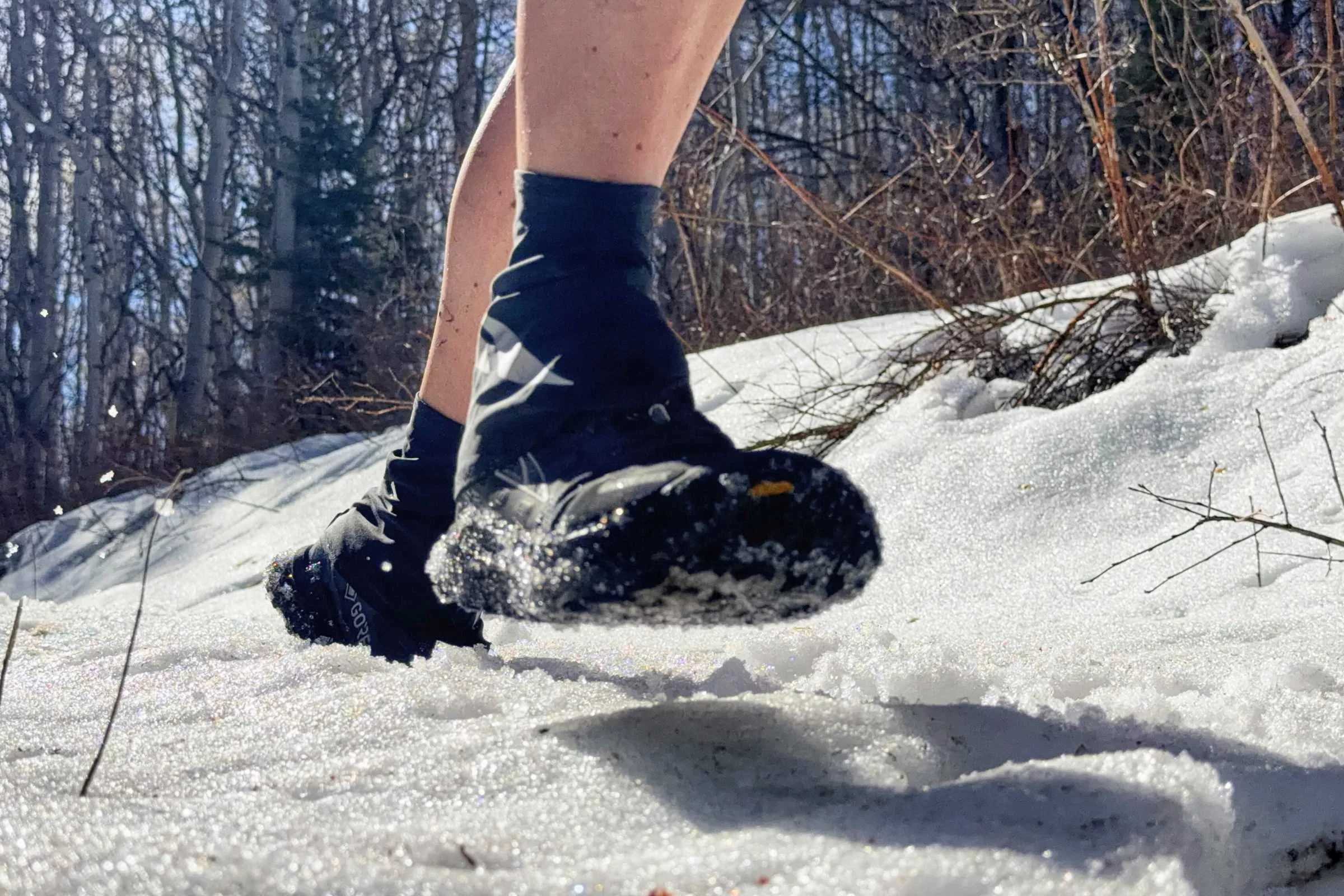
We tested the men’s and women’s versions of the Altra Lone Peak 9+ GTX shoes. We’ve run over 70 miles in them so far, ranging from short walks to 15-mile runs. We’ve also worn them during regular life (walking dogs/babies, going to work, etc.) for several weeks.
We ran during multiple snowstorms, just after the snow fell, as the snow was melty and slippery, through thick, slippery desert mud, and crossing rocky streams. Also, we had plenty of nice weather running on dry hardpacked trails and loose, gravelly surfaces of varying pebble sizes. Terrain types varied from snow, ice, hard dirt, loose slopes, deep gravel, granite stones, asphalt, and cement (including the polished cement floor of a warehouse).
Additionally, we did side-by-side comparisons between the Lone Peak 9+ GTX and other similar shoes, including some runs wearing the 9+ GTX on one foot and the 9+ on the other foot to compare breathability and water permeability. We also tested them alongside our trusty pair of Lone Peak 7s, the Merrell Trail Glove 7, and other pairs of zero-drop shoes. Other barefoot shoe comparisons: My brother and I both rotated through wearing each pair for an activity or a regular day out and about. See why the Lone Peaks made our best trail running shoes for hiking guide.
Performance in the field
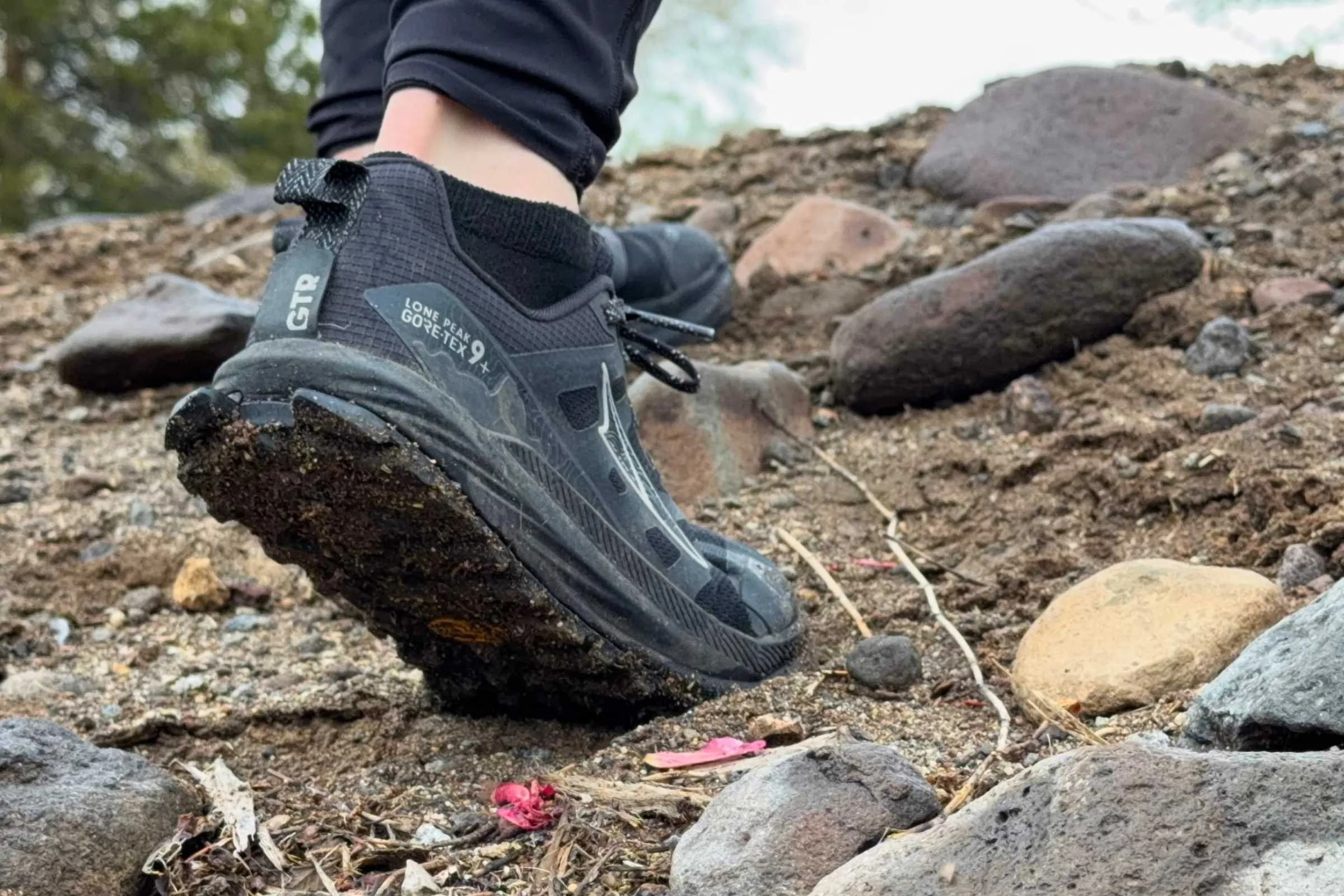
Fit and sizing
True to Altra’s legacy of giving your toes room to splay out, this version of the Lone Peak shoes has the same wide toe box that Altra fans will recognize. The laces easily create a snug fit through the midfoot that keeps the shoe from flopping around or slipping on slopes during a run, while maintaining ample room for most feet to spread, planting firmly with each step.
Wider-footed folks don’t get the same experience, though. With no “wide” version available, runners with a wider midfoot still have to use the same space and just change the laces to adapt the fit. While this is doable, the heel cup is unchanging. Most runners find the highly fitted heel cup to do an excellent job staying put without blisters or hotspots, but if you have a wide heel, the Lone Peaks may not be right for you.
Runners with a wide forefoot will appreciate the wide toebox, though their feet won’t be able to spread as wide, proportionally, as those of a runner with average or narrow feet. Still, for most runners, the Lone Peak provides an adaptable and forgiving fit that works on most feet.
When it comes to sizing, the men’s and women’s versions are slightly different from one another. In our experience, the women’s version fits fairly true to size, but if you have wider-than-average feet, you may appreciate sizing up a half size.
For example, Maggie normally falls between a 7.5 and an 8, has slightly wider than average feet (though rarely has to purchase wide sizes), and a long big toe, and finds that the 8 is a better fit for her feet. On the other hand, we found the men’s version runs slightly large. Our male tester typically wears a size 10.5 and has wide feet, often purchasing wide or extra-wide shoes. He finds the 10.5 regular to be an acceptable width but slightly too long, and would prefer a 10 wide—though the Vibram-soled Lone Peaks aren’t currently available in wide versions (only the regular Lone Peak 9 has wide sizing).
Comfort and cushioning
For a 25mm-stack shoe, which is lower than most trail running shoes, the Lone Peak 9+ GTX still provides comfortable cushioning even on long runs. Particularly for those who are already fans of the barefoot shoe movement, the Lone Peaks feel practically plush in comparison. In fact, the Lone Peak 9+s are our pick for best for long distances in our Best Women’s Trail Running Shoes guide.
Maggie started as a barefoot runner back in 2009 in a pair of white and lime-green Vibram FiveFingers. After a couple of years running mixed sidewalks and dirt trails, she decided she wanted a little more cushioning for her joints to push on longer runs up and down cement curbs. Though she dabbled in a few other discontinued models, she landed on the Altra Lone Peak line and has been a diehard fan ever since—even wearing them to win first place among women at the 2025 Auburn Trail Half Marathon, an endurance race covering 2,500 feet of elevation gain and loss over the steep granite slopes that make up the American River Gorge. For her, the Lone Peak 9+ GTX cushioning is more than enough to keep her zero-drop-loving feet comfortable and happy for the roughly 1,000 miles she runs annually.
Compared to many other trail running shoes, the Lone Peak line traditionally has more groundfeel. The 9+ version, with stiffer Vibram Megagrip outsoles, has noticeably lower ground feel than previous iterations compared to Altra’s MaxTrac outsole. Still, the thinness of the sole does allow good ground feel for tactical trail maneuvers, and the Vibram Megagrip material loosened up a bit (though after 70 miles, it has yet to become as flexible as the MaxTrac sole), to still be considered an above-average ground feel shoe.
For barefoot runners, this change to the stiffer Vibram sole can feel quite dampening. If you prefer more groundfeel, you may opt for the Lone Peak 9s, with the more flexible MaxTrac outsole—though see our notes about traction differences before making your final decision.
In line with the rest of the Altra Lone Peak ethos, the 9+ GTX version has rather minimal arch support, though not zero! Flat-footed runners will still notice a small arch in these shoes, and those seeking strong arch support should try another model or add their preferred insole.
Traction and grip
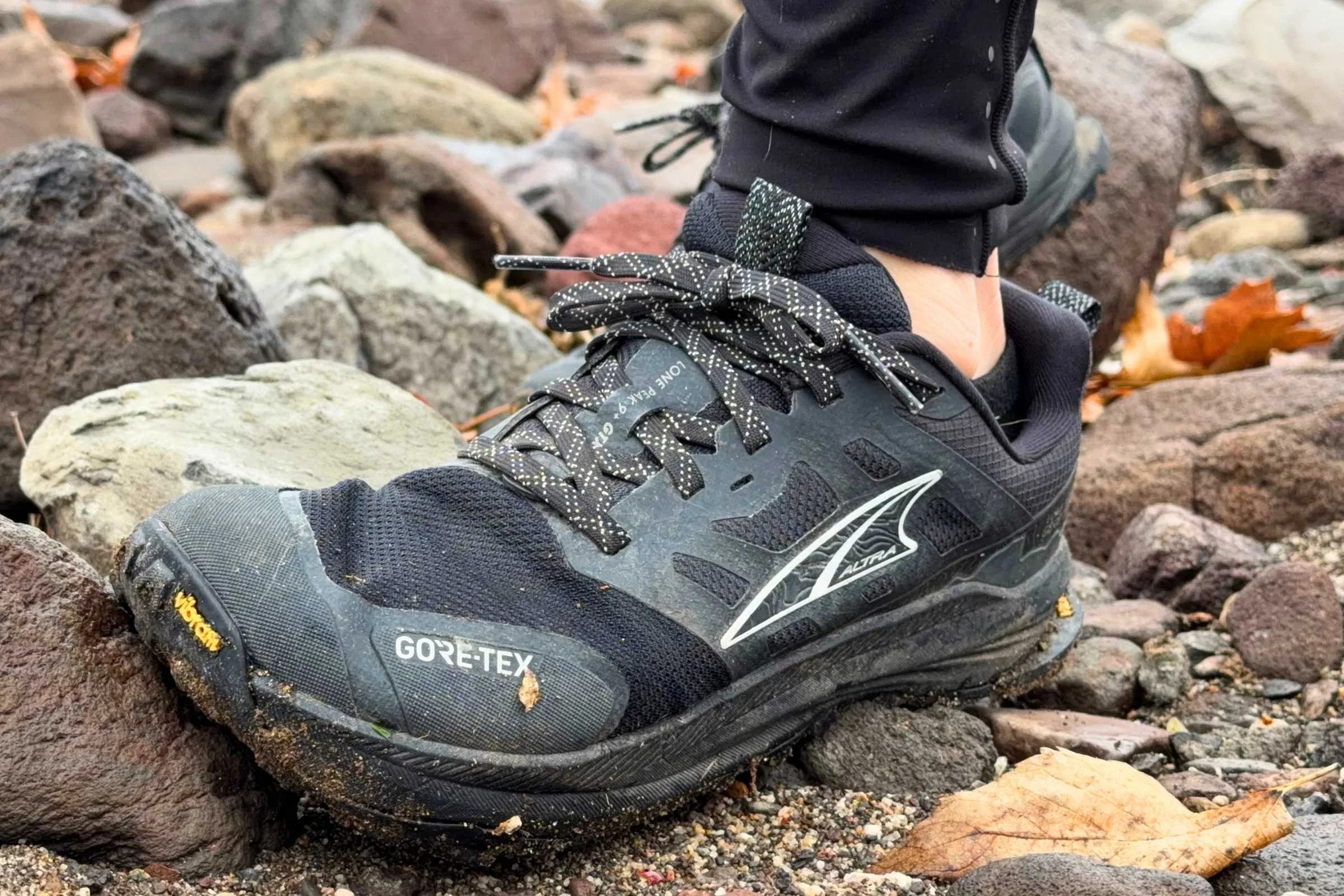
Altra has made minor changes to the lug pattern on the bottoms of the Lone Peak 9s and 9+s. While largely the same as previous iterations, the forefoot lugs of the 9 and 9+ models have a flat top section instead of the standard inverted V shape of old. The back portion of the heel also now has a cut-out section in the center. While we couldn’t tell any traction difference from either of these changes, the biggest change we found comes from the use of Vibram Megagrip over Altra’s proprietary MaxTrac outsole.
For dry trails and gravel surfaces, we think these two outsoles perform largely the same. But in wet conditions, the improved performance of the Vibram Megagrip material is highly noticeable. We were very impressed with how well the Lone Peak 9+ GTX gripped while running through 2.5-inch deep sloppy mud puddles and over wet granite stones crossing streams.
We even put them to the test on steep slopes in the snow, and we only felt minimal slipping in loose snow, but a seriously impressive grip over hard-packed and tracked snow. Normally Maggie wears microspikes to run her usual trail routes in the winter—even in previous versions of the Lone Peak—but she found she didn’t need them with the Vibram-soled Lone Peak 9+ GTXs on her feet!
For these reasons, the Lone Peak 9+ GTX is our Best for Running in our Best Minimalist Shoes guide.
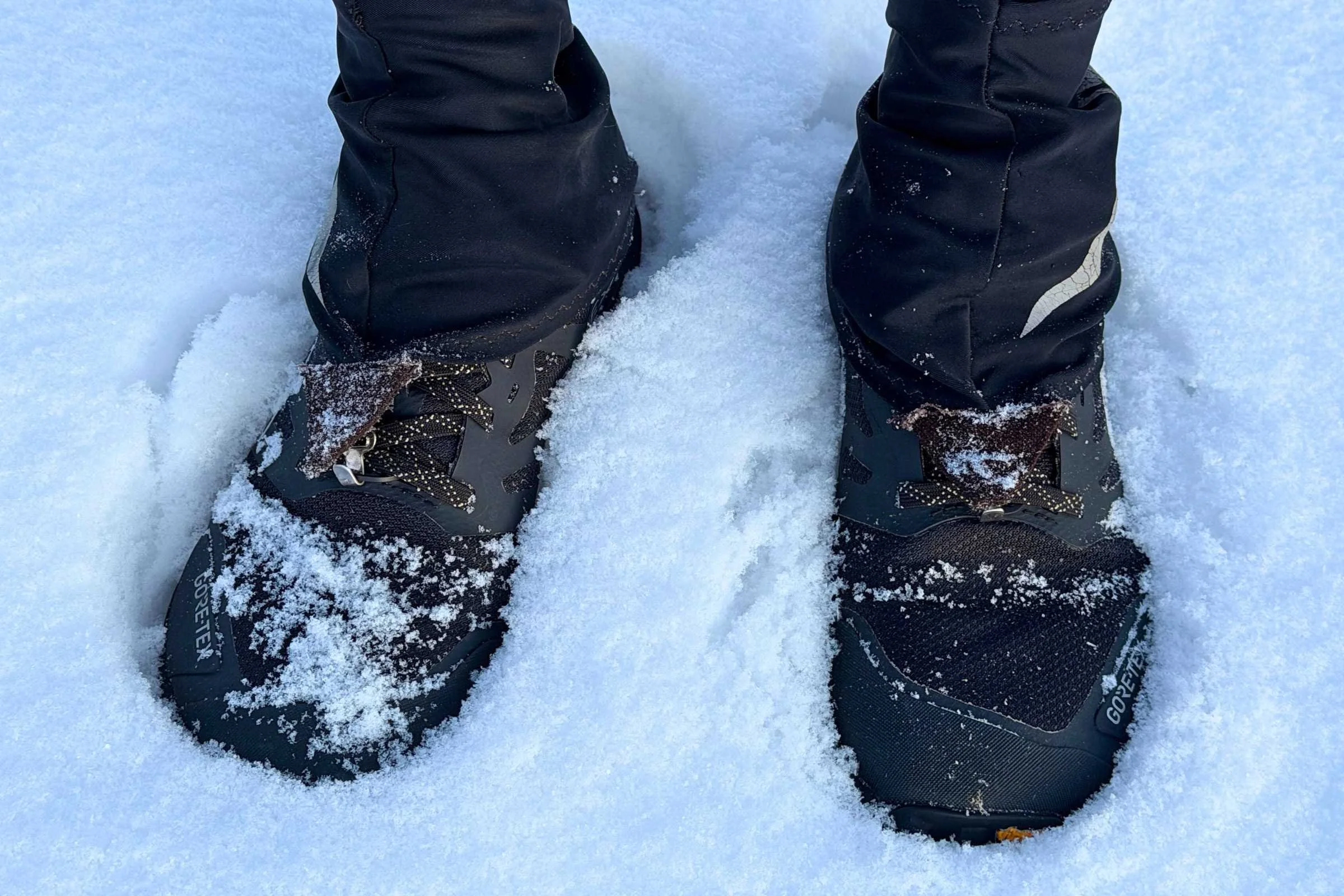
While there are four versions of the Lone Peak 9s available (the 9, the 9+, the 9 GTX, and the 9+ GTX), we think the maxed-out 9+ GTX is the optimal solution for runners who frequently find themselves logging miles in the worst kinds of conditions. The Vibram Megagrip outsole of the + version Lone Peaks, combined with the protection from GORE-TEX in the uppers, makes these shoes a powerhouse for runners determined to head out into the snowstorm, through mucky spring meadows, and across persistent forest streams.
One of our longtime criticisms of the Lone Peak line is that the lugs typically tend to wear down after about 400 miles, forcing you to replace them to maintain your traction. In theory, the Vibram material of the 9+ versions should last longer than the non-MaxTrac outsole. After over 70 miles, our pair has very minimal visible lug wear, and only in our testers’ typical spots of highest friction. We expect these lugs to surpass the 400-mile mark looking better than the MaxTrac version, and we’ll keep running in them to find out for sure!
Waterproofing and breathability
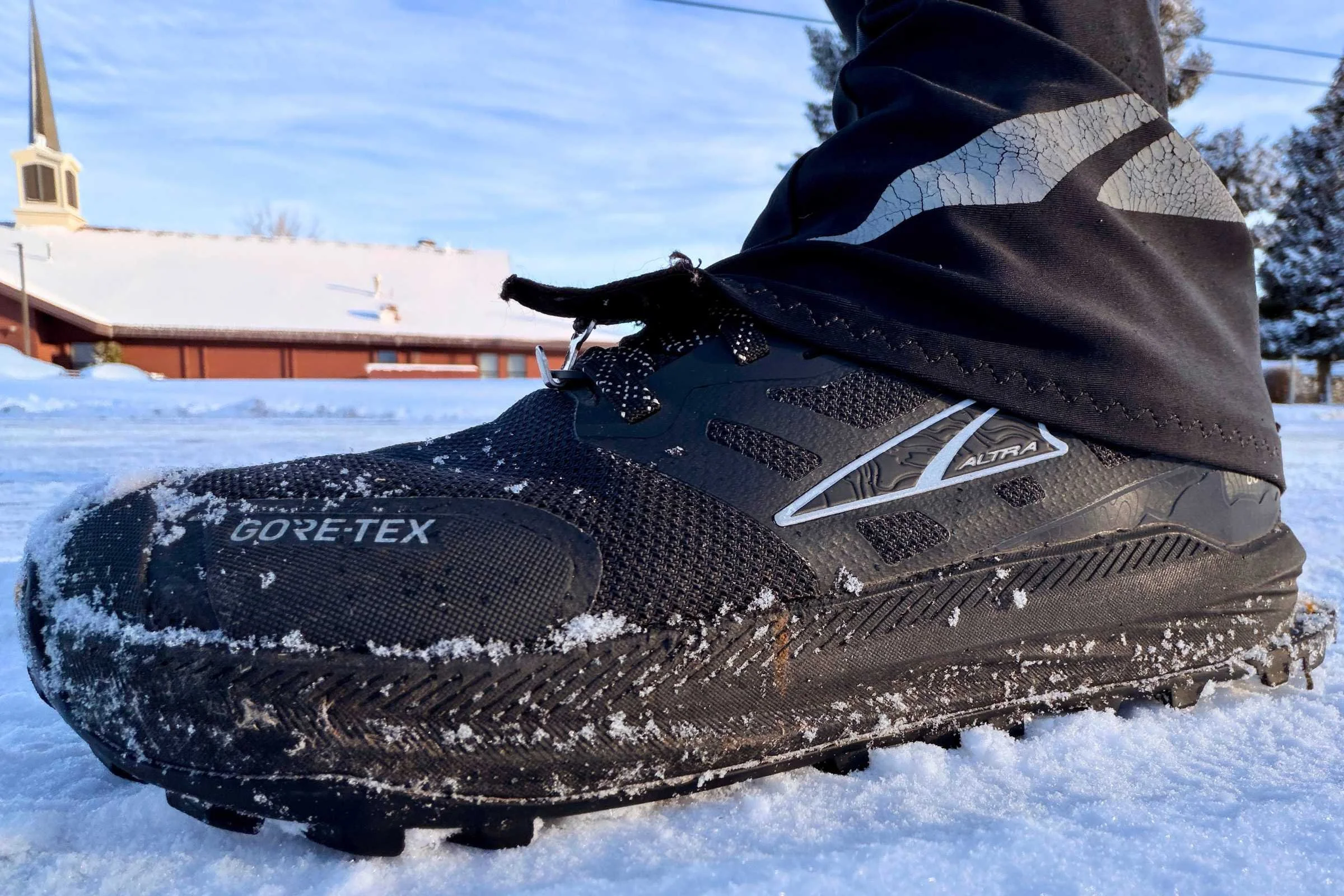
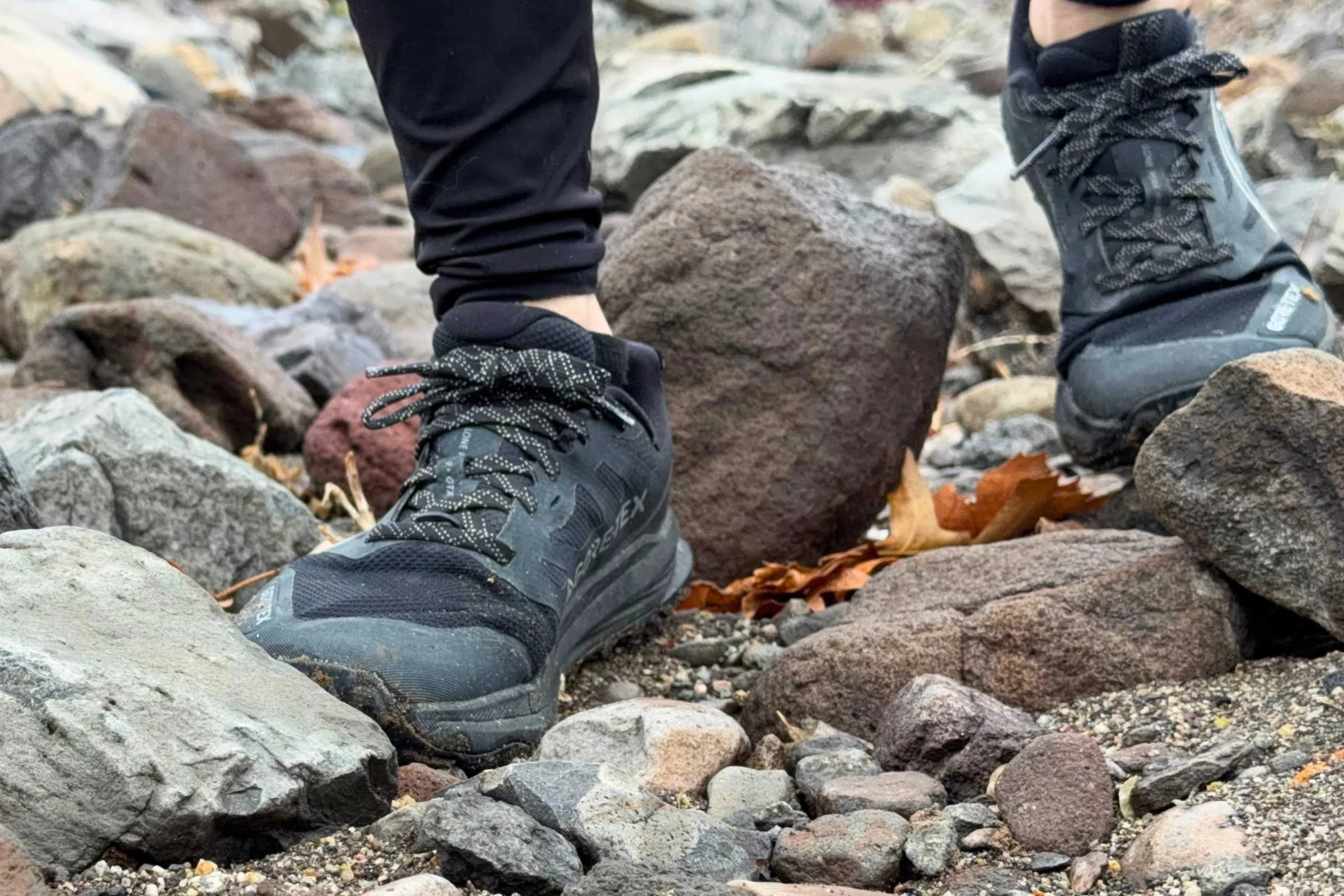
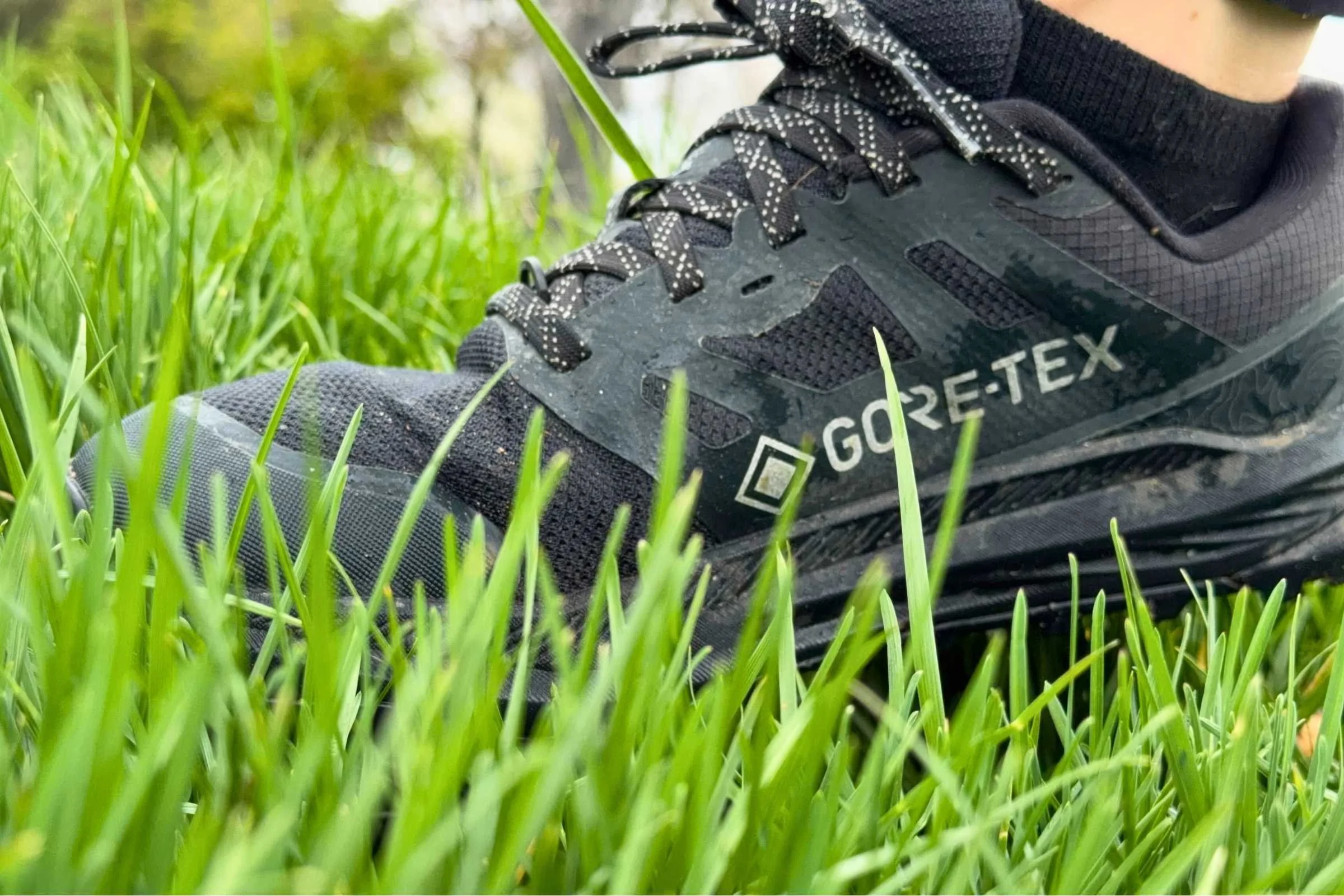
The GORE-TEX Invisible Fit layer in the upper of the Lone Peak 9+ GTX proves its worth through the cruddiest of crud. Through 6-inch deep snow (paired with Altra gaiters!) and 3-inch deep puddles, our socks stayed dry.
Notably, GORE-TEX is a physical layer, rather than a durable water repellent (DWR) coating that you have to regularly reapply, lending credibility to its waterproofing abilities over time. On the same token, because it’s a physical layer, the mechanics of your shoes bending while you run or hike can physically wear down the layers the shoe is made out of. We haven’t noticed any weakening of the waterproofing ability at the creases of our Lone Peak 9+ GTXs after over 70 miles, but we’ll certainly keep tabs on that ability as we continue to log miles in them.
We’ve also worn these GORE-TEX-lined shoes on warm spring runs at about 85 degrees without noticing any significant decrease in breathability. Perhaps this may come into play at temperatures above 90, but we’re impressed with the functionality of these waterproof shoes.
Durability
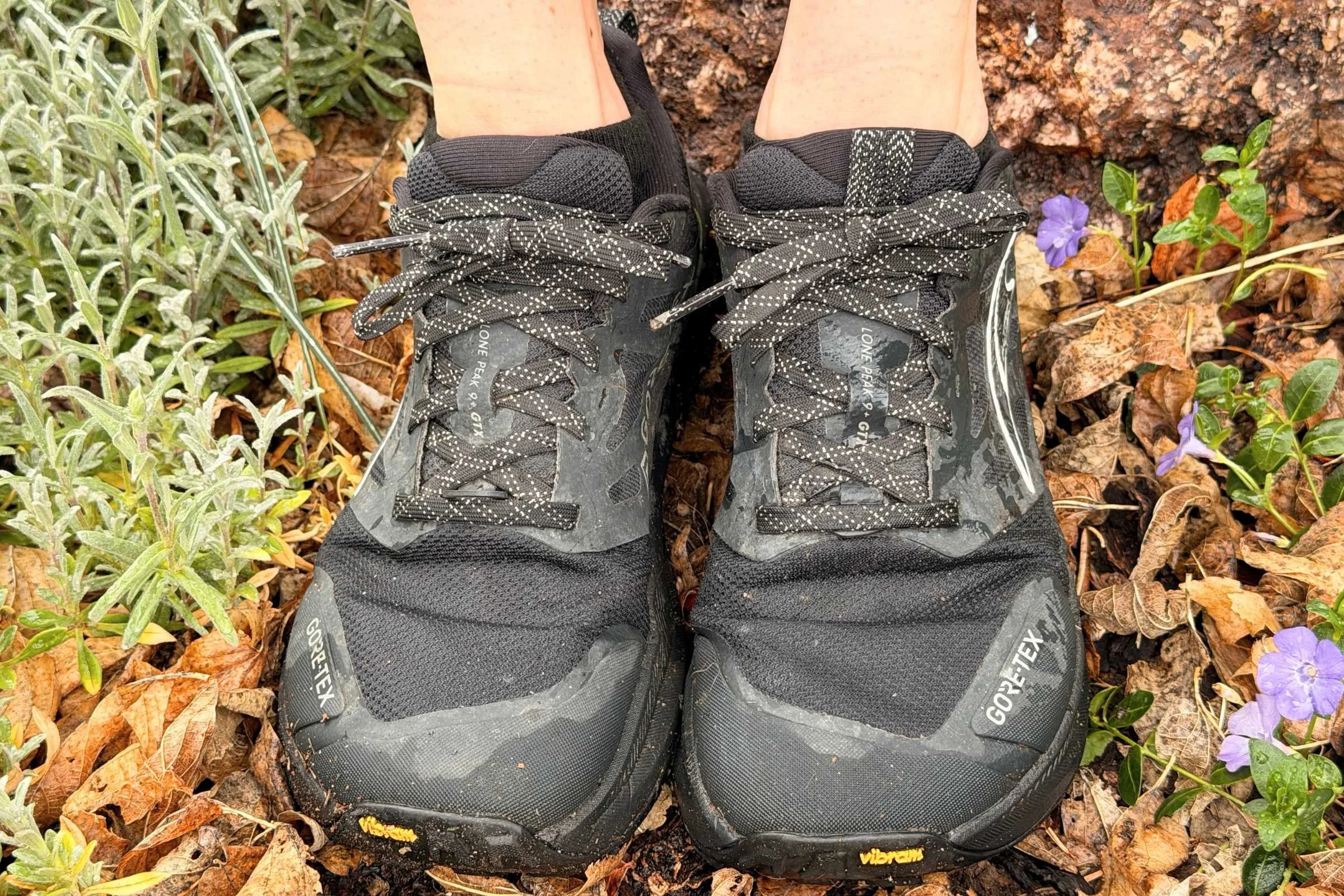
Altra has somewhat shortened the toe cap in the Lone Peak 9s, but we haven’t found any ill effects from that change. Maggie is a self-identified klutz who trips and falls every few months, and frequently bashes her toes against rocks, and she finds the protection and durability of these uppers to be slightly better than previous versions.
The Altra MaxTrac sole has a reputation for wearing down rather noticeably, but we’re hopeful the Lone Peak Vibram Megagrip outsole won’t have to the same degree. After about 60 miles, there is very little noticeable wear to our Lone Peak 9+ GTXs.
Altra claims to have made upgrades to the Altra EGO midsole of the Lone Peak 9. After over 70 miles, the soles have broken in and the midsoles feel just as cushioned as they did right out of the box. We’ll be keeping a close eye on how these shoes age over time.
Weight and running feel
The weight difference between the lightest Lone Peak 9s and these maxed-out Lone Peak 9+ GTXs is less than an ounce, and honestly? We can’t feel it at all when it comes to balance or foot feel.
If you’re already someone who wears low or zero-drop running shoes, the Lone Peak 9s feel speedy through their surefootedness over sloped trails. If you’re used to something with a higher drop, these 0mm heel-toe drop shoes may feel a bit sluggish, as the geometry of the sole is not propelling you forward. We recommend slowly breaking them in so your body can adjust to the difference.
For runners who feel fastest and most confident when they can feel the ground under their feet and respond to it accordingly, the Altra Lone Peak 9+ GTXs are superb, even when the technical terrain includes wet, sloppy gunk. They’re well balanced, helping them to feel lighter than they are—though they’re about average weight for trail running shoes, in the first place!
Features
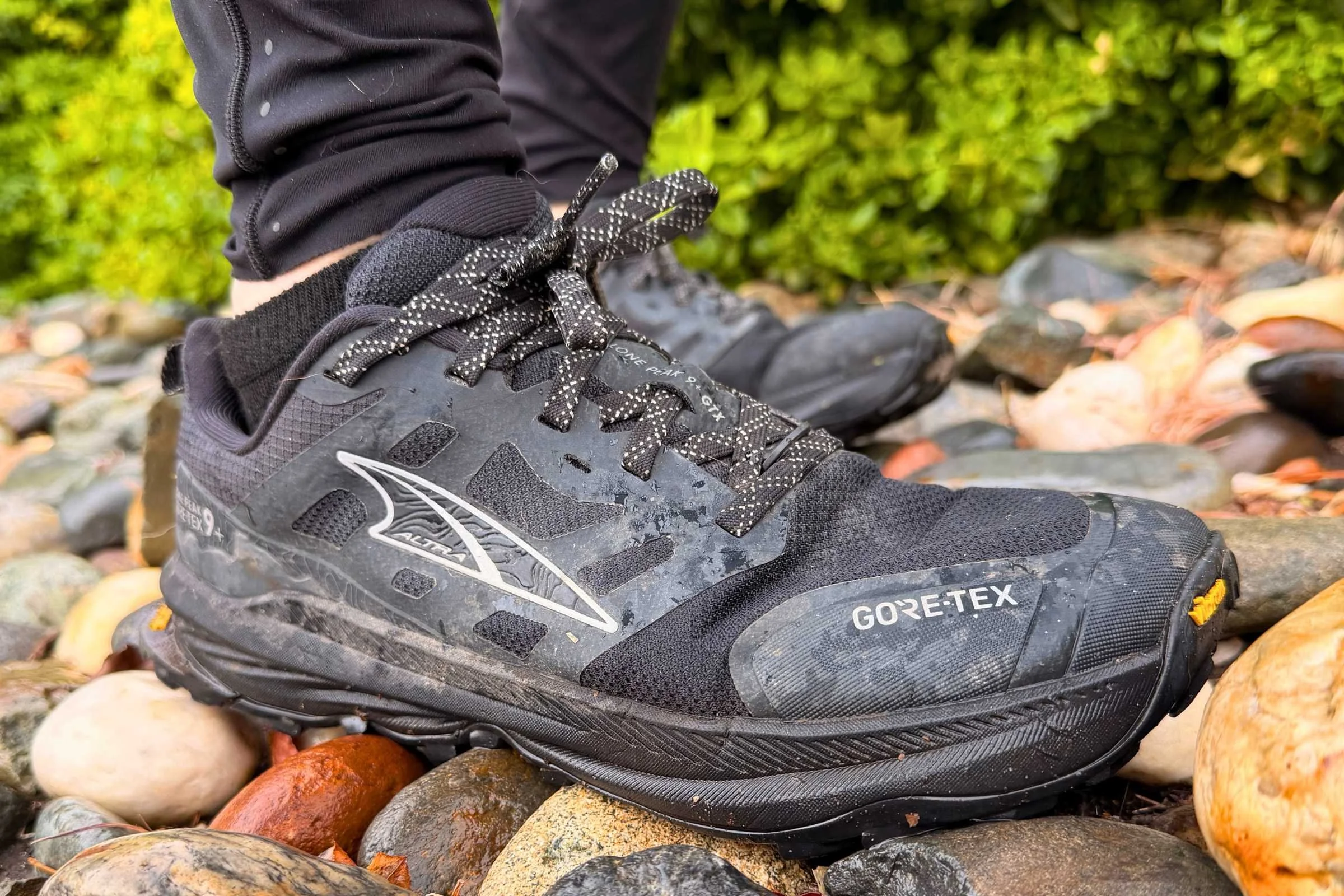
GORE-TEX Invisible Fit waterproof membrane
An invisible layer within the upper of the shoe (comprising 15% of the upper) that is both water and windproof, as well as breathable.
Altra FootShape wide toe box
Altra’s take on a wide toe box that’s far wider than most trail running shoes (even wide among barefoot shoes!) and is designed to let your forefoot and toes spread as a natural, stabilizing part of your gait.
Zero-drop platform
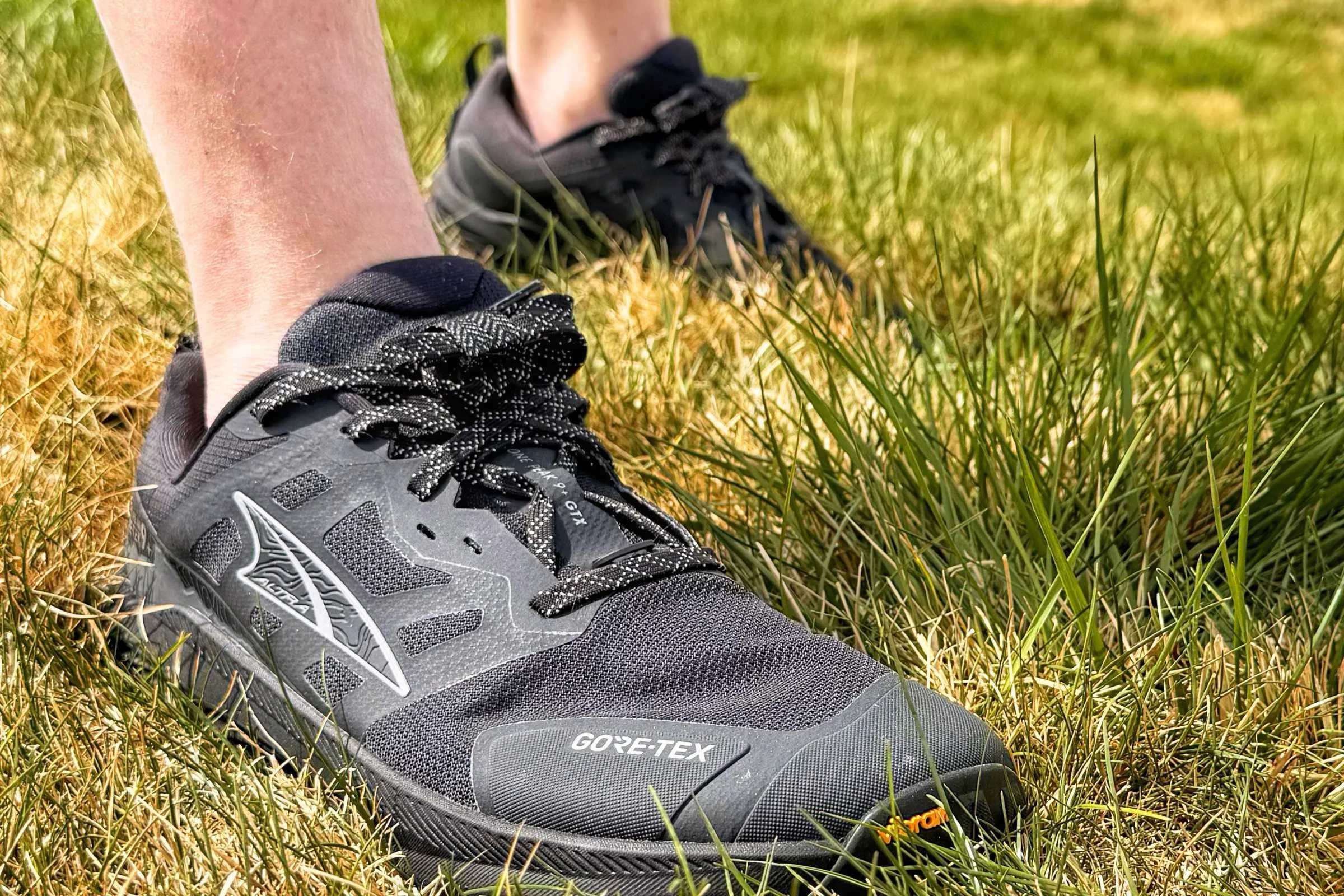
The heel, midsole, and forefoot are all the same thickness, giving you the same stance in the Lone Peak as you would have barefoot on a hardwood floor.
Altra EGO midsole foam
Altra’s proprietary midsole cushioning, entirely hidden as the middle layer within the sole of the Lone Peak.
Vibram Megagrip rubber outsole
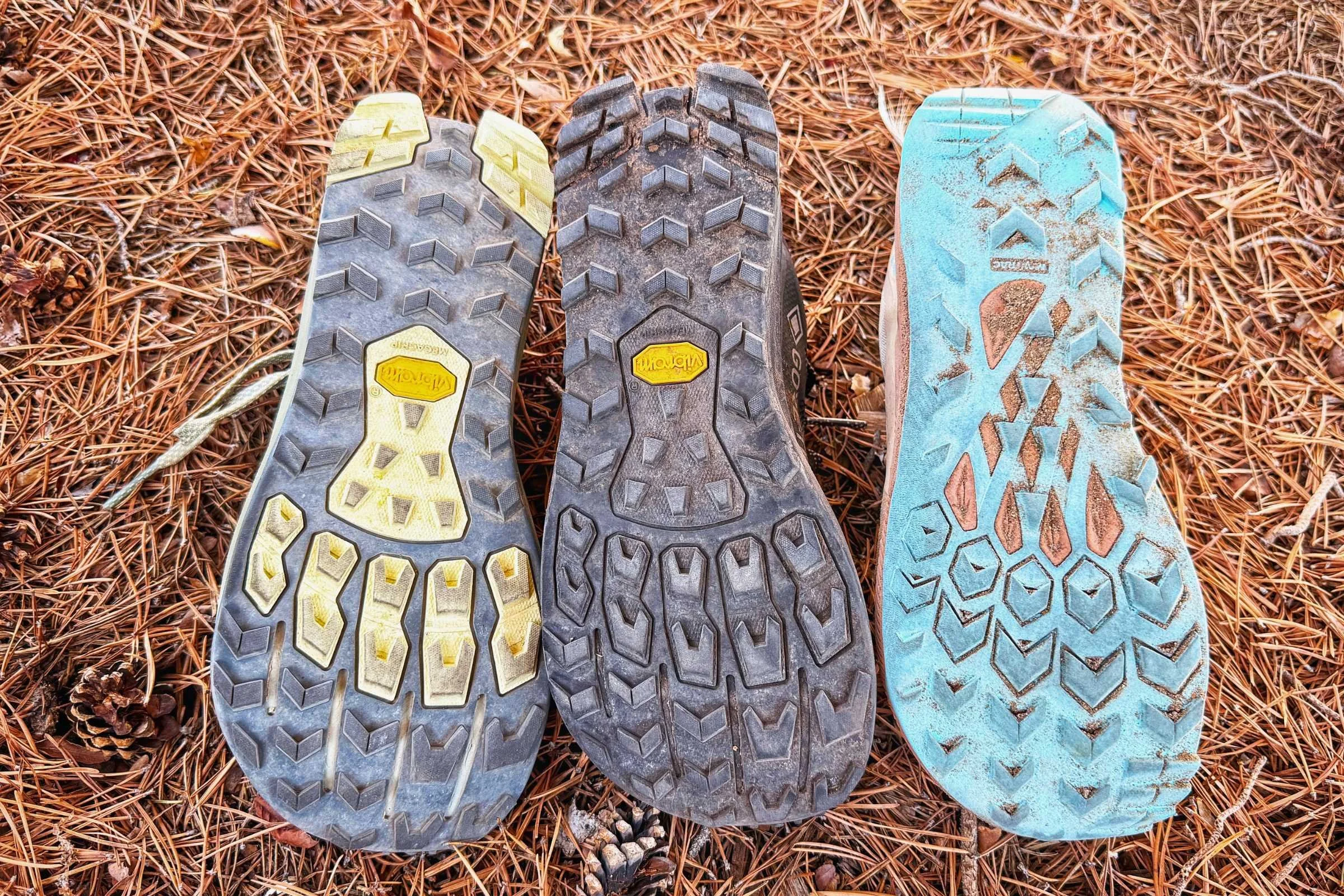
Vibram’s proprietary rubber compound, designed for extra traction and durability, makes up the entire exterior, bottom, and lugs of the Lone Peak 9+ and Lone Peak 9+ GTX.
Altra TrailClaw lug pattern
This describes how the lugs face opposite directions in the heel and forefoot, to give you better grip on uphills (pointing forward under the forefoot) and downhills (pointing backward under the heel).
Reinforced toe cap
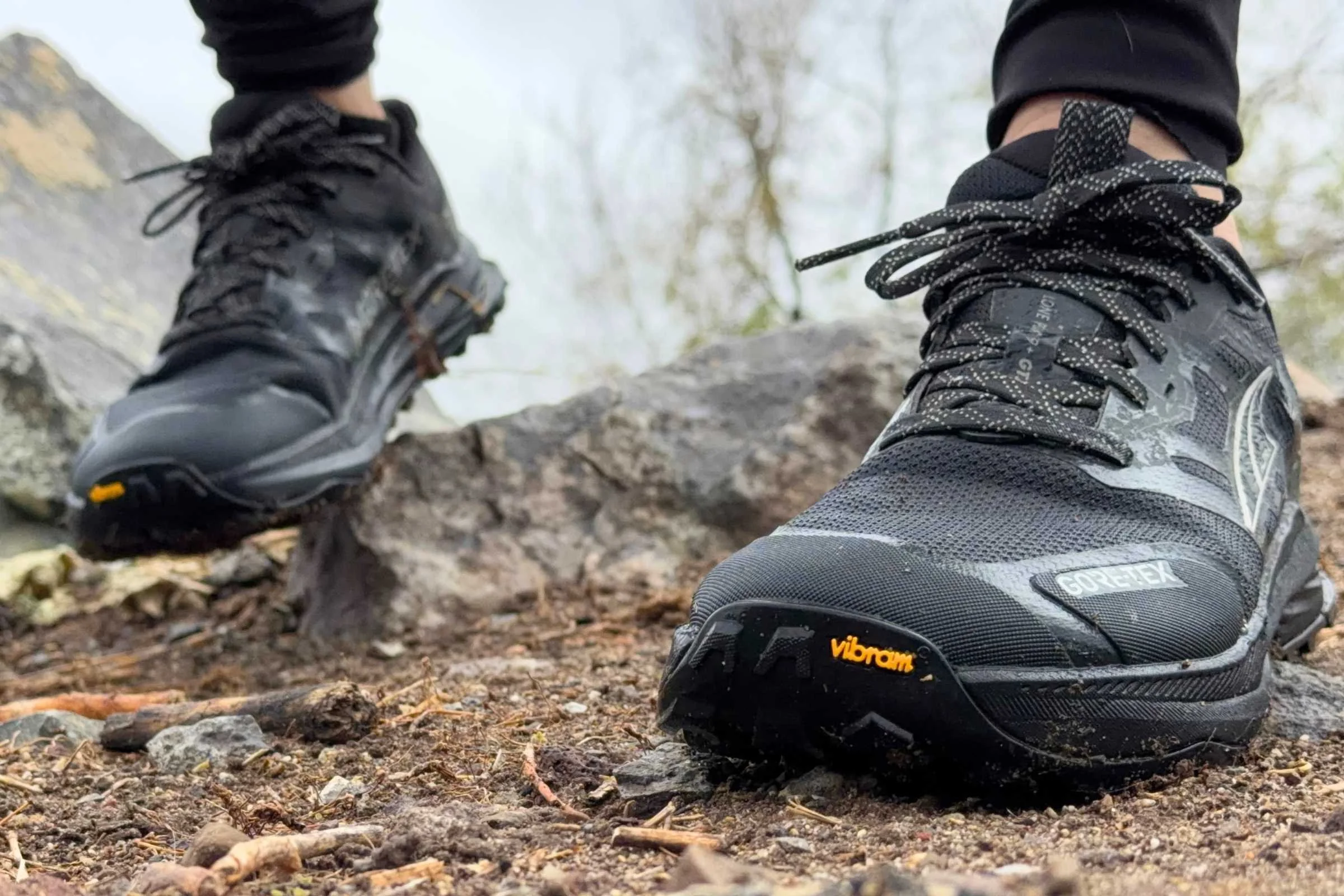
The strip of harder material along the front of the toes, designed to protect your toes from smacking against rocks.
Men’s vs women’s Altra Lone Peak 9+ GTX differences
Fit differences: Largely the same between men’s and women’s versions
Size range: 5.5-12 (women’s), 7-16 (men’s); no alternate width options available (only the base model, the Lone Peak 9, comes with a wide option)
Weight differences: 10.0 oz (women’s), 12.4 oz (men’s)
Colors: 3 (women’s), 2 (men’s)
Should you buy the Altra Lone Peak 9+ GTX trail running shoes?
Buy if:
You run or hike frequently in wet conditions
You prefer wide toe boxes
You want a waterproof trail shoe with natural foot positioning
You like zero-drop running shoes
You enjoy barefoot shoes but want some joint cushioning
Skip if:
You prefer traditional heel-to-toe drop shoes
You run mainly in hot, dry climates
You want maximum cushioning
You prioritize lightweight racing shoes
You want maximal groundfeel through your soles
Where to buy
The Altra Lone Peak 9+ GTX trail running shoes are popular footwear, so you have options when it comes to retailers. Here are some of the pros of the retailers.
REI
Pros: 100% satisfaction policy for 1 year; 10% dividend for members.
Amazon
Pros: Free 2-day shipping with Amazon Prime membership
Backcountry
Pros: Frequent sales for Expedition Perks members (free to join), fast shipping, Gearhead chat customer service is excellent
Similar trail running shoes
Altra Lone Peak 9
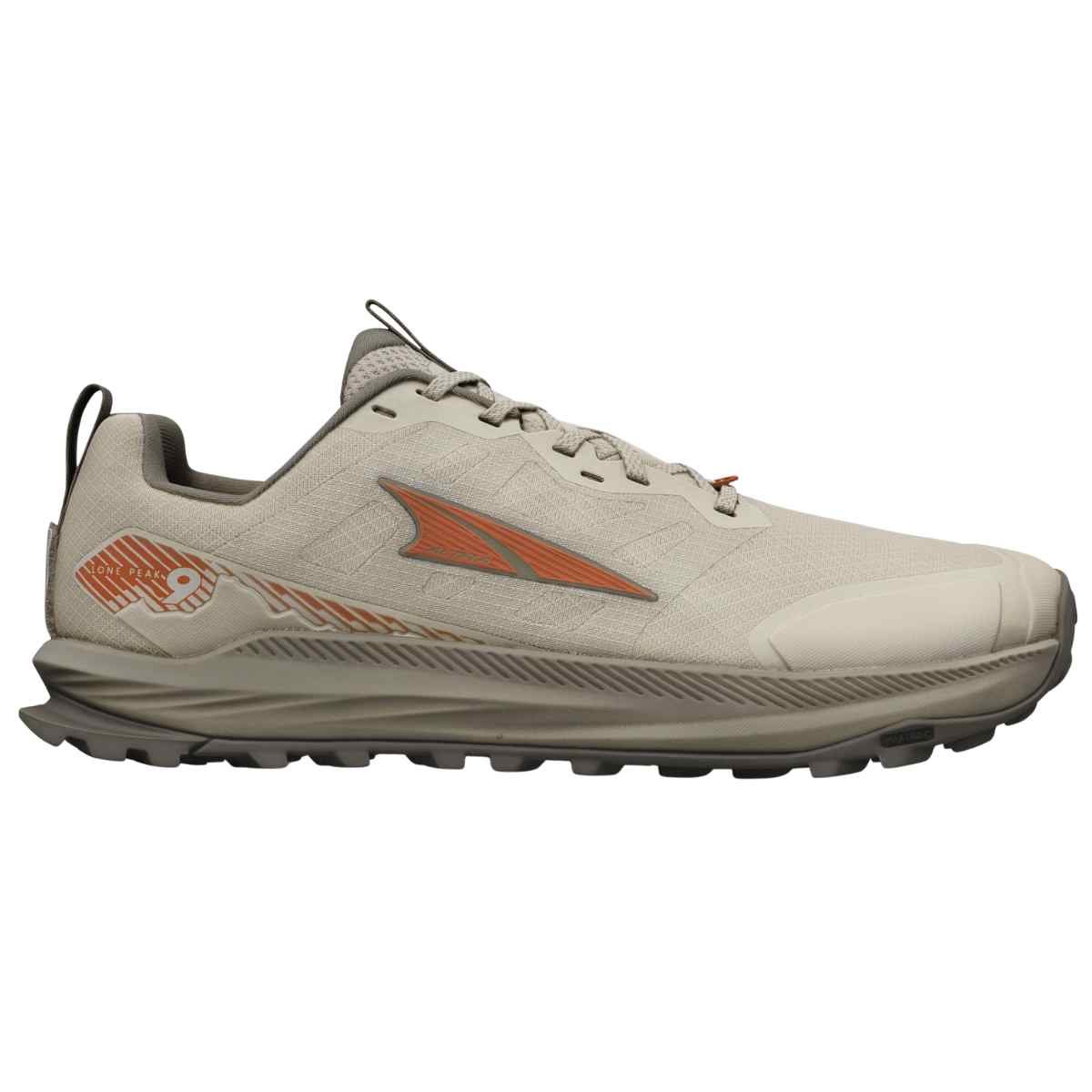
MSRP: $145
Cushion: Moderate
Stability: Neutral
Heel-to-Toe Drop (mm): 0
Stack Height: 25 mm
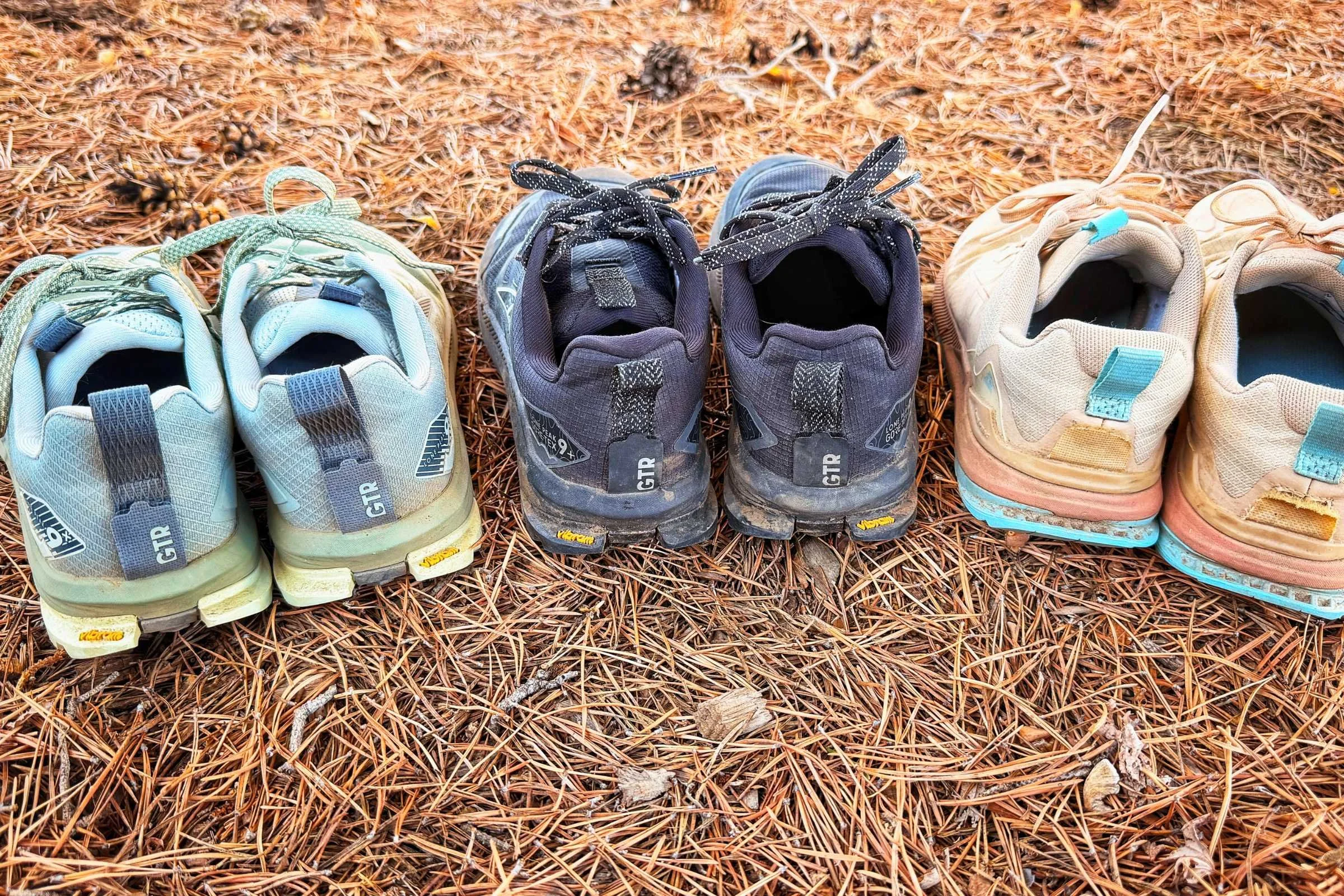
The Altra Lone Peak 9 differs from the Lone Peak 9+ GTX in two main ways: it doesn’t have a Vibram Megagrip outsole and it isn’t waterproof. This means it’s more flexible and breathable than the Lone Peak 9+ GTX, but not as grippy on wet surfaces. Additionally, this is the only shoe in the Lone Peak line that is available in wide sizing.
Altra Lone Peak 9
men's
Women's
Altra Lone Peak 9+
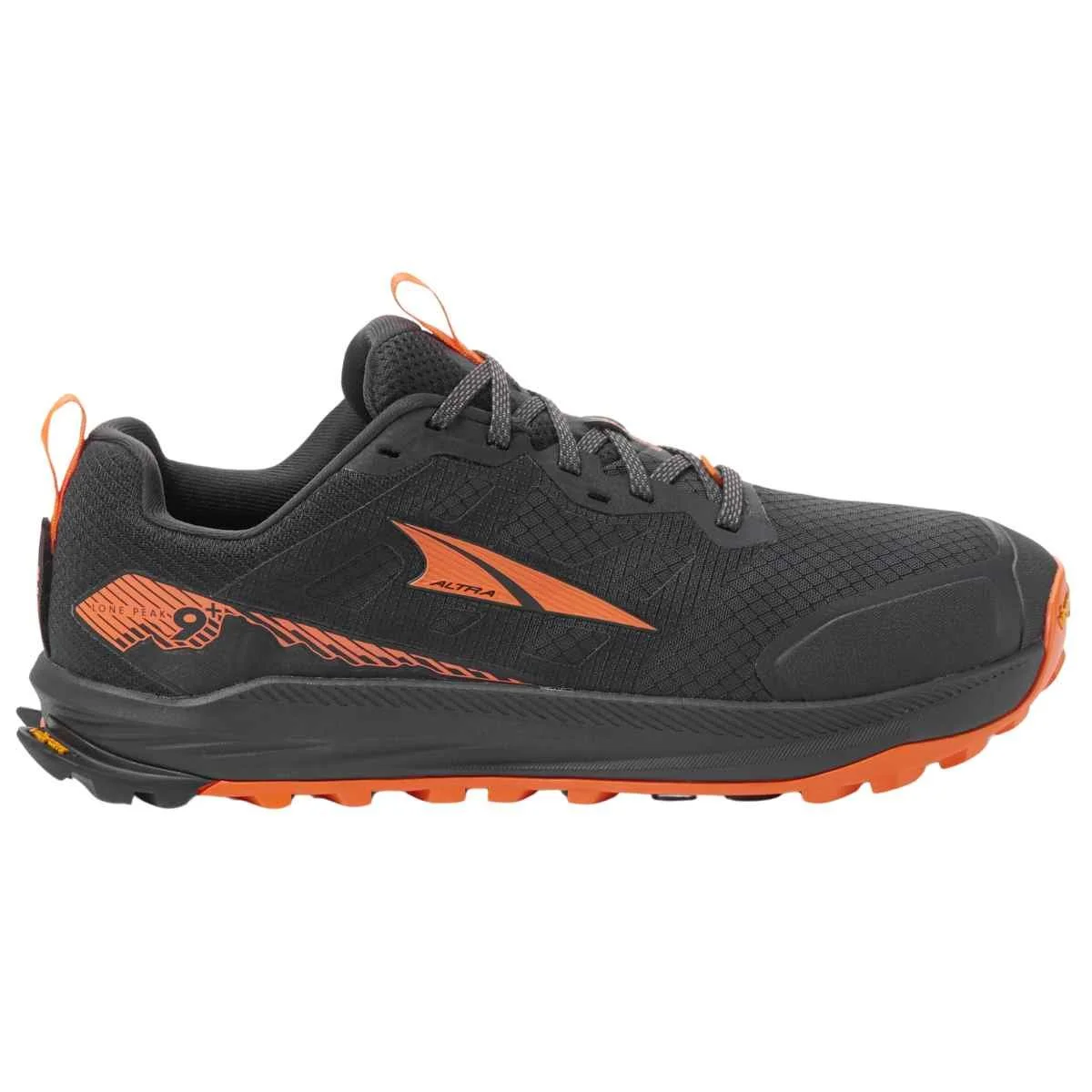
MSRP: $160
Cushion: Moderate
Stability: Neutral
Heel-to-Toe Drop (mm): 0
Stack Height: 25 mm
The Altra Lone Peak 9+ is exactly the same as the Lone Peak 9+ GTX except it isn’t waterproof. This makes it more breathable and better suited for dry and/or hot runs. If you are running or hiking in wet conditions frequently but want more breathability, we’d suggest this shoe. It has the same Vibram outsole and performs just as well as the 9+ GTX in terms of traction. It’s also a bit stiffer than the Lone Peak 9 with MaxTrac outsole, which makes it better suited for rockier environments.
The Lone Peak 9+ is our pick for best for long distances in our Best Women’s Trail Running Shoes guide. Learn more in our in-depth review of the Altra Lone Peak 9+ trail running shoes.
Altra Lone Peak 9+
men's
Women's
Altra Lone Peak 9 GTX
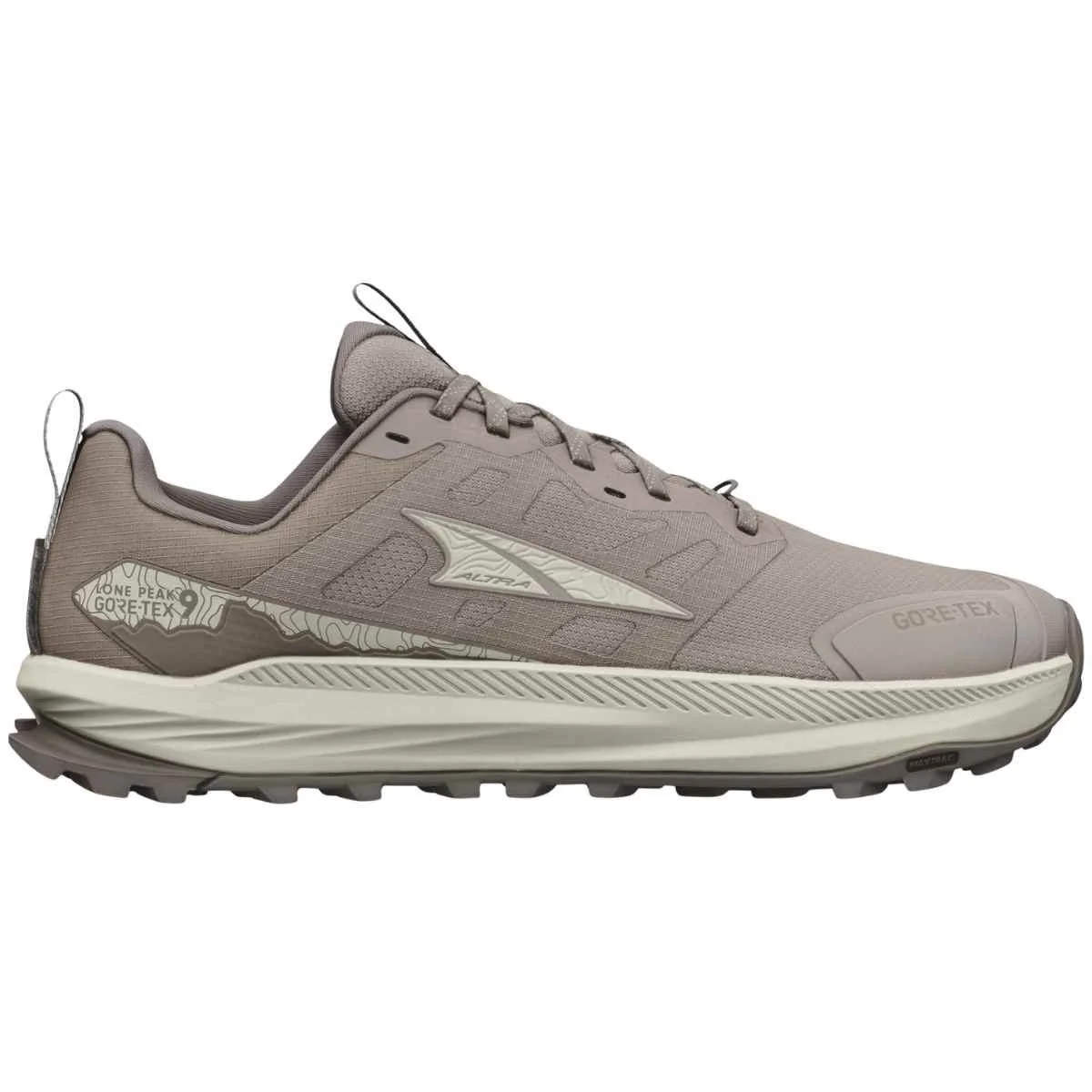
MSRP: $165
Cushion: Moderate
Stability: Neutral
Heel-to-Toe Drop (mm): 0
Stack Height: 25 mm
The Altra Lone Peak GTX is the same as the Lone Peak 9+ GTX except for the outsole. This shoe uses Altra’s proprietary MaxTrac outsole rather than the Vibram Megagrip outsole. As a result, it’s a little more flexible but offers less traction and grip on wet surfaces.
This shoe is a good choice for people who frequently run in slop and are okay with 4/5 traction instead of 4.5/5, and prefer a more flexible, lighter sole.
Altra Lone Peak 9 GTX
Why you should trust us / About the author
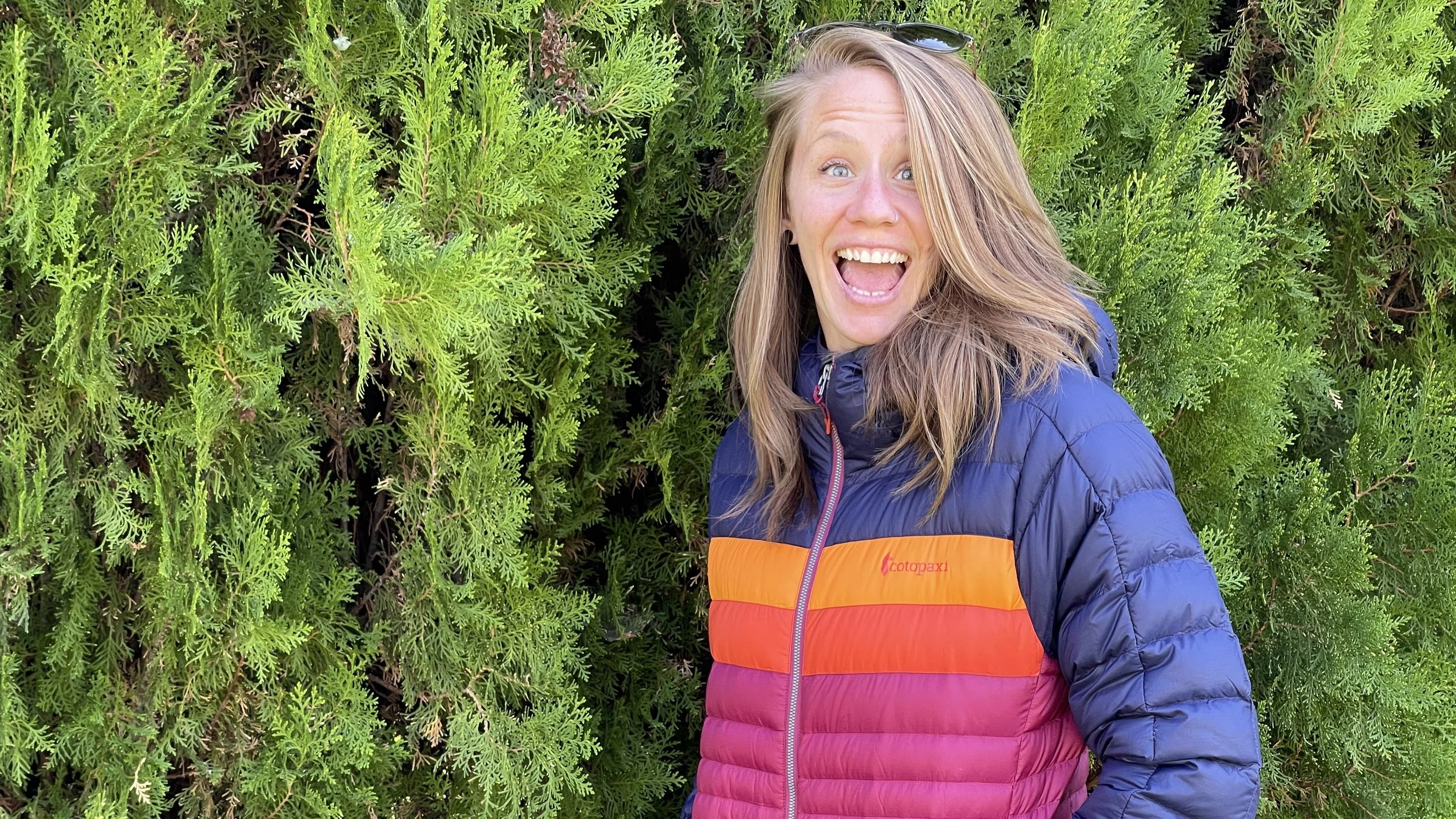
Maggie is an avid trail runner based in Reno, Nevada, hitting her neighborhood trails at least four days a week and taking hikes in her backyard Sierra Nevada Mountains and through the deserts of northern Nevada as often as possible. She likes to compete in both trail and road races and is no stranger to the podium. She worked as a professional backcountry guide for over 15 years, backpacking, hiking, and kayaking, from places like Texas and Utah to the U.S. Virgin Islands and the Galapagos Islands, mostly in a pair of Chaco sandals.
Maggie started her barefoot journey running in some of the early Vibram FiveFinger shoes back in 2009. Though she added some cushion to her runs after a few years pounding cement, she is still adamant about running in only zero-drop shoes. She has logged thousands of miles in nine pairs and iterations of the Altra Lone Peak trail shoe line over the past decade. When not running, Maggie loves to be as barefoot as possible, feeling the ground and honing her foot stability and strength. She explores her natural backyard with her dog, Isla, and travels the world with a pair of barefoot shoes on her feet and Altra Lone Peaks in her bag.