Best SPF Lip Balms of 2026
Lip Balms with Broad Spectrum SPF to protect you in the sun
May 20th, 2026
Home > Gear Reviews > Sun Protection
As people who are outdoors year round, we at Treeline Review know that sun protection is essential. We wear our face and body sunscreens, our UPF-rated sun protective shirts, pants, and water wear, and you know we're wearing hats with good coverage. But did you know that it's also incredibly important to protect your lips from sun damage?
The skin of your lips is thinner and more fragile than the skin on the rest of your body, and because it lacks oil glands, it's especially vulnerable to dryness and damage including sunburn. Prolonged exposure to UVA and UVB rays increases the risk of skin cancer, which yes, you absolutely can get on your lips. Unfortunately, not all SPF lip balms are created equal, and as we searched for data, it was tough to find good information — the recommendations out there are sparse and geared mostly toward people looking for lip makeup containing SPF. So we did what we always do: applied science and rigorous testing to the problem.
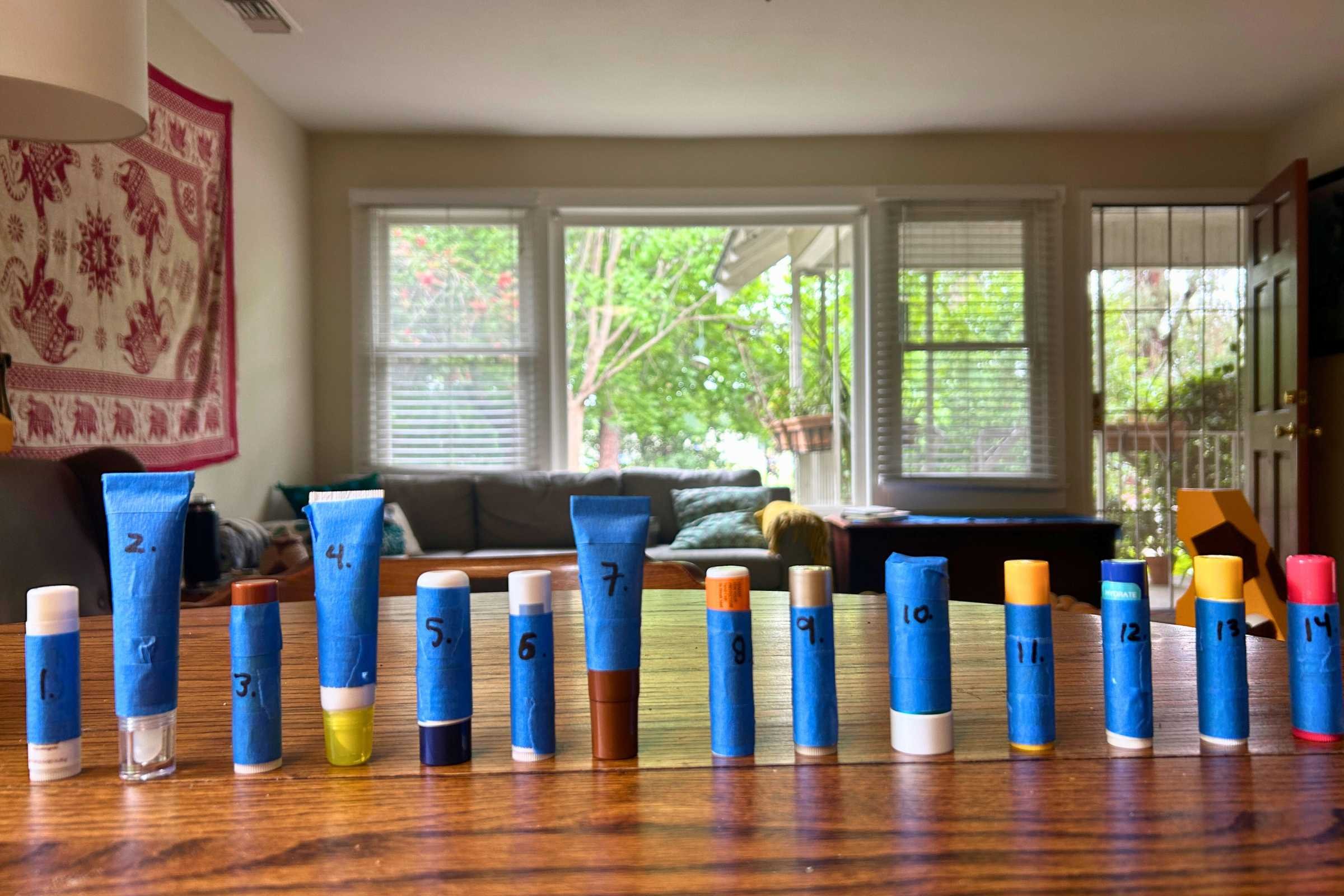
We evaluated more than 17 of the top SPF lip balms through all four seasons, wrapping each one in blue tape so our seven testers of different skin tones and scent preferences wouldn't know the brand they were testing. We wore them for months, tested them in snow, kayaking, hiking, and at the beach, and left them for days in a hot car in July to see what actually survived. We only tested lip balms with SPF 30 or higher, in line with the American Academy of Dermatology Association's recommendations.
Top Pick: The Aquaphor Lip Repair Stick + Sunscreen earns our Best Overall award. It was the landslide favorite in blind testing, coming out on top for nearly every tester. It stood out for a neutral scent and flavor, hydrating but non-greasy texture, a non-shiny finish, and the only balm that survived two days in a 90-plus-degree car without melting.
We create reader-supported, mission-driven, objective gear reviews independently selected by our editors. This story may contain affiliate links, which help fund our website. When you click on the links to purchase gear, we may get a commission — without costing you an extra cent. Thank you for supporting our work and mission of outdoor coverage for every body! Learn more.
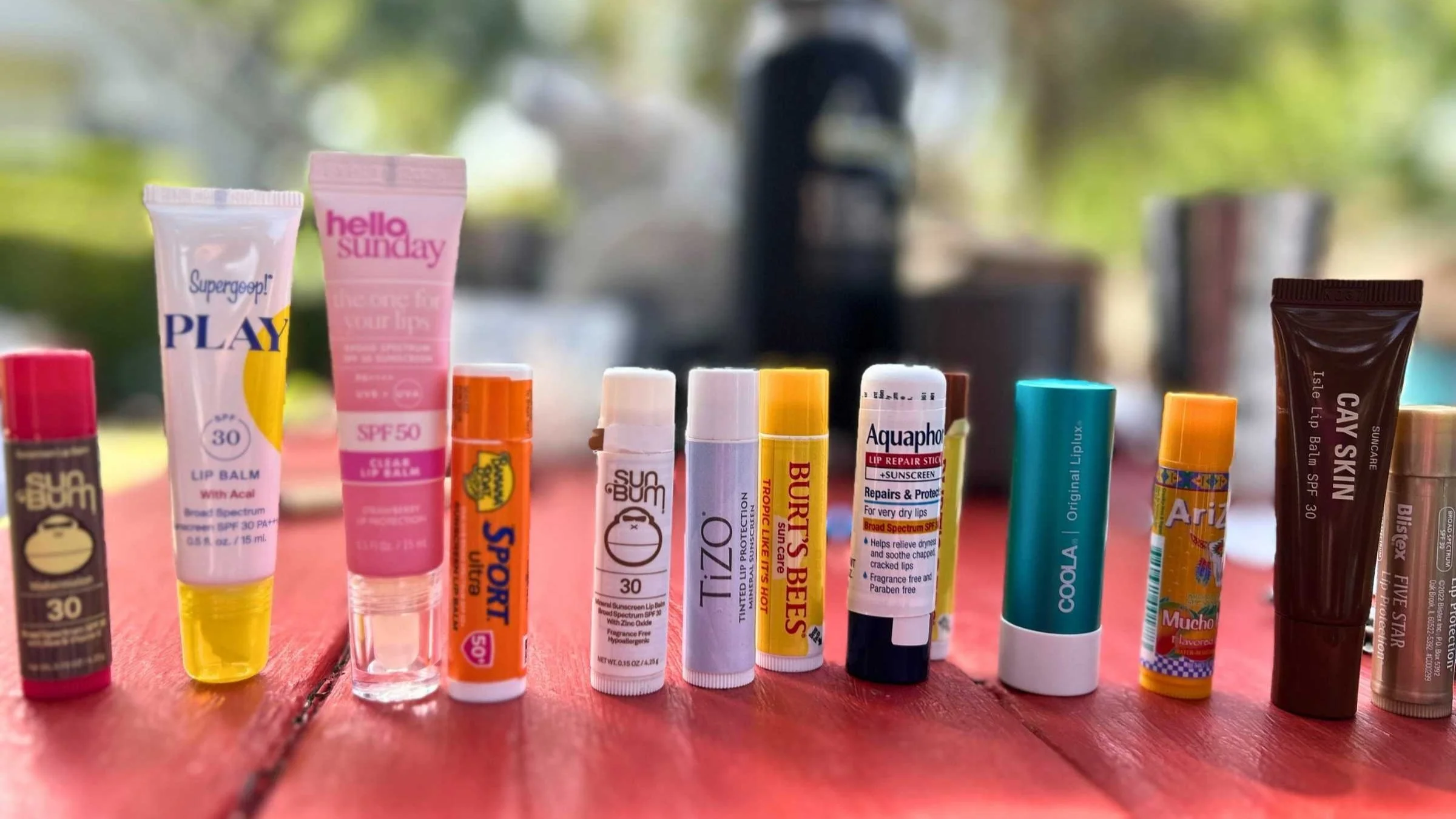
Comparison Table
| SPF LIP BALM | TREELINE AWARD | SPF | ACTIVE INGREDIENTS | MSRP* | SCENTED? |
|---|---|---|---|---|---|
| Aquaphor Lip Repair Stick + Sunscreen | Best Overall SPF Lip Balm Read why |
30 | Avobenzone (3%), Homosalate (9%), Octisalate (4.5%), Octocrylene (9%) | $8.41/stick | No |
| Blistex Five Star Lip Protection SPF 30 | Best Affordable SPF Lip Balm Read why |
30 | Avobenzone (3%), Homosalate (15%), Octisalate (5%) | $5.99/stick | Yes, light |
| TiZO Lip Protection SPF 45 | Best Mineral SPF Lip Balm Read why |
45 | Zinc Oxide 5.5% Titanium Dioxide 4% | $12.50/stick | No |
| Cay Skin Isle Lip Balm SPF 30 | Best Liquid/Gel SPF Lip Balm Read why |
30 | Avobenzone (3%), Octisalate (5%), Octocrylene (10%) | $16.00/tube | No |
| Badger Mineral Sunscreen Face Stick SPF 35 | Best Reef-Safe SPF Lip Balm Read why |
35 | Non-nano Zinc Oxide 22.5% | $13.95/stick | No |
The Winners
Best overall SPF lip balm: Aquaphor Lip Repair Stick + Sunscreen

SPF rating: 30
Key ingredients: Avobenzone (3%), Homosalate (9%), Octisalate (4.5%), Octocrylene (9%)
Price: $8.41/stick
Scented: No
What we liked: Neutral scent and flavor, hydrating, non-shiny, didn’t melt in our pocket, didn’t melt in the car
What we didn’t like: Bulky packaging, not the cheapest (though not too expensive), some testers had to reapply frequently, not vegan
Aquaphor Lip Repair Stick + Sunscreen was the landslide favorite SPF lip balm in Treeline Review user testing. We wrapped each lip balm in blue tape so our seven testers of different skin tones, levels of hairiness, and scent preferences wouldn't know the brand of lip balms they were testing. The Aquaphor came out on top for nearly everyone. It’s hydrating without feeling heavy, looks non-shiny, and has the waxy texture you’d expect of a typical lip balm. It has no added fragrance or color, and it doesn’t taste overwhelmingly of chemicals. It’s not the absolute cheapest of SPF lip balms, but it’s certainly on the more affordable side. There's a lot to love with this lip balm and the best SPF lip balm is the one that you'll use.
Aquaphor Lip Repair Stick + Sunscreen
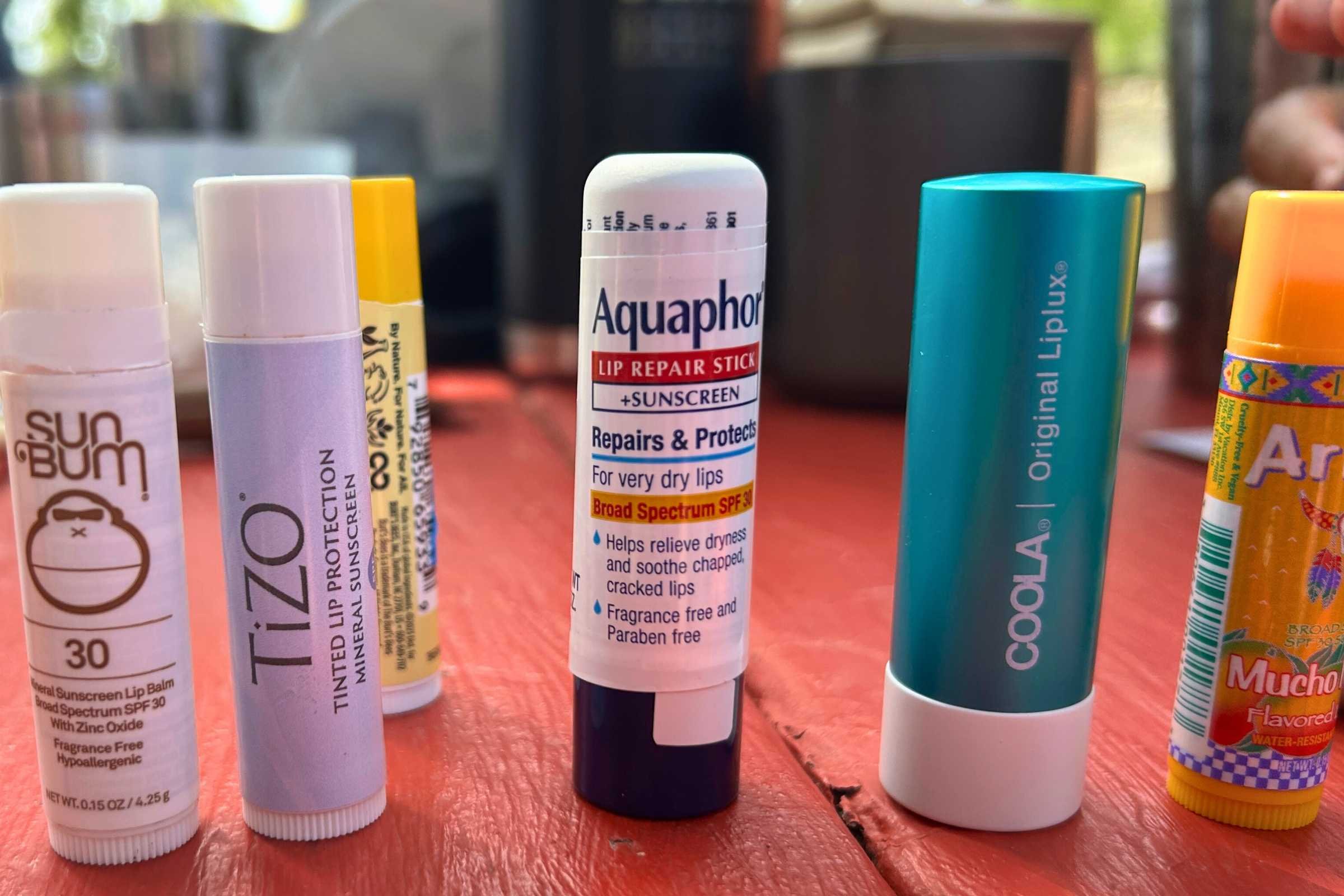
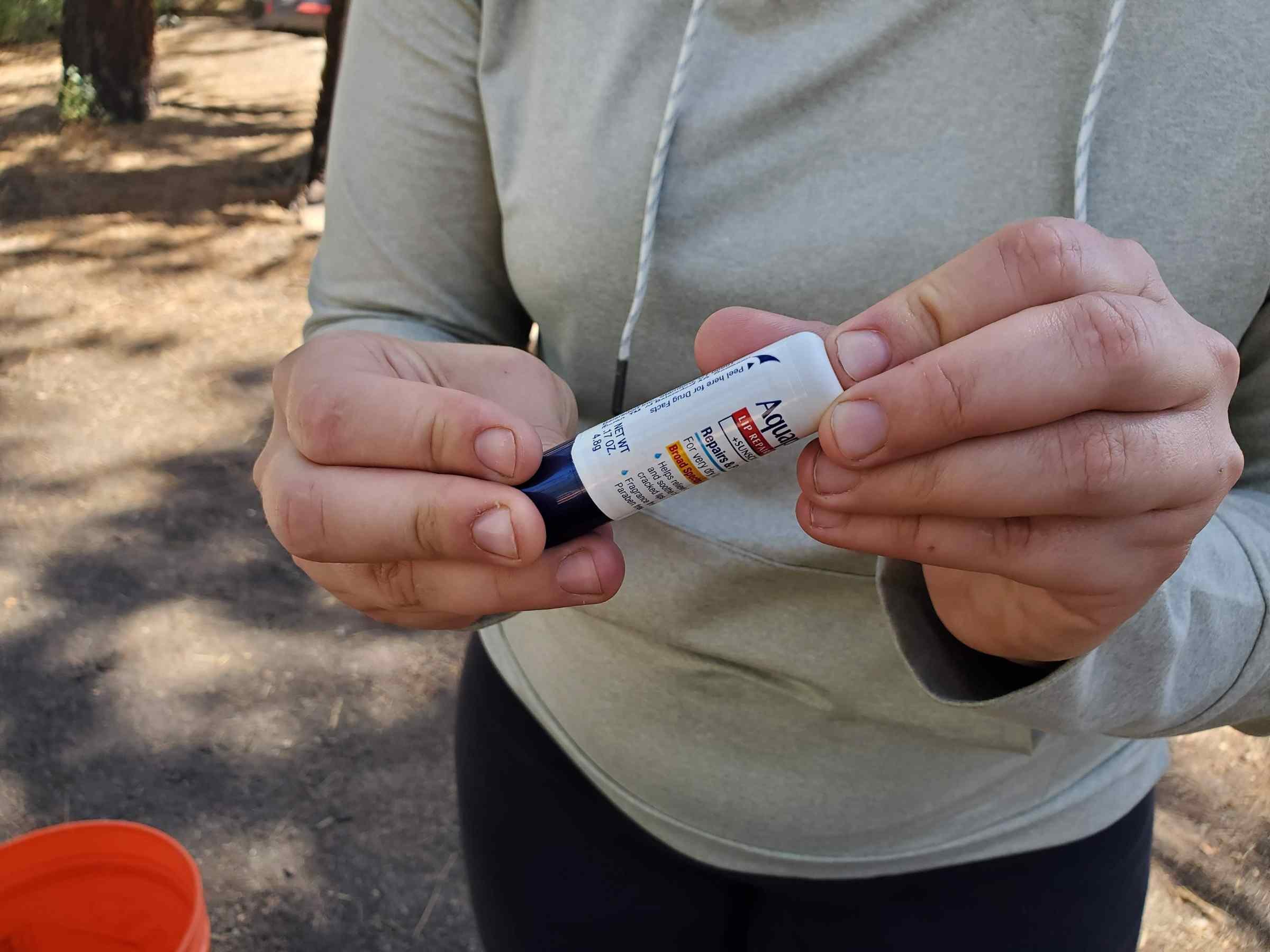
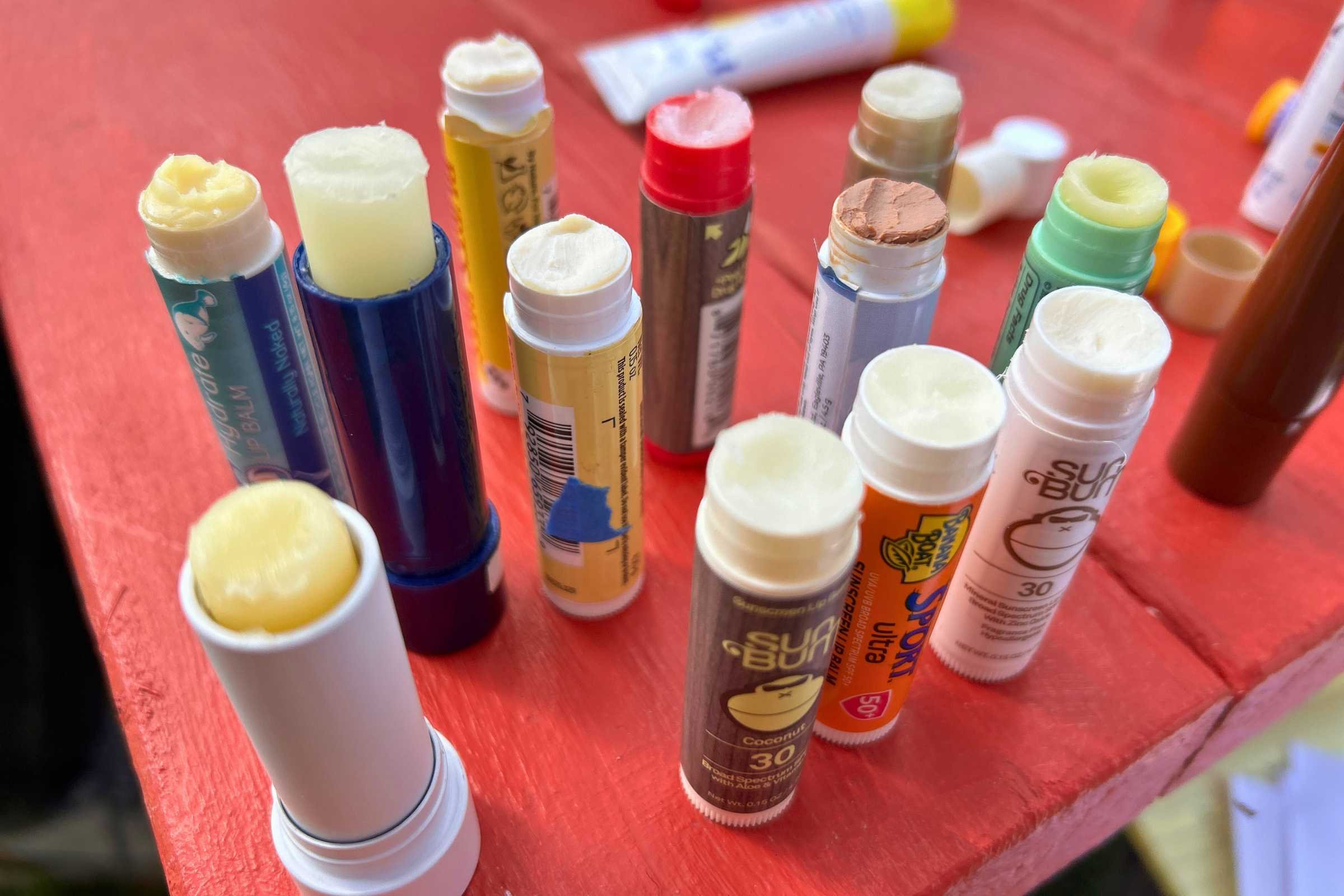
This lip balm survived two days in a hot car (90+ degrees inside) without melting or even noticeably sweating. Online reviews agree: across many retailers and review sites, Aquaphor Lip Repair Stick + Sunscreen is one of the most frequently-recommended SPF lip products out there.
The biggest drawback we found was the product’s longevity, with the lip balm rubbing or washing off relatively easily. While the packaging is slightly bulkier than we’d prefer, this wasn’t a dealbreaker, as it was still among many testers’ top picks. As one tester noted, Aquaphor Lip Repair Stick + Sunscreen is “slightly fancier than a basic lip balm,” and we appreciate its straightforward, affordable effectiveness.
Best affordable SPF lip balm: Blistex Five Star Lip Protection SPF 30

SPF rating: 30
Key ingredients: Avobenzone (3%), Homosalate (15%), Octisalate (5%)
Price: $5.99/stick
Scented: Yes, light
What we liked: Affordability, non-drying, neutral taste, minimal scent
What we didn’t like: Not great longevity, not particularly hydrating, application not as smooth as some others, not vegan
If you’re someone who needs a tube of SPF lip balm in every bag and drawer, Blistex Five Star Lip Protection SPF 30 is the one for you. It’s one of the most affordable SPF lip balms on the market, and unlike many similarly priced products, it doesn’t smell terrible or taste overwhelmingly of chemicals.
Blistex Five Star Lip Protection SPF 30
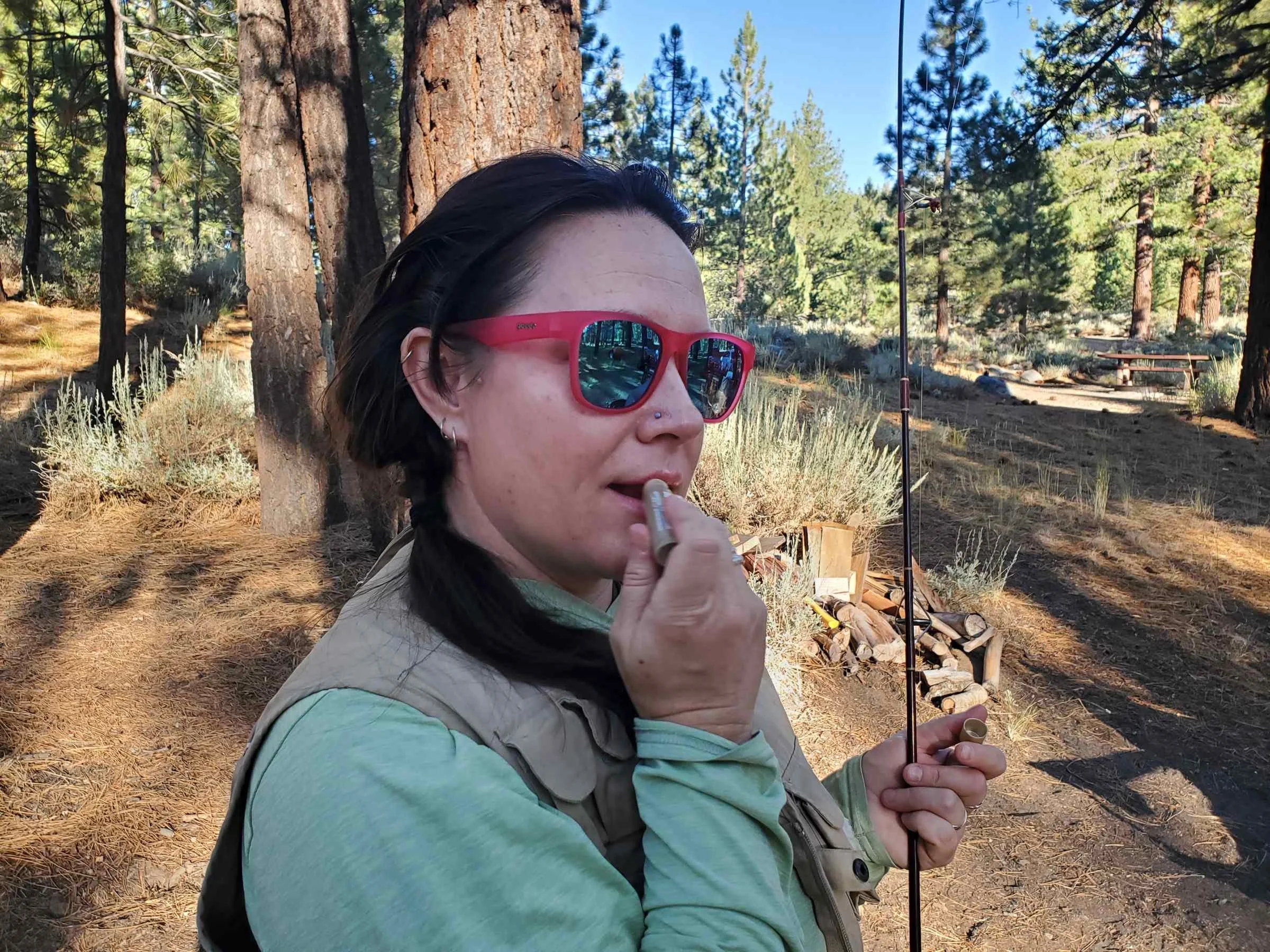
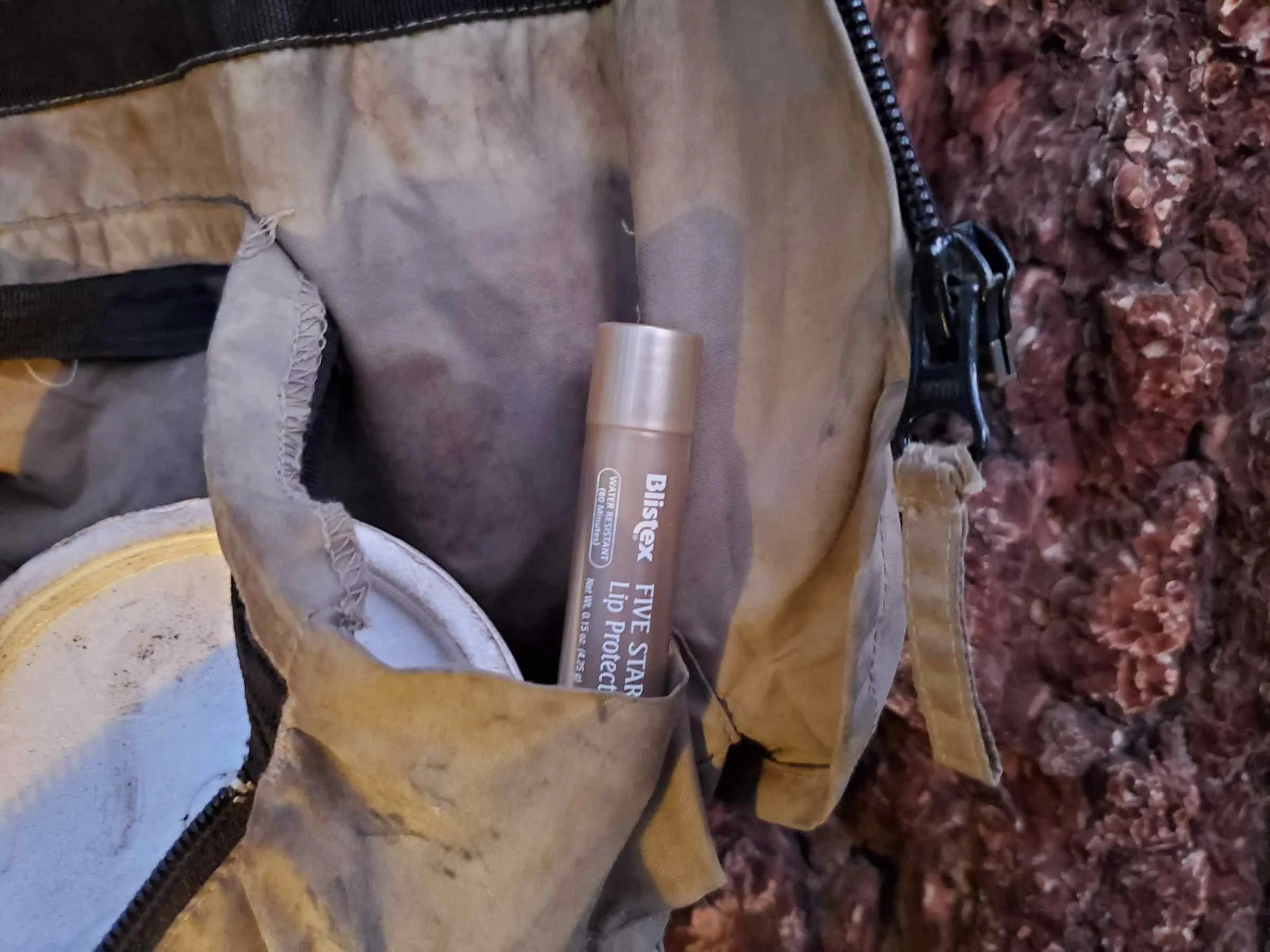
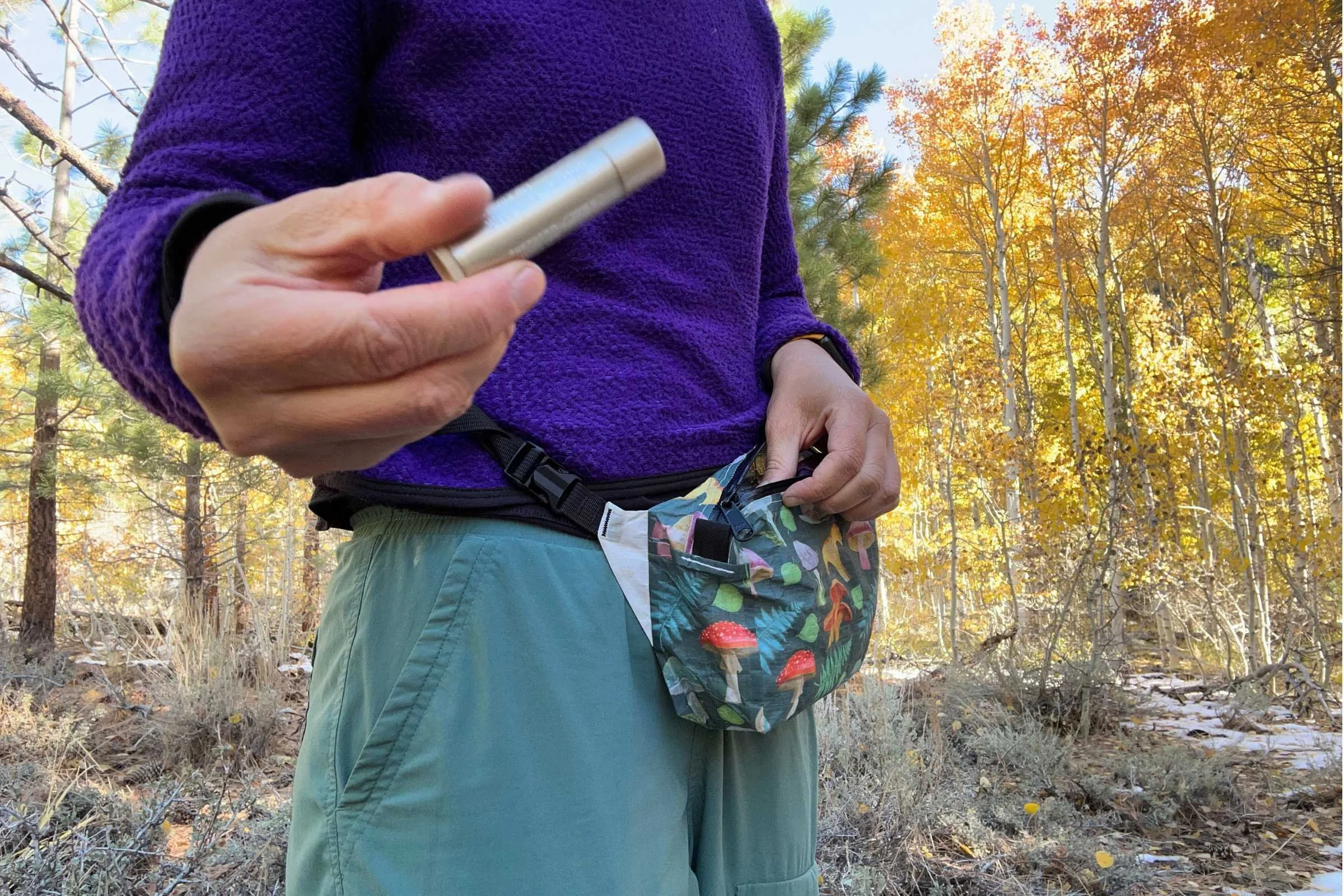
Overall the experience of this product is…nothing special. Testing notes included words like “standard,” “basic,” and, my favorite, “uneventful.” The smell is vaguely sweet but not too strong, and most people found the taste neutral.
The lip feel is the waxy texture of a typical drugstore lip balm. It’s not really hydrating, but neither is it drying. It did not get squishy in our pockets over the course of the day. It did not melt after many hours in a hot car. It was no one’s favorite, but it was not polarizing, and no one hated it! For an absolutely average and incredibly cost-effective SPF lip balm experience, Blistex Five Star Lip Protection SPF 30 is your best bet.
Best mineral SPF lip balm: TiZO Lip Protection SPF 45

SPF rating: 45
Key ingredients: Zinc Oxide 5.5% Titanium Dioxide 4%
Price: $12.50/stick on Amazon
Scented: No
What we liked: Very slight tint but no white cast, moisturizing, pleasant lightweight texture, pocket- sized, not much fragrance
What we didn’t like: Mixed feelings on longevity, slight chemical taste, sweated a bit after several hours in a hot car, on the expensive side
Mineral SPF lip balms–those using only zinc oxide and/or titanium dioxide as their active ingredients–are, like all mineral sunscreens, hard to make completely clear. Many of the mineral SPF lip balms we tried left a white cast, but Tizo Lip Protection SPF 45 had the least white cast of all the mineral products we tried. Though it looks light brown in the tube, it applies with a slight but not particularly noticeable tint, even on darker skin tones. One tester described it as “natural-looking.”
TiZO Lip Protection SPF 45
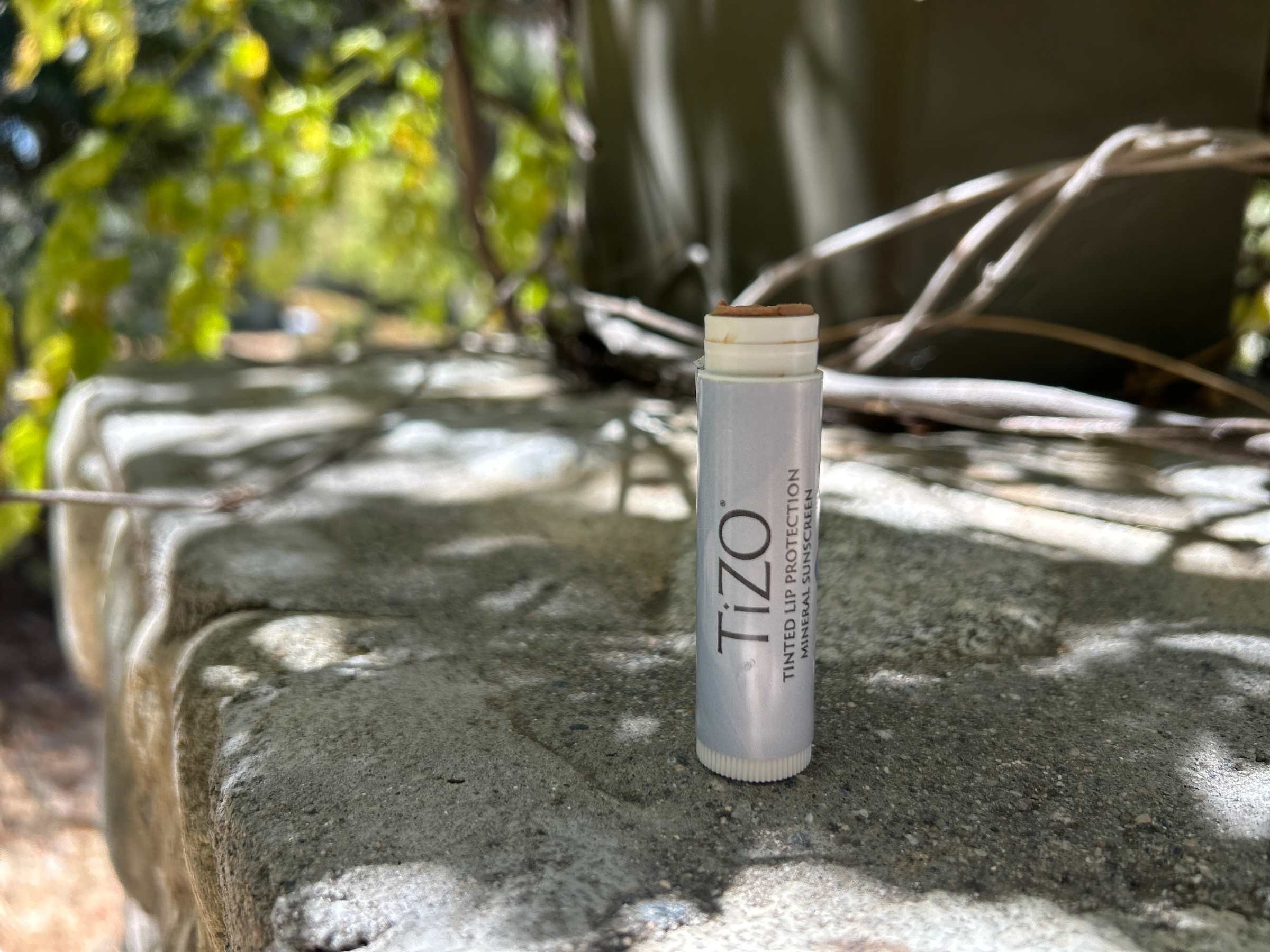
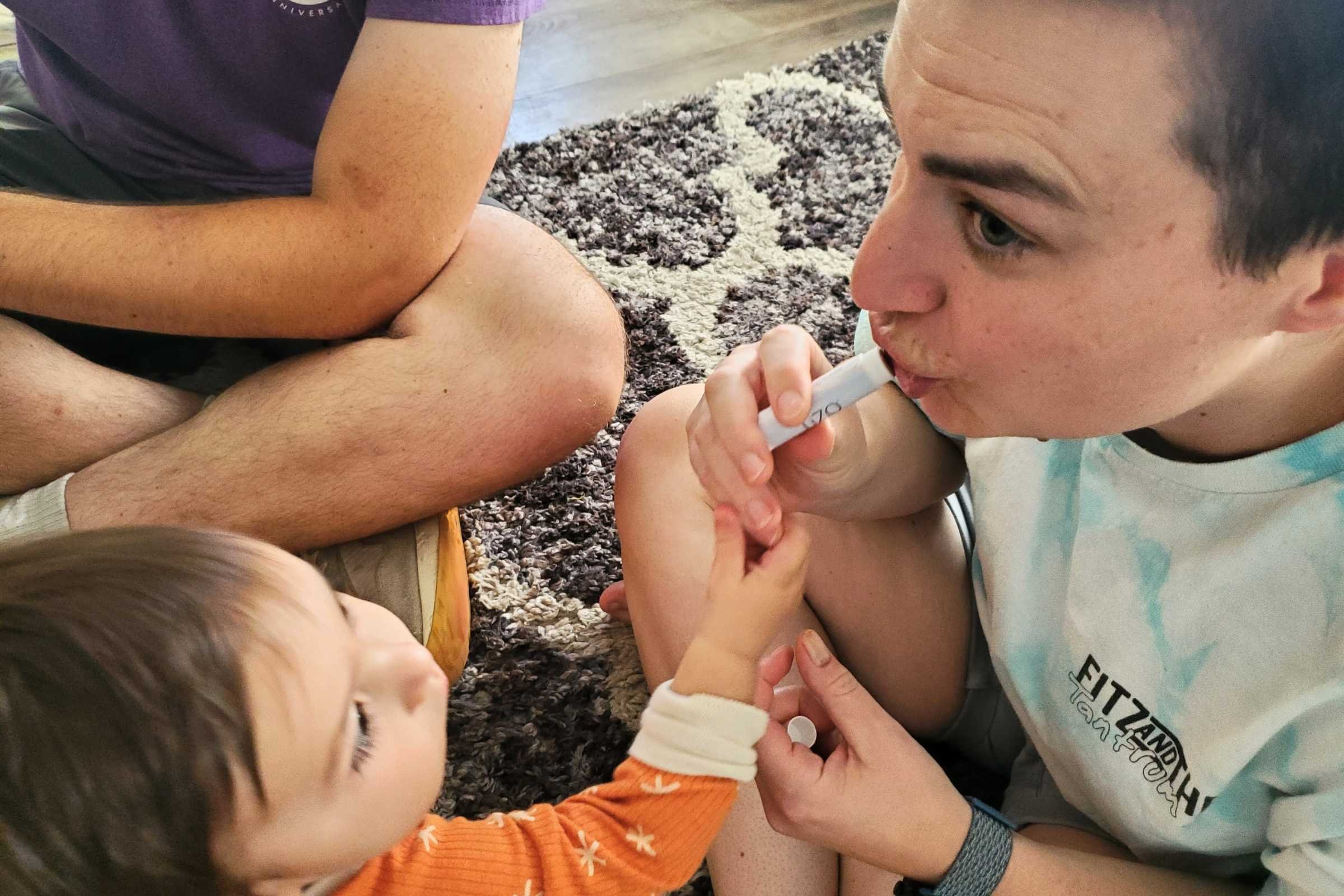
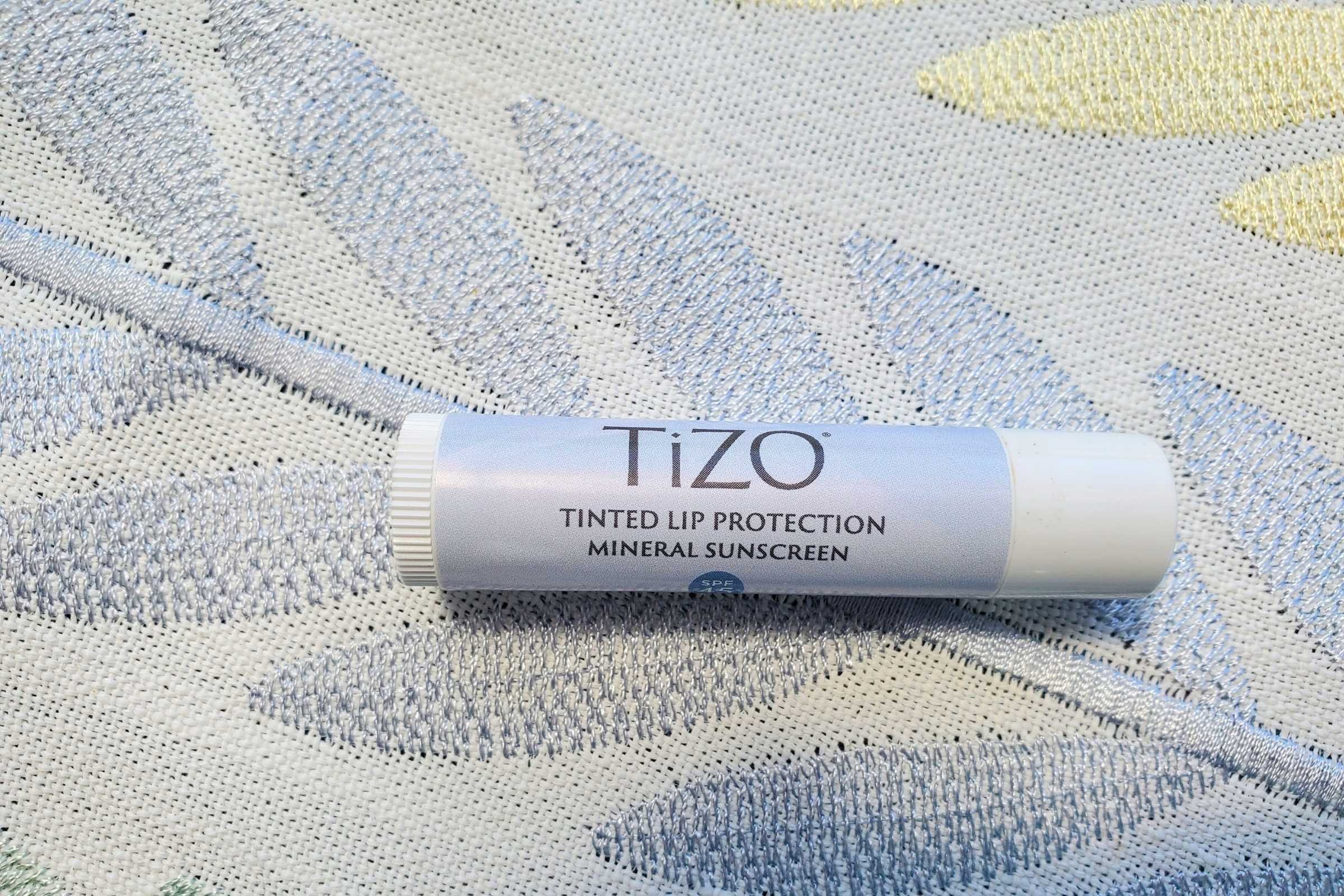
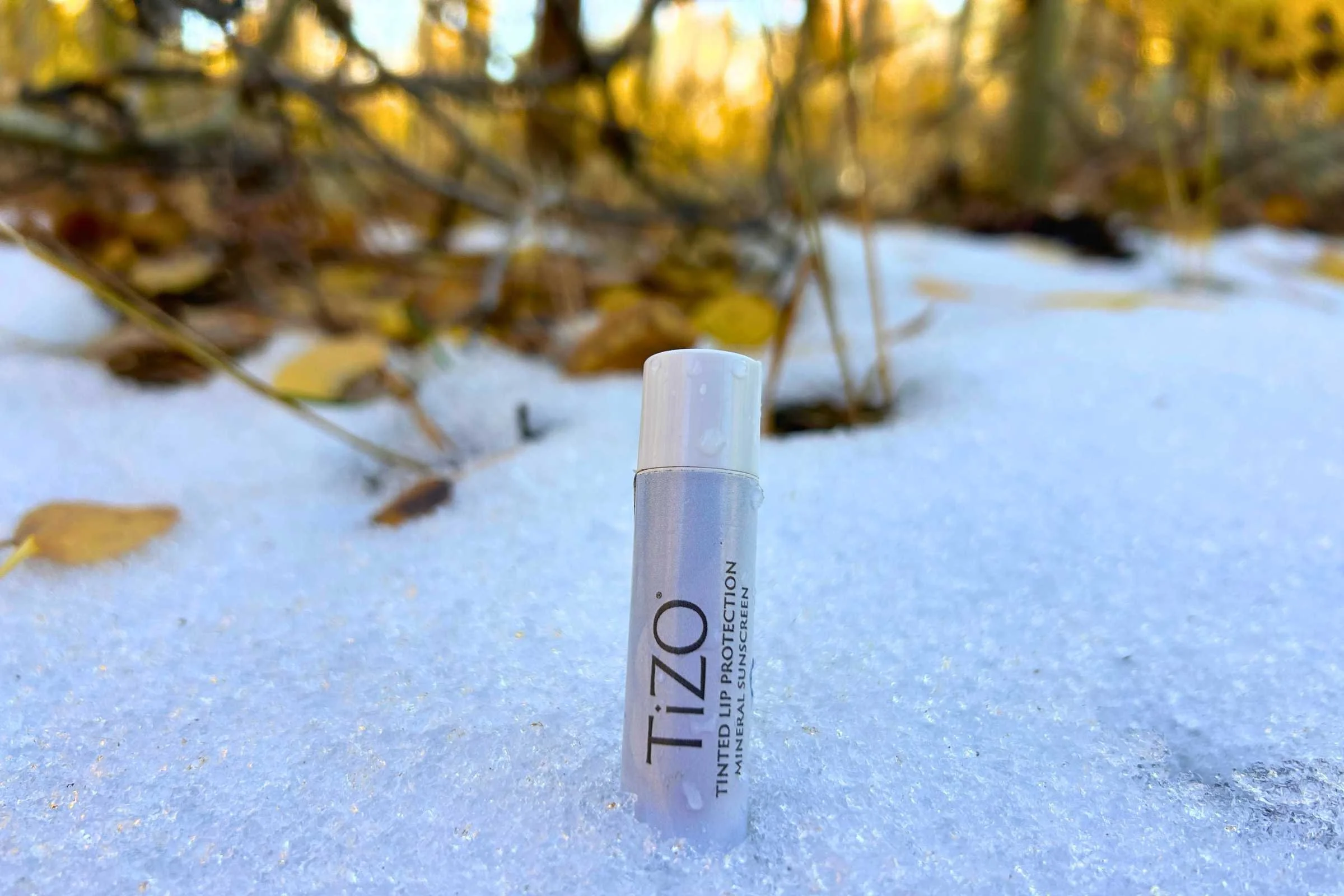
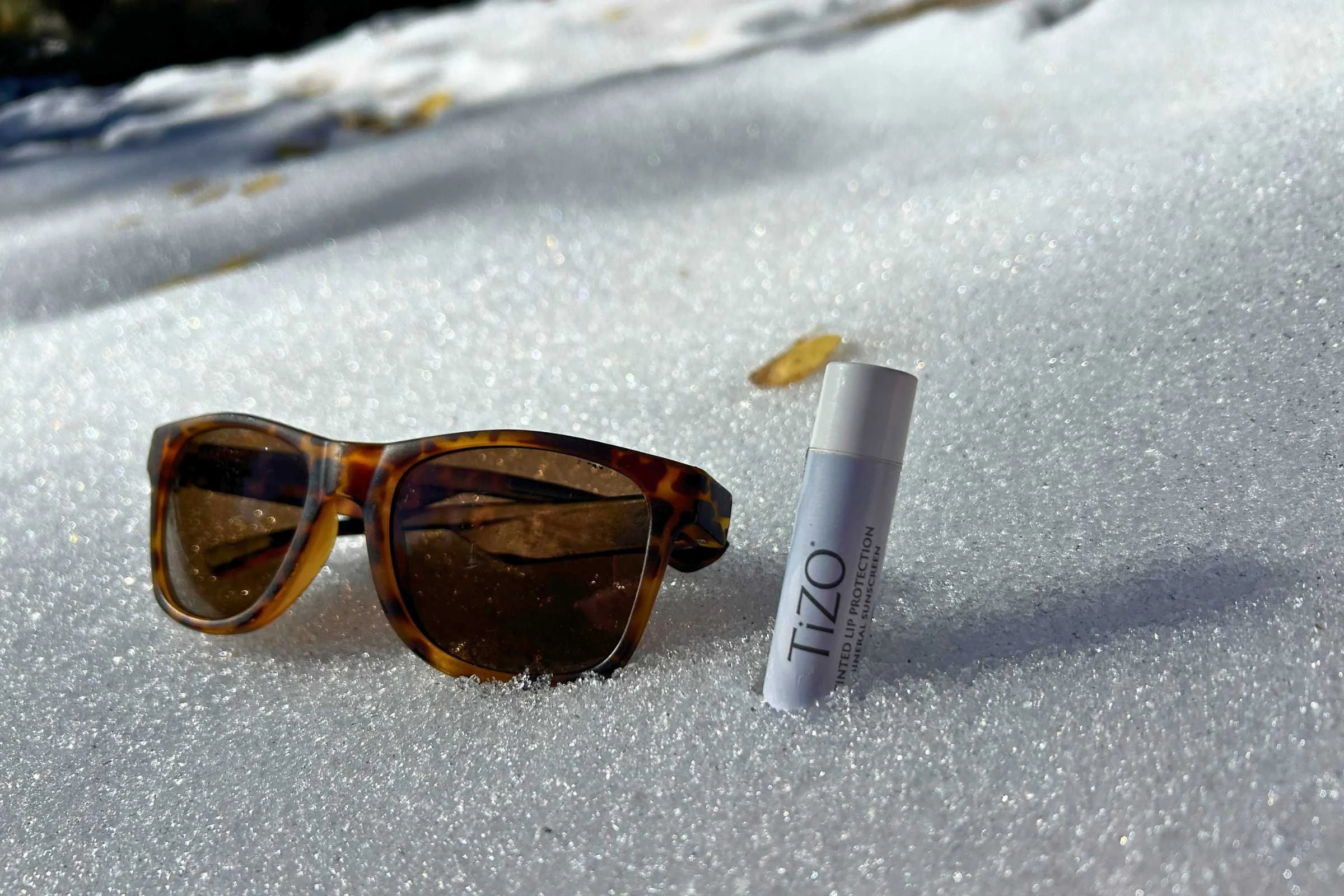
Tizo Lip Protection SPF 45 does have a slight fresh scent, which some testers found citrusy and others minty. Overall, the smell was very subtle, and most people found it to have a neutral taste, though some thought it tasted chemical-y. Online reviews across retail sites, too, find Tizo Lip Protection to be effective, neutral-tasting, and moisturizing. We also liked that this is a pocket-sized tube, about the size of an original Chapstick.
The biggest drawback noted in testing was the product’s longevity, with several testers noting that it didn’t seem to last too long on the lips, particularly after drinking water. It sweated a bit of oily liquid after several hours in a hot car, though it didn’t melt.
Some online customer reviewers also dislike the fact that it contains aluminum-based compounds, which have not been proven to have negative health effects but around which there is a great deal of discourse and currently-active research. If this is an issue for you, our runner-up mineral SPF lip balm, Burt’s Bees SPF 30 Lip Balm, has a slightly greater white cast and more noticeable scent but no aluminum.
Best liquid/gel SPF lip balm: Cay Skin Isle Lip Balm SPF 30

SPF rating: 30
Key ingredients: Avobenzone (3%), Octisalate (5%), Octocrylene (10%)
Price: $16.00/tube on Amazon
Scented: No
What we liked: Pleasant smell, hydrating, doesn’t taste chemical-y, stays on longest of liquid-type balms, doesn’t melt
What we didn’t like: Looks shiny, can feel sticky/heavy
Treeline testers’ favorite liquid or gel-type lip balm was Cay Skin Isle Lip Balm SPF 30. We were using the clear version, although it also comes in multiple shades if that’s your preference. All tints have a flavor described as “vanilla brown sugar” which smelled like…chocolate? Vanilla? Either way, it didn’t taste like sunscreen, which we appreciated. The majority of other liquid-type SPF lip balms we tried tasted strongly of chemicals.
Many people love the smooth application and glowy finish of liquid lip balms and the fact that these won’t melt when you keep them in your hot car/pocket/pack.
Cay Skin Isle Lip Balm SPF 30
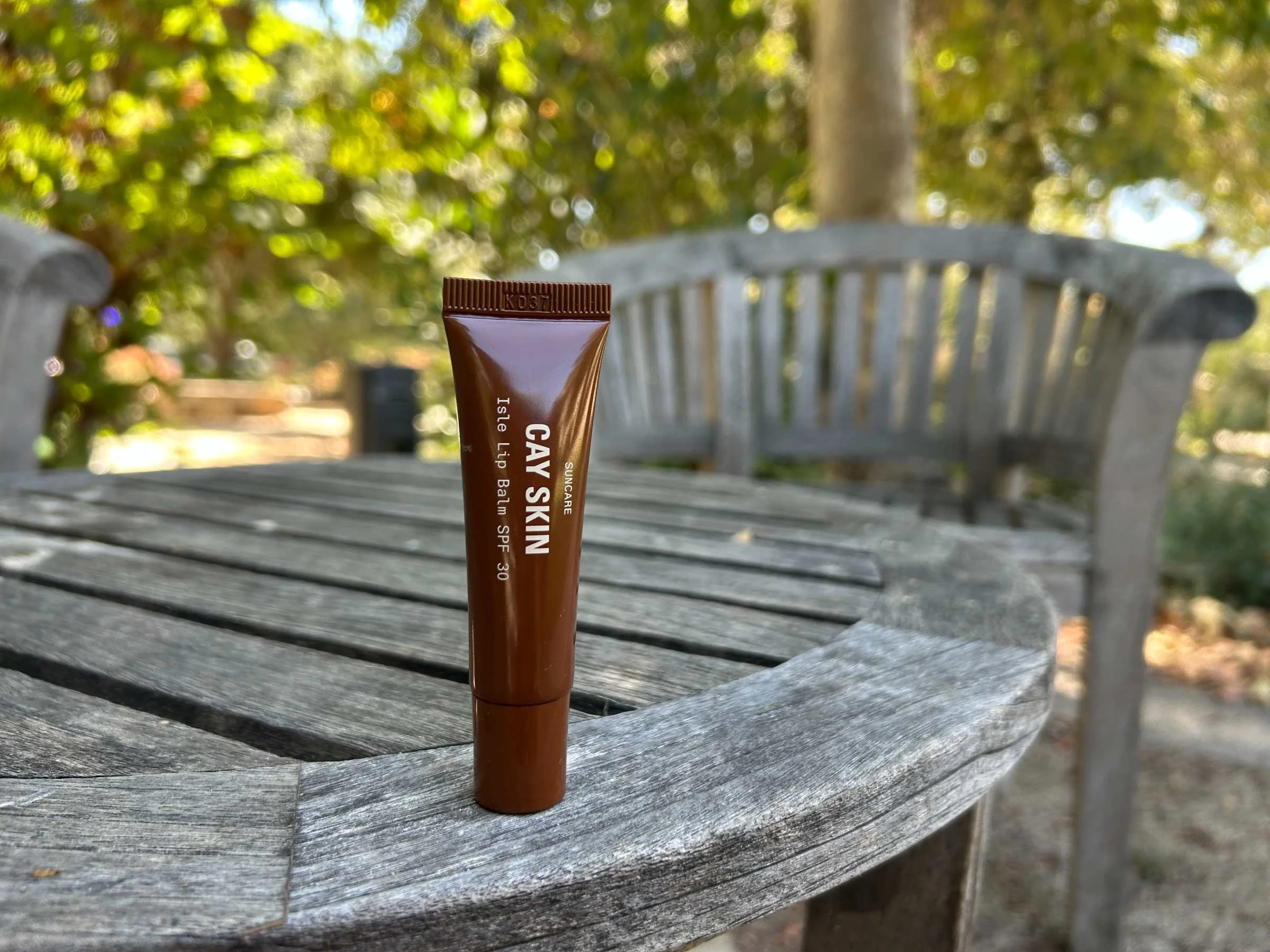
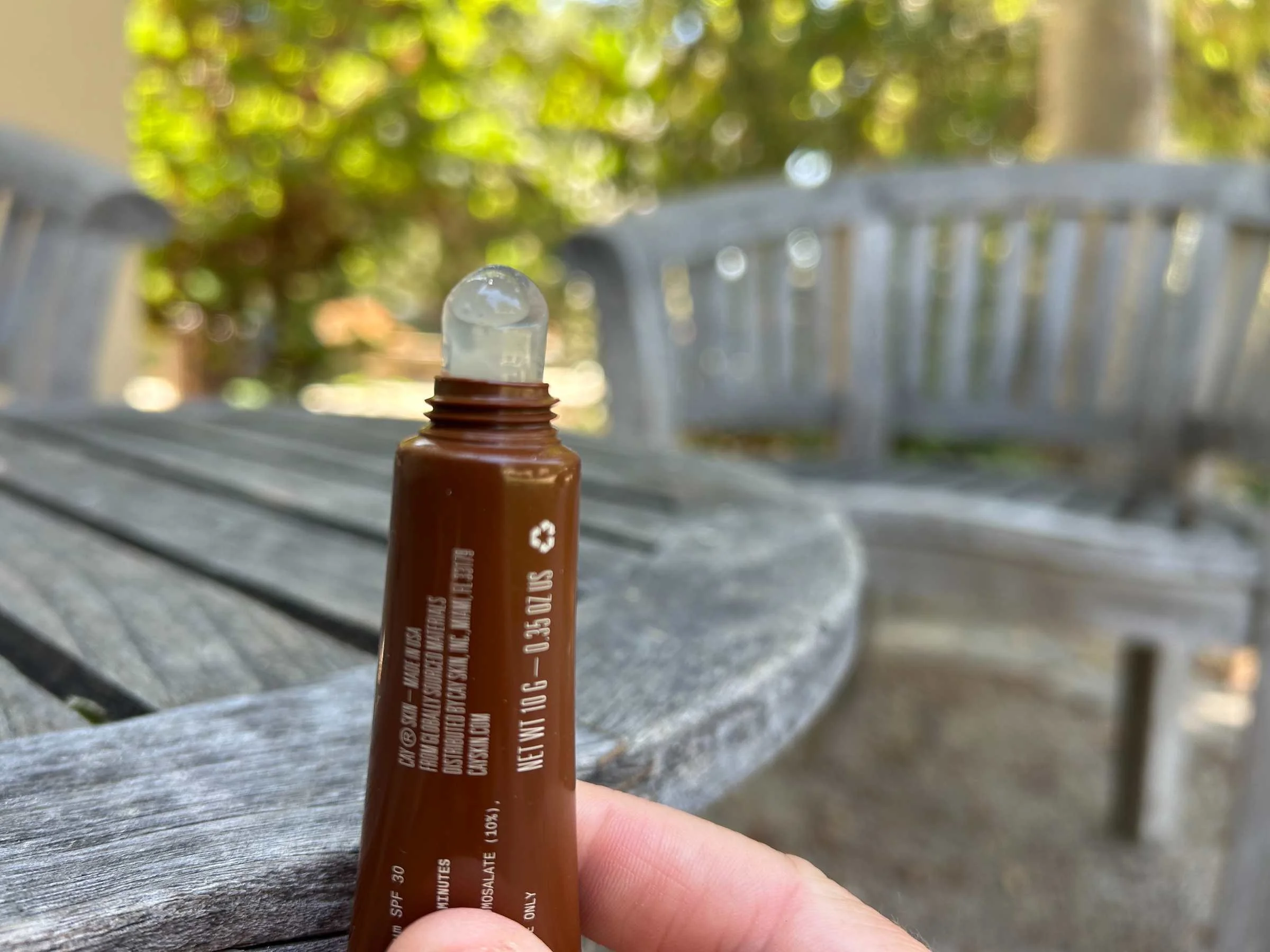
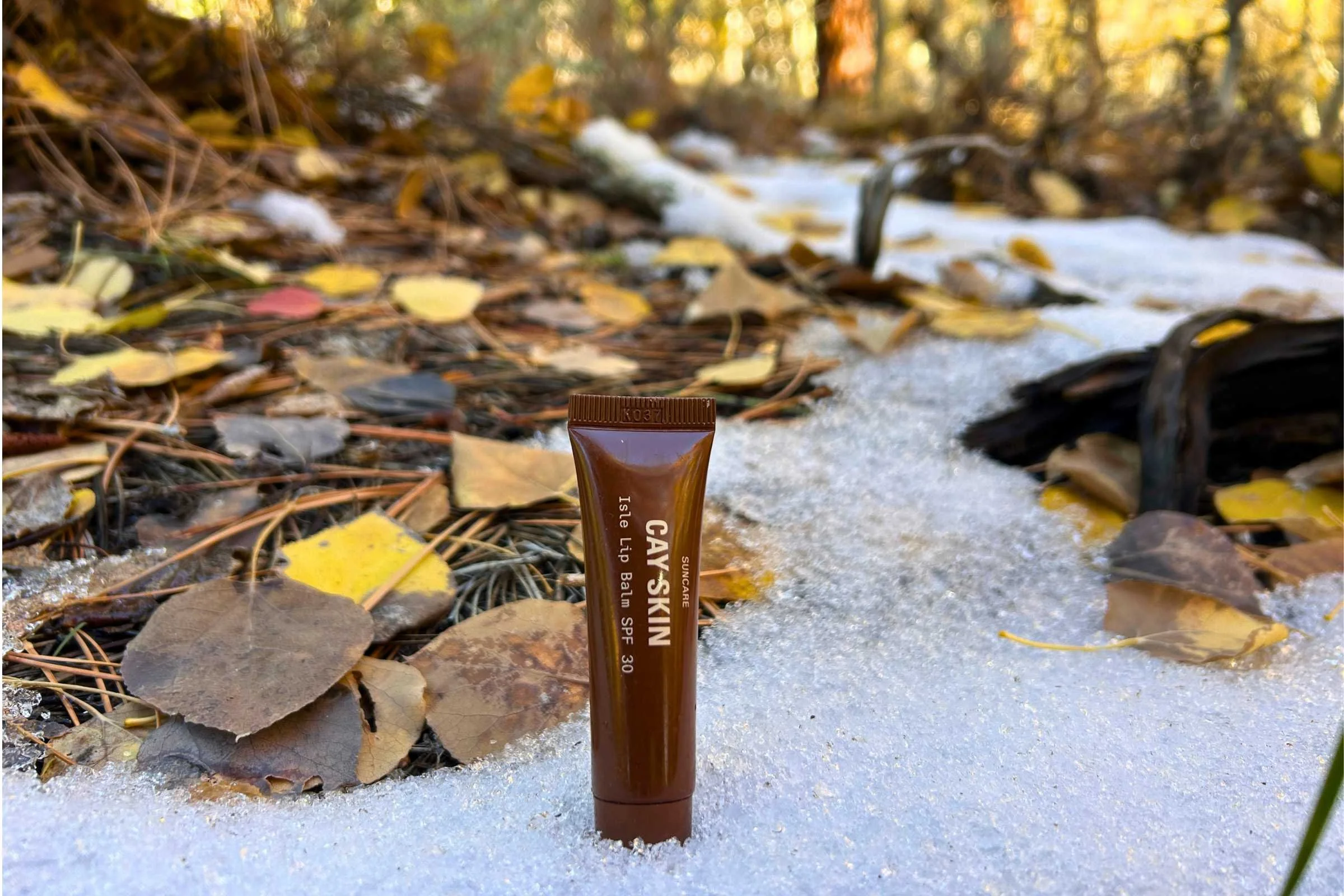
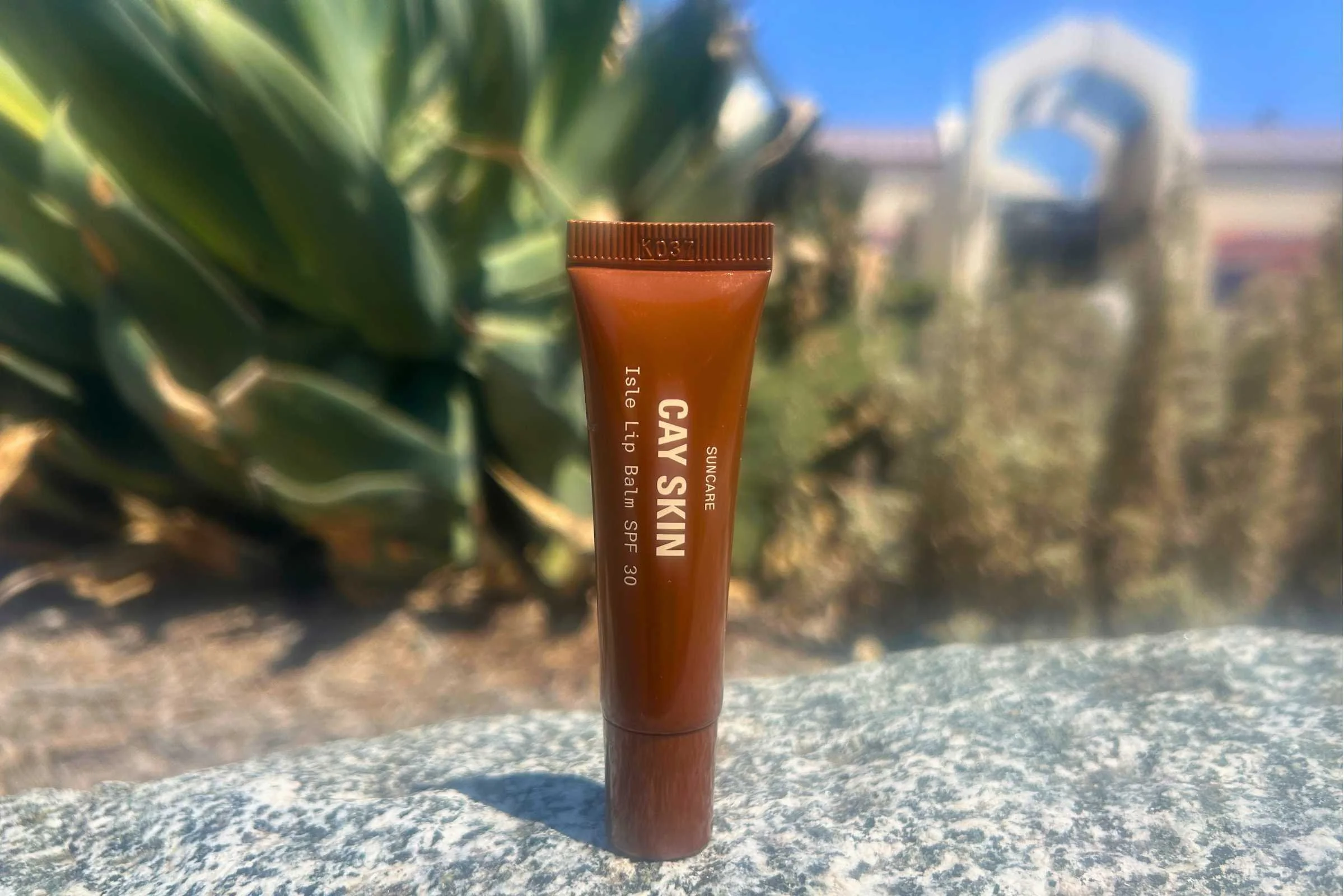
Liquid lip balms–that is, ones that you squeeze out of a tube rather than apply from a stick–are polarizing. The gel-like liquid formula makes some people feel like they don’t last as long, and the shiny finish of many of these products can be off-putting if that’s not what you’re expecting.
In our testing, most liquid-type lip balms tended to have poor longevity, with the more lightweight products feeling like they dissolved immediately when we drank water. Cay Skin had the best longevity of the liquid-type lip balms we tried, largely because it felt thicker and stickier than competitors. We wore it on a 4-hour bike ride and despite frequently drinking water from a bike water bottle, it stayed in place.
Although the Cay is on the expensive side, we found ourselves needing to reapply it less frequently than other liquid-type lip balms, which made it feel like a better value.
In short, this product is a liquid/gel that you apply by squeezing it out of a tube–and of that category of lip balm, it was our favorite. It has a distinct sweet scent, a relatively neutral flavor, and a shiny finish. Its thick, sticky consistency made it more moisturizing and longer-wearing than comparable products. If you’re someone who appreciates a thicker, more persistent liquid lip balm and you like (or at least don’t mind) shiny lips, this is a great SPF lip balm to try.
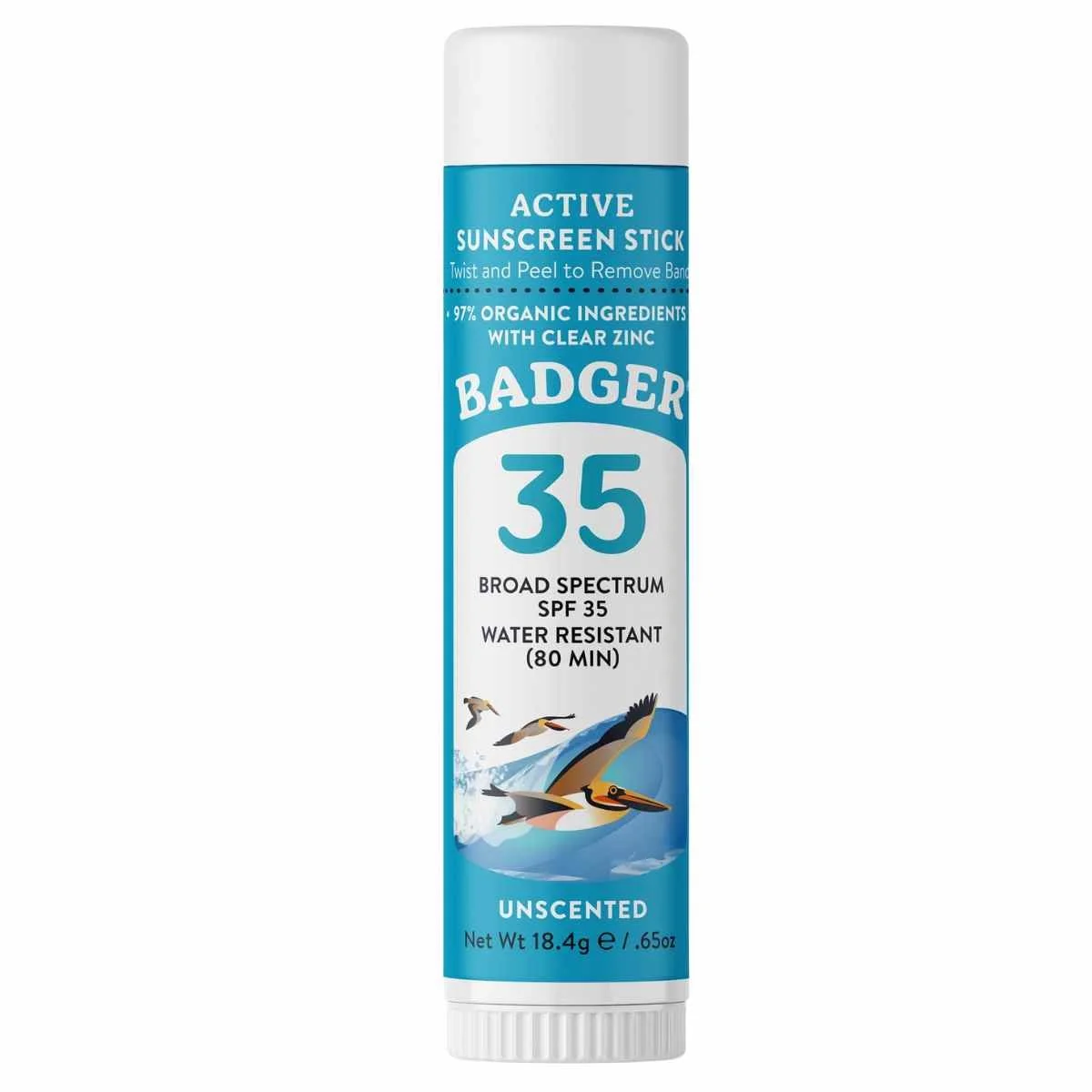
Best reef-safe SPF lip balm for days in the water: Badger Mineral Sunscreen Face Stick SPF 35
SPF rating: 35
Key ingredients: Non-nano Zinc Oxide 22.5%
Price: $13.95/stick on Amazon
Scented: No
What we liked: Reef-safe, neutral scent and flavor, hydrating, excellent longevity & water resistance, dual purpose lips/face stick
What we didn’t like: Stick is larger than most lip balms, white cast, on the expensive side
Whether we’re boating, paddleboarding, surfing, or swimming, when it comes to days on and/or in the water, longevity and water resistance are essential in our sun protection. We also want a product that we’re sure won’t cause harm to freshwater or saltwater wildlife. That’s why our favorite SPF lip balm for days on the water is Badger Mineral Sunscreen Face Stick SPF 35.
Badger Mineral Sunscreen Face Stick SPF 35
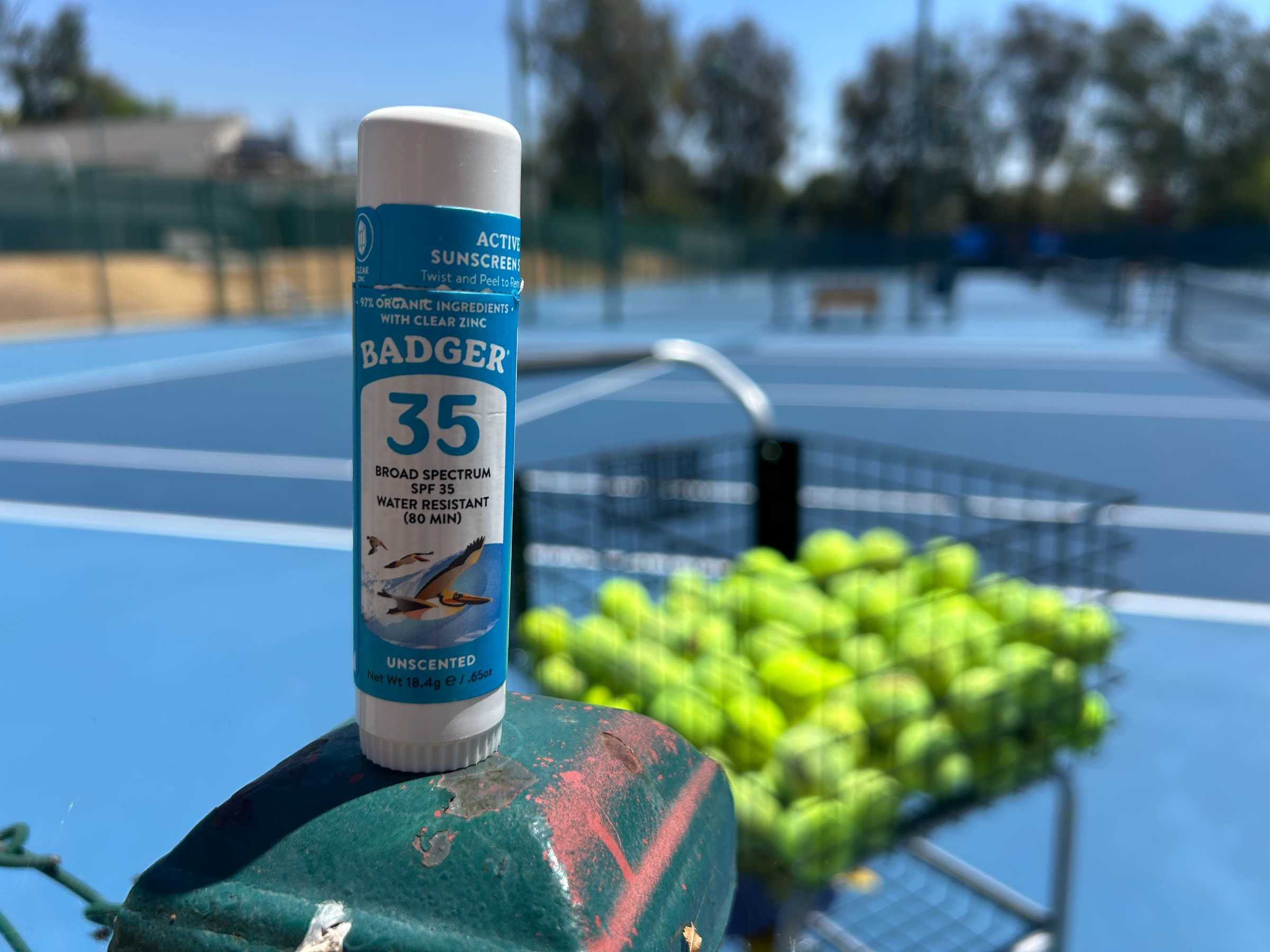
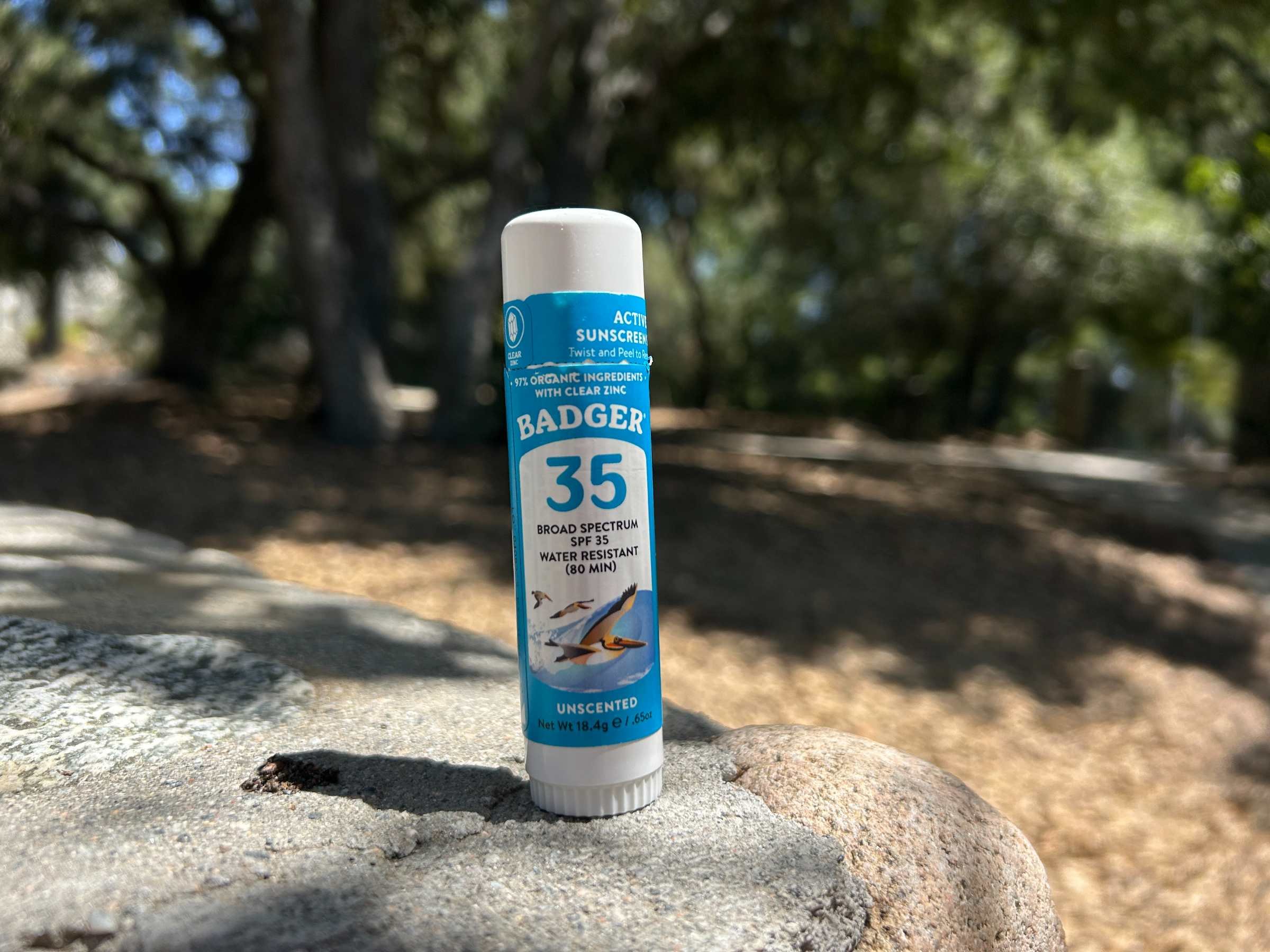
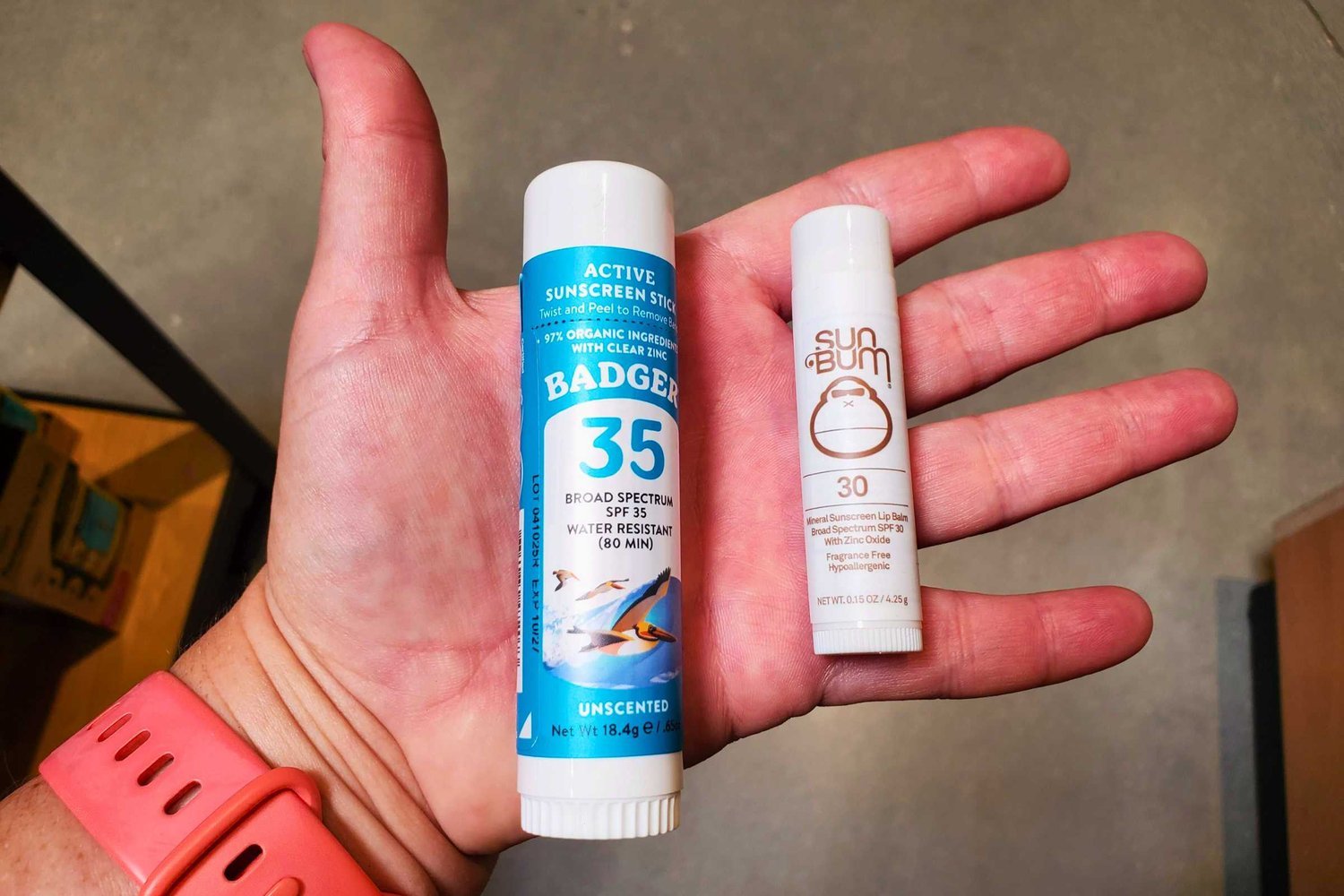
Badger is a brand that makes several products we love for their short, reef-safe ingredient lists (plus being a woman-owned brand, B-corp, and made in the USA). The Badger Mineral Sunscreen Face Stick SPF 35 contains only zinc oxide, extra virgin olive oil, beeswax, cocoa butter, shea butter, and sunflower Vitamin E (most of these are certified organic and non-GMO). It’s moisturizing, long lasting, water resistant, and although it does leave a bit of a white cast, it’s much less noticeable than many other mineral SPF products. While it has no added fragrance, it has a slight neutral scent that didn’t bother most people.
While the size of this tube is larger than we typically want for an SPF lip balm, we appreciate that the larger size means we can use this sunscreen on our cheeks, nose, ears, and the rest of the face as needed (we also like this product for SPF reapplication during hikes and snow sports). Remember, if you’re swimming or sweating, you need to reapply at least every 80 minutes!
Other SPF Lip Balms We Tested
Overall Best SPF lip balm - Honorable Mention: Panama Jack Sunscreen Lip Balm SPF 45

SPF rating: 45
Key ingredients: Avobenzone (3%), Homosalate (3%), Octinoxate (7.5%), Octisalate (5%)
Price: $4.23/stick on Amazon
Scented: Yes, 3+ options
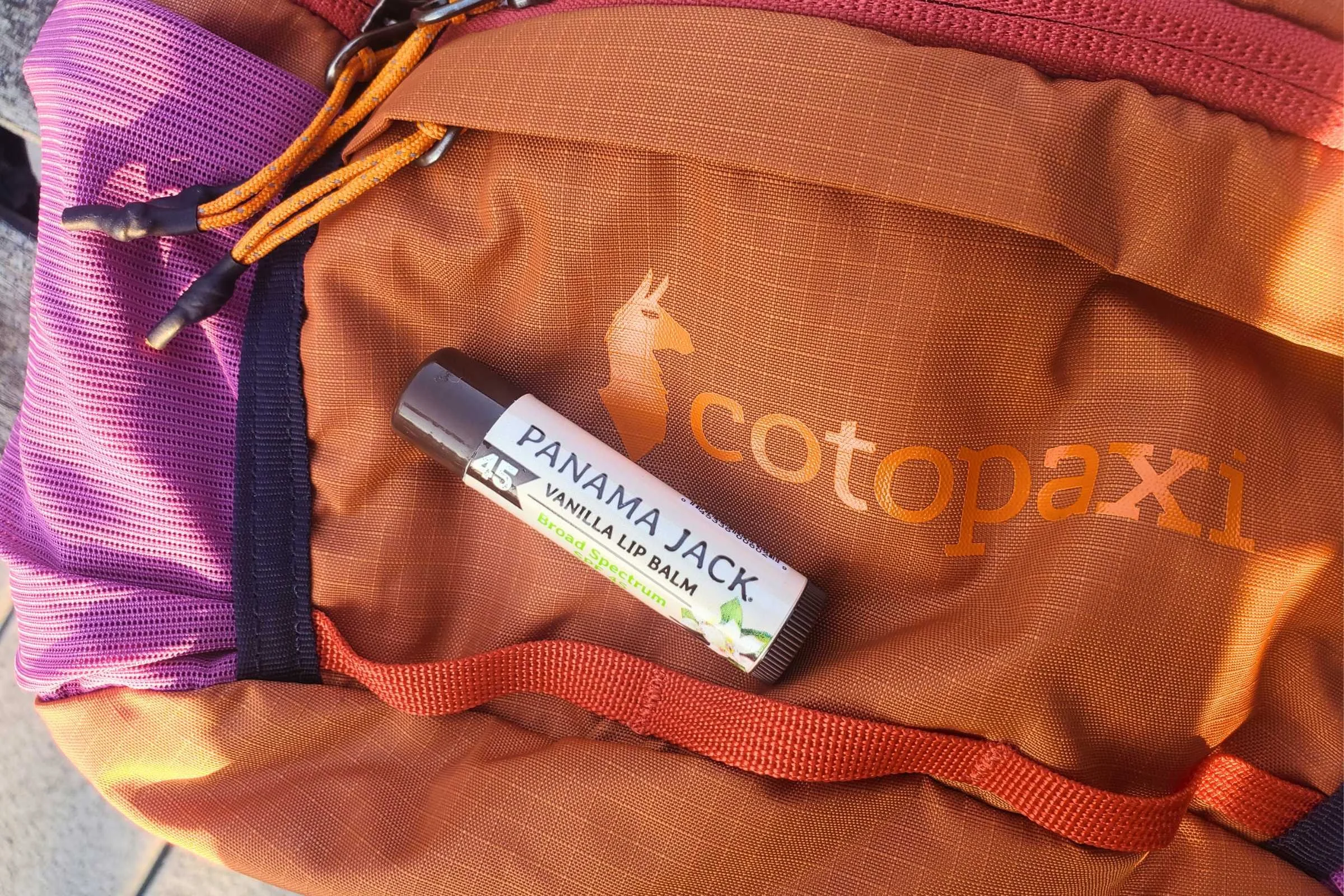
Panama Jack Sunscreen Lip Balm SPF 45 is an extremely popular product that gets stellar reviews across online retailers. We tried the vanilla flavor, and we liked it best of the flavored SPF lip balms we tried. The taste and smell were pretty mild, the taste wasn’t chemical-y, and the product was hydrating without being shiny or heavy. It’s also an extremely affordable pick, around $4 when you buy a 4-pack.
Panama Jack Sunscreen Lip Balm SPF 45
However, it is flavored, which is generally more polarizing than non-flavored products. It also contains octinoxate, which early research suggests could have hormone disrupting effects, and we don’t love that even if it’s not a conclusive medical recommendation at the moment. Overall, though, this is a pleasant and extremely well-liked product across the internet, and it’s our runner-up for best SPF lip balm.
Best Mineral SPF lip balm - Honorable Mention: Burt’s Bees SPF 30 Lip Balm

SPF rating: 30
Key ingredients: Zinc oxide 12%
Price: $4.33/stick on Amazon
Scented: Yes, 3+ options
Burt’s Bees SPF 30 Lip Balm was a close runner-up for Best Mineral SPF Lip Balm. It’s the #2 bestselling SPF lip balm on Amazon, it’s half the price of Tizo, and its white cast is barely more noticeable than our winner. It feels a bit thicker than Tizo when applied, but some testers liked the slightly weightier feel. While it wasn’t a universal favorite in our testing–the Tropic Like It’s Hot flavor was popular, the other flavors less so–it was pretty well-liked overall, and definitely a product we’d recommend if you want a more affordable mineral SPF lip balm.
Burt’s Bees SPF 30 Lip Balm

Mineral lip balms like Burt’s Bees SPF 30 Lip Balm, TiZO Lip Protection SPF 45, and Badger Mineral Sunscreen Face Stick SPF 35 are all good choices for kids. Mineral sunscreen filters like zinc oxide and titanium dioxide are generally gentler and less likely to cause irritation or allergic reactions than chemical filters.

SPF rating: 30
Key ingredients: Avobenzone 2.9% Octisalate 4.9% Octocrylene 7.6%
Price: $15.00/stick
Scented: No
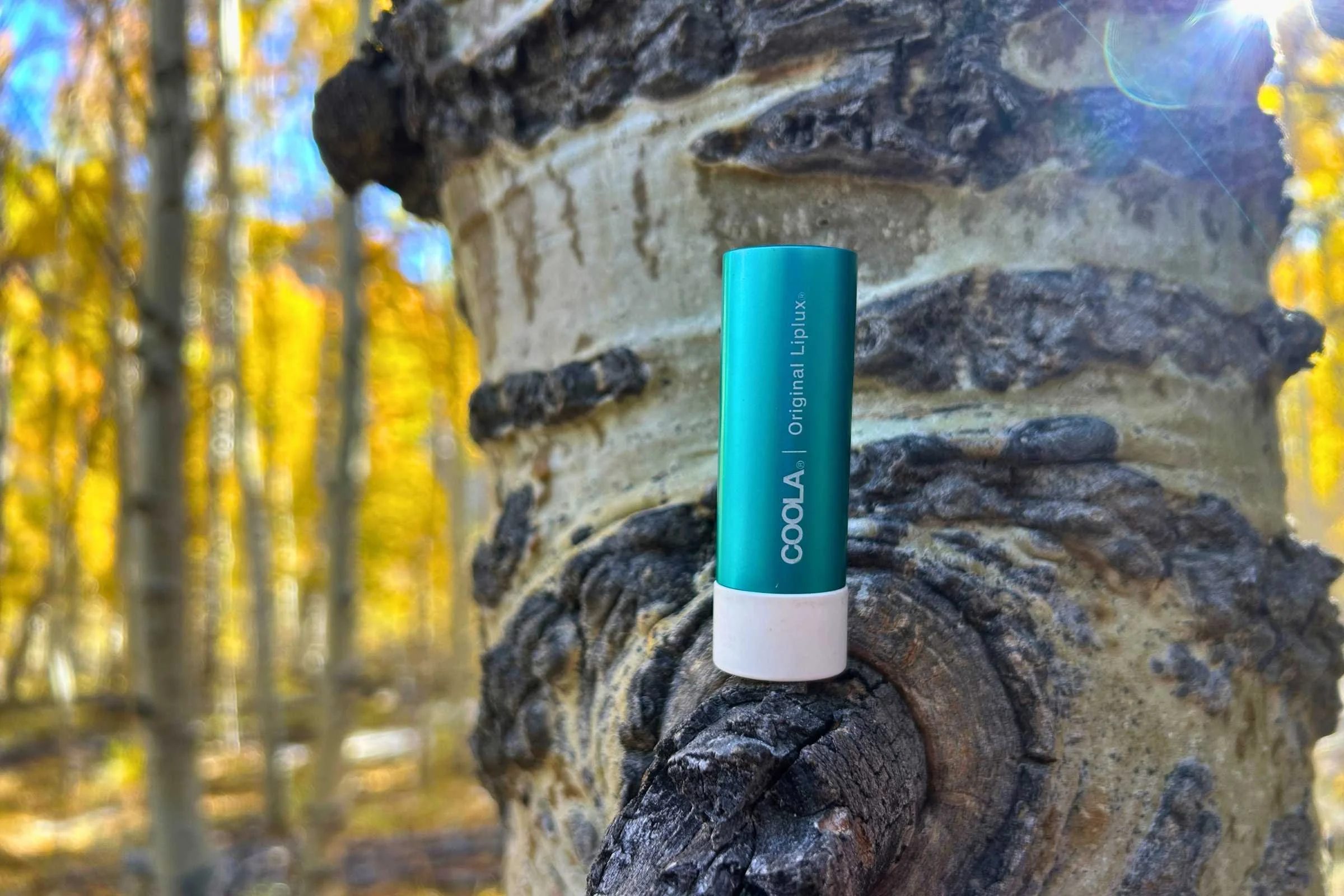
This SPF lip balm, although at the top of several lists we found online, was only fine. Not markedly better as a lip balm than our winner, Aquaphor. We also disliked the bulky packaging, which has a luxurious heft but which is utterly unnecessary, since the actual balm is just the size of a regular stick of lip balm.
COOLA Organic Liplux Lip Balm SPF 30

SPF rating: 50
Key ingredients: Avobenzone 3.0% Homosalate 10.0% Octisalate 5.0% Octocrylene 10.0%
Price: $3.25/stick
Scented: Yes, 3+ options
The Banana Boat Sport Ultra SPF 50 Lip Sunscreen is affordable, but it tastes like chemicals and wasn’t our favorite.
Banana Boat Sport Ultra SPF 50 Lip Sunscreen

SPF rating: 30
Key ingredients: Avobenzone 3% Homosalate 10%,Octisalate 5% Octocrylene 8%
Price: $3.33/stick
Scented: No
We had mixed feelings on this one. Overall the flavors were polarizing (some liked, some disliked), and as a lip balm it was fine but not better than competitors.
Sun Bum SPF 30 Sunscreen Lip Balm

SPF rating: 30
Key ingredients: Zinc oxide
Price: $3.99/stick
Scented: No
Affordable mineral SPF lip balm, and pleasant enough, but tasted a bit chemical-y and had a pretty noticeable white cast.
Sun Bum SPF 30 Mineral Sunscreen Lip Balm
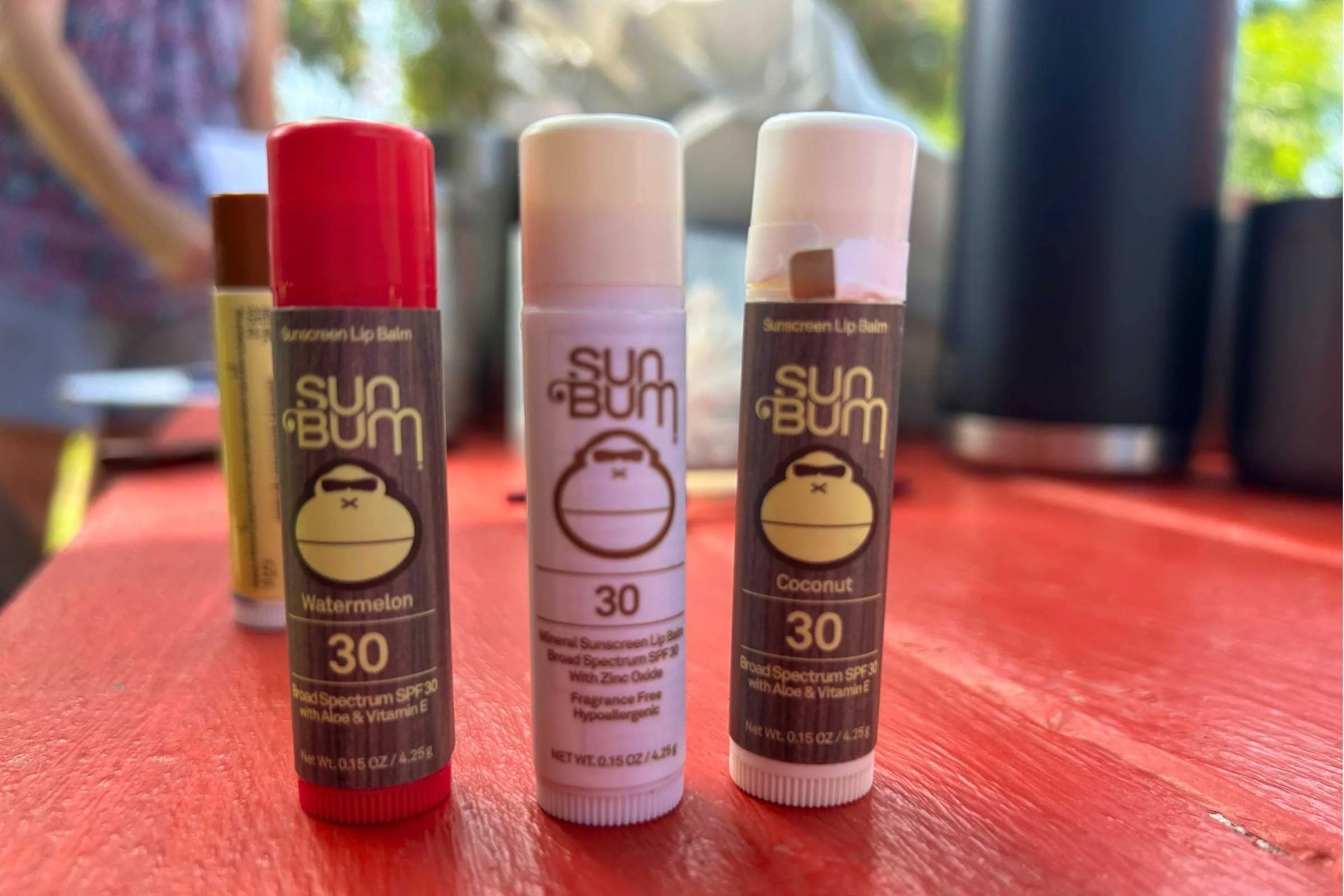

SPF rating: 30
Key ingredients: Avobenzone (3%) Homosalate (5%) Octisalate (3%) Octocrylene (10%)
Price: $4.00/stick
Scented: Yes, 3+ options
Similarly to Sun Bum, these were polarizing, with testers split on flavors. Vacation has some of the best-reviewed flavored SPF lip balms online, and the Mucho Mango flavor was among several testers’ favorites. So not a universal winner for us, but a viable choice if you want to try a flavored lip balm.
Vacation AriZona Iced Tea SPF 30 Lip Balm

SPF rating: 30
Key ingredients: Avobenzone (3%) Homosalate (10%) Octocrylene (10%) Octisalate (5%)
Price: $12.00/tube
Scented: No
Some testers had neutral experiences with this liquid SPF lip balm, but many thought it was too thin/watery, tasted/smelled chemical-y, and/or changed the color of their lips. It’s also on the expensive side.
Supergoop! PLAY Lip Balm SPF 30
SPF rating: 50
Key ingredients: Octocrylene (9%) Homosalate (7%) Octisalate (5%) Avobenzone (3%)
Price: $13.00/tube
Scented: No
This liquid SPF lip balm got mixed reviews from testers, with some liking it quite a bit and others feeling lukewarm. We had a hard time finding it across the internet, though: we bought ours from Sephora, but it looks like the similarly-named product on Amazon has different packaging, and maybe isn’t the same thing? Confusing.
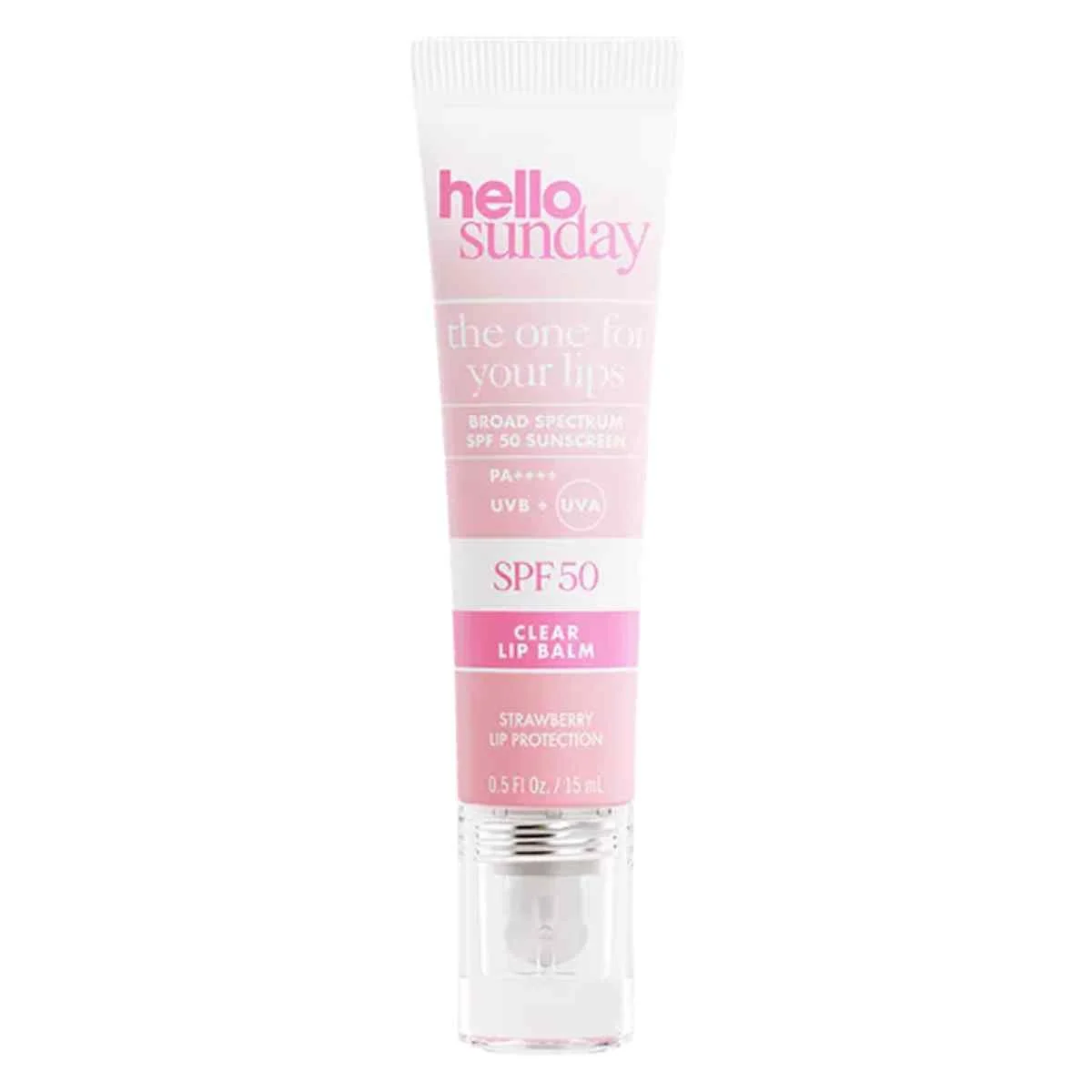
Hello Sunday The One For Your Lips SPF 50 Hydrating Lip Balm

SPF rating: 30
Key ingredients: Titanium Dioxide 7% (Non-Nano), Zinc Oxide 6% (Non-Nano)
Price: $3.78/stick
Scented: Both scented and unscented available
We appreciated this mineral SPF lip balm’s reef -safety, but it left an extreme white cast. Good longevity and water resistance though.
It is worth pointing out that not all Stream2Sea lip balms have a SPF rating. Many of the widely available 2-packs contain the Hydrate version, which is not SPF rated. This 3-pack contains only the SPF version, but many multi-packs contain at least one non-SPF lip balm, so be aware of this before you purchase.
Stream2Sea Naturally Naked Lip Balm SPF 30

SPF rating: 30
Key ingredients: Zinc oxide (15%)
Price: $3.66/stick
Scented: No
This was ok as a mineral SPF lip balm, not too bad of a white cast, but did taste a bit chemical-y. Maybe a runner-up to the runner-up.
Dermatone Mineral Lip Balm SPF 30
For literally any and every other type of SPF lip balm, lip gloss, or other lip product not on this list:
Is it SPF 30+ and protective against UVA/UVB rays? Go ahead and use it. It’ll work. They’re not in this article because they didn’t have as many user experience factors to recommend them, or they’re expensive, or any number of things depending on the person. However, they’re still 100% functional as sunscreen. If you’ll wear them, buy them!
What to look for in an SPF lip balm
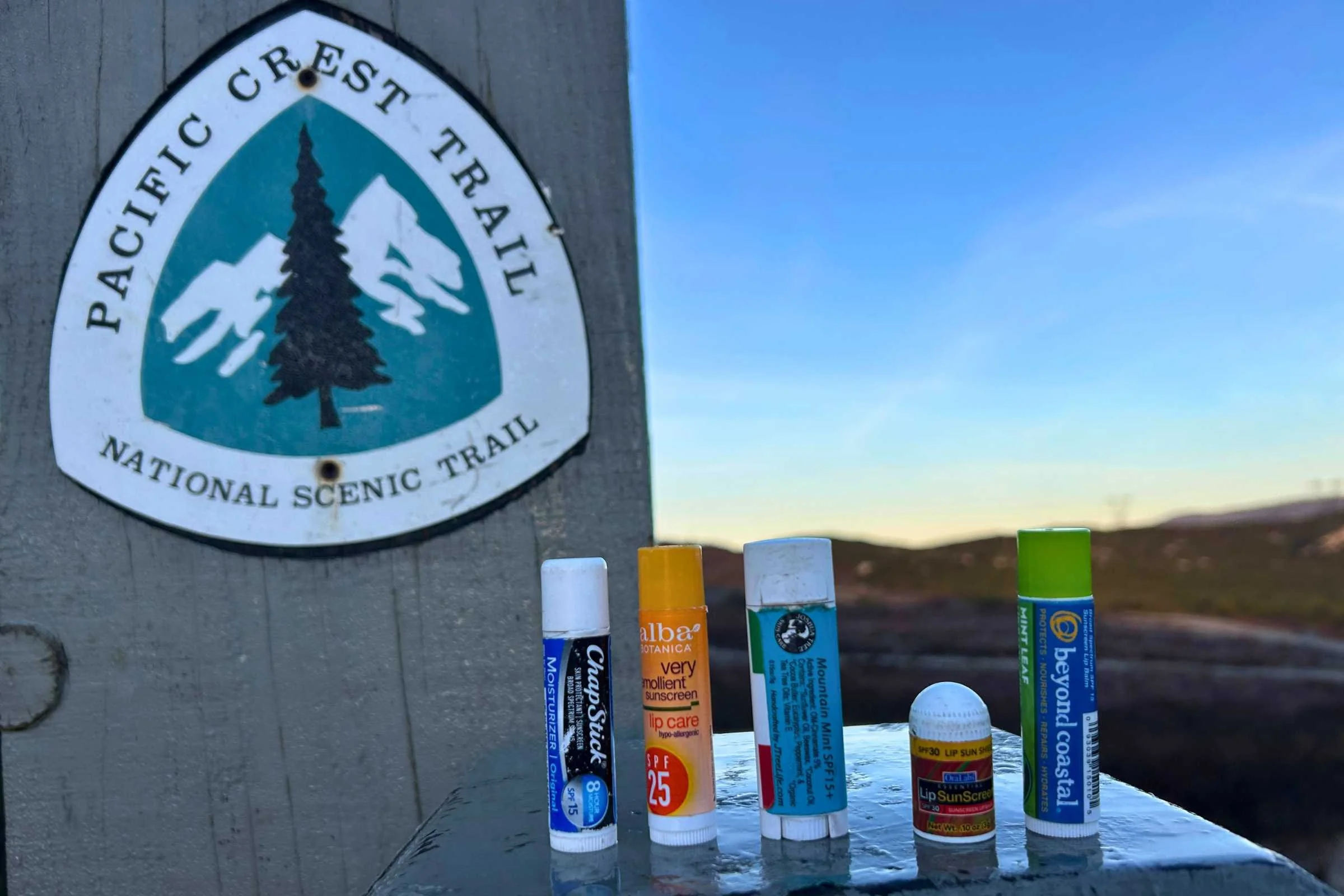
On paper, a lot of SPF lip balms look nearly identical: same SPF number, similar active ingredients, same stick format. The real differences show up in use. How does it feel? Does it taste like sunscreen? Does it stay put through a few hours of hiking, or does it vanish the moment you take a sip of water? Here's what actually matters.
SPF rating and broad-spectrum protection
The American Academy of Dermatology recommends SPF 30 or higher with broad-spectrum protection against both UVA and UVB rays, and that applies to your lips just as much as the rest of your face. We only tested products at SPF 30 or above. Higher SPFs like 45 or 50 give you a bit more cushion if you burn easily, spend time at elevation, or know you'll be in full sun all day, but they're not a substitute for reapplying.
Water resistance
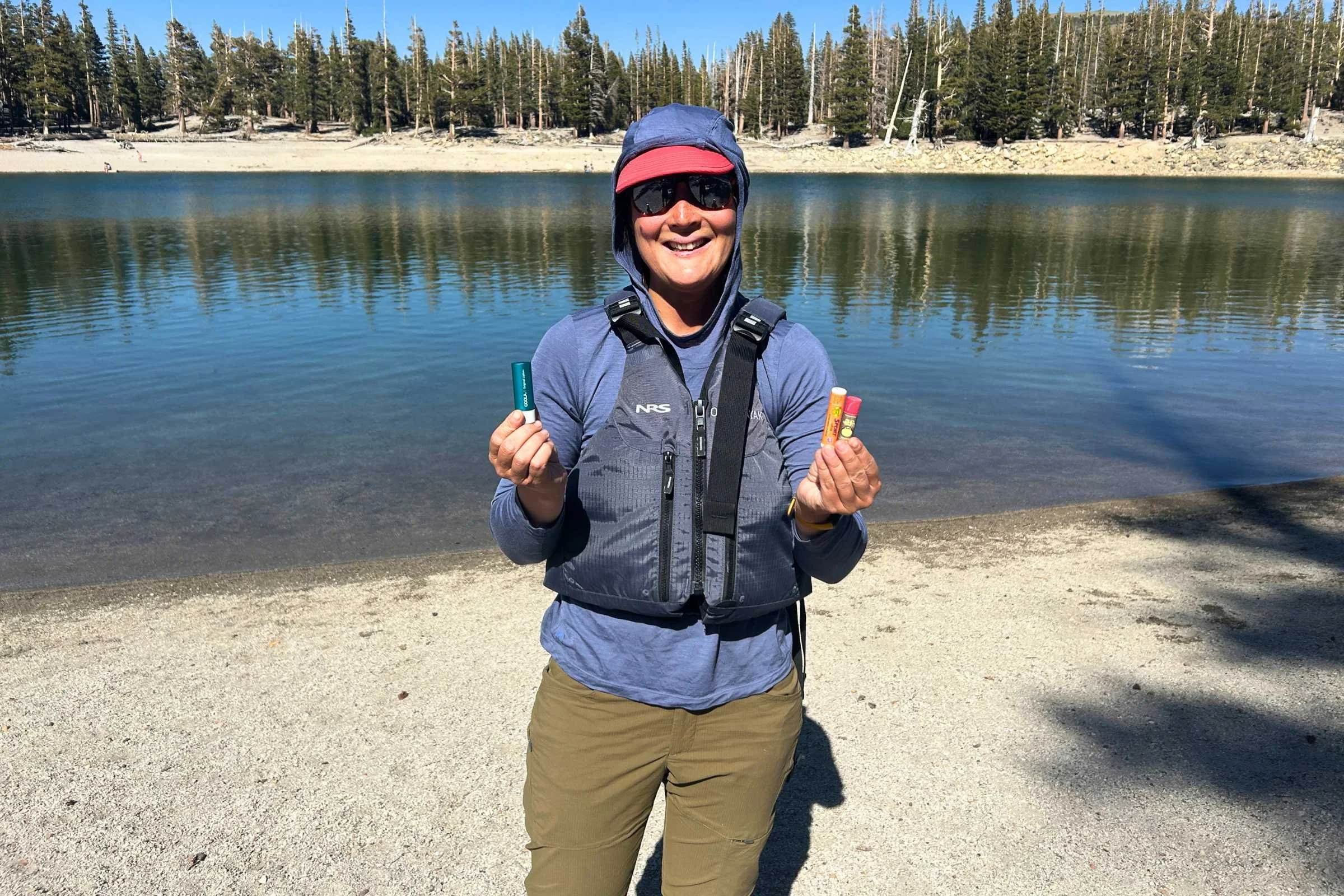
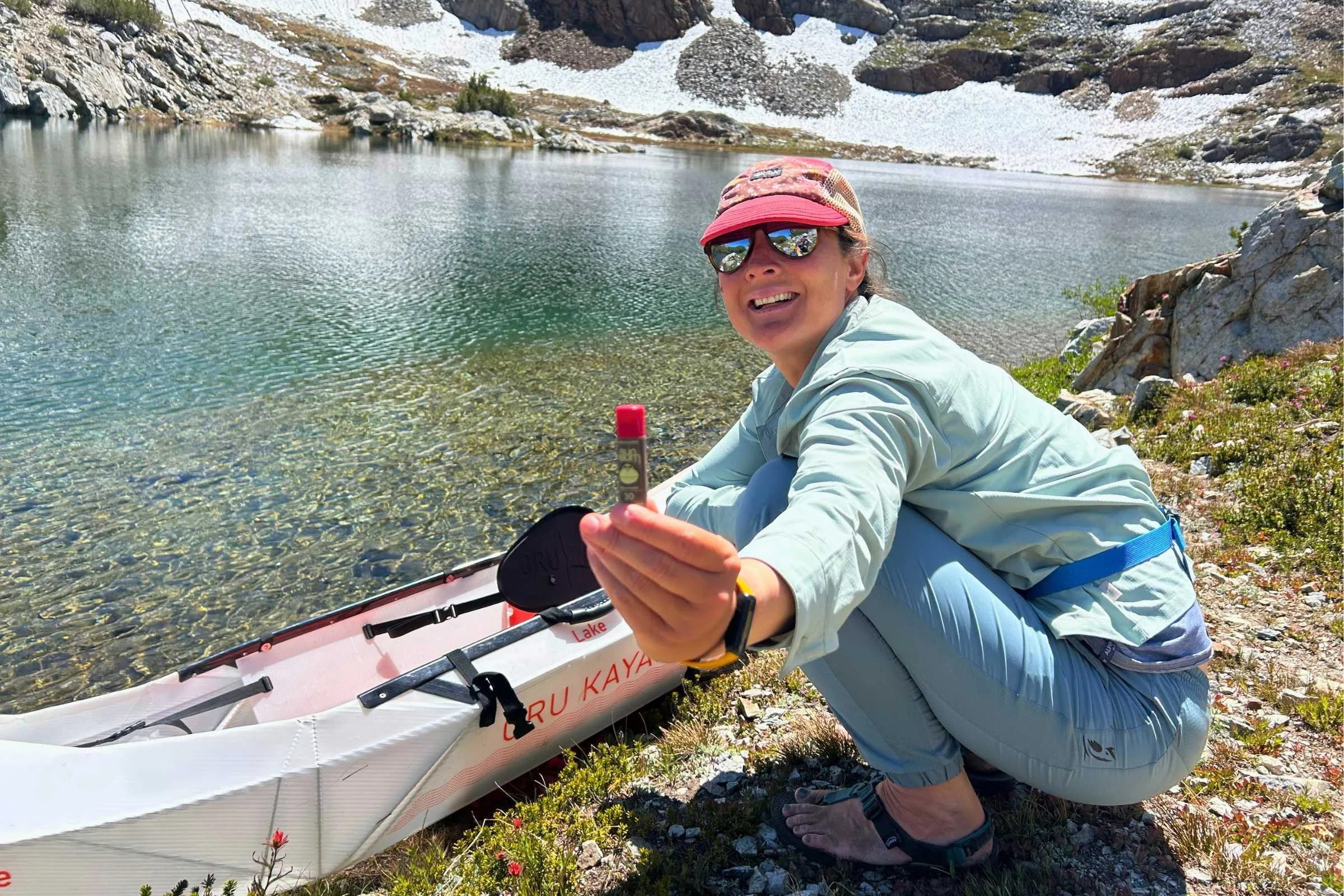
We tested SPF lip balms on the water while kayaking and paddling to see how they perform in wetter conditions.
If you're sweating, swimming, paddling, skiing, or just drinking coffee on a sunny patio, look for balms labeled water resistant, either 40 or 80 minutes. This doesn't mean you can put it on once and forget about it. Your lips are one of the busiest parts of your face: you talk, eat, drink, lick your lips, wipe your mouth. Water resistance means extra staying power, not a reason to reapply less.
Mineral vs. chemical filters
Chemical filters like avobenzone and octisalate absorb UV rays. Mineral filters like zinc oxide physically block and scatter them. Chemical balms tend to go on clear, feel lighter, and come in more flavored options. Mineral balms tend to have shorter ingredient lists, work better for sensitive or reactive skin, and may leave a slight white cast at higher zinc concentrations. Neither is automatically better. If your skin is reactive to chemical filters or you want a reef-friendlier option for water days, mineral is worth trying even if the texture is slightly less seamless.
Moisture ingredients
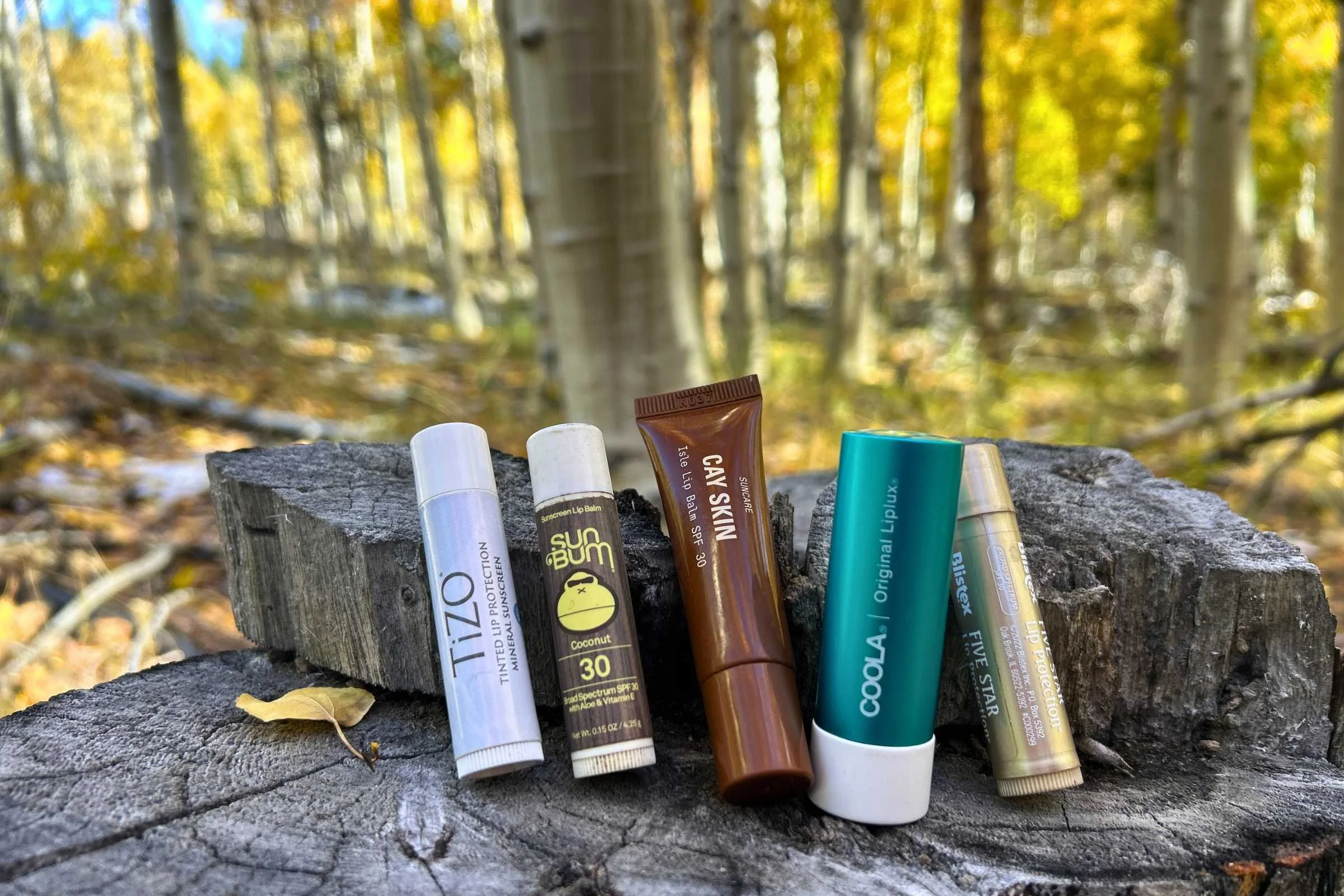
We tested SPF lip balms year-round, including in colder months at altitude in mountain environments where cool air can dry out lips and moisture is especially important.
Because lips have no oil glands, a good SPF lip balm does double duty as sun protection and your main defense against dryness. The most comfortable formulas combine humectants like glycerin and aloe, which draw moisture in, with occlusives like shea butter, beeswax, and petrolatum, which seal it in. A balm that's all humectant and no occlusive may feel good at first and then leave your lips oddly dry an hour later. You want something that feels cushiony and protective, not tight or waxy.
How long it lasts
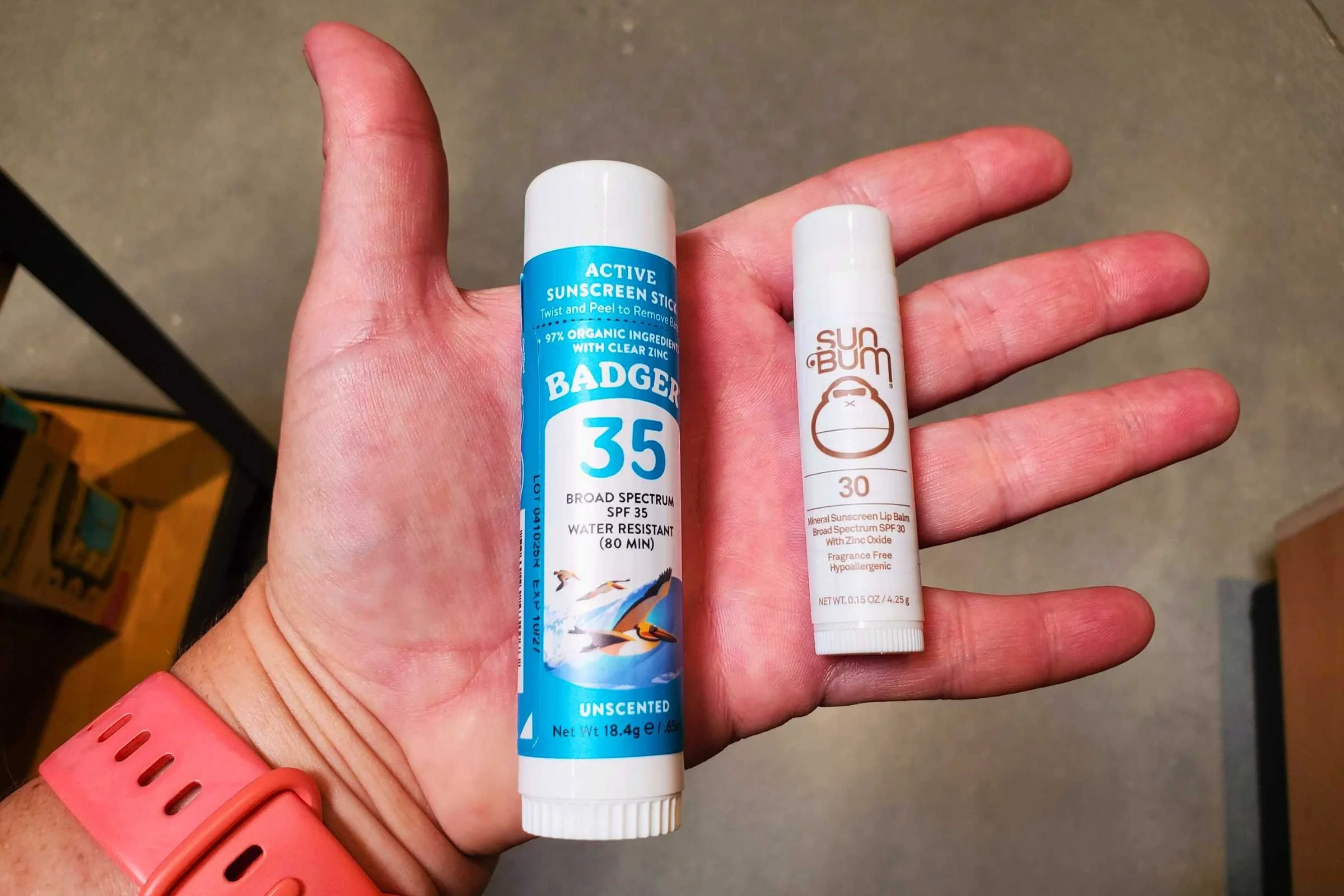
Some balms genuinely hang around; others vanish after one sip of water. If you don't want to be reapplying constantly, look for balms with slightly thicker textures and water-resistant formulas. If you're happy reapplying every hour or so, you can prioritize feel and flavor over staying power.
Flavor and scent
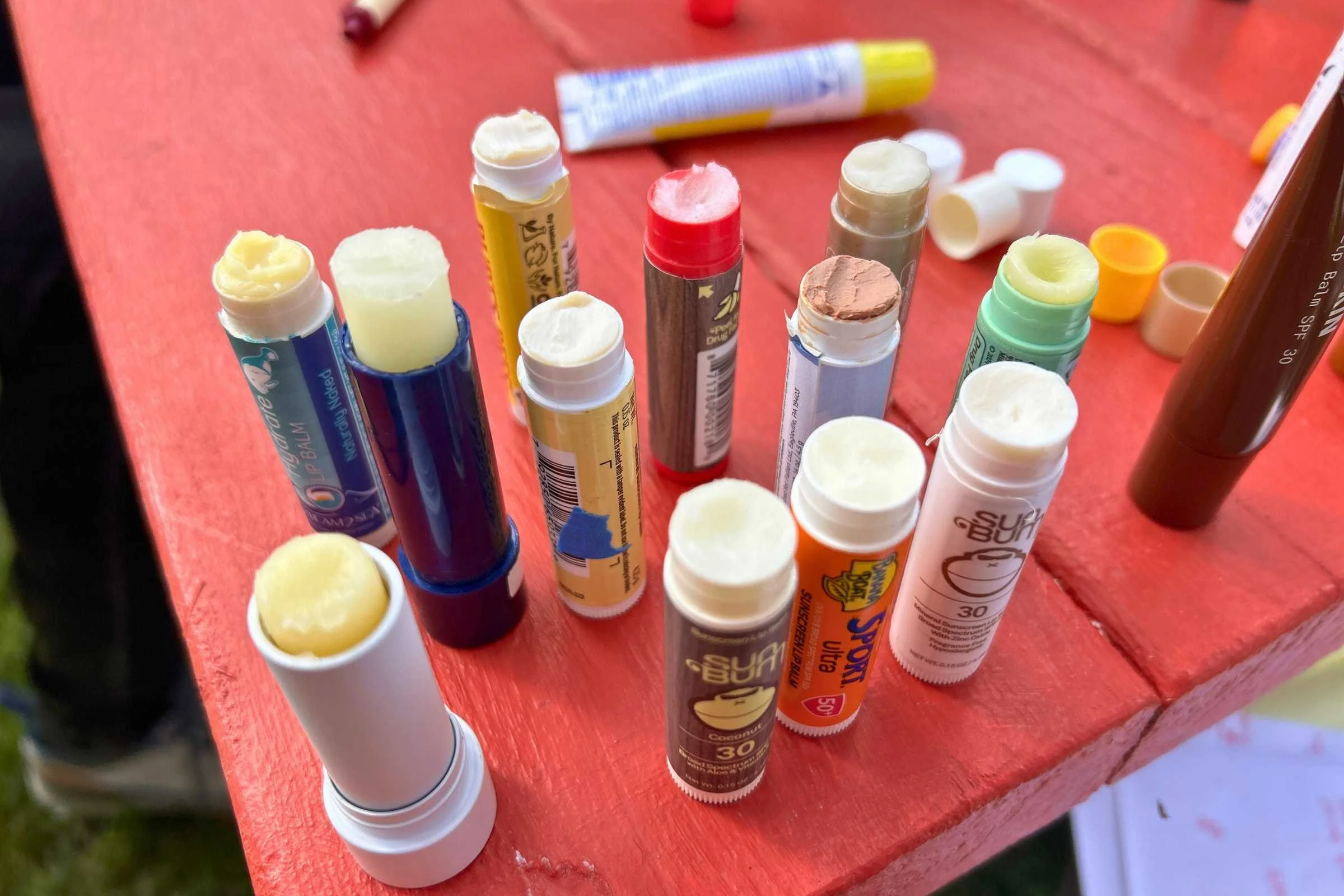
This is personal. Flavored balms are great for people who like them and a deal-breaker for people who don't. A few things worth knowing: strong flavors can encourage lip-licking, which defeats the purpose. Essential oils like peppermint and citrus can irritate sensitive lips even when they smell appealing. If you're not sure where you land, start with something unflavored and go from there.
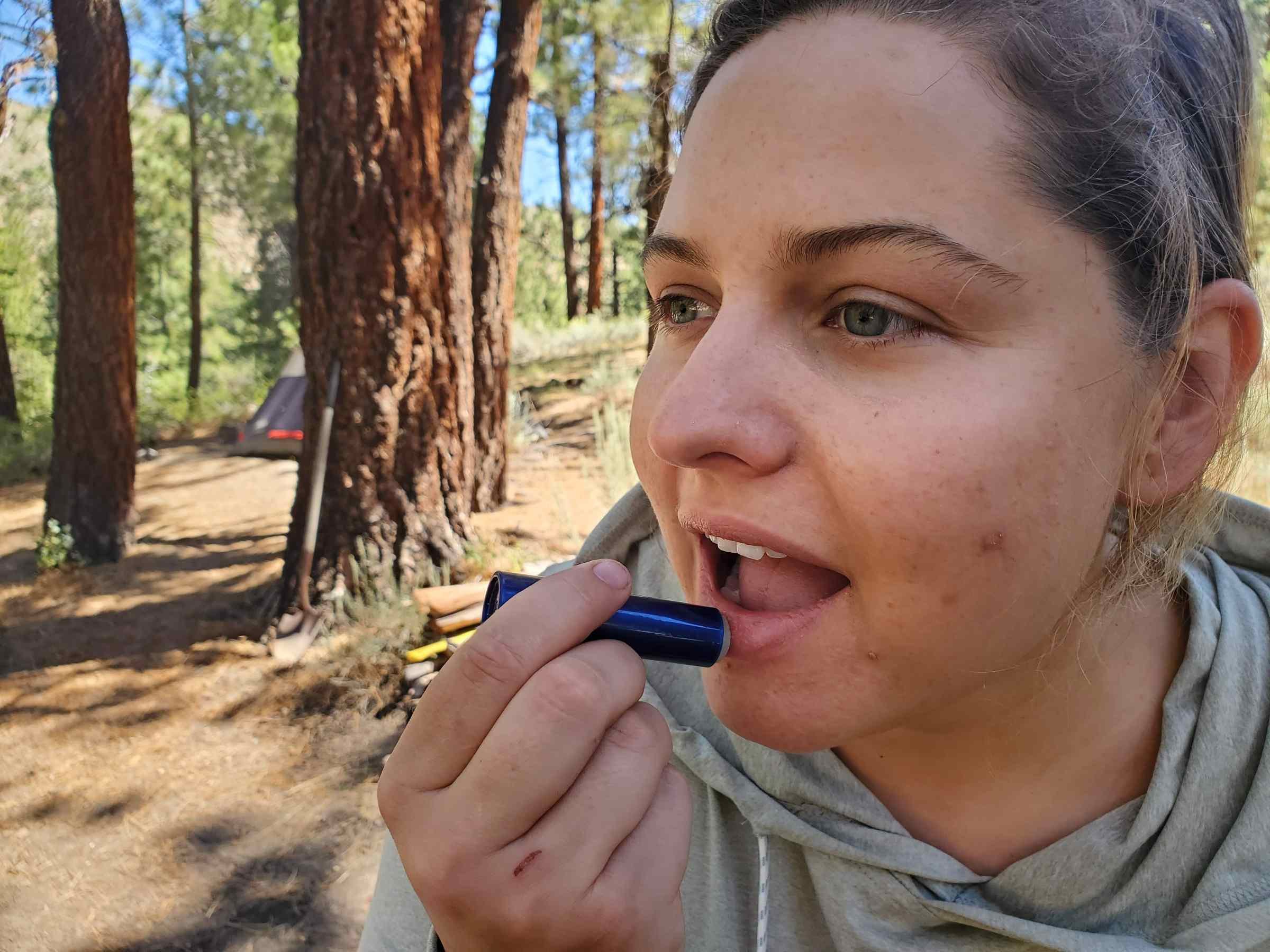
How to apply and reapply SPF lip balm

The basics are simple. Put it on before you go outside, not after you've already been in the sun for an hour. Apply enough to actually coat your lips, including the corners and the lip line, which tend to burn first. If your lips look bare and dry immediately after applying, add another pass.
Because your lips are constantly in use, you'll need to reapply more often than you think. For everyday outdoor exposure, every two hours is the standard recommendation. For anything more active, hiking, running, paddling, skiing, aim for every hour to hour and a half, especially if you're breathing through your mouth or wiping sweat off your face. Reapply immediately after swimming, eating a meal, or downing a big drink. The rule of thumb: if you'd reapply sunscreen on your nose, you should be reapplying on your lips.
If you like wearing other lip products, SPF lip balm works well as a base layer. Apply it first, let it sit for a minute, then layer lipstick or gloss over the top. Just know that reapplying the SPF balm later will disturb whatever's over it, so for long days outside it's often simpler to stick with an SPF balm alone.
A few specific situations worth knowing about:
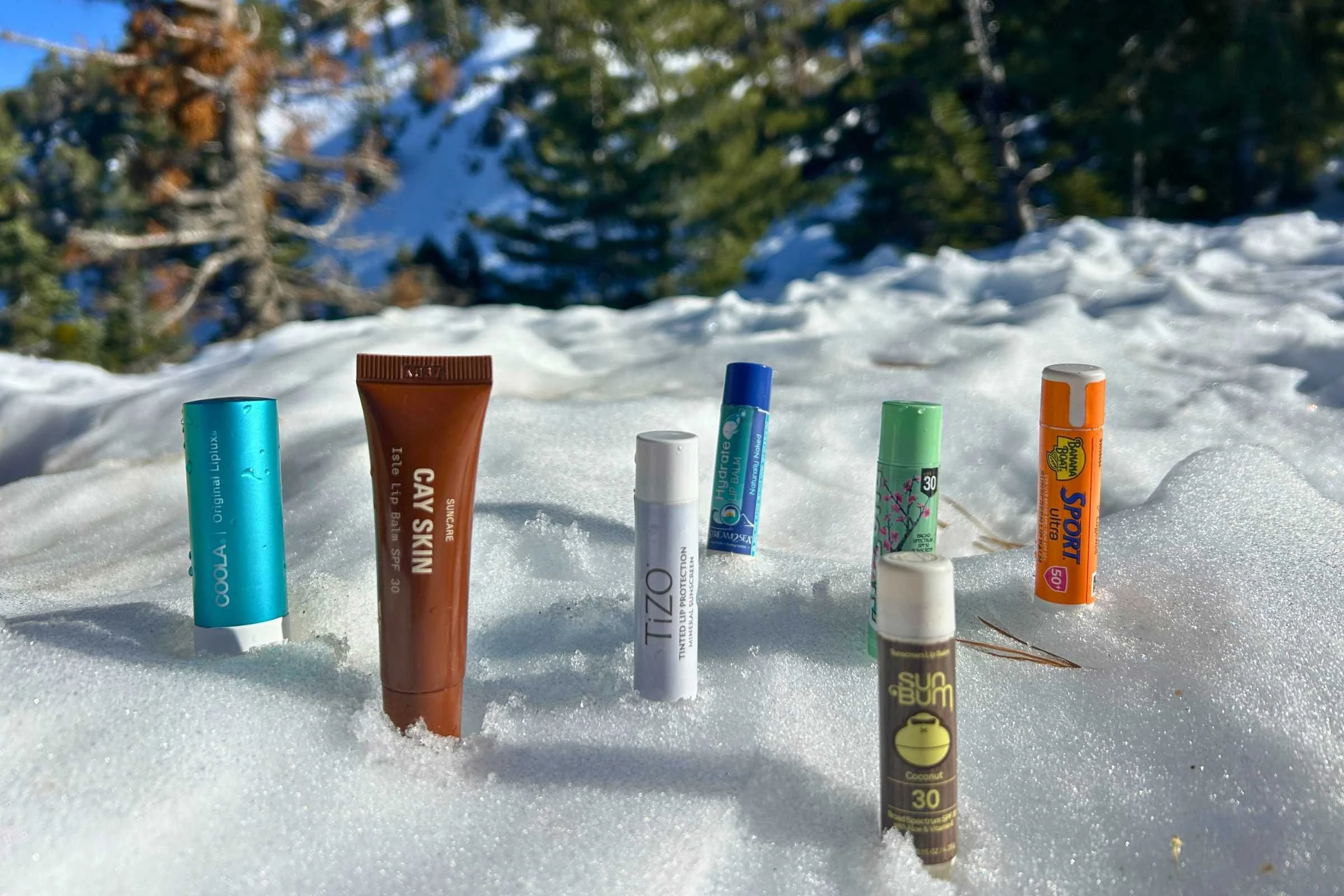
We tested SPF lip balms in summer and in winter to get an idea of how they perform in hot and cold temperatures.
At altitude or on snow, UV exposure is significantly higher than at sea level, and snow reflects UV the same way water does. Use a high-SPF water-resistant balm and reapply every 60 to 90 minutes. This is not overkill.
On water days, choose a reef-safe, water-resistant option and reapply every time you come out of the water. Towel-drying your face removes whatever was left on your lips.
In windy or dry conditions like desert hikes or ridge walks, the wind strips moisture fast. Look for balms with substantial occlusives like beeswax, shea butter, or petrolatum that create a physical barrier rather than just sitting on the surface.
The simplest solution in all of these situations: keep a backup balm somewhere easily accessible. A hip belt pocket, a jacket pocket, a ski pack zipper. If reapplying requires digging through your whole pack, you're going to skip it.
Care and storage
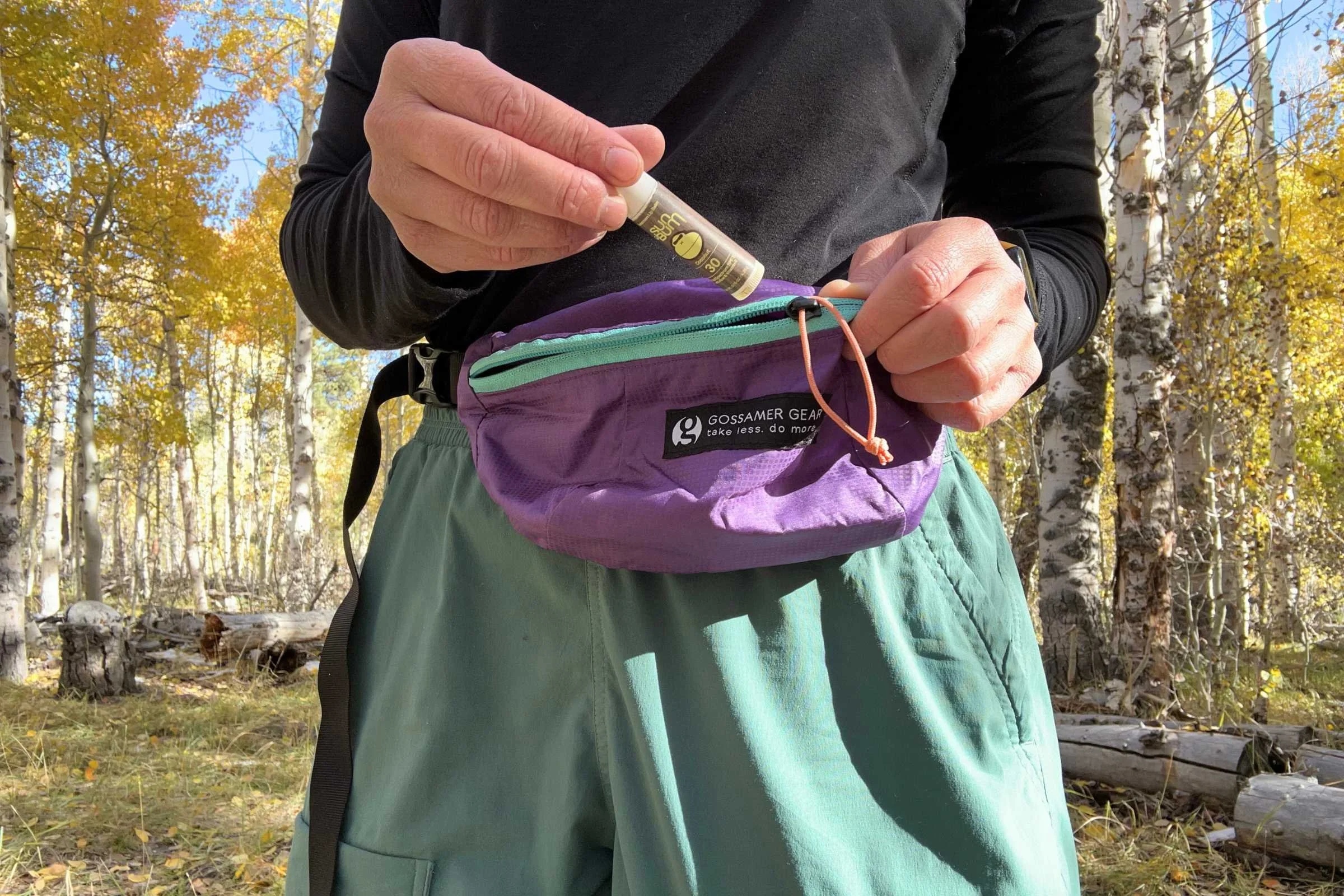
SPF lip balms are sturdier than most face or body sunscreens, but a few habits will keep them performing well.
Keep them away from sustained heat. Leaving a lip balm on a car dashboard or in direct sun for hours is the fastest way to end up with a melted, misshapen stick that drags uncomfortably across your lips. Part of our testing involved deliberately leaving balms in a hot car, so the ones we recommend are specifically ones that survived reasonably well, but none of them are indestructible.
Cap them after every use. The surface of a lip balm picks up lint, sand, and debris surprisingly fast, especially if you're digging it out of a pack pocket repeatedly. If you get visible grit or crumbs on the surface, scrape or wipe off the top layer before using it.
Check the expiration date before a big trip or at the start of each sun season. SPF ingredients do degrade over time, and a lip balm that's been rattling around in your gear bag for two years may not be providing the protection it says on the label. If there's no expiration date and you genuinely can't remember when you bought it, replace it. An SPF lip balm you actually trust is worth more than finishing off a questionable old tube.
How to choose a SPF lip balm

Our testers put in a lot of work to determine the best SPF lip balms.
According to the American Academy of Dermatology Association, the general rules of sunscreen also apply to SPF lip balms. Use a product containing SPF 30 or higher. Apply to the whole lip area at least every 2 hours, and more frequently if you’re swimming or sweating (or, since it’s lip balm, eating or drinking).
Also, if you’ve ever felt like lip balms can leave your lips feeling even dryer after a bit, you’re not alone. This is often down to the ingredients–or rather, the combination of ingredients. You may be familiar with chemicals called humectants, which draw in moisture from the air—these are ingredients like glycerin, hyaluronic acid, aloe vera, and propylene glycol. While moisture is a good thing, balms made only with humectants draw in moisture but don’t lock it in, so lips may feel hydrated at first but quickly dry out again. This can lead to a feeling of perpetual dryness and constant reapplication.
To truly nourish lips, look for formulas that combine humectants with chemicals called occlusives, which seal in the moisture that humectants attract. Occlusives include ingredients like shea butter, cocoa butter, squalane, beeswax, and petrolatum, which create a physical barrier preventing moisture loss. Also, be wary of added fragrances, parabens, or "plumping" ingredients like cinnamon and peppermint, which can irritate lips and worsen dryness, and in rare cases cause allergic reactions.
Pro Tip: if you’re new to SPF lip balms and you’re not sure where to start: We found it interesting that in Treeline Review testing, SPF lip balms from brands known for lip balms were generally preferred over those from brands known for sunscreen (ie. Aquaphor, Blistex, Burt’s Bees, and Cay Skin were better liked overall than Sun Bum, Supergoop, or Banana Boat). Flavored products and liquid lip balm products were more polarizing than their unflavored stick peers. So if you’re looking for an SPF lip balm for the first time, we suggest you look for (1) an SPF product from a company whose lip balms you already enjoy, and/or (2) an SPF lip balm stick without added fragrances or flavors.
FAQ
-
For sensitive skin, look for mineral formulas using zinc oxide or titanium dioxide rather than chemical filters, which are more likely to cause stinging or irritation on the thin skin of the lips. Fragrance-free and oil-free products reduce the risk of breakouts and dryness. If your lips are prone to dryness or eczema, ingredients like hyaluronic acid, ceramides, squalane, or vitamin E add a layer of skin barrier support that purely protective formulas skip.
-
Yes, though the options are more limited than standard SPF lip balms. Colorescience Sunforgettable Color Balm SPF 50 is the most consistently recommended tinted option among dermatologists and beauty reviewers, though it sits at a higher price point. MDSolarSciences Tinted Lip Balm SPF 30 is a more affordable alternative with strong reviews. For outdoor use, keep in mind that tinted balms require the same reapplication schedule as any other lip sunscreen: every two hours and after eating, drinking, or sweating.
-
You can, but it is not ideal for regular use. Face and body sunscreens are not formulated to stay on lips, which means they wear off faster, especially while eating or drinking. They also frequently contain fragrances, alcohols, and textural ingredients that taste unpleasant or cause irritation on the sensitive skin of the lips. A dedicated SPF lip balm uses a wax or balm base that adheres better to lip skin and stays in place longer between reapplications.
-
The American Academy of Dermatology recommends using a lip balm with SPF 30 or higher, broad spectrum protection against both UVA and UVB rays, and water resistance. Reapplication is just as important as the initial application: every two hours when outdoors, and immediately after eating, drinking, or swimming. Most people apply far less than the amount needed for the labeled SPF to work as rated, so applying generously and covering the full lip surface matters.
-
SPF lip balm wears off faster than sunscreen applied to other skin, because lips are in near-constant contact with food, drinks, and saliva. The water resistance rating on most lip balms refers to 40 or 80 minutes of water exposure under test conditions, not real-world lip use. In practice, reapplying every hour during active outdoor use is a more reliable habit than the standard two-hour rule, particularly on sunny days or at altitude where UV intensity is higher.
-
Not necessarily. SPF 30 blocks roughly 97% of UVB rays and SPF 50 blocks roughly 98%, a gap that sounds larger than it is in practice. What matters more than a high SPF number is consistent reapplication, full lip coverage, and choosing a formula you will actually use regularly. An SPF 30 balm reapplied every hour provides better real-world protection than an SPF 50 balm applied once and forgotten, which is a common pattern with lip balms during outdoor activity.
-
Yes. Clouds block heat but do not reliably block UV radiation, and lips are particularly vulnerable because they contain little to no melanin, the pigment that provides natural UV protection to surrounding skin. UV exposure on the lips accumulates over time and is associated with actinic cheilitis, a precancerous condition most common on the lower lip. Wearing SPF lip balm daily, regardless of cloud cover or season, is one of the more straightforward sun protection habits to build.
How We Researched and Tested
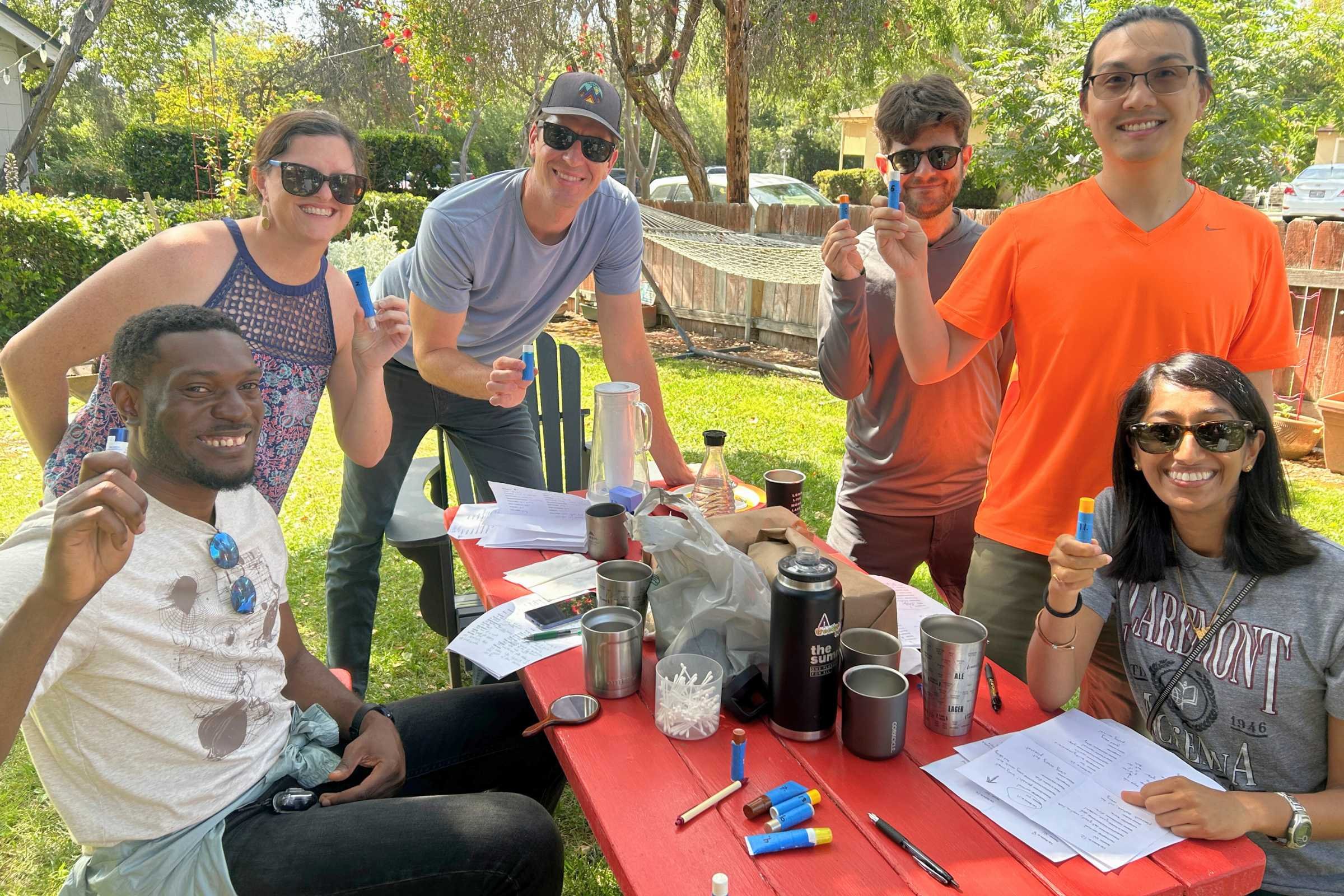
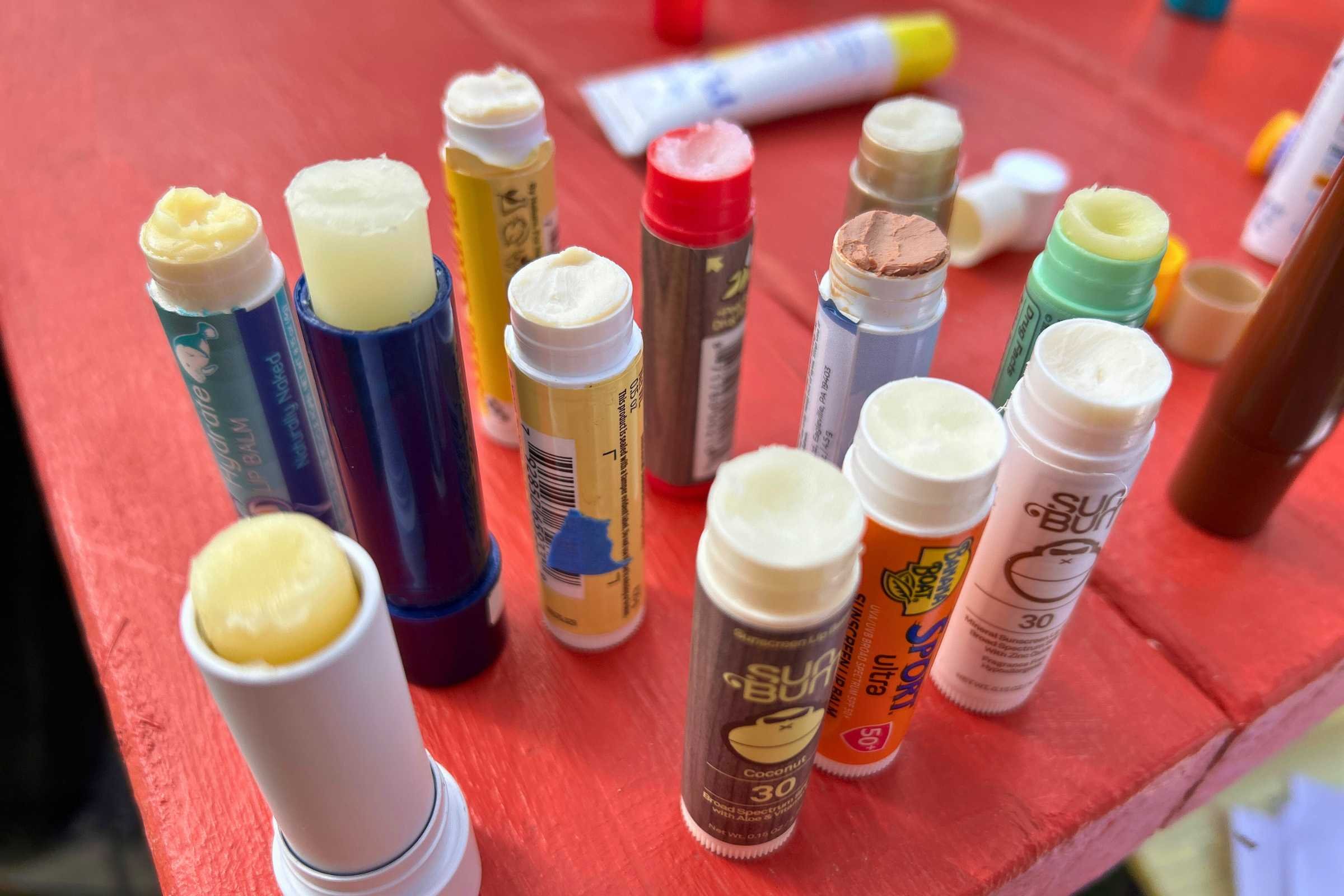
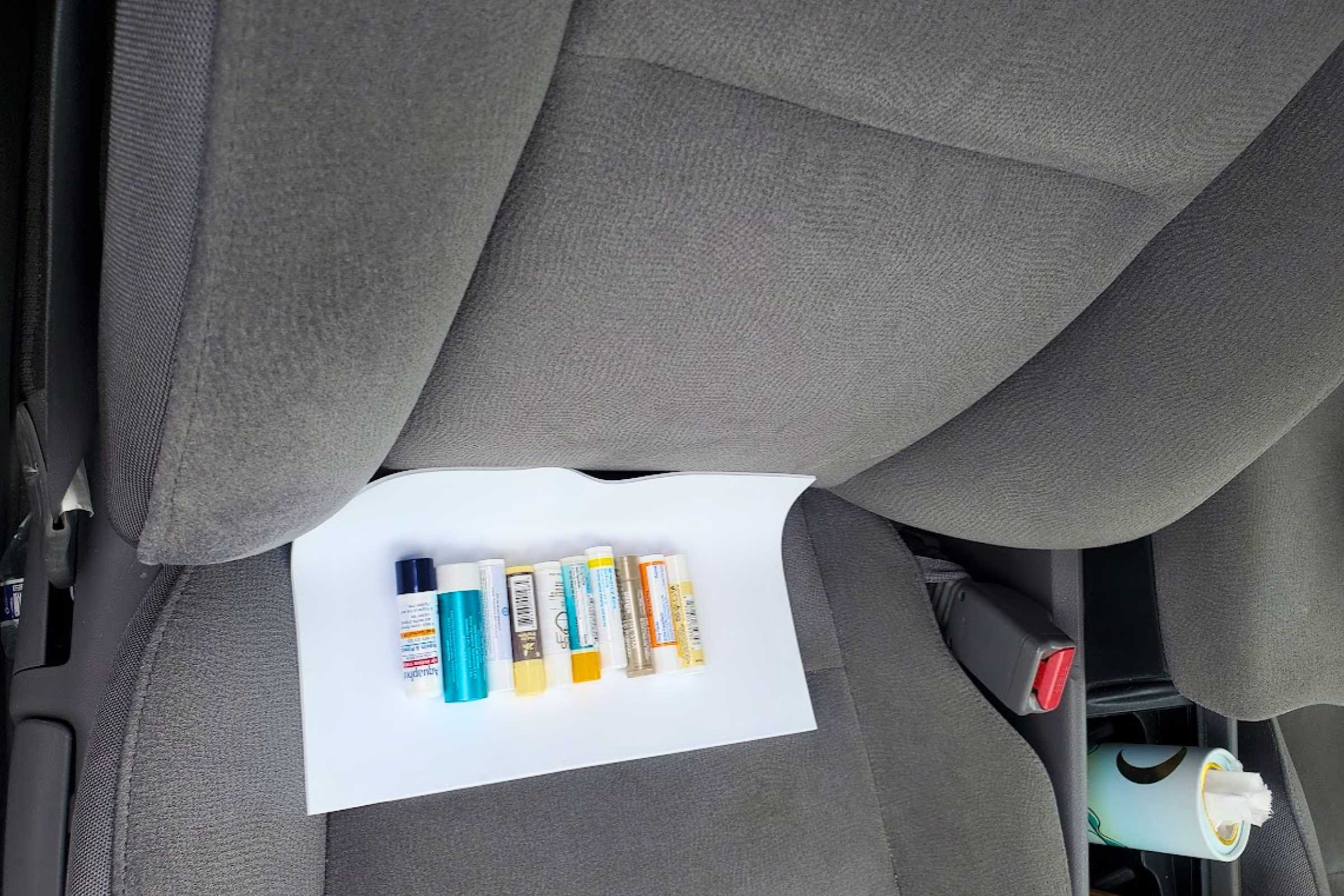
To choose which SPF lip balms to test, we considered:
AADA requirements for sunscreens: All of our picks had to offer broad-spectrum UVA/UVB rays protection and SPF 30+.
Price: You can spend $40 on a tube of lip balm (and power to you if you want to), but we wanted these to be more accessible. Everything here is $16 or under.
Availability: Readily available at lots of major stores and online. If you can’t grab it on your way to the beach/trail/party, what’s the use?
Expert recommendation: Do dermatologists and other skin experts recommend it?
User experience: How does it feel on the lips? Is it moisturizing, drying, or irritating? Does it absorb quickly and invisibly, regardless of skin tone? Does it have a major fragrance? Does it taste chemical-y? Will it melt in your pocket/pack/car? Do people like using it?
Once we’ve compiled an initial list of products to test, we gathered expert input from dermatologists, scientists, doctors and other professionals (the American Academy of Dermatology Association, Environmental Working Group, Haereticus Lab, etc.); professional review sources (like Wirecutter and Consumer Reports); periodicals and informational sites (like Healthline, Men’s Health, Byrdie, AARP, Self, Into the Gloss, and others); user reviews on retail sites (like Amazon, Target, Sephora, REI, etc.); and a group of Treeline Review testers. These fellow testers tried out the products across a range of skin tones, locations, and outdoor activities.
In addition to long-term testing, heat testing, and other experiments, seven Treeline Review testers blind-tested 16 SPF lip balms, identifying each product only by number. Then, they each received a data sheet for every lip balm where they rated lip balms using the same criteria:
Flavor/scent
Hydration/moisturizing
How it looks/white cast
Water resistance
Longevity
Packaging
Other notes
Testers assigned a numeric value (1-10) for each category and were also encouraged to leave qualitative notes. To test water resistance, each tester applied the lip balm and then took a drink of water. After applying, each tester was provided with face wipes to remove the previous lip balm before applying the next lip balm.
Testers were chosen to represent a variety of skin tones, skin types, facial hair, and preference for scented products.
Remember that no sunscreen can completely block damaging UV rays from the sun, especially if misapplied (i.e., you don’t use enough or don’t reapply)! Wear sun-protective hats and clothing if you’re going to be out there for a while. See our guide to the Best Sun Shirts and Best Sun Hats for our recommendations.
- Blind testing — all balms wrapped in blue tape
- Worn for months across all four seasons
- Snow, kayaking, hiking & beach use
- Left in hot car to test melt resistance
- Only SPF 30+ tested per AAD guidelines
- Wearability & longevity
- Scent & flavor neutrality
- Hydration without greasiness
- Melt resistance in heat
- Reef-safe & mineral options
About the Author / Why The Reader Should Trust Us

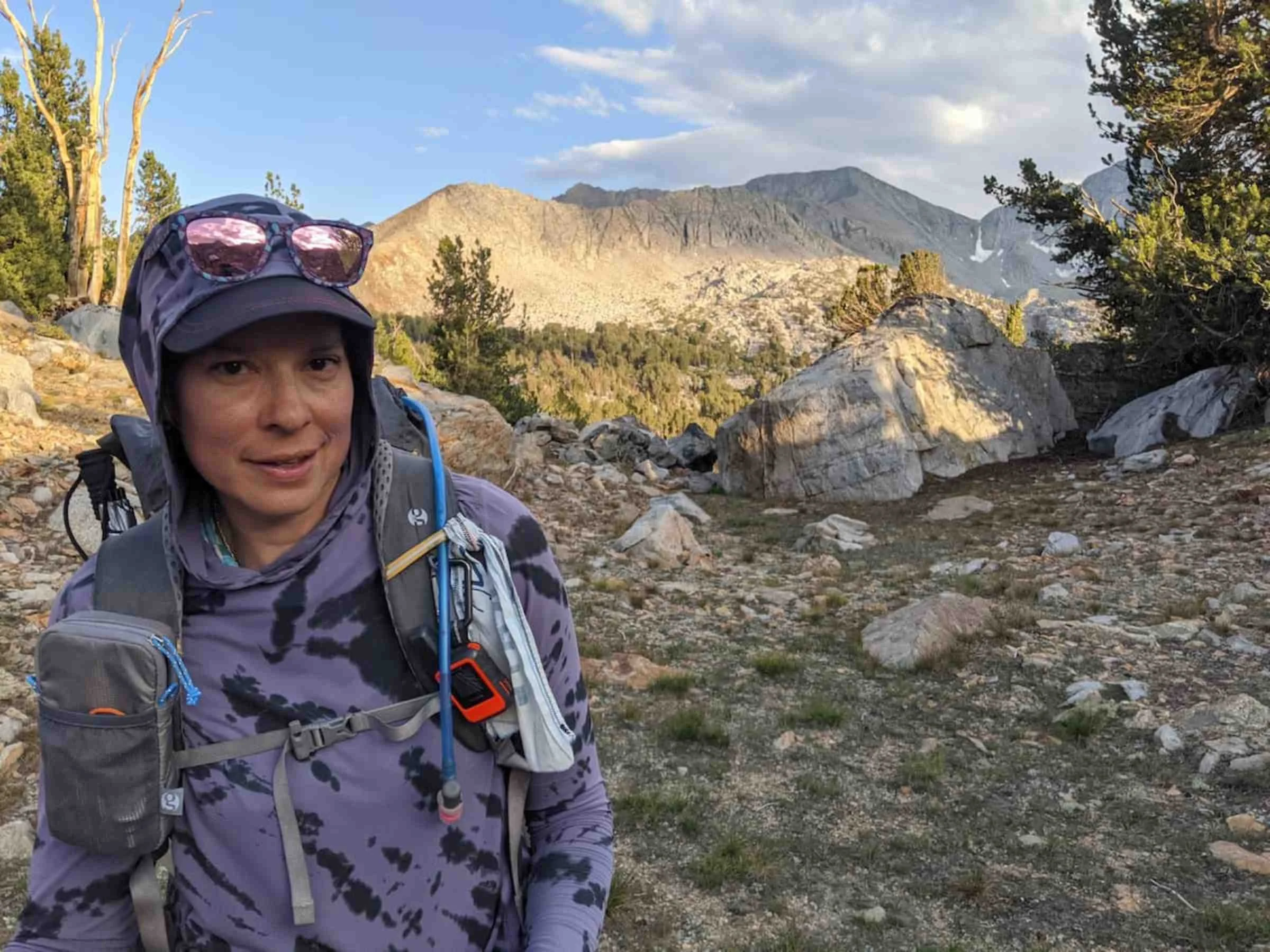
Sunscreen is an essential part of the author’s daily lifestyle and a topic that she is very passionate about.
I am a born-and-raised Southern Californian (read: I’m in the sun all the time, all year, by default). I’m a hiker, backpacker, small-scale farmer, dog-walker, general outdoor enthusiast, and all-around sun-worshiper with an unfortunate history of skin cancer in my family. I’ve been known to pop into the backyard in my pajamas “just for a minute, to get some air” and then accidentally toil in the garden for several hours, or go “for a short walk” and come back many miles and many “Where are you? ARE YOU DEAD???” texts from my wife later. All this to say: sometimes you plan to be in the sun all day, and sometimes a day in the sun finds you, you know? To protect myself from myself–and to be prepared for the unexpected – have been testing many sunscreens for many years hoping to find the one(s) that make me WANT to put them on in the morning.
You can read all of Katie’s articles on her author page.