
Best Spray Sunscreen for 2026
Broad Spectrum SPF Sunscreen Sprays for Face and Body
May 21st, 2026, updated with a new sunscreen, updates on prices
Home > Gear Reviews > Sun Protection
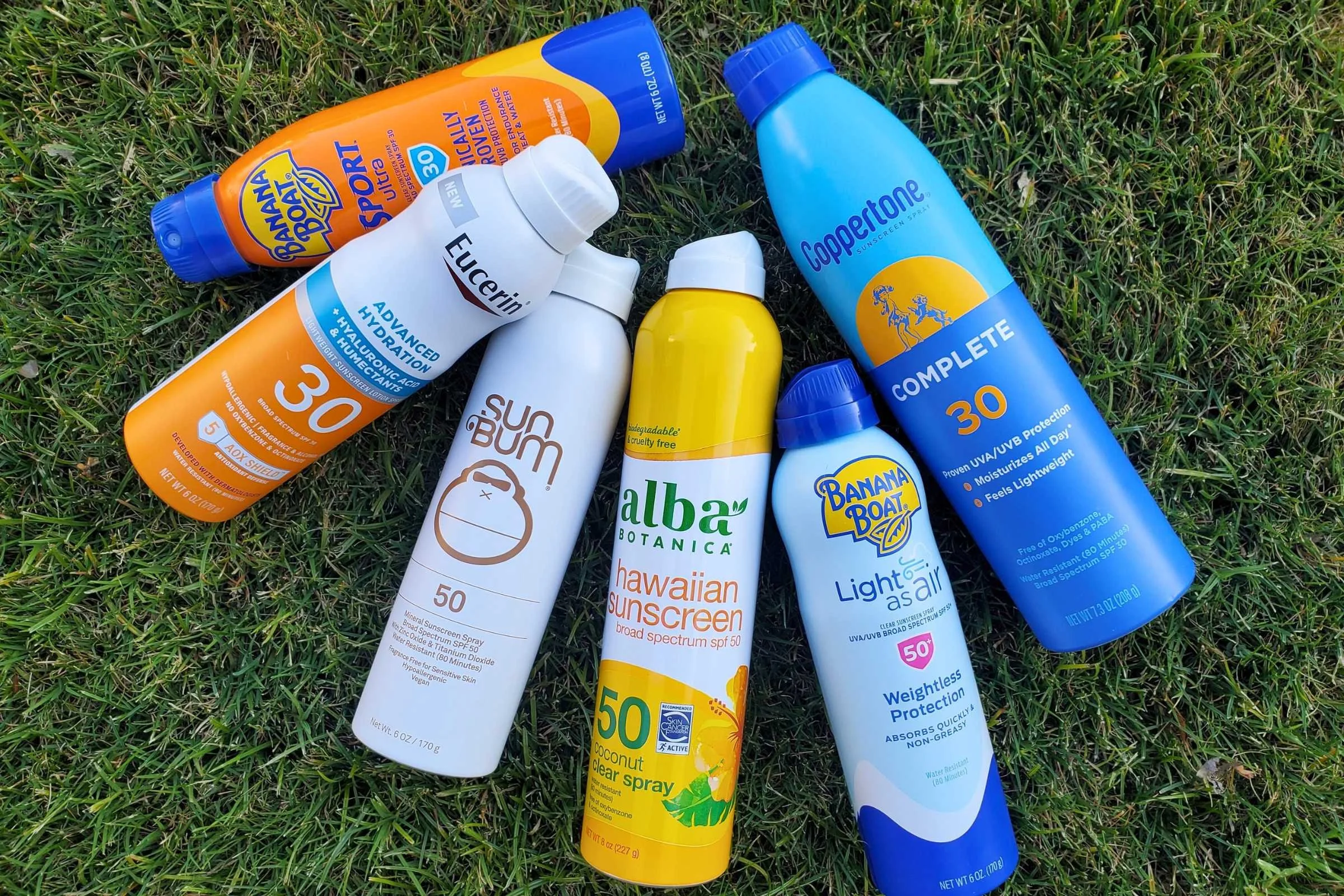
Does spray sunscreen work? Is it as effective as lotion sunscreen? These are common questions in the sunscreen world, and we're here to tackle them as we always do at Treeline Review: with science and rigorous testing.
First off: spray sunscreen is generally not as effective as lotion or cream sunscreen. Not because the active ingredients work differently, but because most people don't apply enough or rub it in properly. Spray sunscreens can also be tough to use in windy conditions, most contain ingredients that harm freshwater and saltwater wildlife so they shouldn't be used near natural bodies of water, and some contain flammable propellants that can cause irritation if inhaled. That said, if you're applying enough, rubbing it in, not inhaling it, and staying away from natural bodies of water, spray sunscreen will protect you just as effectively as any other sunscreen. We tested the top spray sunscreens on the market for ease of application, absorption, protection, matte finish, fragrance, and overall user experience across different skin tones to find the best options for most people.
Our biggest takeaway from testing is that spray sunscreens feel much more similar to one another than different lotion sunscreens do. What separates the best from the rest comes down to how concentrated and targeted the spray pattern is, how quickly it absorbs without leaving an oily or tacky residue, how it performs on different skin tones without white cast, and how easy the applicator is to control when applying in less-than-ideal conditions.
Top Pick: The Banana Boat Light As Air Spray SPF 50+ earns our Best Overall award. It stood out for a noticeably more matte and non-oily finish than any other spray we tested, a concentrated spray pattern that goes where you aim it rather than dispersing in a cloud, an easy-to-press applicator, no white cast on any skin tones, and after it absorbed we basically couldn't tell we were wearing it.
For more sunscreen options, check out our Best Body Sunscreens, Best Face Sunscreens, and Best Reef-Safe Sunscreens guides.
We create reader-supported, mission-driven, objective gear reviews independently selected by our editors. This story may contain affiliate links, which help fund our website. When you click on the links to purchase gear, we may get a commission — without costing you an extra cent. Thank you for supporting our work and mission of outdoor coverage for every body! Learn more.
Comparison Table
| SPRAY SUNSCREEN | TREELINE AWARD | SPF | TYPE | ACTIVE INGREDIENTS | SKIN TYPE | WATER RESISTANT | REEF SAFE | COST PER FLUID OUNCE |
|---|---|---|---|---|---|---|---|---|
| Banana Boat Light As Air Spray SPF 50 | Best Overall Spray Sunscreen Read why |
50+ | Chemical | Avobenzene 2.7%, Homosalate 9%, Octisalate 4.5%, Octocrylene 7% | All, especially oily or combination | 80 min | No, but free from oxybenzone and octinoxate | $2.91 |
| Blue Lizard Sport Mineral Sunscreen Spray SPF 50+ | Best Mineral Spray Sunscreen Read why |
50+ | Mineral | Zinc oxide 24% | All | 80 min | Reef-friendly, but free from oxybenzone and octinoxate | $2.90 |
| Trader Joe’s Sunscreen Spray SPF 50 | Best Affordable Spray Sunscreen Read why |
50+ | Chemical | Avobenzene 3%, Homosalate 15%, Octisalate 5%, Octocrylene 8% | All | 80 min | No, but free from oxybenzone and octinoxate | $1.54 |
| Raw Elements SPF 50 Mineral Sunscreen Spray | Best Reef-Safe Spray Sunscreen Read why |
50 | Mineral | Non-Nano Zinc Oxide 9.5%, Titanium Dioxide 7.2% | All | 80 min | Yes | $10.00 |
| Eucerin Advanced Hydration Sunscreen Spray SPF 50 | Best Moisturizing Spray Sunscreen Read why |
50 | Chemical | Avobenzene 3%, Homosalate 9%, Octisalate 4.5%, Octocrylene 9% | All, especially dry and sensitive skin | 80 min | No, but free from oxybenzone and octinoxate | 2.67 |
| Sun Bum Mini SPF 50 Spray (1.75 oz) | Best Travel-Size Spray Sunscreen Read why |
50 | Chemical | Avobenzone 3%, Homosalate 15%, Octisalate 5%, Octocrylene 7% | All | 80 min | No, but free from oxybenzone and octinoxate | $5.14 |
| Banana Boat Sport SPF 30 Sunscreen Spray | Runner-Up: Best Spray Sunscreen Read why |
30 | Chemical | Avobenzene 1.9%, Octisalate 4.5%, Octocrylene 5.7% | All | 80 min | No, but free from oxybenzone and octinoxate | $1.40 |
The Winners
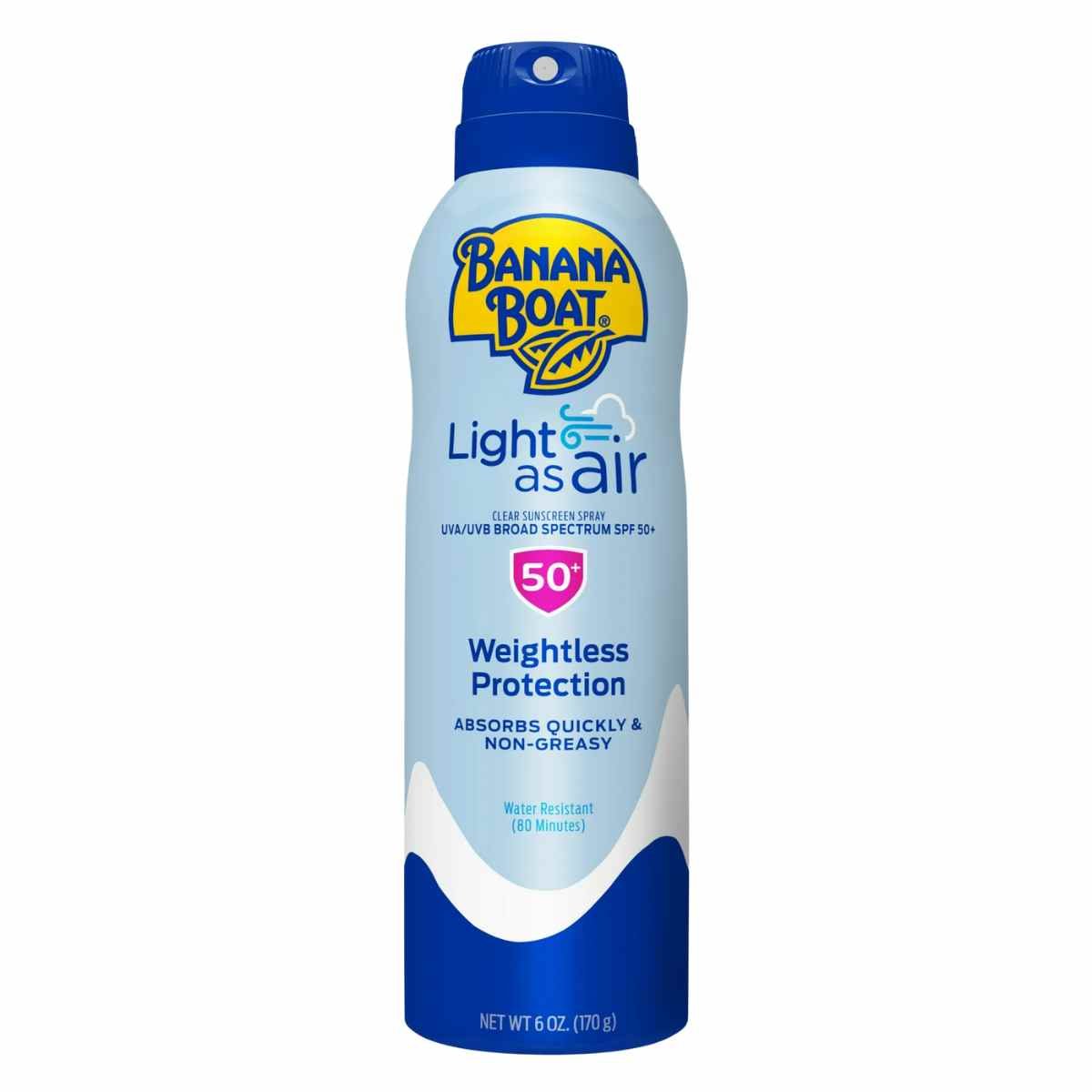
Best overall sunscreen spray: Banana Boat Light As Air Spray SPF 50
Broad spectrum SPF: 50+
Sunscreen Type: Chemical spray
Active Ingredients: Avobenzene 2.7%, Homosalate 9%, Octisalate 4.5%, Octocrylene 7%
Skin Type: All skin types, especially oily or combination skin
Water Resistant: 80 minutes
Reef safe: No, but free from oxybenzone and octinoxate
Cost per oz: $2.91/fluid ounce
What we liked: Most matte (non-oily) finish, lightweight, quick drying, focused spray, no white cast on any skin tones
What we didn’t like: Can feel drying, noticeable fragrance
Overall, our biggest takeaway from spray sunscreen research is that spray sunscreens feel much more similar to one another than different lotion sunscreens do. That said, Banana Boat Light As Air Spray Sunscreen SPF 50+ feels noticeably less oily and more matte than its competitors. The spray also comes out of the canister smoothly and concentratedly, without immediately spraying everywhere in a giant cloud.
The Banana Boat Light as Air Spray sunscreen is among the most popular sunscreens out there. Last summer, we noticed supplies running low in July and the item out of stock at major retailers. We recommend purchasing this item early in the season.
Banana Boat Light As Air Spray SPF 50
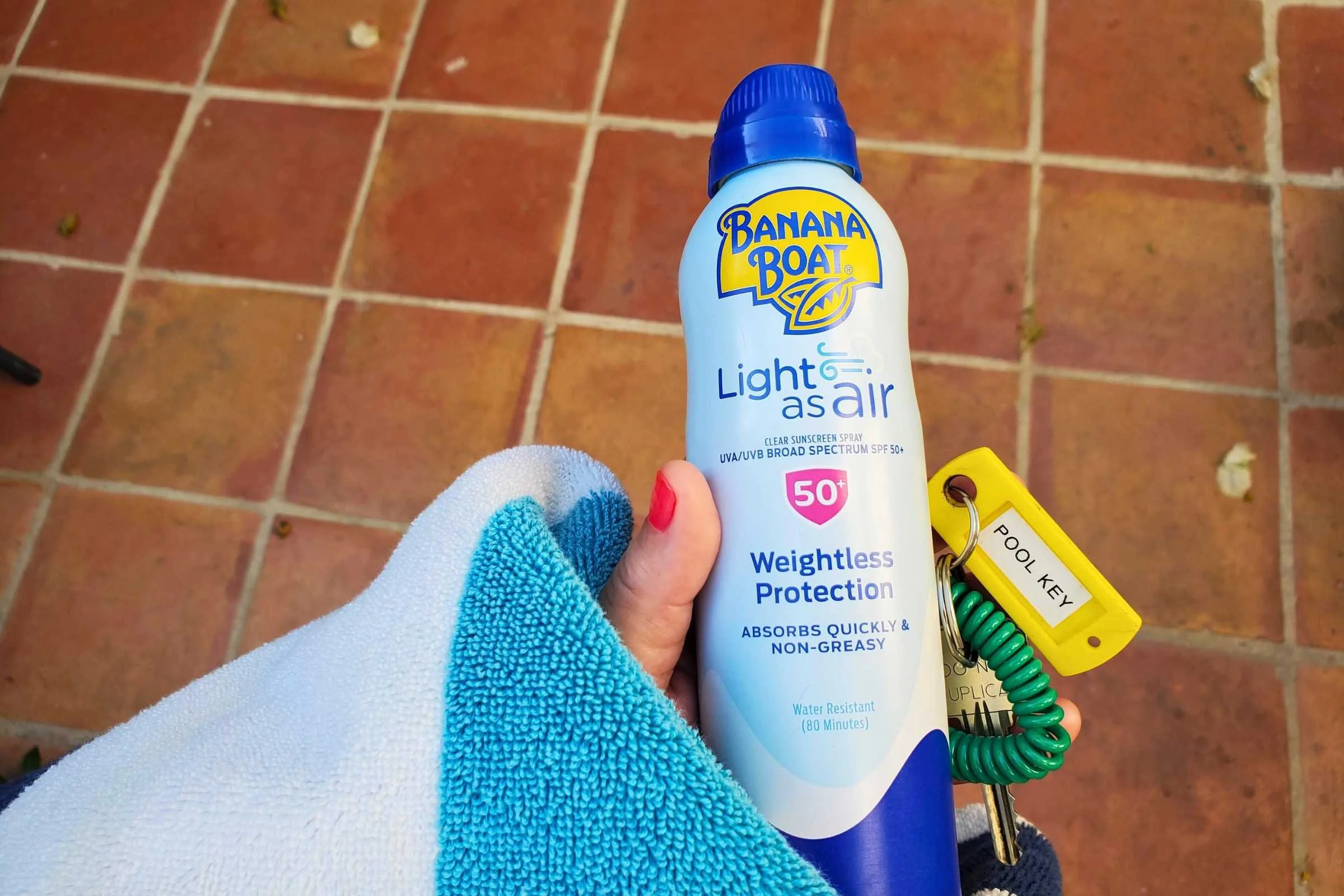
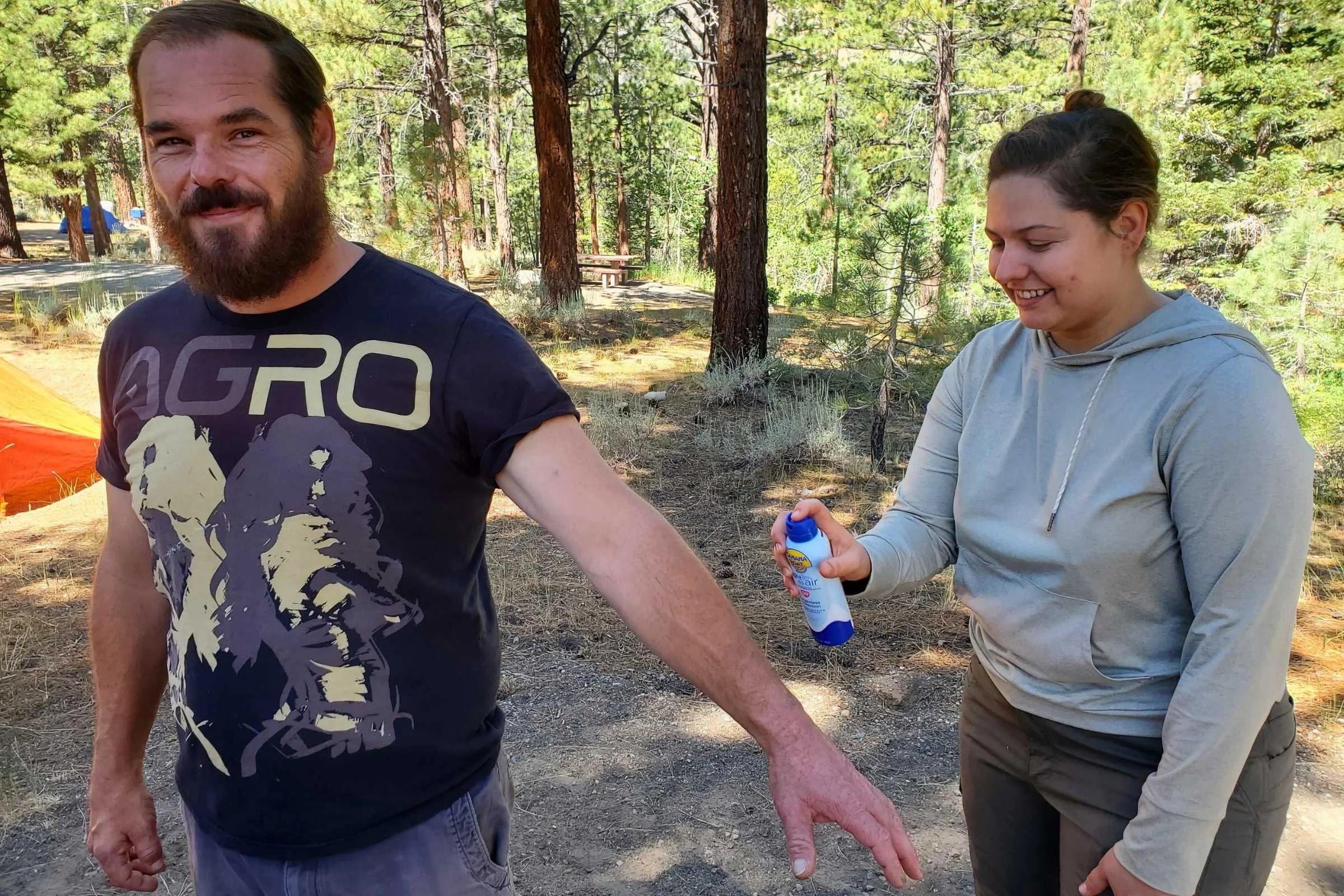
The bottle itself is also slightly more matte than many of its peers, which made it a bit easier to grip as we sprayed and rubbed (then sprayed and rubbed some more) sunscreen over all exposed skin. This was definitely our favorite spray sunscreen of the bunch, and it’s barely more expensive than other drugstore products. We also appreciated that the applicator was very easy to press, so we could apply exactly where and how much we wanted (an excellent quality if you’re applying the product inside).
On the down side, it does contain a fruity fragrance similar to that of its sunscreen lotion equivalent. Online reviewers particularly sensitive to smells found this irritating, and we did find the fragrance was more noticeable in the spray than in the lotion. Like all spray sunscreens, it can also feel drying if your skin is prone to that. On the whole, though, after it absorbed we basically couldn’t tell we were wearing it, which is an ideal quality in a sunscreen (especially an inexpensive one!).
Best mineral sunscreen spray: Blue Lizard Sport Mineral Sunscreen Spray SPF 50+
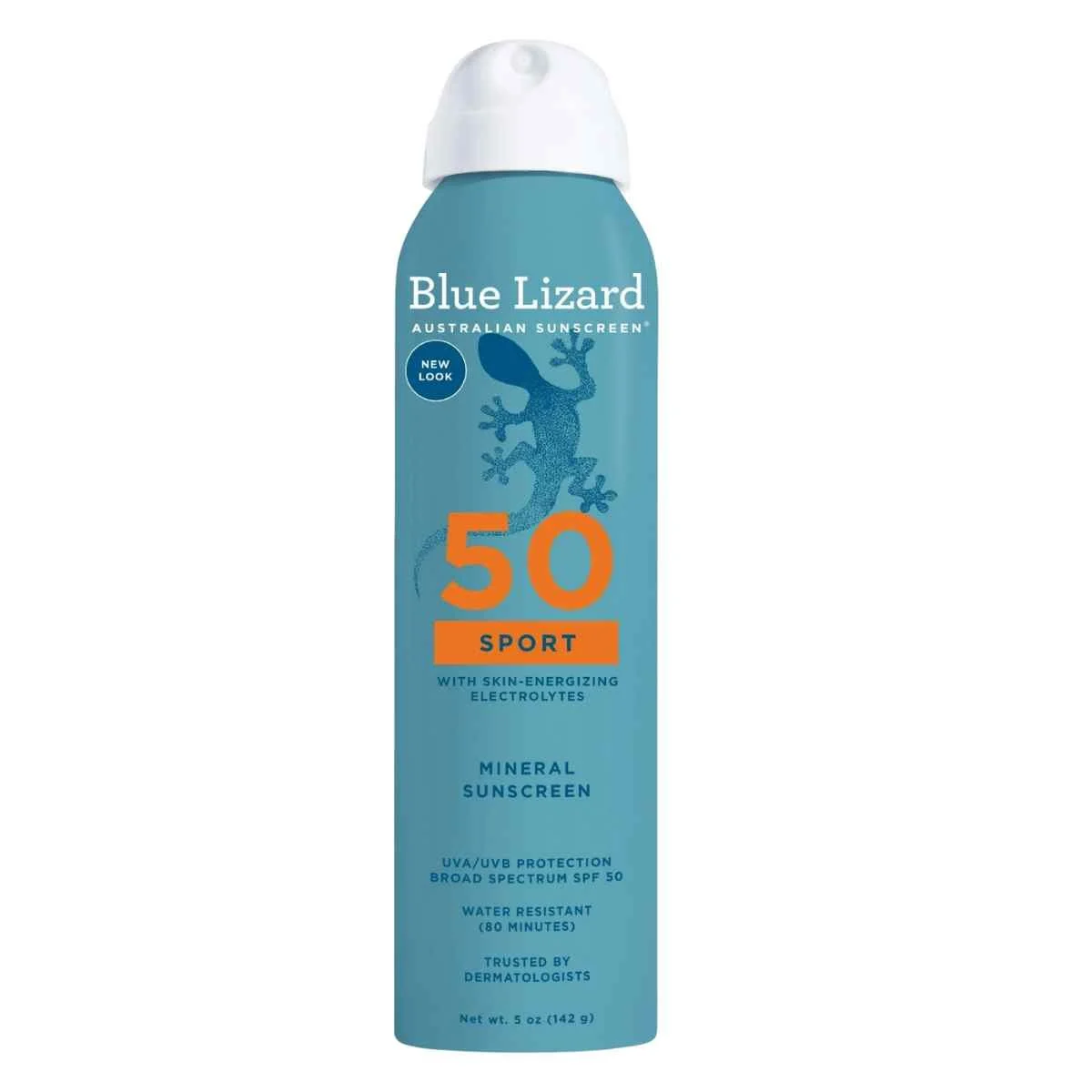
Broad spectrum SPF: 50+
Sunscreen Type: Mineral
Active Ingredients: Zinc oxide 24%
Skin Type: All skin types
Water Resistant: 80 minutes
Reef safe: No, but free from oxybenzone and octinoxate
Cost per oz: $2.90/fluid ounce
What we liked: Affordable for a mineral sunscreen, good protection ratings, applies smoothly, no added fragrance
What we didn’t like: Common mineral sunscreen drawbacks: white cast, sticky, etc.
Blue Lizard Sport Mineral Sunscreen Spray is the mineral sunscreen spray consistently rated most highly by Consumer Reports for its sun protection qualities, and that’s why it’s our winner for Best Mineral Sunscreen Spray. It comes from a brand well-known and loved for its mineral sunscreens, and it is one of the most highly rated mineral spray sunscreens online. This is also our choice for Best Spray Sunscreen for Sensitive Skin.
Blue Lizard Sport Mineral Sunscreen Spray SPF 50+
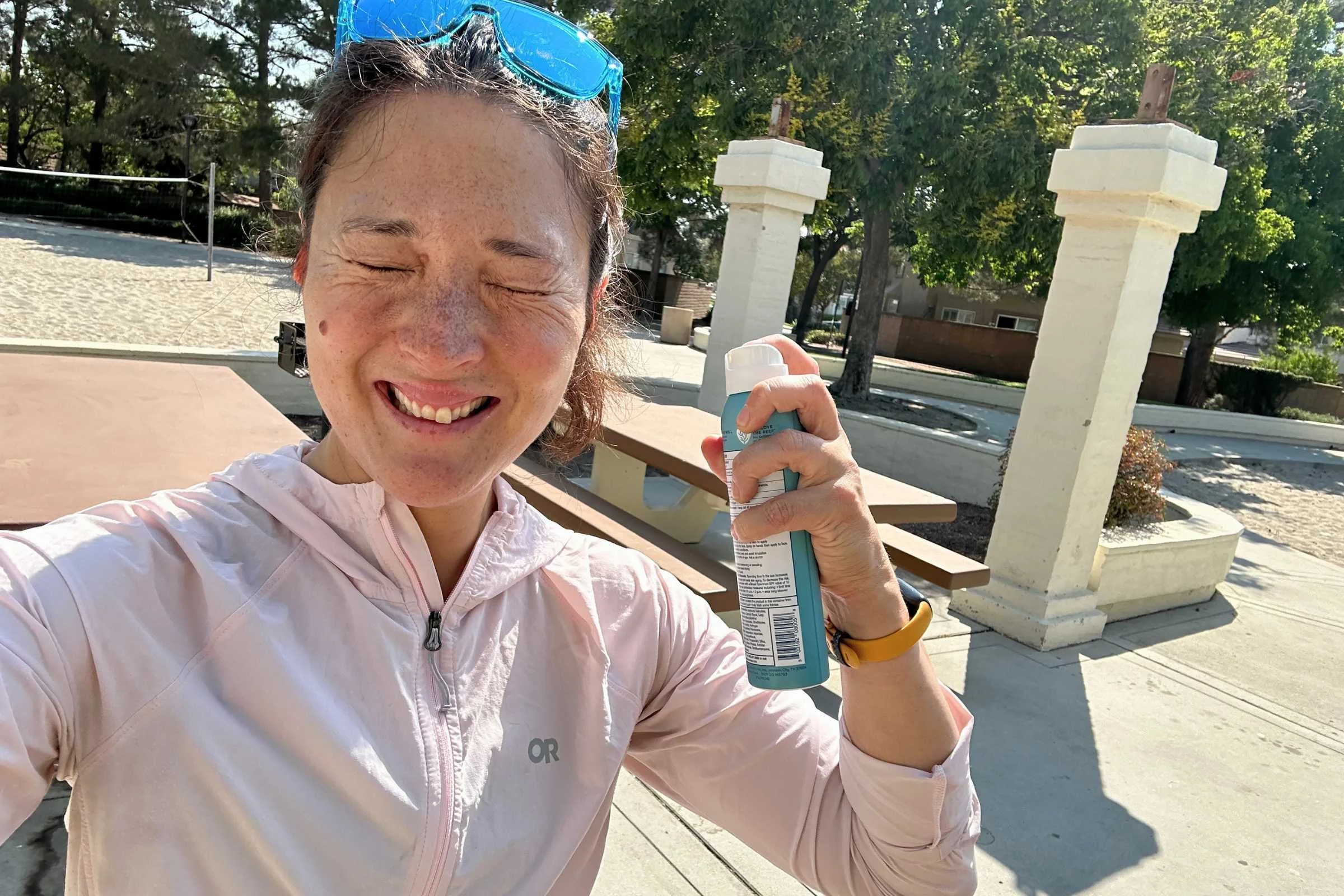
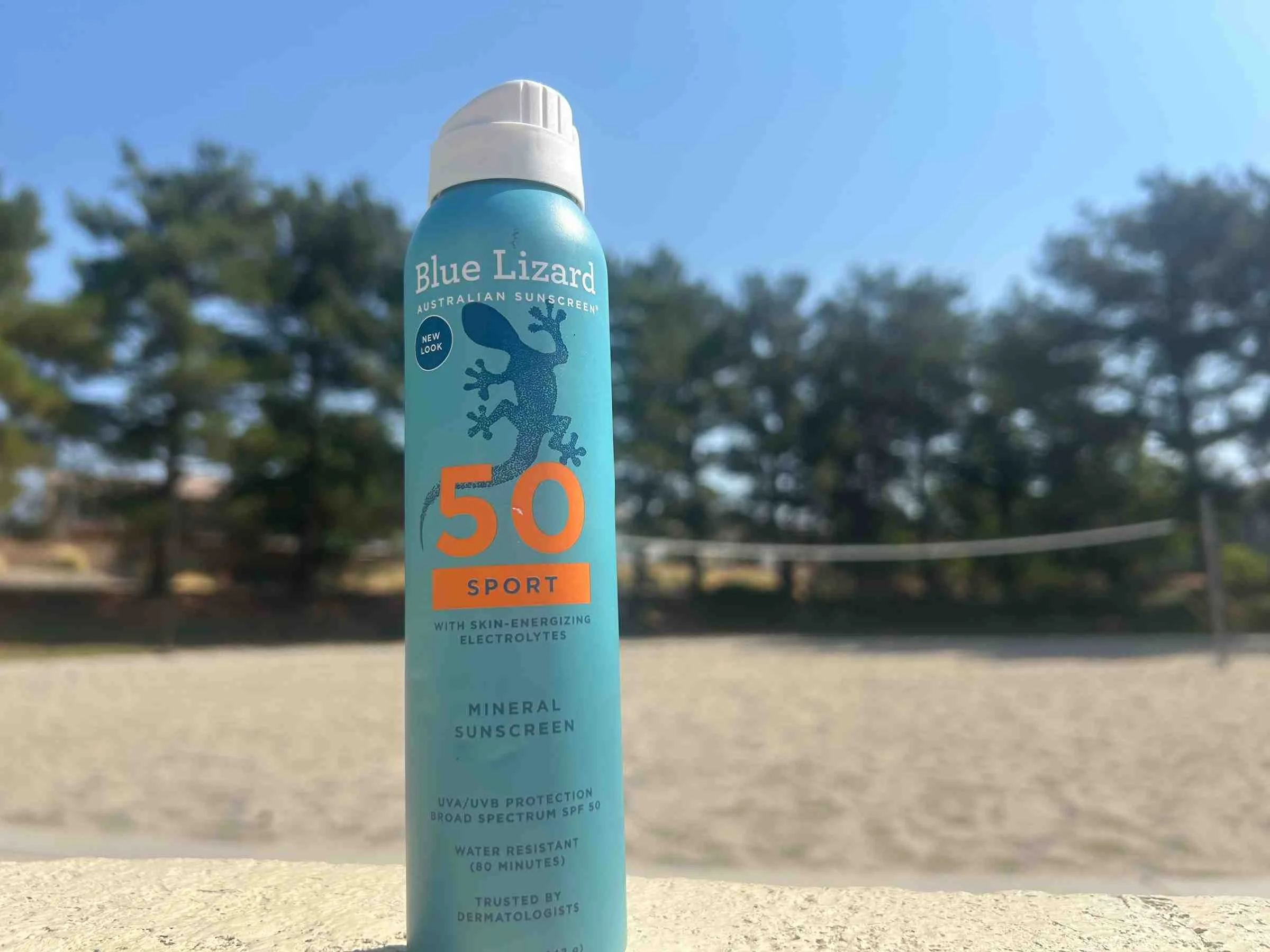
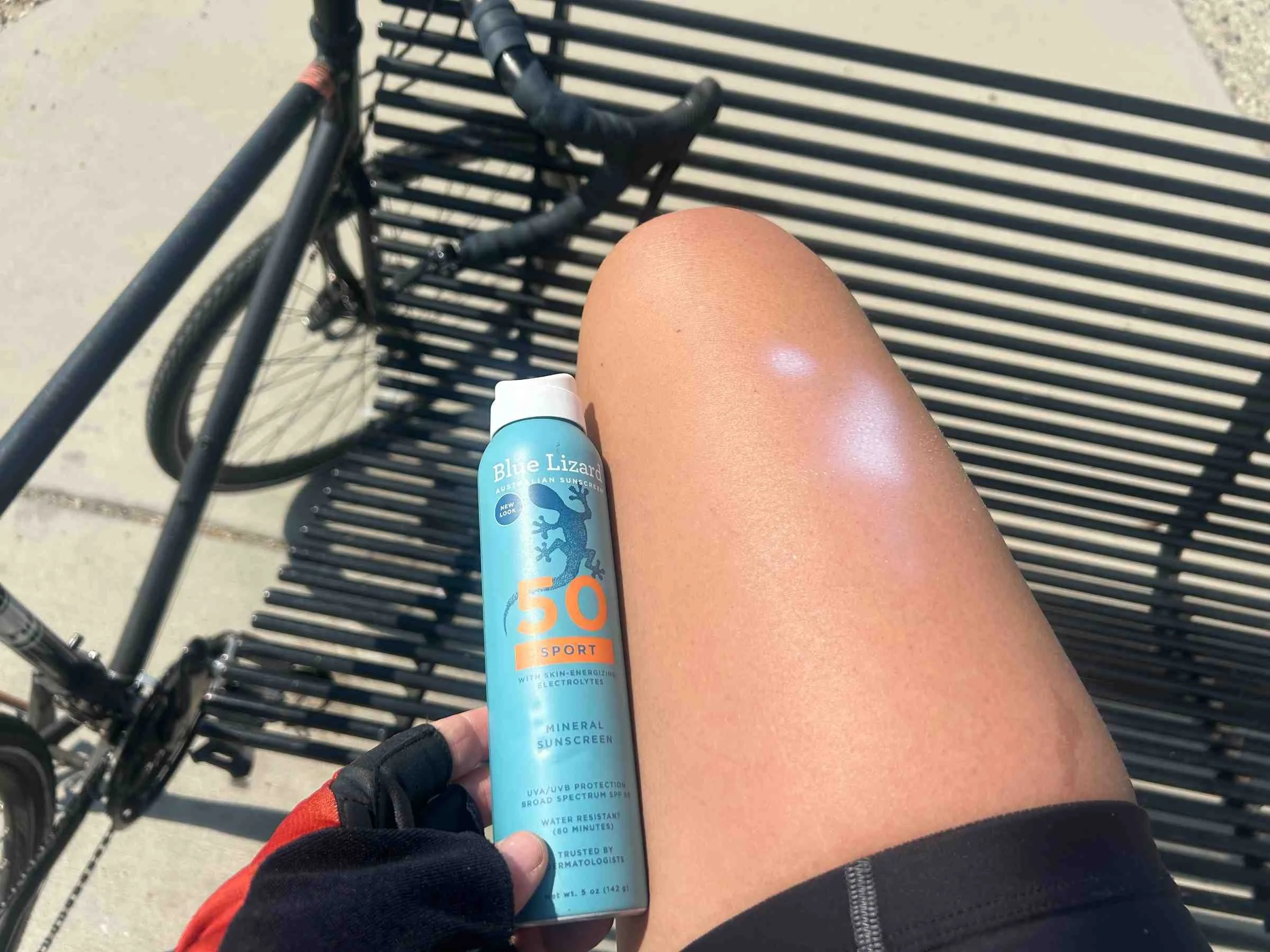
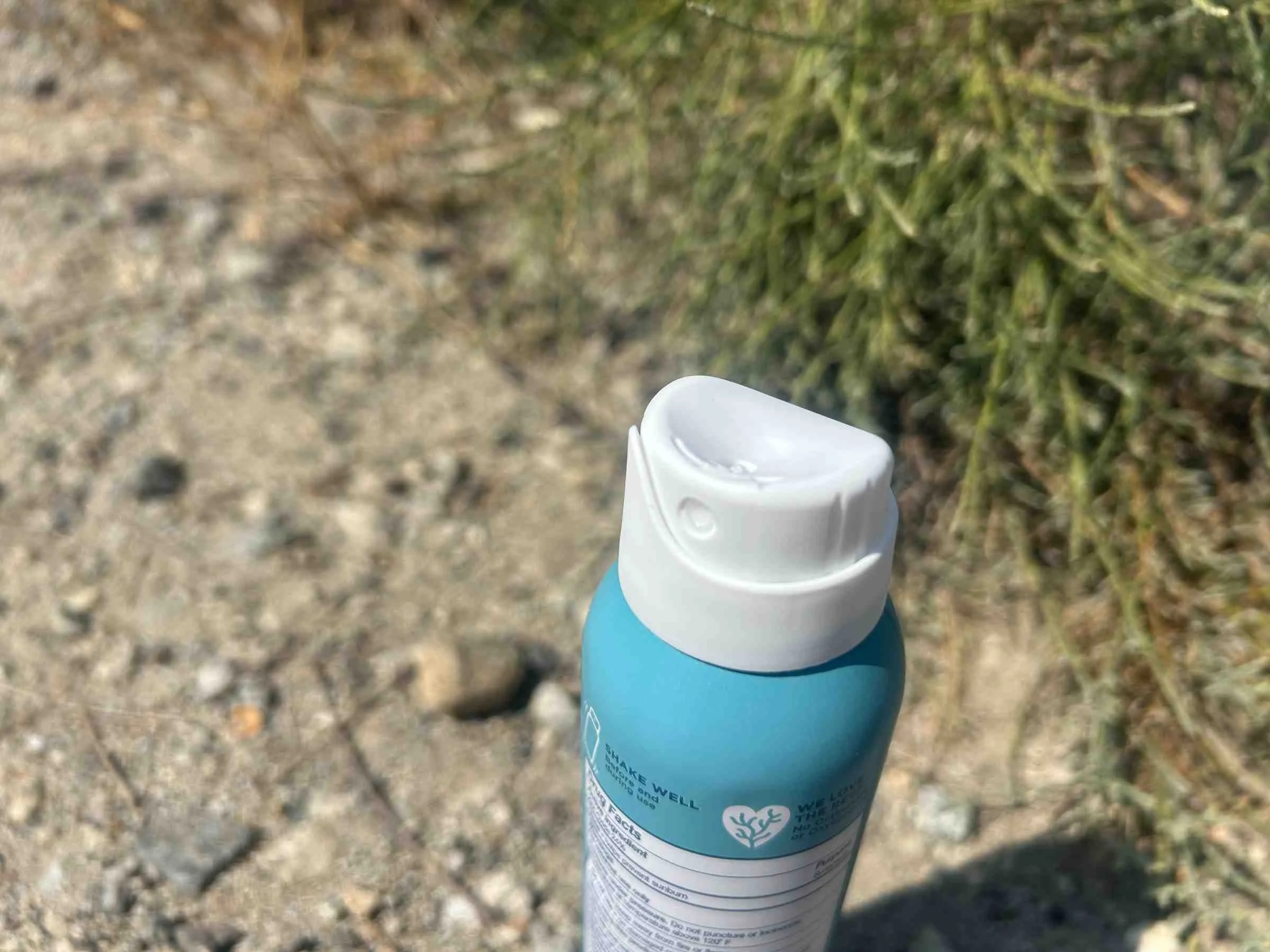
Unlike many sprays, Blue Lizard uses compressed air instead of aerosol propellents in their spray. Propellent sprays often have aerosol propellents that people try to avoid. The Blue Lizard compressed air system uses a "bag-on-valve" system, which physically separates the sunscreen formula from the compressed air.
The experience of using it is about the same as using other mineral sprays. It sprays smoothly and is easy to rub in, though of course a noticeable white cast remains.
Overall, mineral spray sunscreens have the same challenges as mineral sunscreen lotions: they’re thicker than their chemical peers, they stay visible on the skin, they tend to feel stickier than chemical sunscreens, and they’re harder to wash off. Online reviews also mention that mineral sunscreen spray nozzles can get clogged over time, though we didn’t experience this in our testing. It’s also important to note that no traditional spray sunscreen is entirely reef-safe: the spray versions of even our favorite reef-safe sunscreens contain non-reef-safe ingredients.
On the plus side, mineral sunscreens apply more smoothly as a spray than as a lotion, much more lightweight and easier to rub in. Mineral sunscreen sprays are also a great option for sensitive skin in general, and Blue Lizard Sport Mineral Sunscreen Spray is vegan, free of parabens, fragrances, and drying alcohols, which can often cause irritation.
Best affordable sunscreen spray: Trader Joe’s Sunscreen Spray SPF 50+
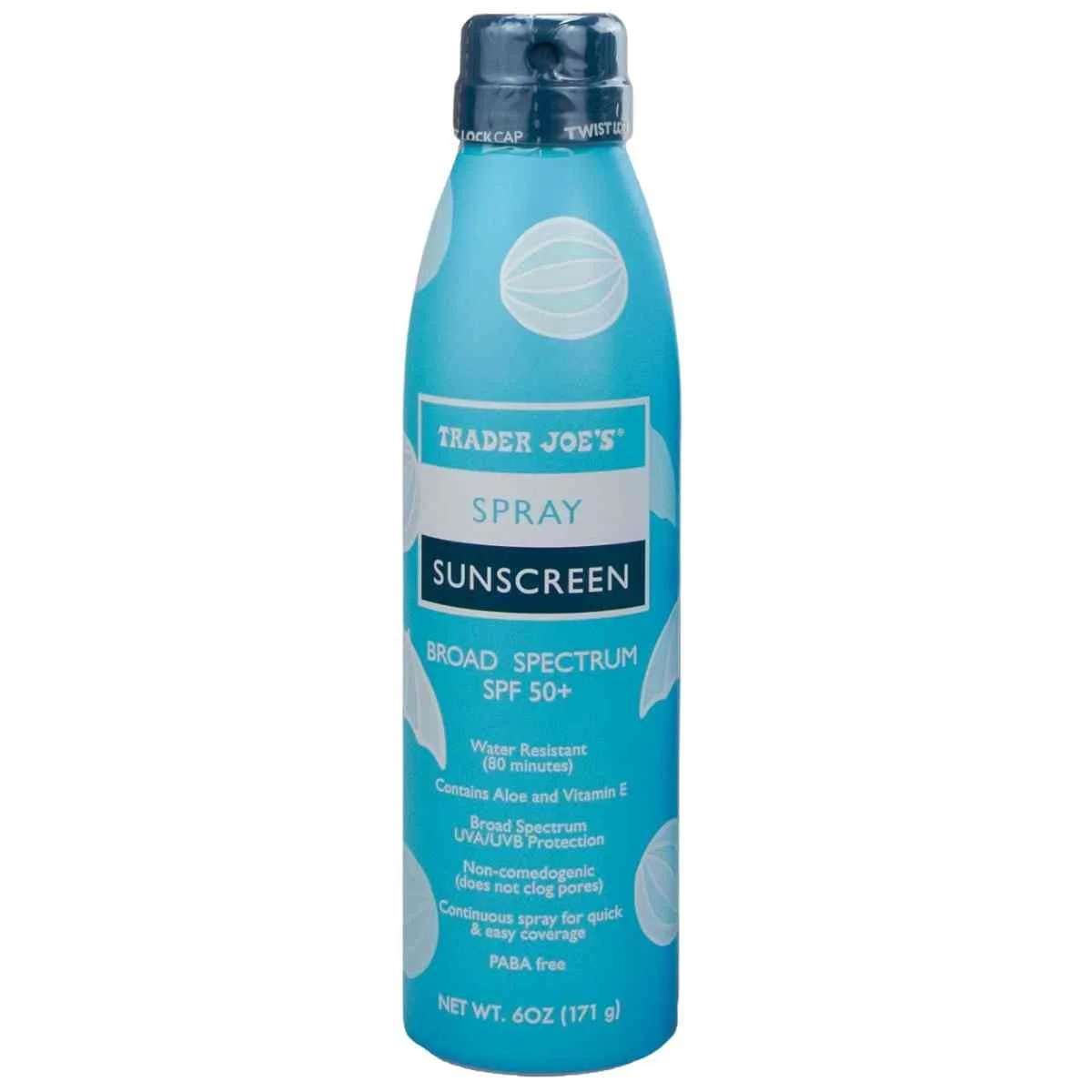
Broad spectrum SPF: 50+
Sunscreen Type: Chemical
Active Ingredients: Avobenzene 3%, Homosalate 15%, Octisalate 5%, Octocrylene 8%
Skin Type: All skin types
Water Resistant: 80 minutes
Reef safe: No, but free from oxybenzone and octinoxate
Cost per oz: $1.54/fluid ounce
What we liked: Great value for money, highly-rated for sun protection, comparable user experience to other sprays
What we didn’t like: Slightly more oily residue than Banana Boat Light As Air, applicator is slightly harder to press, application is a bit less targeted and creates more fumes
Since most of the spray sunscreens we tried felt about the same and applied about the same, our Best Affordable Sunscreen Spray is one that is far above its similarly priced competitors in sun protection and reliability. Trader Joe’s Sunscreen Spray SPF 50+ has been among the top three sunscreen sprays rated by Consumer Reports for the past several years (as an independent organization that rigorously tests how well sunscreens protect the skin, Consumer Reports charges to access their ratings, but the results are available on Reddit for previous years if you want to deep-dive).
Trader Joe’s Sunscreen Spray SPF 50+
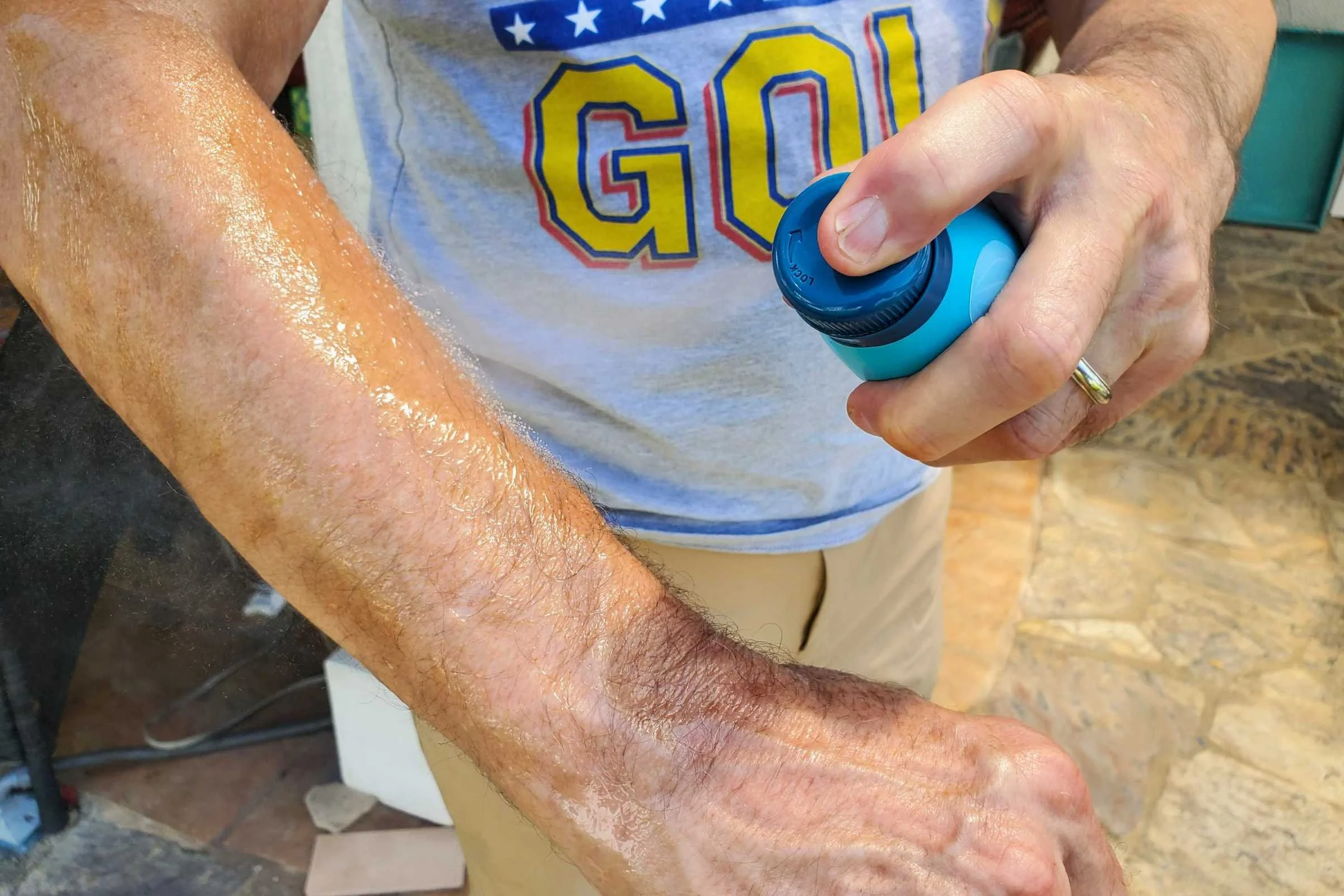
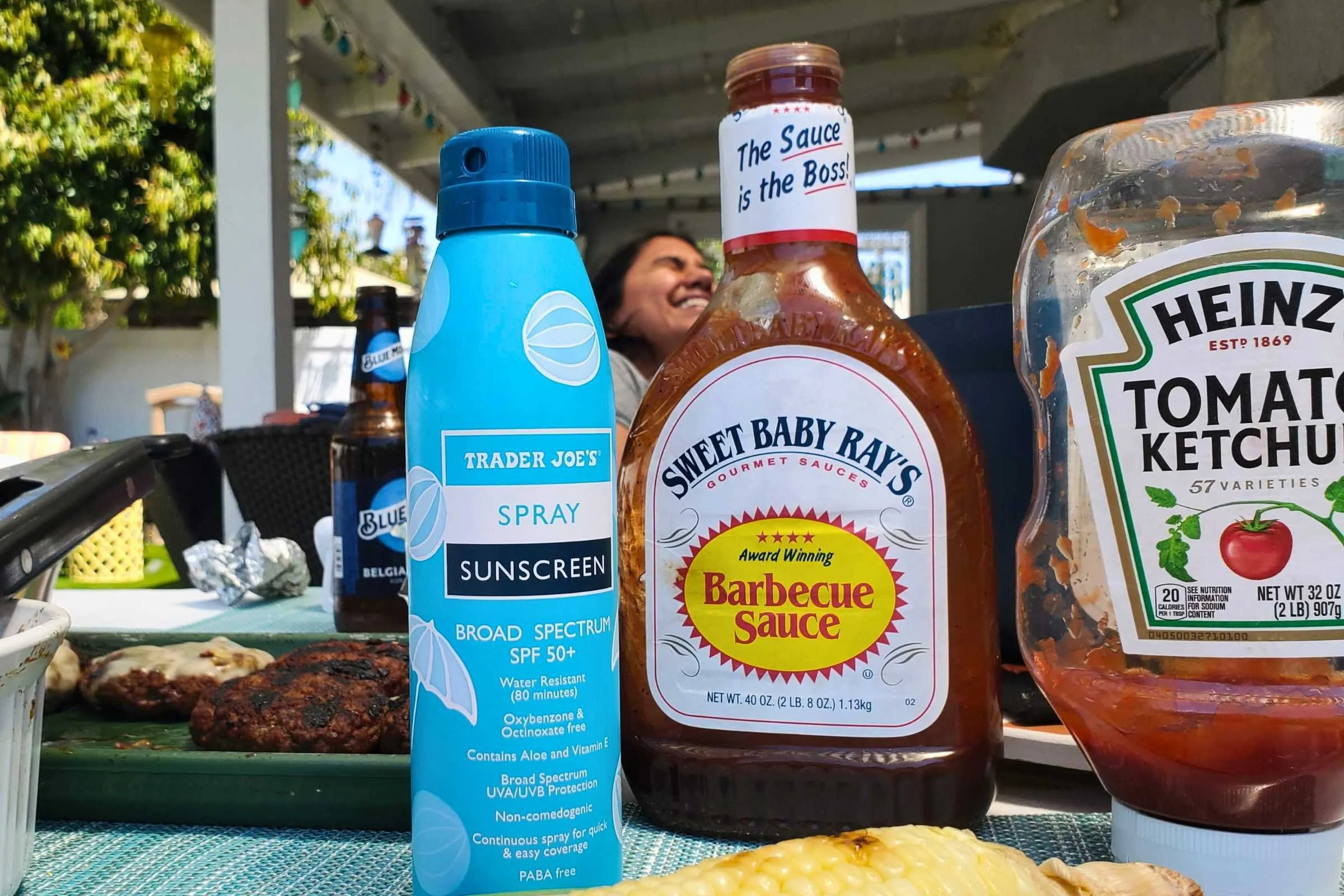
At $1.54/oz, Trader Joe’s Sunscreen Spray SPF 50+ is definitely the best bang for your buck in terms of sun protection. It’s also easy to use, spraying easily and without a major cloud of fumes. It’s easy to rub in, absorbs quickly, has no white cast on any skin tones, and leaves very little oily residue on the skin. We like that it contains aloe and vitamin E, so it doesn’t dry out our skin, and the fragrance is present but very mild (especially compared to both Banana Boat products). While the residue it leaves on the skin is very slightly more oily or tacky than that of Banana Boat Light As Air, the difference is very narrow.
The main thing we disliked about Trader Joe’s Sunscreen Spray is the fact that the applicator button was a bit more difficult to press than that of Banana Boat products, so it was more difficult to apply the amount we wanted without fumes. If you’re applying the product outside, this isn’t really a problem.
Like all of their products, Trader Joe’s Sunscreen Spray SPF 50+ is available primarily at stores (though often available for higher prices on Amazon). If this makes it unavailable to you, the Banana Boat Sport SPF 30 Sunscreen Spray (noted below as an honorable mention) is a great alternative.
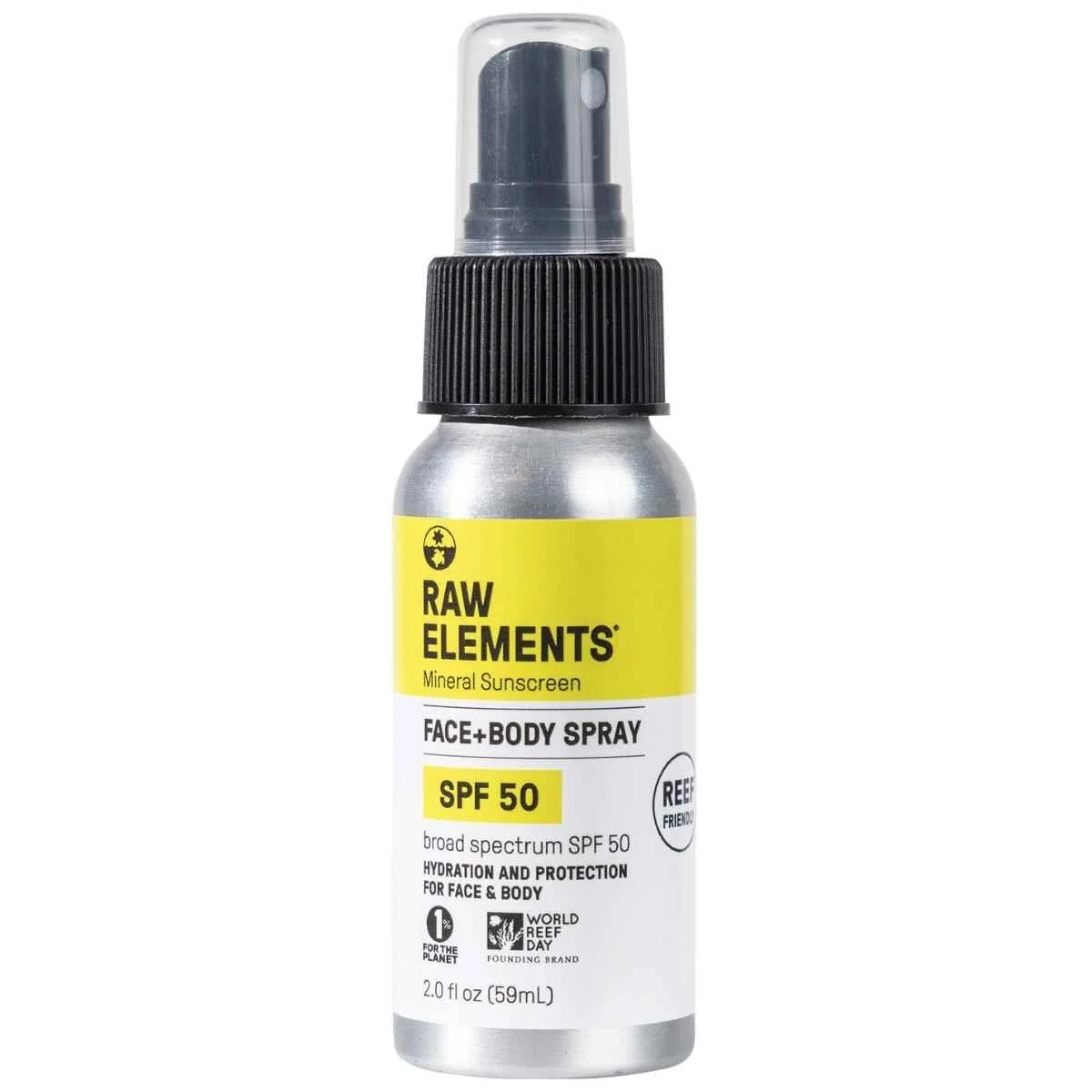
Best reef-safe sunscreen spray for the beach: Raw Elements SPF 50 Mineral Sunscreen Spray
Broad spectrum SPF: 50
Sunscreen Type: Mineral
Active Ingredients: Non-Nano Zinc Oxide 9.5%, Titanium Dioxide 7.2%
Skin Type: All skin types
Water Resistant: 80 minutes
Reef safe: Yes
Cost per oz: $10/fluid ounce
What we liked: Reef-safe, non-nano zinc oxide, lightweight, non-greasy, minimal white cast, travel-friendly size, no added fragrance, available in stores as well as online
What we didn’t like: Expensive, only available in a 2-oz spray bottle
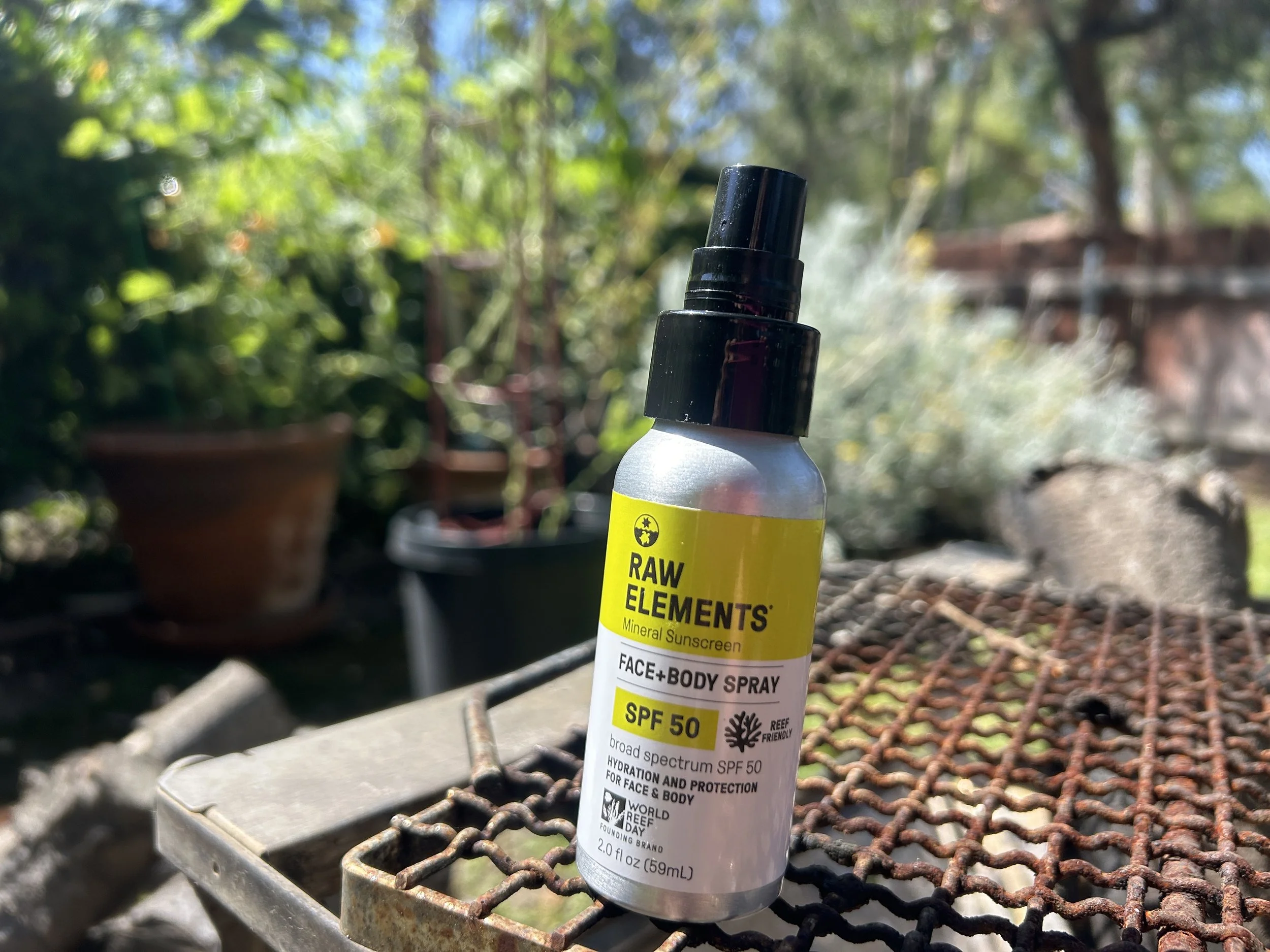
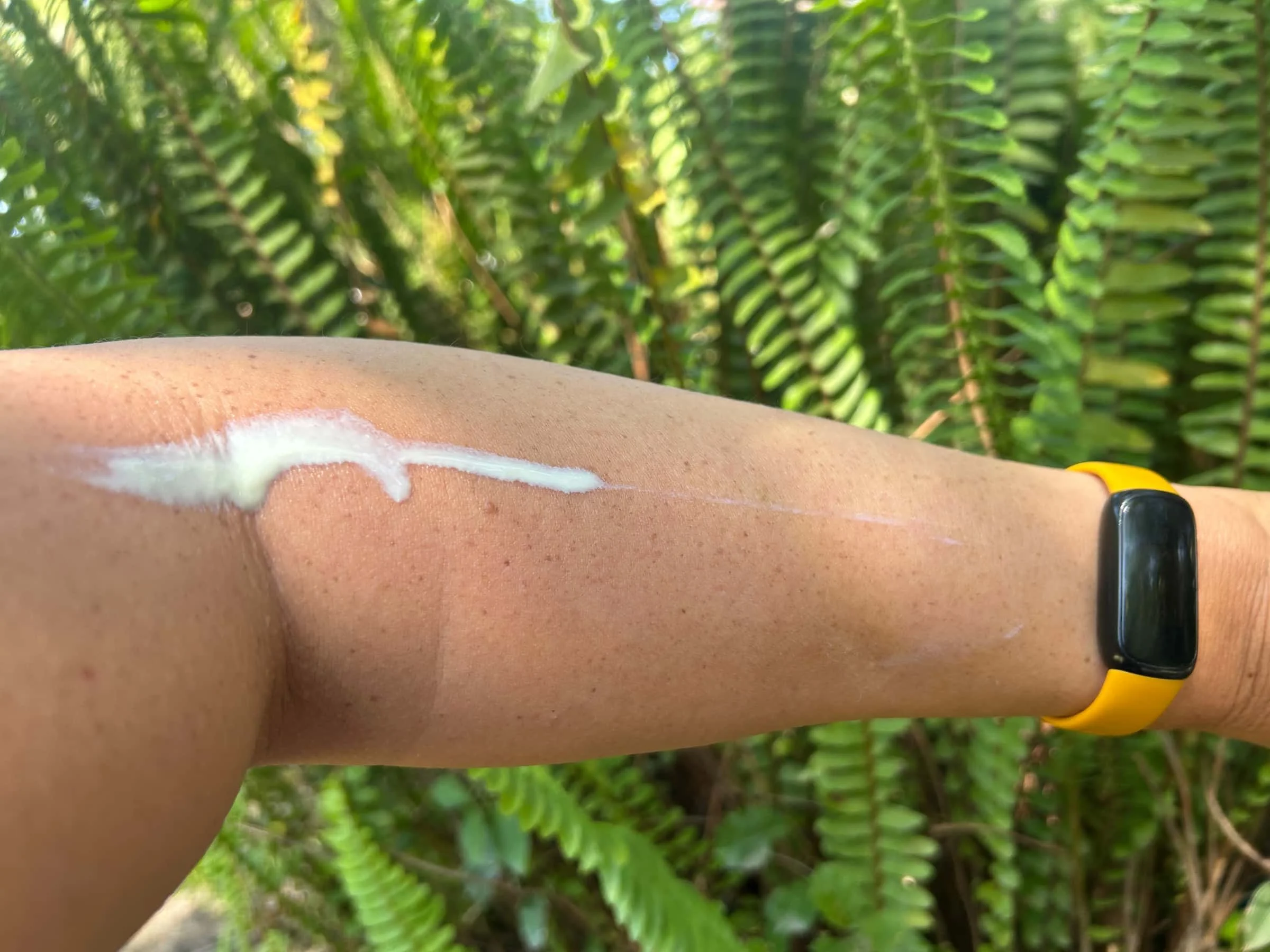
The one truly reef-safe spray sunscreen option is the non-aerosol Raw Elements SPF 50 Mineral Sunscreen Spray. Our testers found it lightweight, non-greasy, with a minimal white cast, and they appreciated the travel-friendly size of the spray bottle. In addition to many online options, you can also get this in person at most REI stores. It’s also the winner for Best Spray sunscreen in our Best Reef-Safe Sunscreen guide.
Raw Elements SPF 50 Mineral Sunscreen Spray
As you probably know if you’ve looked into the topic at all, reef safety is a tricky target. It turns out that determining the effects of a bunch of different chemicals, alone and together, in the short term and long term, on widely varying animals and ecosystems across the globe, all experiencing a variety of different stressors at the same time, is really tough. While a nonprofit called Haereticus Environmental Labs (HEL) maintains the gold standard list of sunscreen ingredients that harm wildlife, new research is emerging every day that links supposedly “safe” chemicals to damaging effects.
Since we’re environmentalists and outdoorspeople here at Treeline Review, we take a “better safe than sorry” approach to environmental protection, opting to avoid all harmful and potentially harmful chemicals when looking for a reef-safe sunscreen. While a search for “reef-safe sunscreen spray” turns up a number of mostly-mineral recommendations, a closer look reveals that all of these contain either nano-sized zinc oxide particles, butyloctyl salicylate (an inactive ingredient shown to be harmful to aquatic life), or both. No traditional spray we could find was completely free of non-reef-safe ingredients.
Though not a true aerosol (that is, enclosed under pressure and released as a fine spray), Raw Elements SPF 50 Mineral Sunscreen Spray is the only reef-safe spray sunscreen option we've found. On the down side, the product is on the expensive side, and it’s only available in a 2-oz bottle, which isn’t ideal in many cases.
Some testers noted that the spray does not come out in a fine mist, which is to be expected since it’s not a true aerosol, but still something to keep in mind. It’s also a mineral sunscreen, so it has the typical mineral drawbacks (white cast, harder to wash off, etc.).
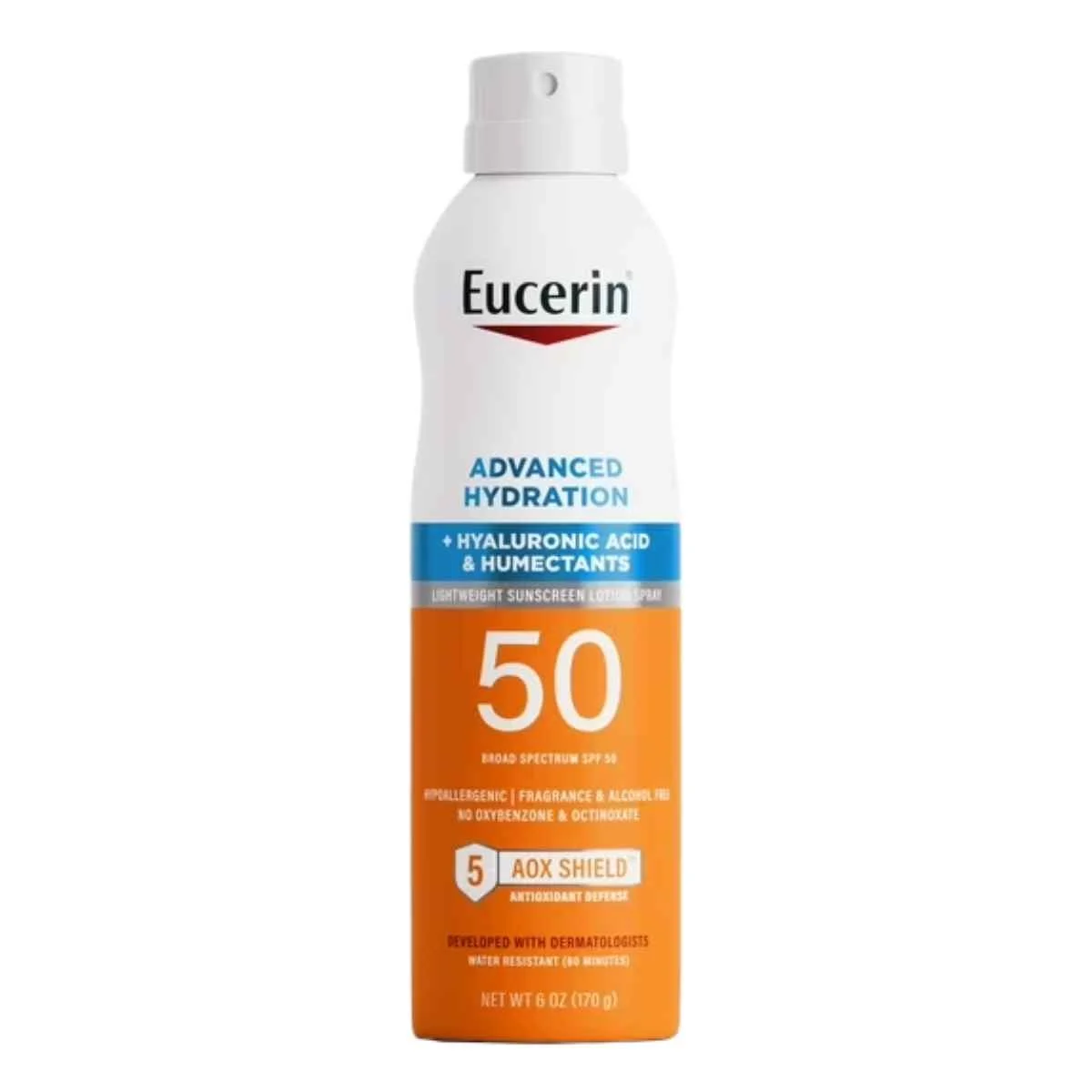
Best moisturizing sunscreen spray: Eucerin Advanced Hydration Sunscreen Spray SPF 50
Broad spectrum SPF: 50
Sunscreen Type: Chemical
Active Ingredients: Avobenzene 3%, Homosalate 9%, Octisalate 4.5%, Octocrylene 9%
Skin Type: All skin types, especially dry skin and sensitive skin
Water Resistant: 80 minutes
Reef safe: No, but free from oxybenzone and octinoxate
Cost per oz: $2.67/fluid ounce
What we liked: Moisturizing, high sun protection ratings, fragrance-free, alcohol-free, feels like a very lightweight lotion, non-irritating, applies without fumes
What we didn’t like: Comes out in a froth rather than a spray, have to spray for longer than usual to get enough product, can feel tacky
Sunscreen sprays often contain ingredients that make them quick drying and easier to spray. While these ingredients have their pros, they can feel drying, smell bad, and irritate sensitive skin. Eucerin Advanced Hydration Sunscreen Spray SPF 50 is the most moisturizing sunscreen spray we tried, and since it’s fragrance free and alcohol free, it’s also great for those with skin sensitive to drying alcohols and other irritants.
Eucerin Advanced Hydration Sunscreen Spray SPF 50
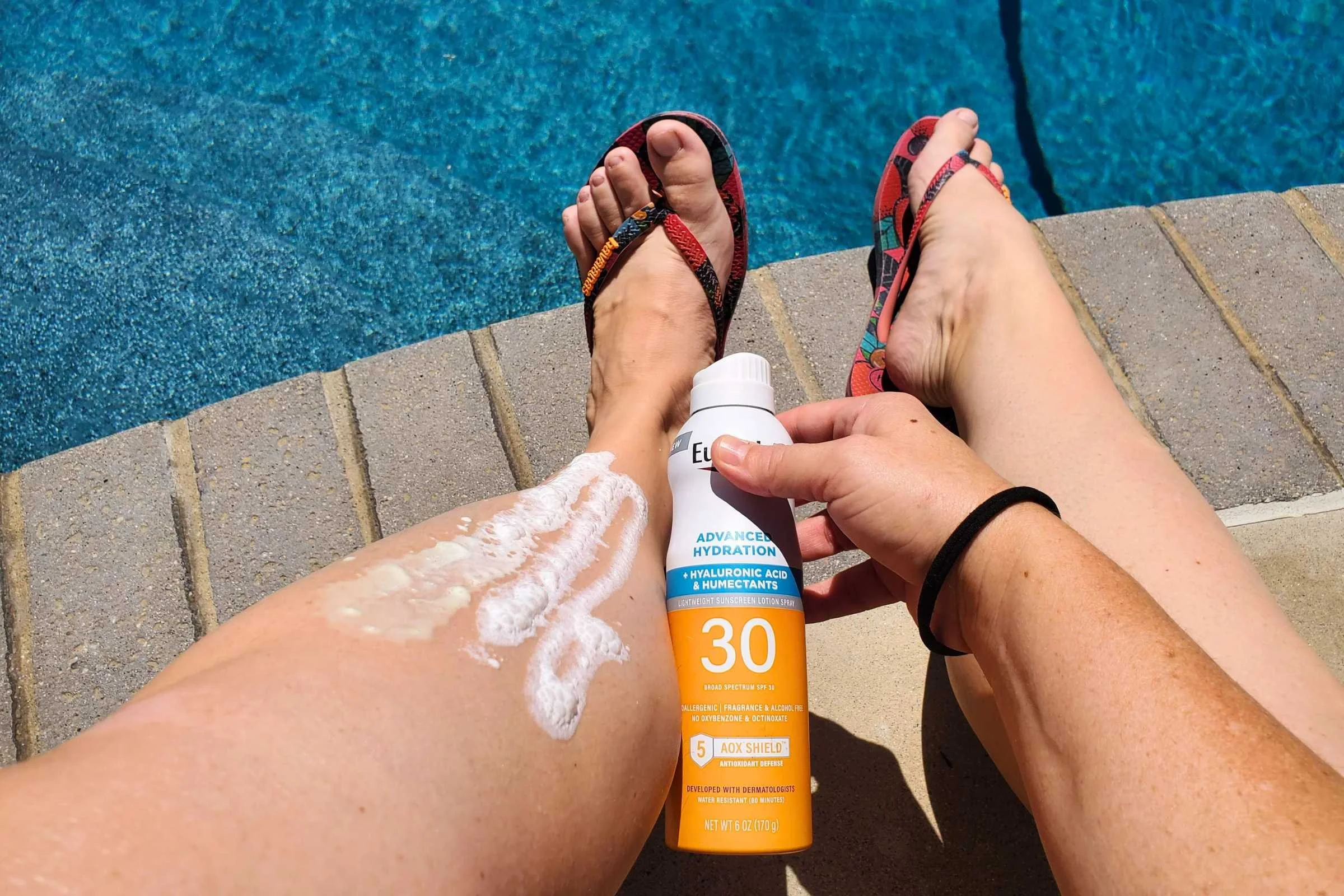
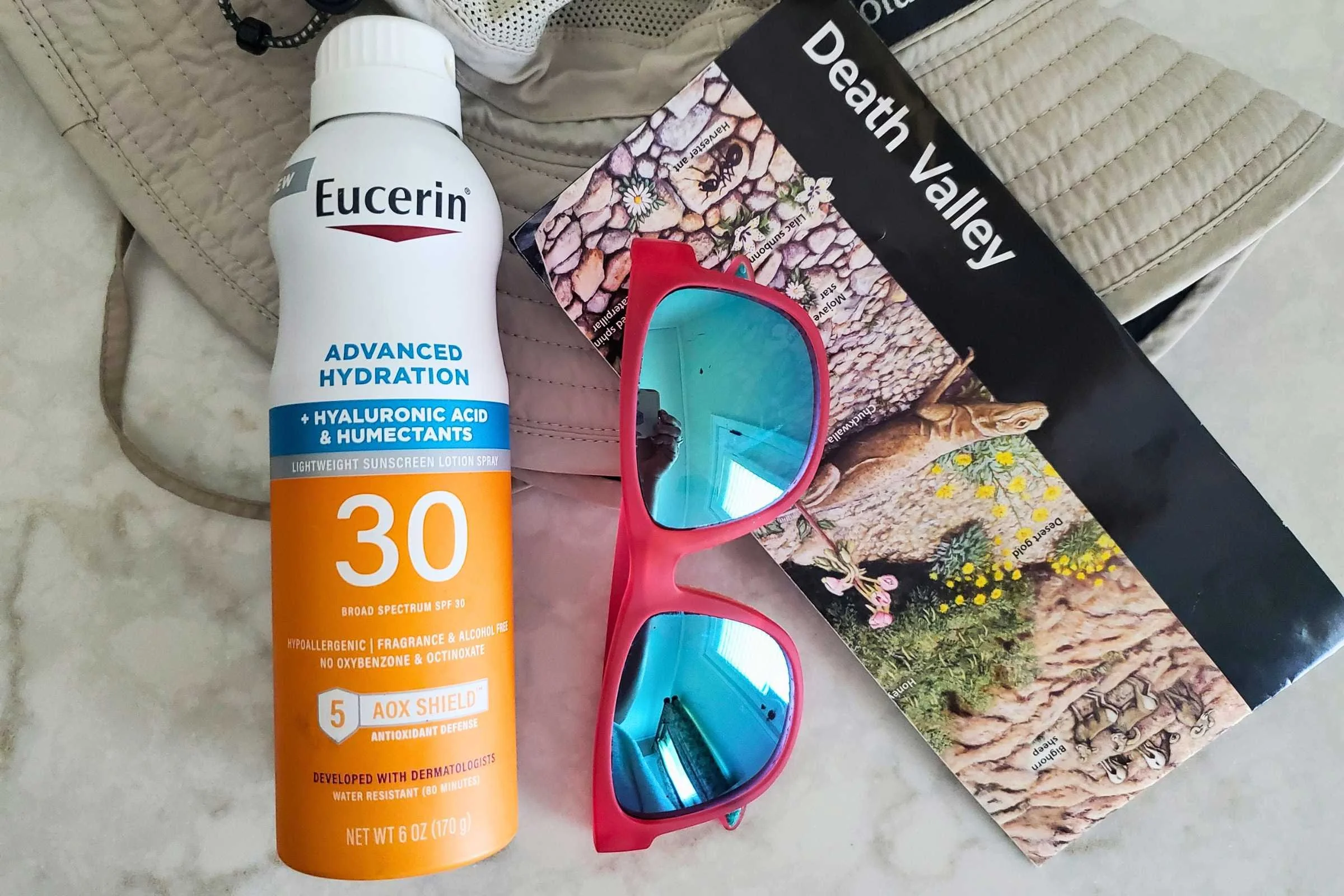

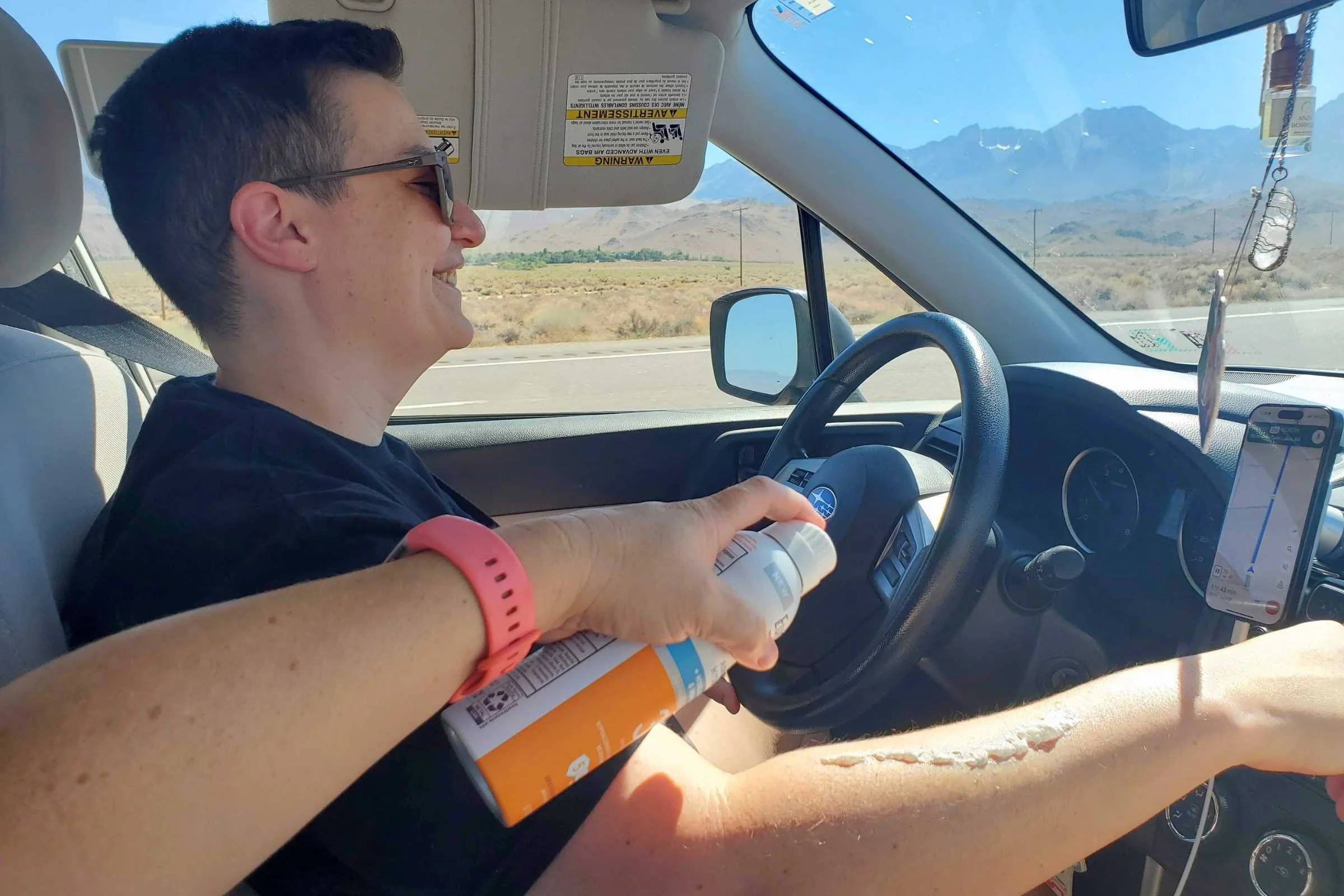
Eucerin Advanced Hydration Sunscreen Spray is our go-to sunscreen spray when our skin is feeling dry or sensitive, or when we’re in a dry climate. The product feels like an extremely lightweight, cooling lotion, which gives it a silkiness that some testers found “luxurious.” It rubs in easily and absorbs quickly, and it doesn't dry out our skin at all, courtesy of the hyaluronic acid and antioxidants added for extra moisture. It also received the highest sun protection rating of all sunscreen sprays from Consumer Reports for the past two years, so we feel confident we won’t get burned.
We also really appreciate that this doesn’t irritate the more sensitive skin of the face. While many other spray sunscreens can be irritating to the face because of their propellant and drying ingredients, this one just feels like a pleasant, cooling lotion (we sprayed it into our hands and then applied it to our faces).
It definitely doesn’t come out of the canister as a typical spray, though. It’s more of a froth, and you have to spray a good amount before you have enough for full coverage. This application experience is definitely polarizing, with some online reviewers upset about how different it is or believing the spray nozzle broken. I loved this froth, though. It made our list of Gear that Changed my Mind because I found it so effective at coverage, which spray sunscreens generally are not great at.
Another major benefit is that this frothy type of application eliminates the cloud of fumes present in almost all other sunscreen sprays, which makes it infinitely more pleasant to apply inside the house (or car). While our testers found the spray surprising at first, we soon got used to it, and the benefits of the product were, for us, more than worth the unconventional application.
The other most common complaint noted in online reviews was the fact that it can stay sticky or tacky on the skin, unlike the typical ultra-dry experience of other spray sunscreens. Our testers did notice this feeling of slight tackiness, but we considered the effect similar to using a moisturizing lotion. Since hydration was a big part of what we wanted from this product, it didn’t bother us.
Best travel-size sunscreen spray: Sun Bum Mini SPF 50 Spray (1.75 oz)
Broad spectrum SPF: 50
Sunscreen Type: Chemical
Active Ingredients: Avobenzone 3%, Homosalate 15%, Octisalate 5%, Octocrylene 7%
Skin Type: All skin types
Water Resistant: 80 minutes
Reef safe: No, but free from oxybenzone and octinoxate
Cost per oz: $5.14/fluid ounce
What we liked: Travel size, applies easily, not oily, widely available in stores and online
What we didn’t like: Not quite as matte as competitors, expensive per ounce
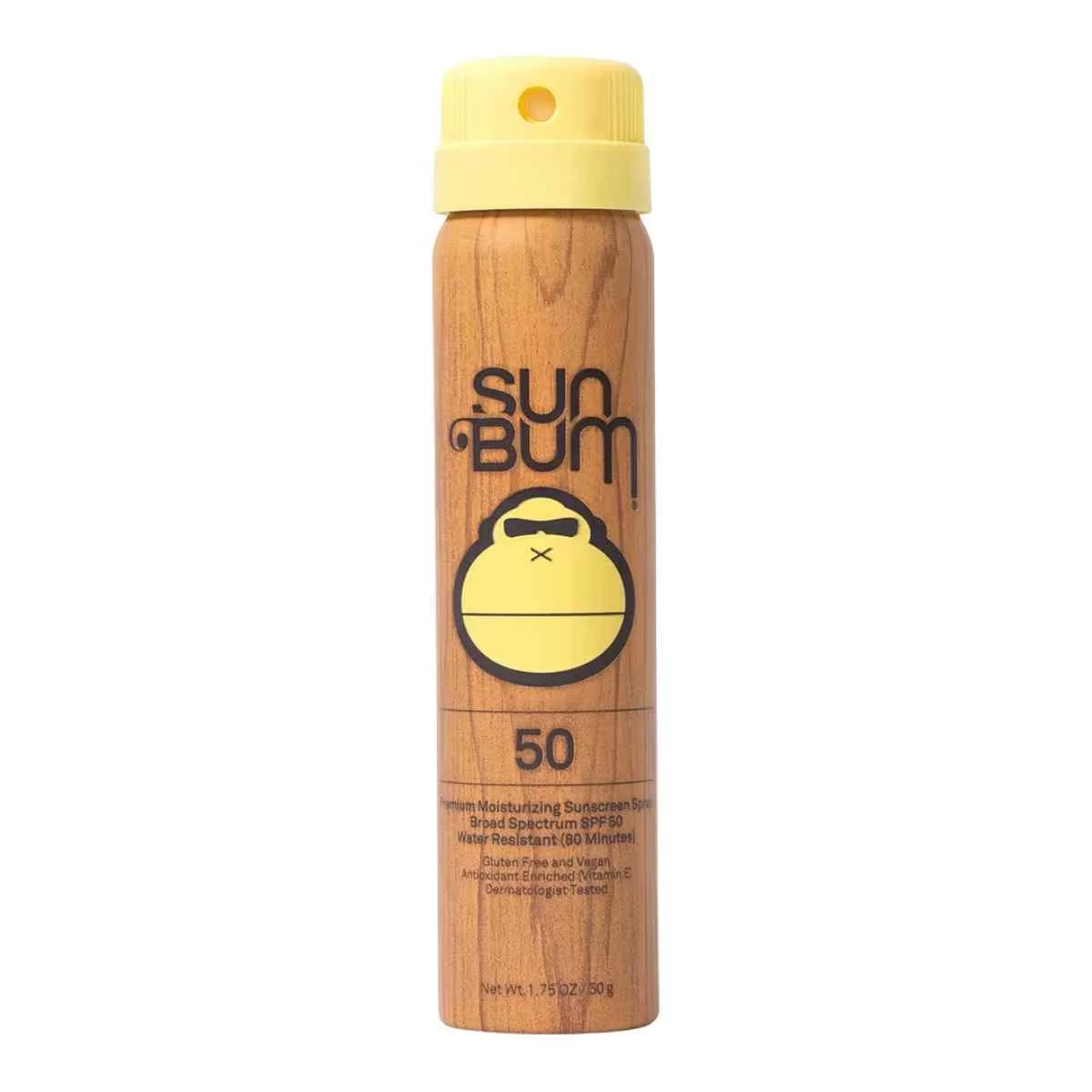
If you’re looking for a truly travel-size spray sunscreen, the 1.75 fl oz size of Sun Bum Original SPF 50 Sunscreen Spray is one of the most common, most affordable options. The full 6-oz size of Sun Bum Original Sunscreen Spray is also great: goes on easily, absorbs quickly, has very little fragrance if any, and has barely any residue. It is also very highly rated for sun protection by Consumer Reports (in the top six sunscreen sprays for the past several years).
Sun Bum Mini SPF 50 Spray (1.75 oz)
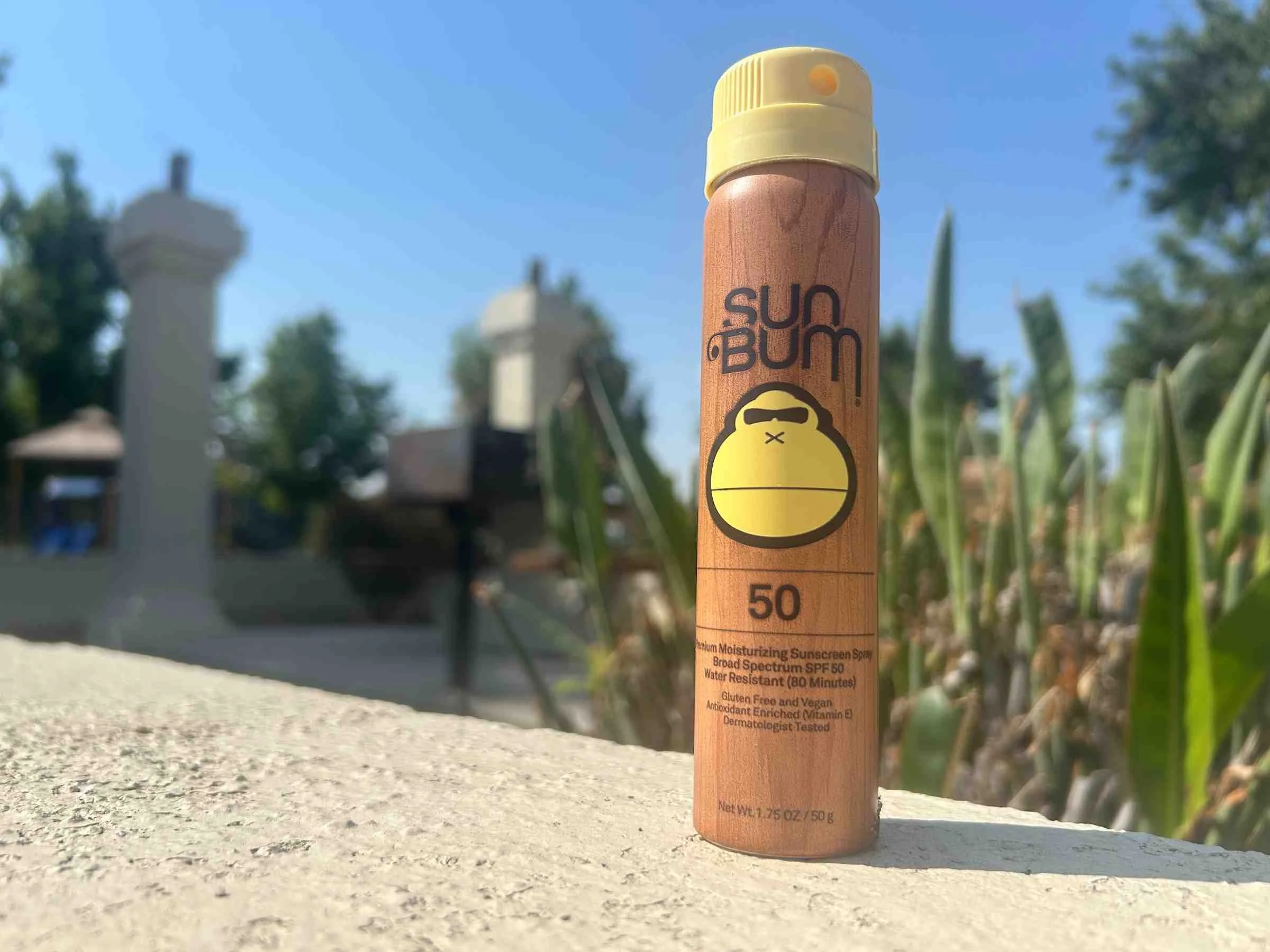

Our main complaint about the full-size version is the applicator: it’s tougher to press than competitors, and the spray comes out in a big cloud rather than a focused stream. However, this is much less of an issue with the travel size product. It’s not quite as matte as our Best Overall Spray Sunscreen winner, the Banana Boat Light As Air Spray, but it’s pretty close. And given that travel-size spray sunscreens are weirdly scarce, we’re extra glad that one of our favorites comes in an extremely portable travel size.
In addition to being a generally quality product, Sun Bum Mini SPF 50 Spray is mostly more affordable and more pleasant to use than its travel-size peers. The only other brands we found with a spray size under 3 oz are Banana Boat SPF 30 (1.8 oz, roughly same price, but lower SPF and more fragrance); Coola Classic SPF 50 (2 oz, much more expensive, and much more oily residue); and Supergoop! Glow Oil SPF 50 (1 oz, most expensive of the bunch, with some fragrance and oily residue). While we do like all of these other products, they’re not quite as affordable or as highly rated for protection as Sun Bum.
Other Spray Sunscreens We Tested
While we tested many other spray sunscreens, these were the “next of the best.” It’s important to note, however, that any sunscreen that is SPF 30+, protective against UVA/UVB rays, and water resistant is a good sunscreen to use!
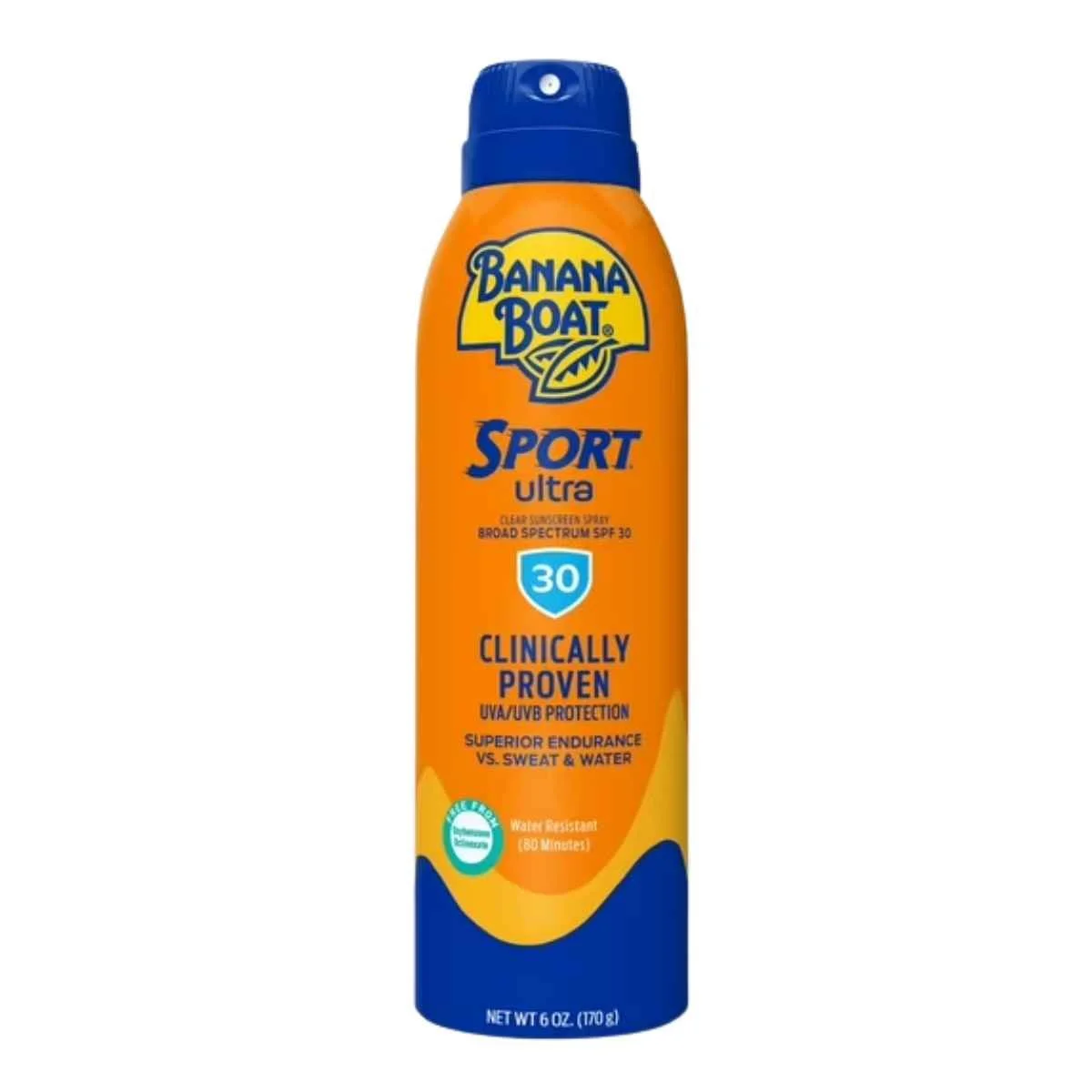
Overall Honorable Mention: Banana Boat Sport SPF 30 Sunscreen Spray
Broad spectrum SPF: 30
Sunscreen Type: Chemical
Active Ingredients: Avobenzene 1.9%, Octisalate 4.5%, Octocrylene 5.7%
Skin Type: All skin types
Water Resistant: 80 minutes
Reef safe: No, but free from oxybenzone and octinoxate
Cost per oz: $$1.40/fluid ounce
What we liked: Applies easily, matte finish, widely available in stores & online, comes in travel size
What we didn’t like: Not quite as matte as Banana Boat Light As Air, not as highly rated for protection as Trader Joe’s, more fragrance than competitors
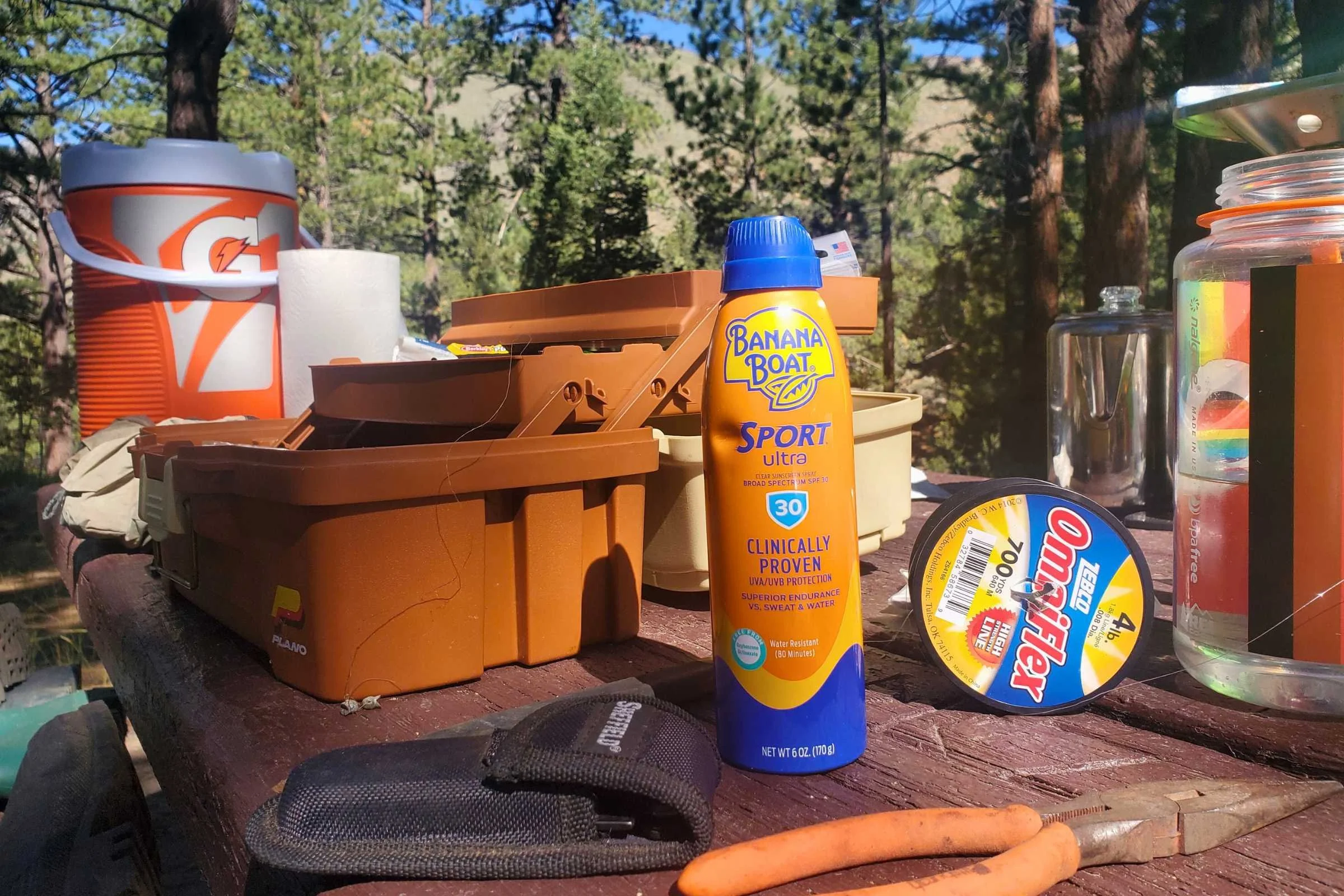
Banana Boat Sport SPF 30 Sunscreen Spray is one of the most common, most time-tested, and most affordable spray sunscreen options out there. It has the second-most matte finish after Banana Boat Light As Air Sunscreen Spray. It goes on easily, absorbs quickly, and has practically no residue at all, though it does have a noticeable floral fragrance.
We love that it comes in a travel size that’s also widely available, both in stores and online. It is also rated quite highly for sun protection by Consumer Reports, though not quite as highly as the Trader Joe’s, Eucerin, or Sun Bum products above. Overall, though, this is an affordable and widely available product that’s pleasant to use, and it’s definitely a close second place for Best Sunscreen Spray.
Banana Boat Sport SPF 30 Sunscreen Spray
Broad spectrum SPF: 30
Sunscreen Type: Mineral
Active Ingredients: Zinc Oxide 12% (Non-Nanoparticle)
Skin Type: All
Water Resistant: 80 min
Reef safe: Reef-friendly, free from oxybenzone and octinoxate
Cost per oz: 3.5/fluid ounce
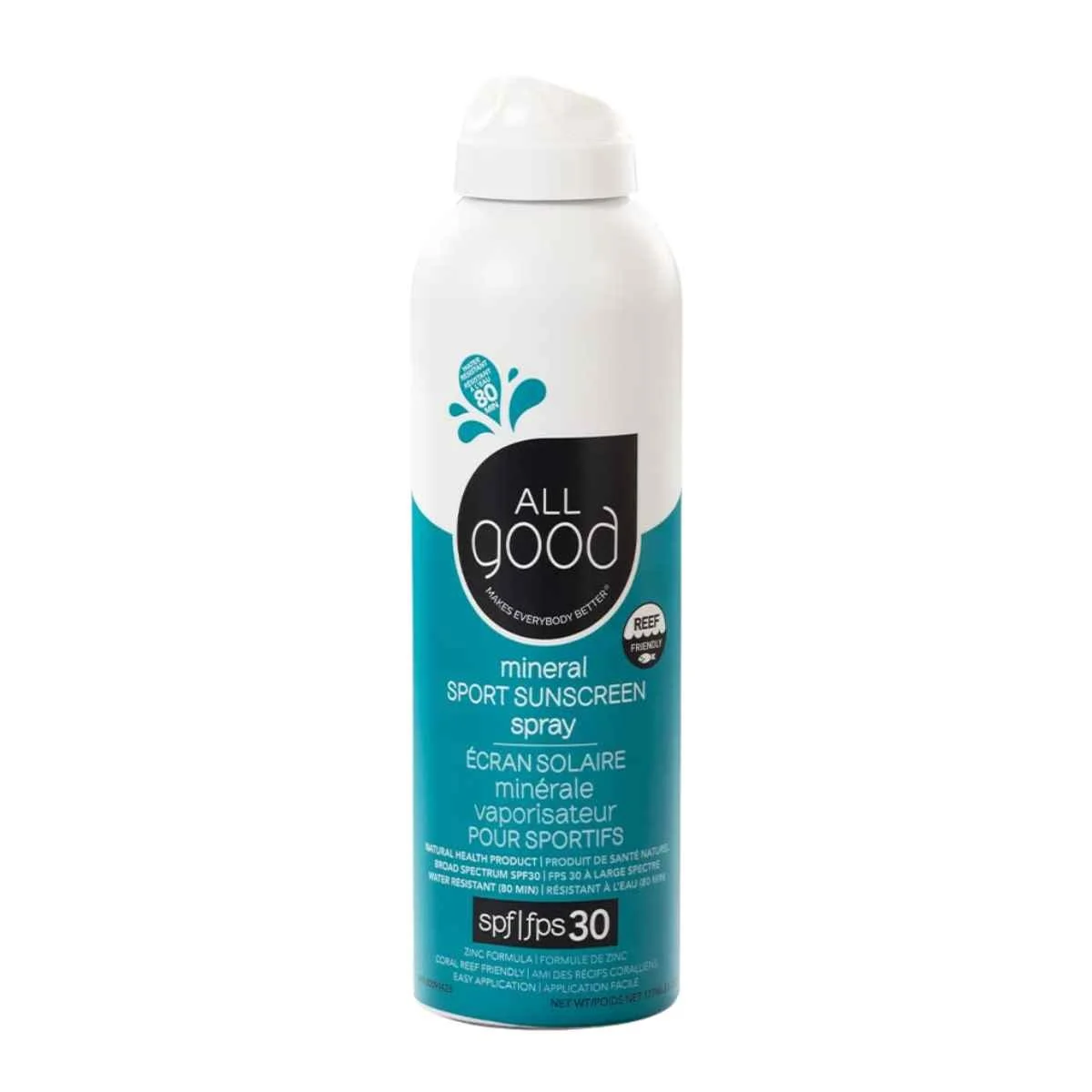
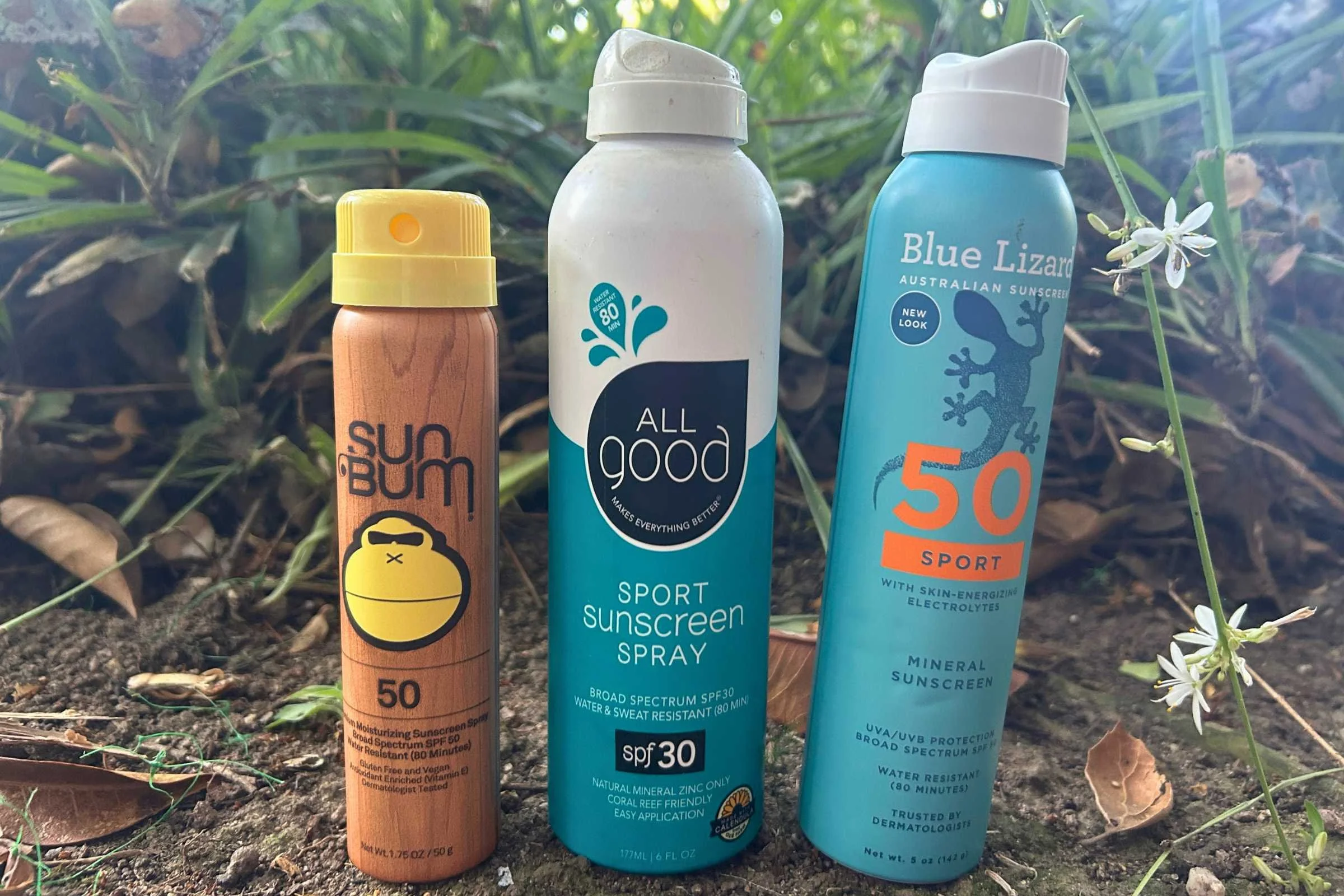
The AllGood Mineral Sunscreen Spray has a lot going for it. It's made by a certified B-Corp who gives 1% to the Planet and AllGood is a woman-owned business. Although it uses zinc oxide, it uses the more reef friendly non–nano zinc oxide. It’s also important to note that no traditional spray sunscreen is entirely reef-safe: the spray versions of even our favorite reef-safe sunscreens contain non-reef-safe ingredients.
As with other mineral spray sunscreens, we find that the AllGood Mineral Sunscreen spray applies more smoothly as a spray than as a lotion and is much more lightweight and easier to rub in. It still has a white cast, like all mineral sunscreens. We also find that the AllGood Mineral sunscreen is a great option for hairy people and those with sensitive skin.
Unlike almost every sunscreen we tested, AllGood Mineral Sunscreen Spray also has green tea and rose hips, which it says can help with moisturizing and repairing skin damaged from the sun or wind.
The AllGood Mineral Sunscreen also uses compressed air instead of propellants. It comes out feeling like a traditional spray.
Our main issue with this mineral sunscreen spray was that the nozzle can clog. As hard as we tried, we couldn't use about half the bottle because we couldn't get it out.
AllGood Sport Mineral Sunscreen Spray
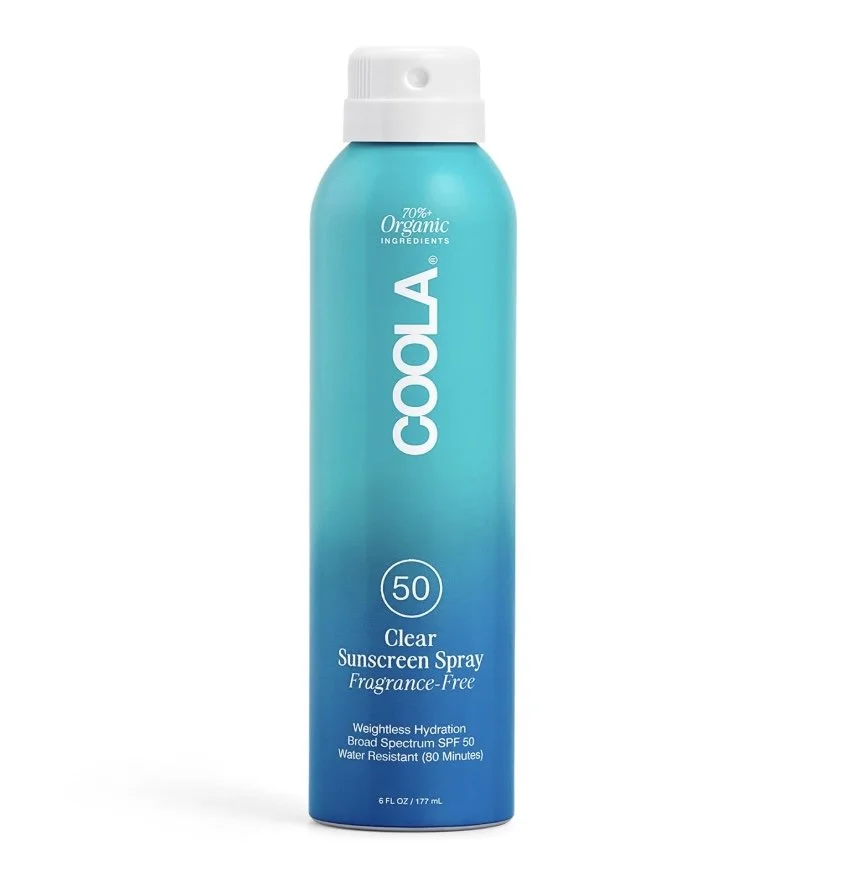
Broad spectrum SPF: 50
Sunscreen Type: Chemical
Active Ingredients: Avobenzone 2.9%, Homosalate 4.0%, Octisalate 4.9%, Octocrylene 9.5%
Skin Type: All skin types
Water Resistant: 80 minutes
Reef safe: No, but free from oxybenzone and octinoxate
Cost per oz: $5.33/fluid ounce
This is a very popular sunscreen, and we appreciate that some of the ingredients are organic and the product is truly fragrance-free. We also really like the 2-oz travel size, which in our opinion is the perfect travel size. The spray is smooth, non-fumey, and a lot comes out, which means application is pretty quick and targeted. The residue is slightly more sticky than our winners, though, and the product is relatively expensive. Not a winner for us, though certainly pleasant, and we will likely be buying the travel size again.
Coola SPF 50 Clear Sunscreen Spray
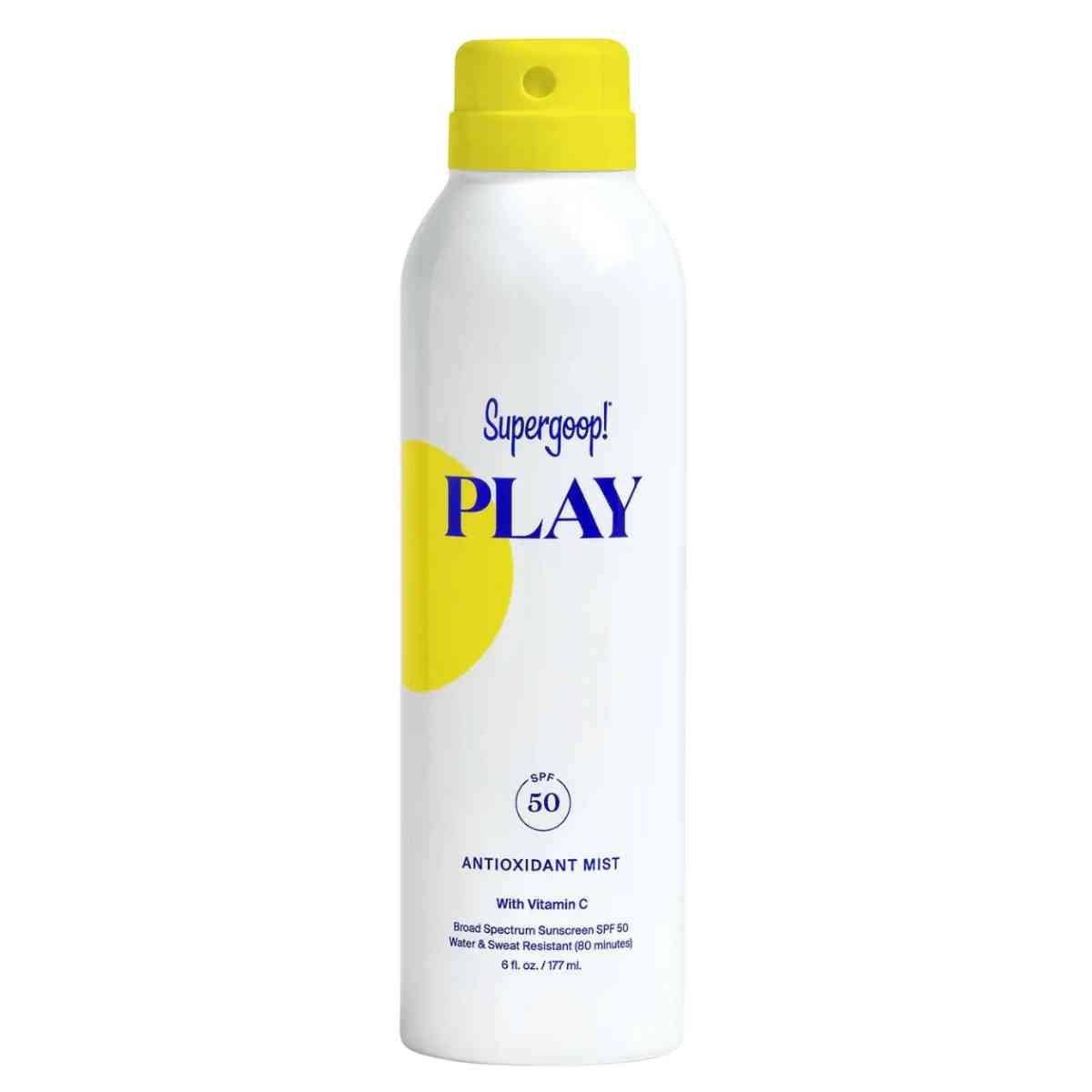
Broad spectrum SPF: 50
Sunscreen Type: Chemical
Active Ingredients: Avobenzone 2.8%, Homosalate 9.8%, Octisalate 4.9%, Octocrylene 9.5%
Skin Type: All skin types
Water Resistant: 80 minutes
Reef safe: No, but free from oxybenzone and octinoxate
Cost per oz: $4.00/fluid ounce
Like Coola, this is a very popular product that also comes in a very portable 3-oz travel size that we really appreciate. However, otherwise it’s not any better than our winners; the spray has some fumes, the button is a bit hard to press, and the residue is slightly sticky compared to Banana Boat. It’s also more expensive.
Supergoop! PLAY Antioxidant Body Mist SPF 50
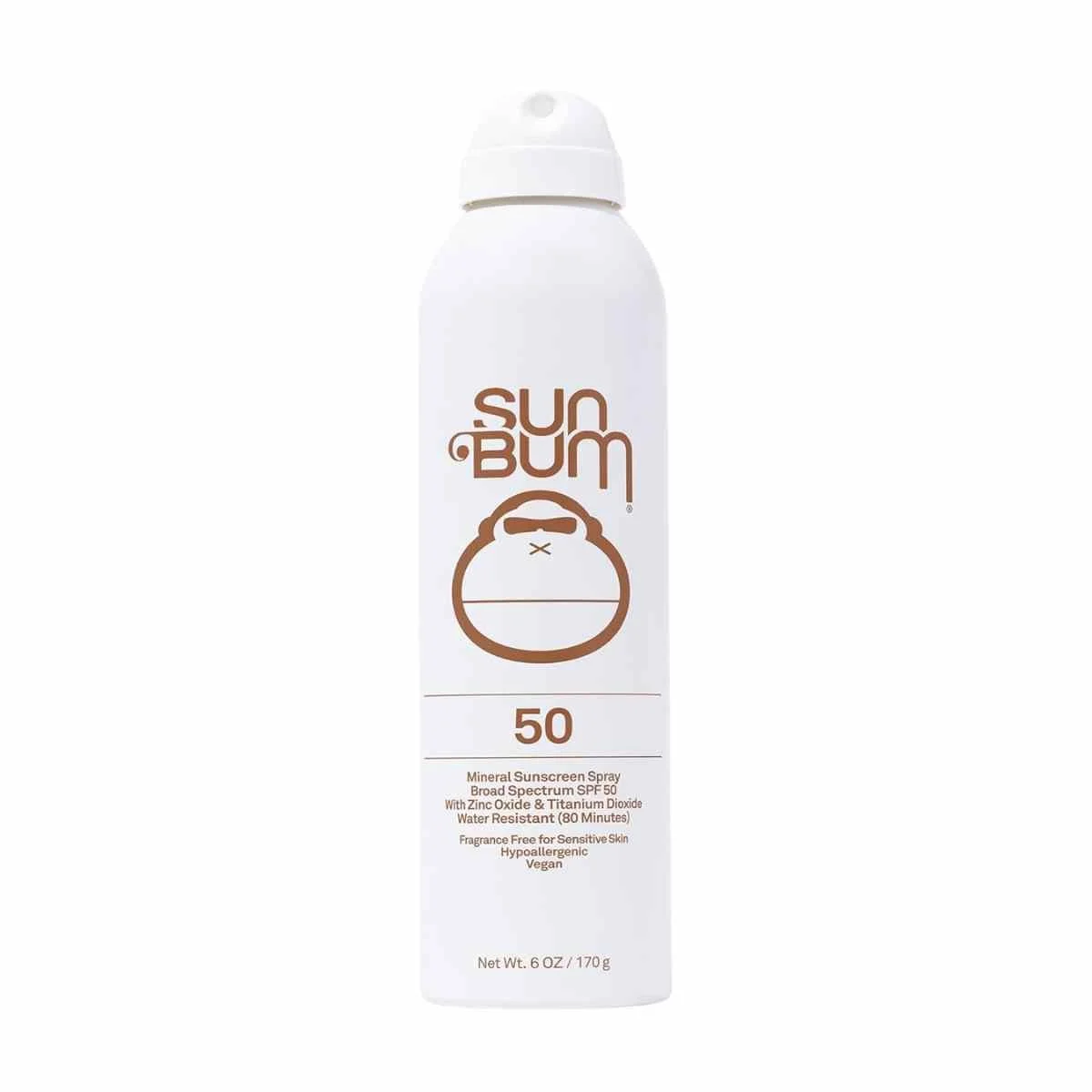
Broad spectrum SPF: 50
Sunscreen Type: Chemical
Active Ingredients: Titanium dioxide 3.4%, Zinc Oxide 16%
Skin Type: All skin types, sensitive skin
Water Resistant: 80 minutes
Reef safe: No, but free from oxybenzone and octinoxate
Cost per oz: $3.42/fluid ounce
This has about the same user experience as the other mineral sunscreen sprays we tried; it sprays easily and doesn’t dry the skin but has a significant white cast. However, it’s not as highly rated for sun protection as Blue Lizard, and it’s not reef-safe like Raw Elements, so it’s not a winner for us.
Sun Bum Mineral SPF 50 Sunscreen Body Spray
Broad spectrum SPF: 50
Sunscreen Type: Chemical
Active Ingredients: Homosalate
Skin Type: All skin types
Water Resistant: 80 minutes
Reef safe: No, but free from oxybenzone and octinoxate
Cost per oz: $0.91/fluid ounce
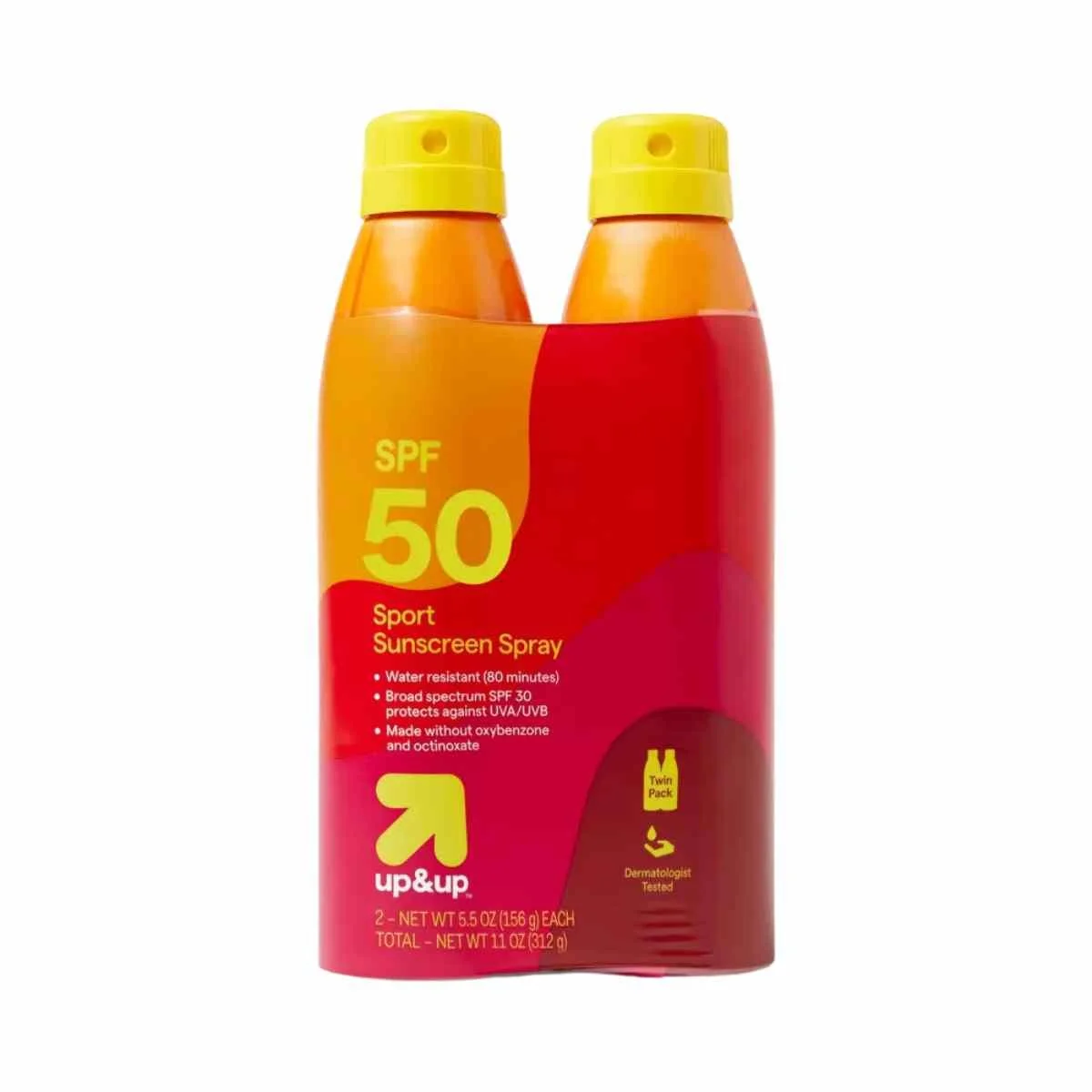
This is Target’s store brand sunscreen spray. It’s fine. About the same as Trader Joe’s, but with slightly more fragrance and slightly more oily residue.
Up&Up Sport Sunscreen Spray SPF 50
What to look for in a spray sunscreen
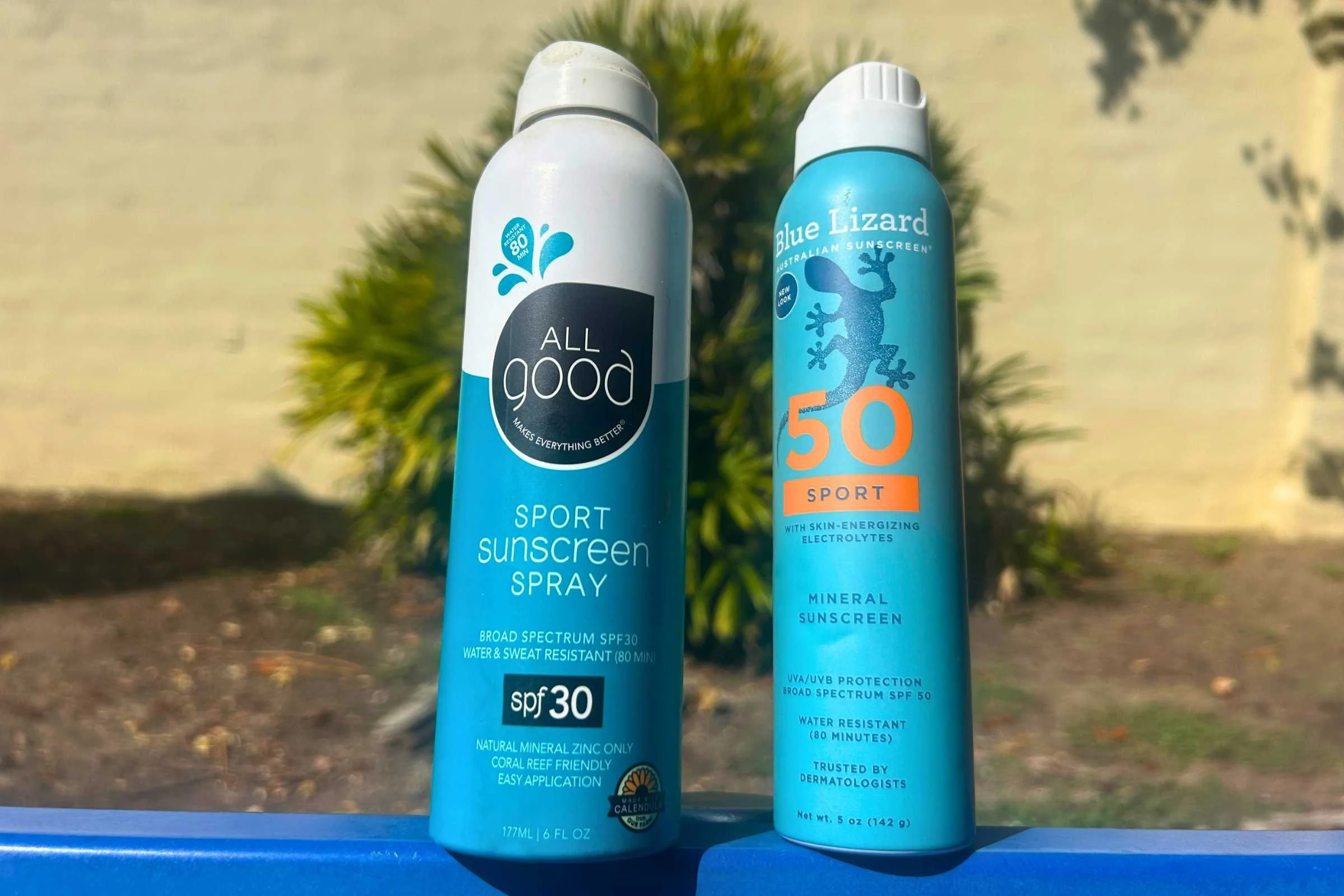
Most spray sunscreens look similar on paper. The real differences show up in how they feel, how easy they are to apply properly, and whether you'll actually reach for them consistently. Here's what matters.
SPF and broad-spectrum protection
SPF 30 or higher with broad-spectrum UVA and UVB coverage is the baseline. SPF 30 is sufficient for most outdoor use if you're applying correctly and reapplying on schedule. SPF 50 gives you a slightly larger margin of error, which is useful if you tend to forget to reapply or spend a lot of time at elevation. SPF 100 is not a force field. It buys you slightly more time before burning, but it doesn't change the fundamental math of needing to reapply.
Good for Sensitive skin
Ultimately, everyone’s skin is different. Having read hundreds (probably thousands) of online sunscreen reviews at this point, we can say with authority that no single sunscreen works for everyone.
In general when it comes to sensitive skin, though, we know that customers want both sun protection and a product that won’t cause redness, irritation, breakouts, drying, flaking, or other negative effects.
Sunscreens that contain chemical filters, fragrances, and other skincare chemicals can cause these types of irritation to sensitive, acne-prone, and/or eczema-prone skin. Although there’s no single solution, experts agree that those with sensitive skin should look for:
Mineral (i.e., zinc oxide or titanium dioxide) or hybrid (mineral and chemical) formulas, since chemical filters tend to cause more irritation than their mineral peers.
Oil-free and fragrance-free products, since these ingredients can cause breakouts and/or may irritate sensitive skin.
Products free from alcohol and denatured alcohol, which can dry out and irritate the skin. These are particularly common in sunscreen sprays, to which alcohol is added to help products dry more quickly.
If dry skin or eczema is an issue, gentle hydration from ingredients like hyaluronic acid, ceramides, vitamin E, and/or colloidal oatmeal.
When looking for these qualities in a spray sunscreen, look for products described as “non-aerosol” (usually meaning they lack chemical propellants, which can be irritating), alcohol-free, and fragrance-free.
Water and sweat resistance
For anything active outdoors, look for 80-minute water resistance, which is the maximum the FDA allows brands to claim. This matters for pool days, long hikes, and any situation where you're going to be sweating. It doesn't mean you apply once and you're done for the day. It means the protection holds up reasonably well while your skin is wet before you need to reapply.
Chemical vs. mineral formulas
Chemical sprays like Banana Boat Light As Air feel lighter, disappear faster into the skin, and are less likely to leave visible residue. Mineral sprays using zinc oxide or titanium dioxide are better tolerated by sensitive or reactive skin but tend to be thicker, stickier, and more likely to leave a white cast, especially at higher zinc concentrations. Neither is universally better. If you have sensitive skin, mineral is worth the extra effort. If you prioritize an invisible, quick-drying finish and you're not near a natural body of water, a chemical spray will probably get used more consistently.
How it sprays
This is where a lot of sprays fall apart in practice. A nozzle that requires serious hand strength, a spray that immediately becomes a cloud of fumes, or a mist so diffuse that most of it lands on the air rather than your skin: any of these will result in you using less than you should. Look for sprays that come out in a controlled stream or mist, cover skin predictably, and don't require contortions to apply to hard-to-reach areas.
Scent and potential irritants
Many sprays include fragrance, alcohol, or essential oils to smell appealing and dry down quickly. For most people this is fine. For people with sensitive skin, asthma, or fragrance sensitivities, it's worth looking for fragrance-free or alcohol-free options with shorter ingredient lists. If you're not sure how your skin will react, a small patch test before covering your whole body is worth the thirty seconds it takes.
White cast and finish
Mineral sprays are the most likely to leave a white cast, which can be more pronounced on deeper skin tones. Chemical sprays tend to leave a subtle sheen. Dry-touch formulas can feel slightly powdery, which some people love and others find drying. None of these finishes affect UV protection, but they absolutely affect whether you'll reach for the bottle again.
Environmental impact
Most spray sunscreens are not suitable for use at the beach, lake, or river. Aerosol sprays disperse small particles including inactive ingredients and propellants that can harm aquatic ecosystems, and many contain ingredients proven to damage coral reefs. If you're spending time in or near natural bodies of water, use one of our Best Reef-Safe Sunscreens instead. For parks, trails, and backyards away from natural water, a spray is a reasonable choice.
Dermatologist approved
The American Academy of Dermatology recommends everyone use a sunscreen that offers:
Broad spectrum sun protection (i.e., protects against UVA and UVB rays)
SPF 30 or higher
Water resistance
Buy a sunscreen that meets the requirements above (this info is usually on the front of the bottle). Every single sunscreen we review meets those basic requirements. If you want more fun & helpful facts about sunscreen, please enjoy the AADA’s website and the Skin Cancer Foundation.
SPF demystified: SPF 30 vs. SPF 40?
SPF, or Sun Protection Factor, measures how well a sunscreen protects your skin from UVB rays (the rays that cause sunburn and contribute to skin cancer).
The SPF number reflects how long it would take for UVB rays to burn you, compared to unprotected skin. So SPF 30 sunscreen (applied exactly as directed) means it would take 30 times longer to burn than with no sunscreen at all. It also translates into the percentage of UVB rays blocked: SPF 15 blocks around 93% of UVB rays, while SPF 30 blocks about 97%, and SPF 50 blocks around 98%. If those seem like minor differences, think of it as SPF 15 allowing 133% more UVB exposure than SPF 30.
Essentially, under ideal, lab-like conditions, higher SPF products do provide more protection. However, as we know, the real world is more complicated! People wearing high SPF products may assume they’re fully protected and end up spending more time in the sun without reapplying or using additional sun protection like hats or shade—ultimately increasing their UV exposure and UV damage. So while you can absolutely wear an SPF 75 or 100 (protecting against 99% of UVB rays), you’d still need to re-apply at least every 2 hours or after swimming or sweating.
As a general rule, dermatologists recommend a minimum of SPF 30 because it’s affordable, widely available, and provides strong protection when applied and reapplied properly. For extended outdoor activities, especially at high altitudes or near the equator, or for those with heightened sensitivity to the sun, SPF 50 or higher can be helpful, but remember that it needs to be reapplied just as often as lower SPFs!
In addition to SPF 30 or above, you’ll want to look for sunscreen labeled as “Broad Spectrum,” which indicates that it protects against both UVA and UVB rays. You may also see labels that include “PA” with a series of + marks; this is a system used mostly in Asia, where the number of + signs indicates how much UVA protection that product conveys (++++ is the highest). No matter the SPF number, consistent reapplication and sun-smart habits are essential for real protection.
Spray vs. lotion sunscreen
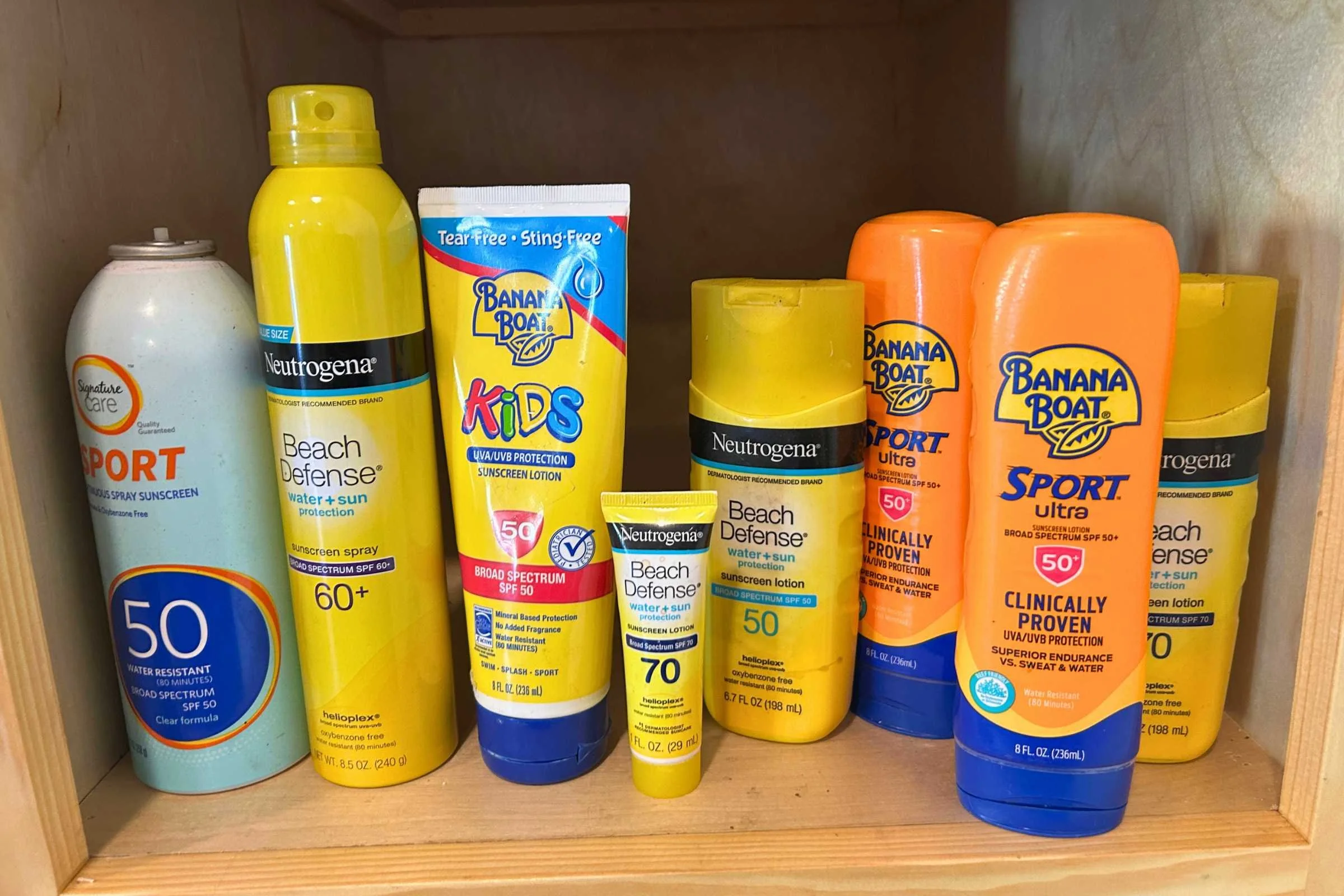
Some sunscreen sprays and sunscreen lotions we tested side-by-side.
Neither is better in every situation. As we noted in the intro, spray sunscreen is generally less effective in practice because most people don't apply enough or don't rub it in properly. That's not a reason to avoid sprays entirely. It's a reason to use them thoughtfully.
Sprays are genuinely useful when you need to cover large areas quickly, when you're reapplying over sandy or sweaty skin where rubbing in thick lotion sounds miserable, or when you're dealing with kids who won't stand still long enough for a full lotion application. They're also easier to keep in a bag or pack for reapplication throughout the day, and "the one you actually use" is the best sunscreen you own.
Lotions are better when you need a reliable base layer before you go outside, when you're applying to your face, when you're near natural water, or when you have dry or sensitive skin that doesn't do well with the alcohols and propellants that make sprays spray. Most dermatologists recommend applying a lotion before you leave the house and using a spray for subsequent reapplications during the day. We think that's a reasonable approach for most people.
How to apply spray sunscreen
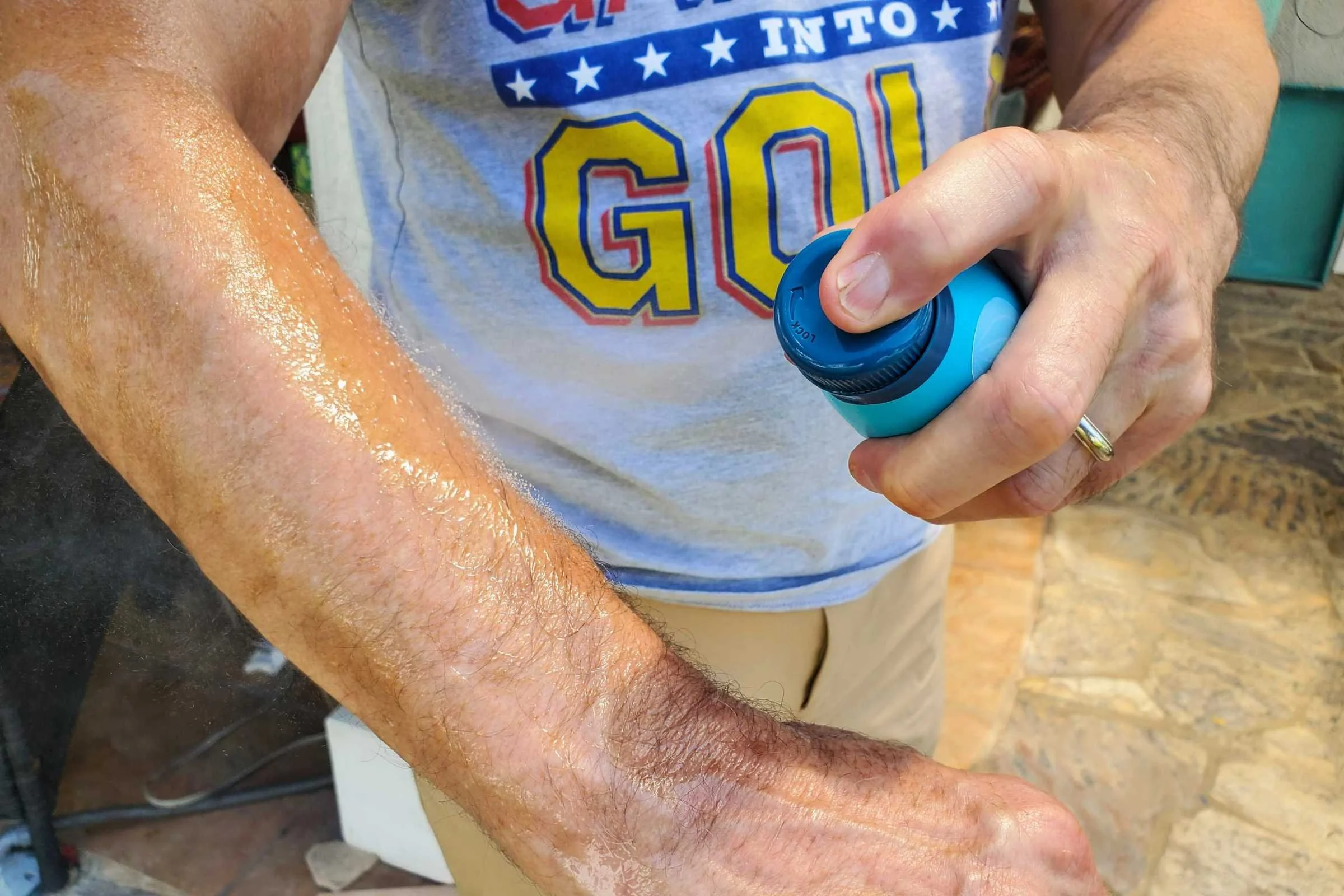
Remember that as a general rule with either sprays or lotions, most adults require around an ounce of sunscreen—picture a full shot glass—to fully cover the face, neck, chest, arms, and legs. Bear in mind that most spray sunscreen canisters contain 6 oz: that means only six uses for full-body coverage of most adults. Children require around half this amount. Body sizes differ, of course, so when in doubt, just apply more than you think you need!
When it comes to applying sunscreen sprays in particular, the American Academy of Dermatology Association has a few recommendations to ensure effective sun protection:
To make sure you’re applying enough, hold the nozzle close to your body (~4–6 inches away) and spray until your skin glistens.
After spraying, rub the product in thoroughly across all exposed skin (THIS IS ESSENTIAL).
Avoid applying sunscreen sprays on windy days, when your risks of applying insufficiently, inhaling the product, and contaminating nearby nature are all highest.
Don’t inhale spray sunscreen, and don’t spray it near your face or mouth. If applying spray sunscreen to these areas, spray the product into your hands and then apply to the face.
Never apply sunscreen sprays near open flames (grills, candles, campfires, cigarettes, etc.) as many aerosols contain flammable chemicals.
Reapply every two hours, and after swimming or sweating. For spray sunscreens, that means repeating the steps above: spray onto the skin until it glistens, then rub in thoroughly to cover all exposed areas.
Other tips:
Shake the bottle well before every use. Active ingredients can settle, especially in mineral formulas. Apply away from wind, open flames, and enclosed spaces. Sprays are flammable and easy to inhale; camp stoves, grills, and poorly ventilated rooms are all situations to avoid.
Apply more than you think you need (most people only use 25-50% of the recommended amount). With spray sunscreen, hold the nozzle close to your skin and spray until the skin glistens. Alternatively, spray generously into the hands and rub into the skin.
Use sunscreen literally every day on every part of your body that will see the sun.
If you’re going to be outside for a while, wear clothing designed for sun protection and a sun hat.
And that’s it. Go forth, apply, and prosper without skin cancer!
Care and storage

Keep sprays out of sustained heat and direct sun. A bottle left on a car dashboard or in direct sunlight for hours can degrade the active ingredients and destabilize the propellant. If your can has been sitting in a hot car for weeks, consider replacing it rather than trusting it.
Mineral spray nozzles in particular can clog over time. Wipe the nozzle after use if you notice buildup. A quick burst with the bottle upright after each use helps clear any residue. If a nozzle does clog, a clean cloth and a warm water rinse can sometimes revive it.
Check expiration dates before a big trip or at the start of each season. Give the bottle a shake and a test spray. If it smells off, sprays unevenly, or looks separated or discolored, replace it. The expiration date on sunscreen is not a suggestion. The active ingredients break down over time, and a bottle you can't rely on is worse than no bottle at all because it creates a false sense of protection.
FAQ
-
For sensitive skin, look for mineral formulas using zinc oxide or titanium dioxide, which cause less irritation than chemical filters. Alcohol is particularly common in spray sunscreens and is worth avoiding, as it can dry and irritate sensitive or eczema-prone skin. Fragrance-free and oil-free formulas reduce the risk of breakouts and redness. Non-aerosol sprays are generally gentler than aerosol versions since they skip the chemical propellants that can aggravate reactive skin.
-
The American Academy of Dermatology recommends a sunscreen with SPF 30 or higher, broad spectrum protection against both UVA and UVB rays, and water resistance. For spray sunscreen specifically, hold the nozzle close to the skin and spray until the skin glistens, then rub it in to ensure full coverage. Reapply every two hours when outdoors and immediately after swimming or sweating. If swimming in a natural body of water, choose a reef-safe mineral formula.
-
In controlled conditions, yes. SPF 30 blocks roughly 97% of UVB rays, SPF 50 blocks roughly 98%, and SPF 100 blocks roughly 99%. The practical gap between them is smaller than the numbers suggest, and consistent reapplication matters far more than chasing a higher SPF number. Dermatologists recommend SPF 30 as the minimum for most people, with SPF 50 or higher worth considering for extended outdoor activity, high altitude, or heightened sun sensitivity. No SPF rating changes the two-hour reapplication rule.
-
Spray sunscreen can provide equivalent protection to lotion when applied correctly, but correct application is harder to achieve in practice. The main risks are applying too little, missing patches of skin, and inhaling aerosolized particles. Spraying until the skin glistens and rubbing it in afterward closes most of the gap. For the face specifically, spraying into the hands and applying like a lotion is safer than spraying directly, both for coverage and to avoid inhaling the product.
-
Spray sunscreen is not recommended for children's faces due to the risk of inhaling aerosolized particles. For the body, sprays can be used on children by spraying into an adult's hands first and applying like a lotion rather than spraying directly onto skin. Mineral spray formulas are generally preferred for children since they are less likely to cause irritation than chemical filters. The FDA has flagged inhalation risk as an open safety question for aerosol sunscreens, which is worth keeping in mind for any age group.
-
Spray sunscreen can be used on the face, but spraying it directly carries two risks: inhaling the product and missing patches of skin around the eyes, nose, and hairline. The recommended approach is to spray generously into your hand and apply it like a lotion, which gives you more control over coverage and keeps the product away from your airways. If full facial coverage is a priority, a lotion, stick, or powder sunscreen is a more reliable format for the face than a spray.
-
Applying spray sunscreen in wind is one of the most common ways people end up with inadequate coverage outdoors. Wind disperses the spray before it reaches the skin, which means less product lands where you need it and more is wasted or inhaled. In windy conditions, spraying into your hands and rubbing the product on is a more reliable approach than spraying directly onto the body. Turning your back to the wind and holding the nozzle close to the skin also helps reduce dispersal on mildly breezy days.
-
Since it is a compressed gas, you generally must place it in your checked luggage when flying, rather than your carry-on. Another good flying recommendation:pack it inside a sealed plastic bag to prevent any leaking from air pressure changes or open valves
Literally any and every other type of sunscreen spray
As mentioned above, the differences between sunscreen sprays are much smaller than the differences between sunscreen lotions. They’re all very, very similar to one another, and we didn’t try a single sunscreen spray that we’d simply never use. Is it SPF 30+, protective against UVA/UVB rays, and water resistant? If you apply enough of it and rub it in (see below for application tips), it’ll work!
For additional sun protection, check out our Best Hiking Umbrellas guide.
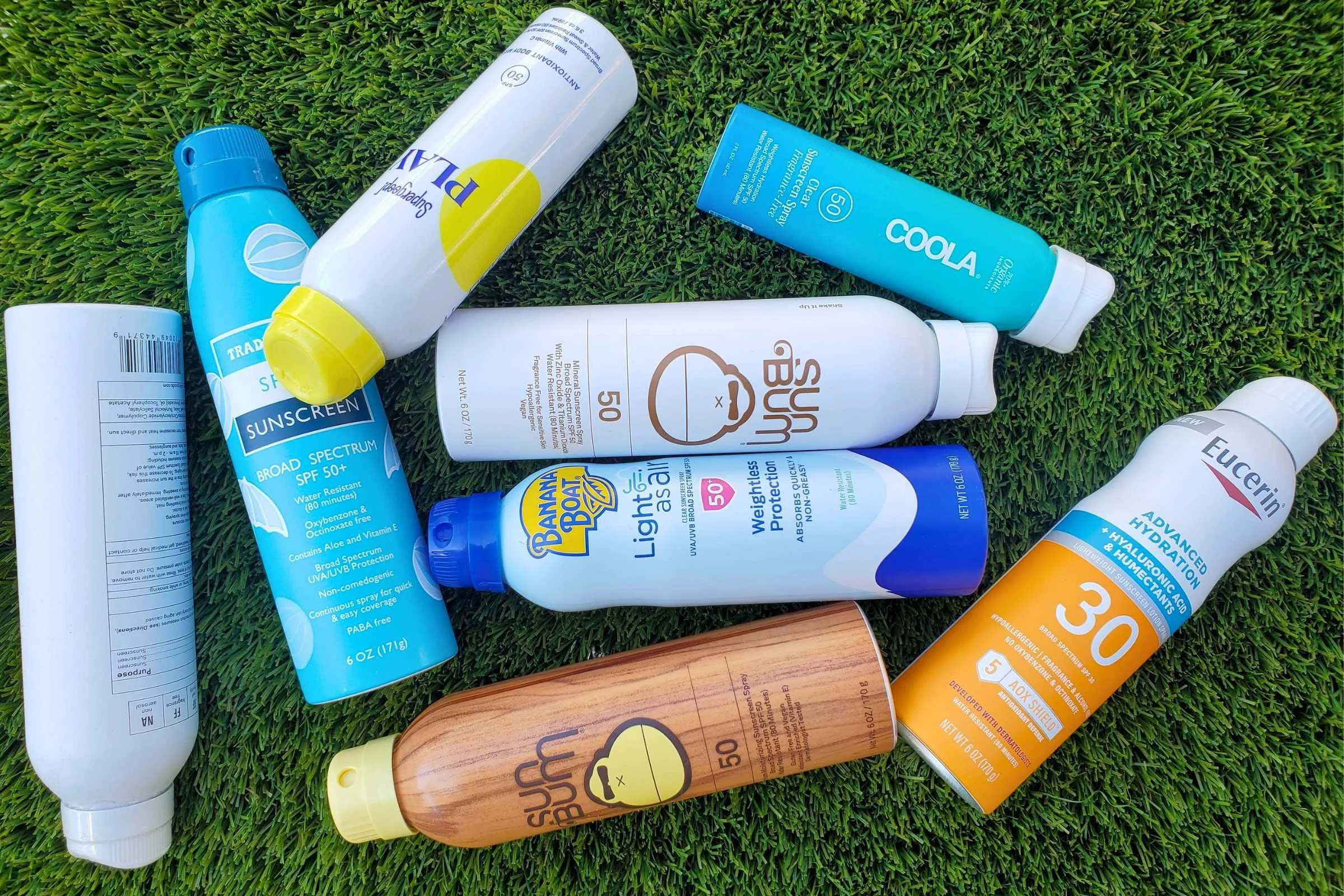
We did a deep dive into sunscreen sprays to find the best spray sunscreen for most people.
How We Researched and Tested
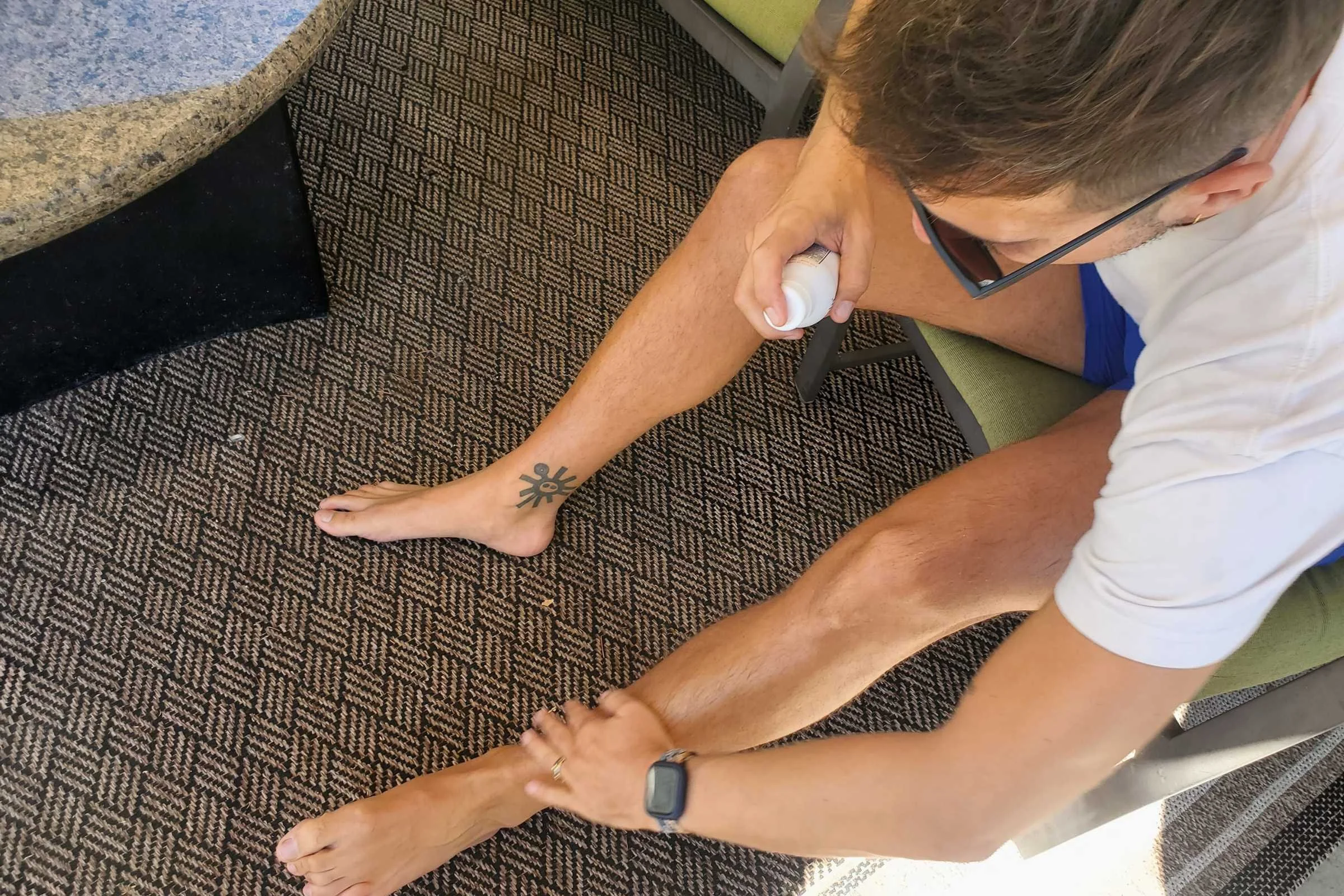
Rubbing in spray sunscreen is an absolutely essential step to ensure full coverage and sun protection.
To choose which sunscreens to test, we considered:
AADA requirements for sunscreens: All of our picks had to offer broad-spectrum UVA/UVB rays protection; SPF 30+; and water resistance.
Price: You can spend $80 on a bottle of sunscreen (and power to you if you want to), but we wanted these to be more accessible. Everything here is under $30.
Availability: Readily available at lots of major stores and online. If you can’t grab it on your way to the beach/trail/party, what’s the use?
Expert recommendation: Do dermatologists and other skin experts recommend it?
User experience: Does it feel heavy or greasy? Does it absorb quickly and invisibly, regardless of skin tone? Does it have a major fragrance? Do people like using it?
Ease of the spraying mechanism: Does it clog? Does it spray in an even mist or drip out? Is there even coverage?
Once we’ve compiled an initial list of products to test, we gathered expert input from dermatologists, scientists, doctors and other professionals (the American Academy of Dermatology Association, Environmental Working Group, SaveTheReef.org, etc); professional review sources (like Wirecutter and Consumer Reports); periodicals and informational sites (like Healthline, Men’s Health, Byrdie, AARP, Self, Into the Gloss, and others); user reviews on retail sites (like Amazon, Target, Sephora, REI, etc.).
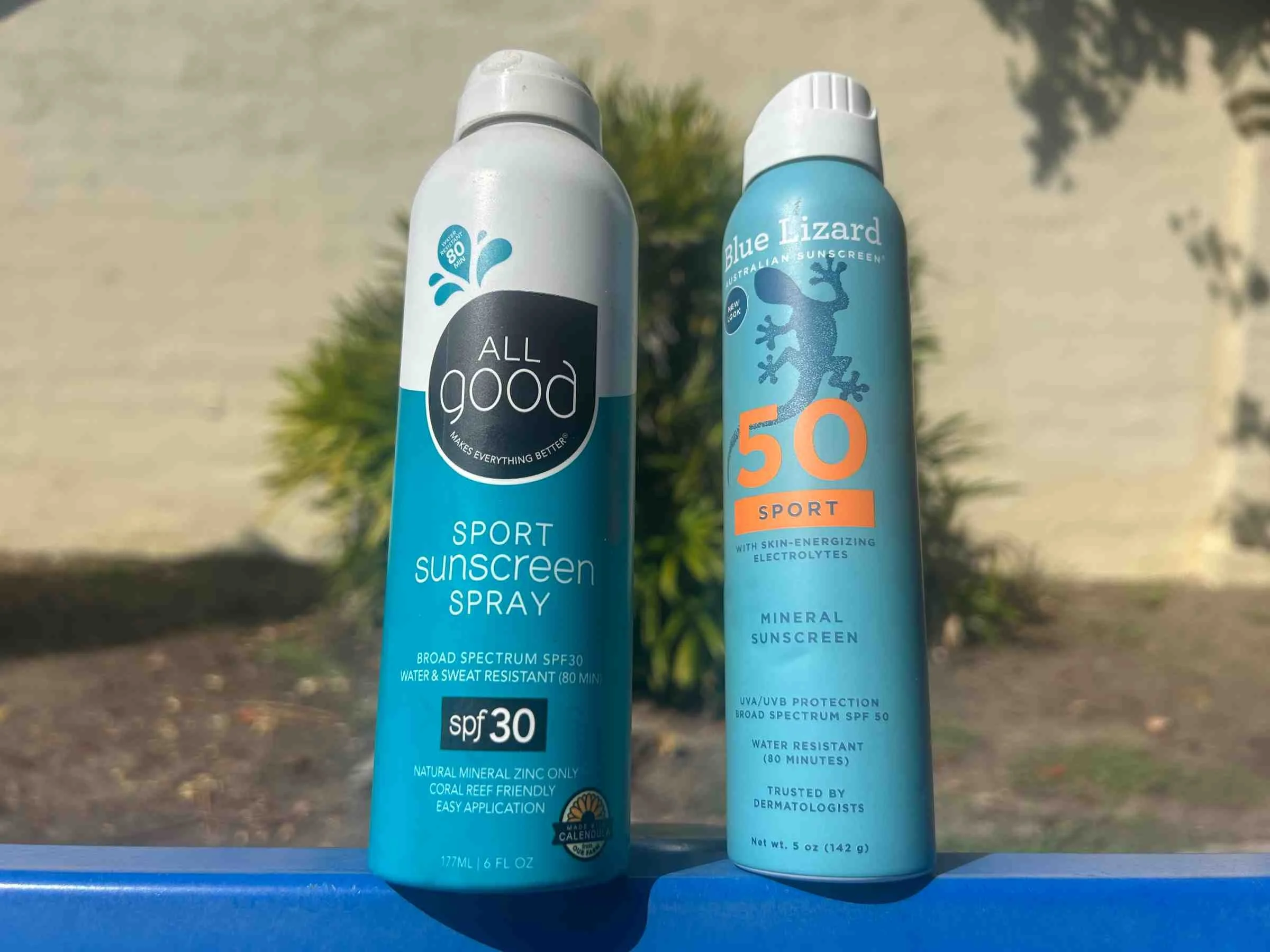
The Allgood Sport Mineral spray sunscreen performed well until the spraying mechanism clogged. We didn’t have that issue with the Blue Lizard Mineral Spray Sunscreen.
Then, a group of Treeline Review testers took these sunscreen sprays camping in the Sierra, hiking in Yosemite Valley, in bike rides in the Southern California foothills, and working all-day, all-weekend outdoor festivals in Oregon. These fellow testers tried out the products across a range of skin tones, locations, and outdoor activities.
Remember that no sunscreen can completely block damaging UV rays from the sun, especially if misapplied (i.e., you don’t use enough or don’t re-apply)! Wear sun-protective hats and clothing if you’re going to be out there for a while. See our guide to the Best Sun Shirts and Best Sun Hats for our recommendations.
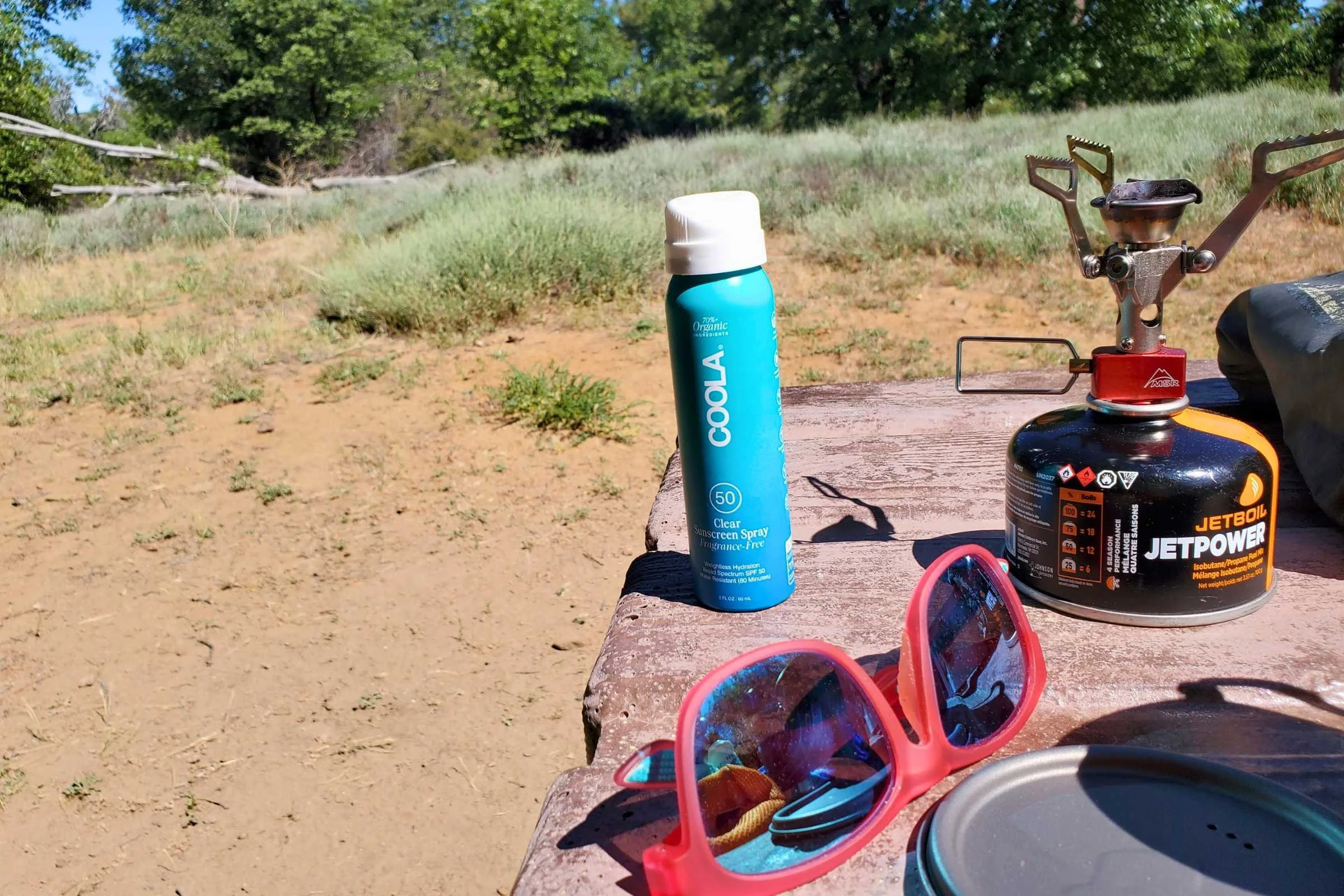
We tested more than 10 of the top spray sunscreens on the market, putting them through rigorous testing at the pool, on the trail, and everywhere in between.
- Camping in the Sierra & hiking in Yosemite
- Bike rides in Southern California foothills
- All-day outdoor festivals in Oregon
- Tested across different skin tones & types
- Pool days, sweaty hikes & long outdoor sessions
- Spray pattern, fumes & nozzle clogging
- Absorption & residue across skin tones
- White cast, scent & skin irritation
- Water & sweat resistance
- Reef impact & ingredient safety
About the Author / Why The Reader Should Trust Us

I am a born-and-raised Southern Californian (read: I’m in the sun all the time, all year, by default). I’m a hiker, backpacker, small-scale farmer, dog-walker, general outdoor enthusiast, and all-around sun-worshiper with an unfortunate history of skin cancer in my family. I’ve been known to pop into the backyard in my pajamas “just for a minute, to get some air” and then accidentally toil in the garden for several hours, or go “for a short walk” and come back many miles and many “Where are you? ARE YOU DEAD?” texts from my wife later. All this to say: sometimes you plan to be in the sun all day, and sometimes a day in the sun finds you, you know? To protect myself from myself—and to be prepared for the unexpected—I have been testing many sunscreens for many years hoping to find the one(s) that make me want to put them on in the morning.
What do I, the author and self-proclaimed sunscreen nut, personally wear and use?
Wow, I’m so glad you asked—let’s talk about it! My daily face sunscreen is a Korean product I order online, but I use Supergoop Play Everyday when I want a little extra moisture. For a body sunscreen, I use Supergoop Play Everyday, Black Girl Sunscreen, or Sun Bum Original.
After writing this article, I’m a huge fan of Eucerin Advanced Hydration Sunscreen Spray SPF 50 because it’s moisturizing, fragrance-free, super lightweight, and I can apply it inside without fumes.
If I’m going to be in the sun a bunch (wearing a hat, of course), I’ll put on a mineral product over my everyday face sunscreen. I usually do this with a tinted sunscreen so I don’t look like a ghost-I mostly use Ilia Super Serum Skin Tint SPF40 because it has a nice glow and I can still see my skin underneath, but I’ll also use Supergoop CC Screen or Supergoop Mineral Matte Screen occasionally (the latter has a very fun, light, mousse-like texture, but definitely leaves a cast on darker skin tones). These mineral products come across more like makeup in their marketing.
I’m also a devotee of facial sunscreen sprays for re-application. I use Supergoop Re-Setting Mist and Vacation Super Spritz SPF 50 about equally often.
For more stories by Katie, see her author page.


